2 varieties

Capsicum pubescens Varieties

Capsicum pubescens is a Central Andean cultivated species identified through fuzzy growth, mainly purple flowers, and mature dark seeds considered together.

2 varieties 2 comparisons 1 heat levels
Capsicum pubescens plant with fuzzy leaves, purple flowers, and round red and orange fruits in an Andean garden

Capsicum pubescens is a Central Andean cultivated species recognized by fuzzy growth, mainly purple flowers, and dark seeds used together as clues. Browse Rocoto and Manzano Pepper, compare the current 12,000 to 100,000 SHU range, and plan for cool highlands without assuming frost hardiness.

Purple Flowers and Black Seeds

Capsicum pubescens is best identified by a combination of traits. Species studies describe pubescent leaves and stems, mainly purple corollas, and mature seeds that are dark brown to black, but no single feature should carry the identification alone.

Look at several flowers, the soft hairs on new growth, and a fully mature cut fruit before assigning a plant to the species. Flower color can vary and a dark object in a photograph may be soil or damaged tissue, so documented seed or plant provenance remains stronger than one image.

The dark seeds provide the clearest kitchen-side clue once a ripe fruit is opened. They distinguish the typical pubescens seed appearance from the pale seeds common in many other cultivated peppers, while the whole plant still supplies the botanical context.

A Cultigen From the Central Andes

Kew Plants of the World Online accepts Capsicum pubescens and gives its native range as Peru to Bolivia. The species is known as a cultivated Andean pepper, and researchers have not identified a confirmed wild form that settles its ancestry.

A 2024 genomic study of locoto accessions proposed central-west Bolivia as a plausible domestication area. The authors treated that result as a hypothesis shaped by the accessions available, so it should not be inflated into a final pinpoint birthplace.

Pangenome research across cultivated peppers reinforces the need for broad sampling because one reference genome cannot represent all variation. The responsible conclusion is a Central Andean cultigen with stronger recent evidence for central-west Bolivia, plus a sampling caveat that remains open.

Cultivars in Capsicum pubescens

This collection contains exactly two canonical profiles. Rocoto comes first and Manzano Pepper follows, giving readers direct records for the two names rather than a mixed list of loosely assigned bird peppers or unrelated species.

Rocoto, manzano, locoto, chile de cera, and other regional or type labels can overlap in trade and conversation. That overlap does not prove that every plant sold under those names is the same cultivar, so check the profile, provenance, fruit form, and recorded heat instead of treating the words as exact synonyms.

The two loaded profiles span 12,000 to 100,000 SHU, from Manzano's stored lower endpoint to Rocoto's stored upper endpoint. This is the current KnowThePepper collection range, not a biological limit for every pubescens accession or harvest.

Thick Walls Change the Cooking Job

Thick, fleshy walls make these fruits useful when the pepper must keep its shape around a filling. Peru's Ministry of Foreign Trade and Tourism records rocoto relleno in Arequipa's culinary inventory, where a hollowed rocoto is filled and cooked as a composed dish.

That documented dish supports a practical choice between a whole stuffed fruit and a thin sauce pepper. It does not prove that wall thickness creates a specific sweetness, juiciness, or aroma, so flavor claims still belong to the named cultivar and preparation.

For stuffing, choose an intact fruit with enough cavity for the filling and use a recipe that controls its heat. For sauces, remove and portion the flesh deliberately because the loaded profiles begin in the hot tier and can vary substantially within their recorded ranges.

Plan for Cool Highlands, Not Frost

FAO EcoCrop places Capsicum pubescens production in a highland band of roughly 1,500 to 2,900 meters and notes limits from hot lowland conditions. That supports describing the species as adapted to cool Andean environments, not as a pepper that prefers tropical lowland heat.

Cold-tolerant does not mean frost-hardy. Freezing conditions can still damage the plant, so growers outside a mild highland climate should use a frost-free window, sheltered position, greenhouse, or movable container rather than expecting winter survival.

Match the named cultivar's maturity information to the local season and protect it from both hard frost and prolonged heat. The altitude evidence guides climate choice, while it does not create one universal sowing date, germination temperature, or yield promise for the species.

All Capsicum pubescens Profiles

2 varieties

Every variety in this collection, sorted by maximum Scoville heat rating. Click any card for the full profile with flavor notes, anatomy details, growing tips, and substitutes.
Origins Breakdown

Capsicum pubescens varieties are grown worldwide. Explore peppers from specific regions in our origin hub pages.

Heat Level Distribution

How capsicum pubescens distribute across the Scoville scale. Click any tier to browse all peppers at that heat level.

Heat Range Comparison

Visual breakdown of where each variety falls on the Scoville scale. Wider bars show a larger documented SHU spread between individual pods.

The causes of pepper heat variation explain why pods from one cultivar do not always measure alike.
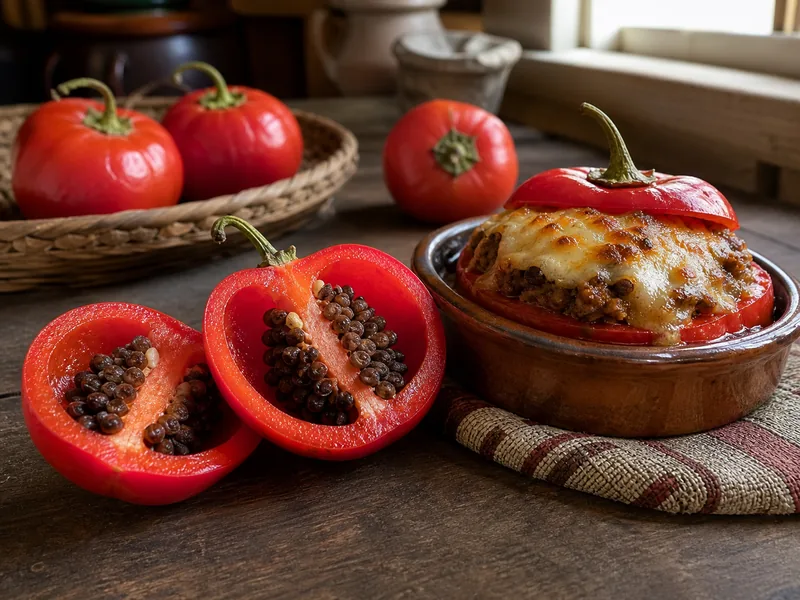
Cut thick-walled red rocoto with dark seeds beside a stuffed rocoto in a baking dish

Frequently Asked Questions

Use a combination of softly pubescent leaves and stems, mainly purple flowers, and mature dark brown-to-black seeds. No single photograph or fruit trait proves the species, so documented plant or seed provenance is stronger evidence.
They belong to Capsicum pubescens and their regional names can overlap, but the names do not guarantee one identical cultivar. Compare provenance, fruit form, and the canonical Rocoto and Manzano Pepper profiles before treating them as interchangeable.
No. FAO altitude and temperature guidance supports adaptation to cool Andean highlands and sensitivity to hot lowlands, but it does not show frost hardiness. Protect plants from freezing conditions.

Explore More

Jump into the wider database, heat tiers, comparisons, and substitute references without another card wall.