

KnowThePepper
Rocoto: Apple-Shaped, Black-Seeded, and as Fierce as a Hot Scotch Bonnet
The rocoto (Capsicum pubescens) is an ancient Andean pepper with a deceptively round, apple-like shape and a heat range of 30,000 to 100,000 SHU - comparable to a hot scotch bonnet-level burn. Its black seeds and purple flowers make it instantly recognizable among growers.
Fruity, crisp, and genuinely fierce, it has fed Peruvian kitchens for thousands of years.
- Species: C. pubescens
- Heat tier: Hot (10K-100K SHU)
- Comparison: 4-40x hotter than a jalapeño, depending on where the jalapeño falls in its 2,500-8,000 SHU range
What Makes Rocoto Different?
The rocoto was domesticated in the highlands of Peru and Bolivia well before European contact, which makes it one of the oldest cultivated peppers on Earth, and one of the few belonging to the Capsicum pubescens species, a species so distinct it cannot cross-pollinate with most other cultivated peppers.
The name translates roughly to 'tree pepper' in Quechua, a nod to its woody, perennial growth habit. In the wild, plants can survive for years in cool mountain conditions where other Capsicum species would die back.
That cold tolerance is a defining trait of the species.
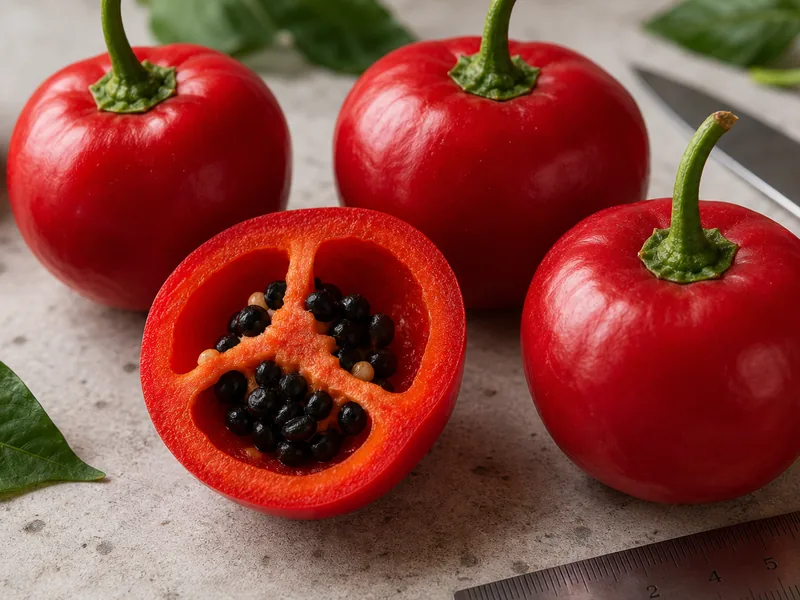
Physically, the rocoto breaks the visual mold. Round or slightly pear-shaped, about the size of a small apple, it looks more like a cherry tomato than a chili.
The flesh is thick and crisp, the walls substantial.
Colors run from green through yellow to vivid red at full maturity. The seeds are distinctively black, a feature specific to C. pubescens and useful for identification.
Heat lands between 30,000 and 100,000 SHU, putting it firmly in the extra-hot tier alongside habaneros and similar peppers.
The burn builds gradually but holds. Flavor-wise, it reads fruity and slightly vegetal, more crisp apple than tropical sweetness, which makes it a natural fit for fresh salsas and stuffed preparations common across Peruvian pepper traditions.
What Is the Origin of Rocoto?
Archaeological evidence from Guitarrero Cave in Peru places Capsicum pubescens cultivation at roughly 6,000 years ago, making rocoto among the earliest domesticated peppers anywhere. Pre-Columbian Andean civilizations, including the Inca, incorporated it heavily into their diets, and rocoto remains central to Peruvian cooking today.
Unlike most New World peppers that spread globally after Spanish contact, rocoto stayed largely regional.
Its cold-weather requirements and thick-walled fruit made it harder to transport and dry than thin-skinned varieties. Spanish colonizers favored other species, leaving rocoto relatively unknown outside South America until the 20th century.
Today it thrives in highland markets across Peru, Bolivia, and parts of Ecuador. The dish rocoto relleno - a stuffed pepper preparation from Arequipa, is considered a national food landmark, preserving the pepper's role at the center of Andean food culture.
How Hot Is Rocoto, and What Does It Taste Like?
The Rocoto delivers 30K–100K Scoville Heat Units, placing it in the Hot tier (10K-100K SHU). That makes it roughly 4-40x hotter than a jalapeño, depending on where the jalapeño falls in its 2,500-8,000 SHU range.
Flavor notes: fruity and crisp.
What Nutrients Does Rocoto Provide?
Like other hot peppers, rocoto delivers meaningful nutrition relative to its small serving size. A 100g portion of fresh rocoto provides approximately 40 calories, with significant vitamin C content, often exceeding 150% of the daily recommended value at full red maturity.
Capsaicin, the compound responsible for heat, has been studied for its effects on metabolism and inflammation. The capsaicin explains why the burn feels different from acidic or thermal heat, it binds to TRPV1 receptors directly.
Rocoto also provides vitamin A, potassium, and dietary fiber. The thick walls contain more flesh per fruit than thin-skinned varieties, making the nutritional density per pepper notably higher.
Which Dishes Suit Rocoto?
Rocoto's thick walls and crisp texture make it a standout for stuffed preparations. Rocoto relleno, the Arequipa classic, fills whole peppers with spiced meat and cheese before baking, a dish that showcases both the heat and the structural integrity of the fruit.
The flavor profile is genuinely fruity without veering tropical.
Think crisp apple with a grassy edge, which pairs well with the rich, earthy flavors common in Andean cooking: potatoes, cheese, cured meats. That same brightness works in fresh salsas and ceviches where the pepper's acidity-forward character complements citrus marinades.
For peppers for tacos, rocoto brings a different character than the dried chiles typical of Mexican preparations, its fresh fruitiness adds dimension without muddying the other flavors. It also holds up well in hot sauce applications for wings where you want heat that lingers but doesn't overwhelm the meat.
Blanching whole rocoto in boiling salted water for 2 to 3 minutes before cooking reduces bitterness and takes the edge off the heat without destroying the crisp texture. Seed removal drops the intensity significantly, the thick placenta holds most of the capsaicin.
Compared to the Sugar Rush Peach, rocoto's heat feels rounder and more sustained rather than sharp and immediate.
Where Can You Buy Rocoto, and How Do You Store It?
Fresh rocoto peaks in availability from late summer through fall in regions where it's grown locally.
Latin American grocery stores in cities with large Peruvian communities, Los Angeles, Miami, New York, often carry them fresh or frozen year-round. Frozen rocoto, widely exported from Peru, is a reliable option that preserves both texture and heat reasonably well.
At the market, look for firm fruit with glossy, unblemished skin.
Soft spots indicate age. Red specimens are fully ripe and hottest.
Yellow and orange are slightly milder.
Refrigerate fresh rocoto in a paper bag for up to two weeks. For longer storage, freeze whole or halved, they hold well for 6 months and can go straight from freezer to pan.
Which Peppers Can Replace Rocoto?
Compare substitutes for Rocoto by form, flavor, and heat before choosing a ratio. Measured adjustments must account for the dish and the concentration of the replacement.
Direct comparisons show where flavor, form, and preparation differ in the Manzano vs Rocoto matchups.
How Do You Start and Grow Rocoto Peppers?
Capsicum pubescens is the most cold-tolerant domesticated pepper species, but that doesn't mean it's easy. It needs a long growing season, often 120 to 150 days to first harvest, and performs best in mild climates where summers stay below 90°F. High heat actually suppresses fruit set.
Start seeds indoors 10 to 12 weeks before last frost. Germination is slower than most peppers, sometimes taking 3 to 4 weeks at 75 to 80°F soil temperature.
The plants grow large, often reaching 3 to 4 feet, with distinctive fuzzy leaves and striking purple flowers.
A single plant can produce heavily across multiple seasons if overwintered indoors.
For seed-starting and container cultivation, rocoto rewards patience. Container growing works well given its perennial nature.
Bring it inside before frost and it may fruit for years.
Compare this to the faster-maturing cultivation characteristics of Southeast Asian varieties that finish in 70 to 90 days, rocoto demands a longer commitment.
Soil should drain well. Rocoto roots dislike standing water.
Feed with a balanced fertilizer during vegetative growth, then switch to lower-nitrogen once flowering begins.
Full sun is ideal, though it tolerates partial shade better than most hot peppers.
Pollination sometimes needs a hand indoors, a soft brush transferred between flowers improves fruit set when there are no insects around.
Rocoto FAQ


- CooksInfo - Rocoto Peppers
- Chile Pepper Institute, New Mexico State University
Species classification: C. pubescens - based on published botanical taxonomy.