Best Peppers for Tacos, Matched to Salsa, Roasted Filling, and Adobo
Match the pepper to the taco component. Jalapeno or serrano can sharpen a fresh salsa. Roasted poblano can become part of the filling. Ancho, guajillo, and pasilla build a dried-chile adobo. This guide follows documented Mexican and extension recipes rather than ranking peppers across jobs they do not share.
Which pepper belongs in each part of a taco?
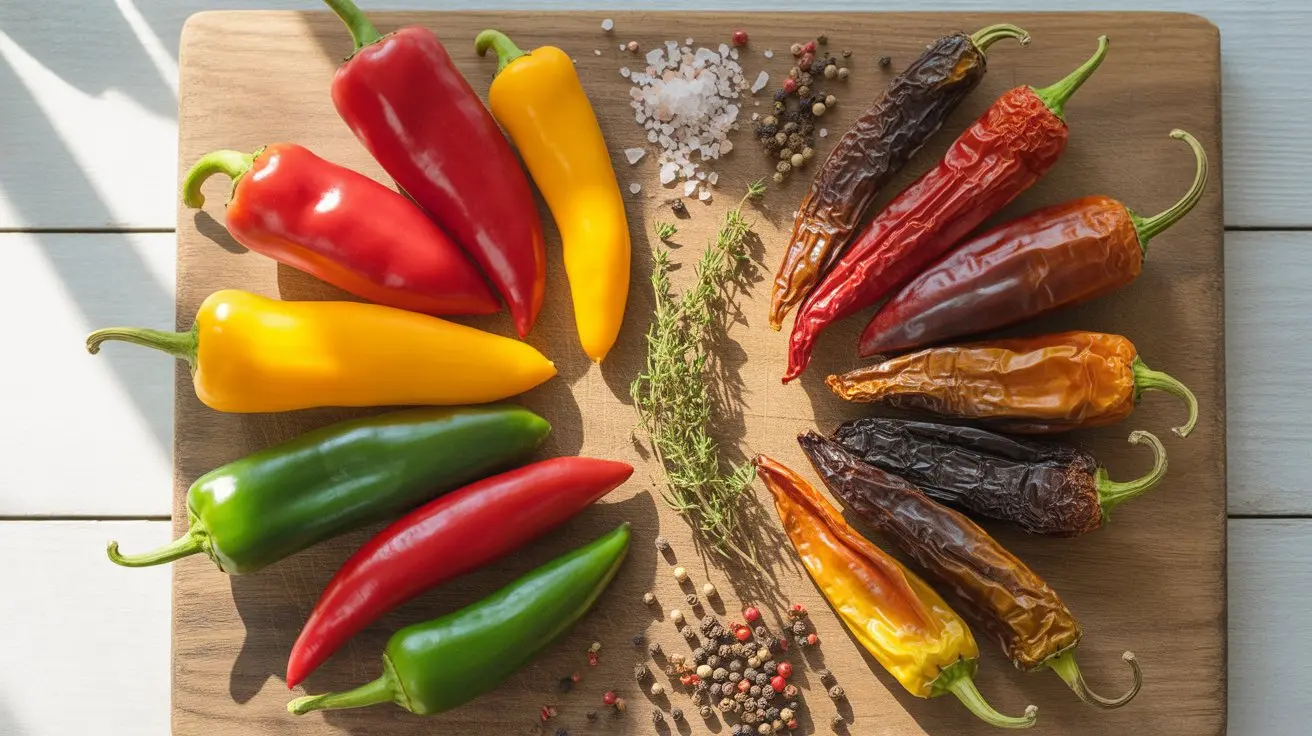
A taco may contain fresh salsa, a cooked filling, a dried-chile marinade, and a table sauce. One pepper does not need to do all four jobs. Mexico's agriculture ministry describes chiles, salsas, and tacos as a linked part of the country's food culture and names green chile, chile de arbol, cuaresmeno, chilaca, habanero, morita, guajillo, cascabel, chipotle, and manzano among the peppers used around tacos and salsa.
That list is a starting map, not a ranking. Pick a pepper whose form matches the component you are making.
Fresh salsa: jalapeno or serrano
Jalapeno is the more moderate starting point. University of Florida Extension places it around 2,000 to 8,000 SHU and documents its use in salsa and Mexican food. It can be chopped raw for a green, crisp note or cooked with the other salsa ingredients.
Serrano moves the heat upward. Iowa State University Extension places serranos at 10,000 to 25,000 SHU. Use it when a fresh salsa needs more pungency without switching to a dried-chile flavor. The actual pod can vary, so add part of one, taste, and then decide whether the batch needs more.
Roasted filling: poblano
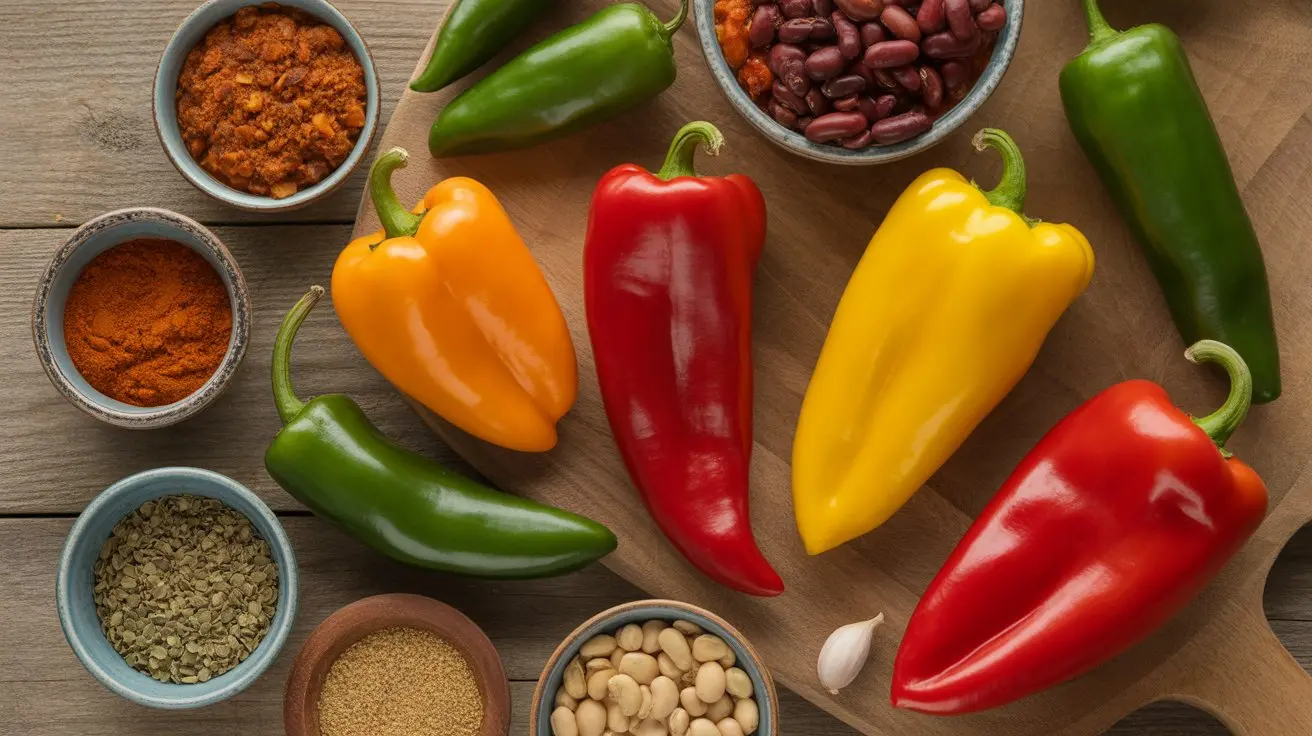
Poblano works as part of the filling rather than only as a seasoning. Iowa State describes the fresh type as large, blocky, thin-walled, and mild, with a published band of 1,000 to 2,500 SHU. Roast it, remove loosened skin when the recipe calls for it, then slice or chop it with vegetables, cheese, beans, or meat.
A zero-heat table can use bell pepper, but that substitution changes the wall thickness and sweetness. It is a practical choice for heat tolerance, not an exact flavor match.
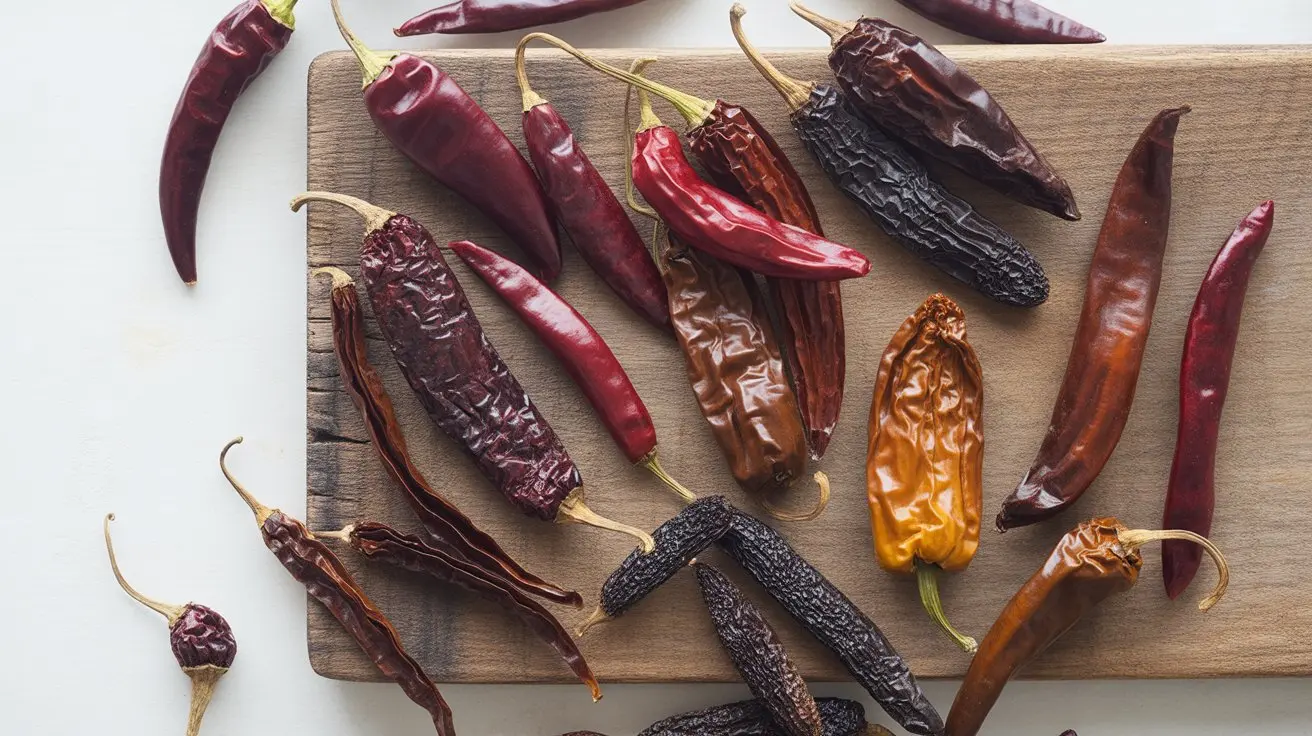
Dried-chile adobo: ancho, guajillo, and pasilla
Oregon State University Extension's Mexican adobo recipe uses dried ancho, guajillo, and pasilla chiles. Its method removes stems and seeds, toasts the chiles in a dry skillet for 30 to 60 seconds, then soaks them in hot water for 15 minutes before blending.
That method builds a sauce for meat or vegetables without treating dried chiles as a dry garnish. Do not scorch them: a short toast is enough to make them aromatic, while burnt chile can make the whole sauce bitter.
Smoky and sharp accents: chipotle, morita, or chile de arbol
Mexico's agriculture ministry includes chipotle, morita, and chile de arbol among the chiles paired with tacos and salsas. Chipotle and morita are dried, smoked forms, so they belong where smoke is useful in a sauce or braise. Chile de arbol supplies a sharper dried-chile heat and should be scaled to the diner's tolerance.
These are accents. A taco filling does not become more authentic simply because it contains the hottest pepper available.
How do you control salsa heat for a mixed group?
Keep a hotter salsa separate when a group has mixed tolerance. Iowa State explains that capsaicinoids are produced around the placental tissue, while seeds can carry capsaicin through contact. Removing seeds alone is therefore an unreliable way to make a hot pepper mild.
Wear gloves for hot chiles and avoid touching the face or eyes. Taste the finished salsa with the food it will accompany: fat, acid, salt, and the filling all change how the same spoonful is perceived.
Best Peppers for Tacos, Matched to Salsa, Roasted Filling, and Adobo FAQ
- Government of Mexico Agriculture Ministry - El chile, las salsas y los tacos: la perfecta combinacion
- Oregon State University Extension - Mexican Adobo Sauce
- University of Florida IFAS Extension - Pepper Production in Miami-Dade County, Florida
- Iowa State University Extension - Growing Peppers in the Home Garden