

KnowThePepper
Chipotle: A Smoke-Dried Jalapeno, Not Its Own Pepper
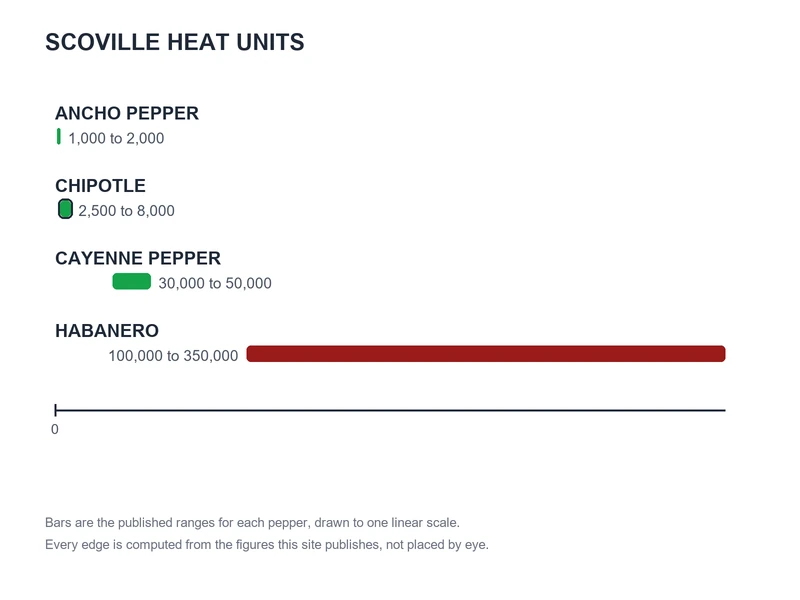
Chipotle is a smoke-dried jalapeño with a flavor unlike any other pepper in the 2,500-8,000 SHU range. The drying process transforms a fresh green chile into something earthy, sweet, and deeply smoky, heat you can taste coming through layers of wood and char.
It anchors Mexican cooking and has become one of the most recognized chile flavors worldwide.
- Species: C. annuum
- Heat tier: Medium (1K-10K SHU)
- Comparison: the same heat range as a jalapeño because their published ranges overlap
What Is Chipotle Known For?
The chipotle isn't a distinct pepper variety, it's a process applied to a pepper. Specifically, it's a jalapeño that has been left to ripen to red, then smoked and dried.
Smoking takes the jalapeño's grassy freshness and converts it into something deeply smoky, rich, and complex with dried-fruit sweetness.
Understanding that chipotle = smoked red jalapeño also explains one common confusion: the different chipotle products you encounter aren't just different brands, they're different processes.
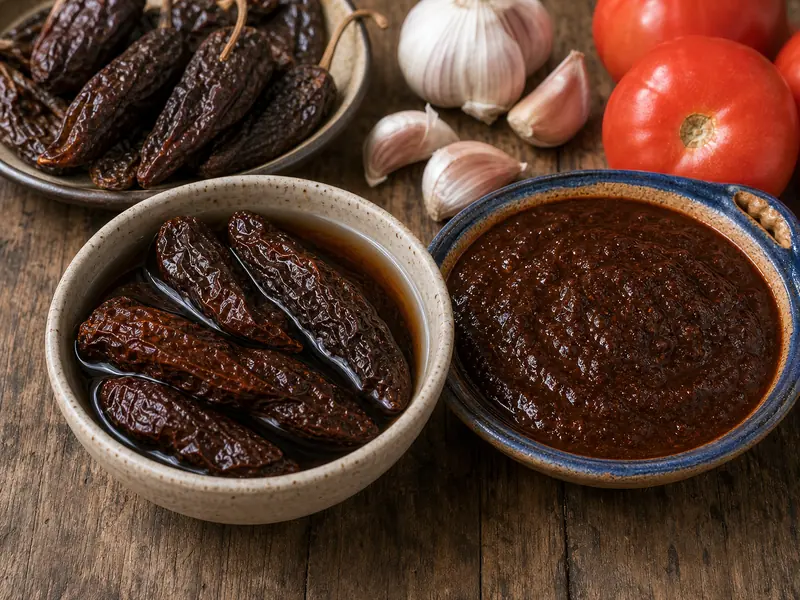
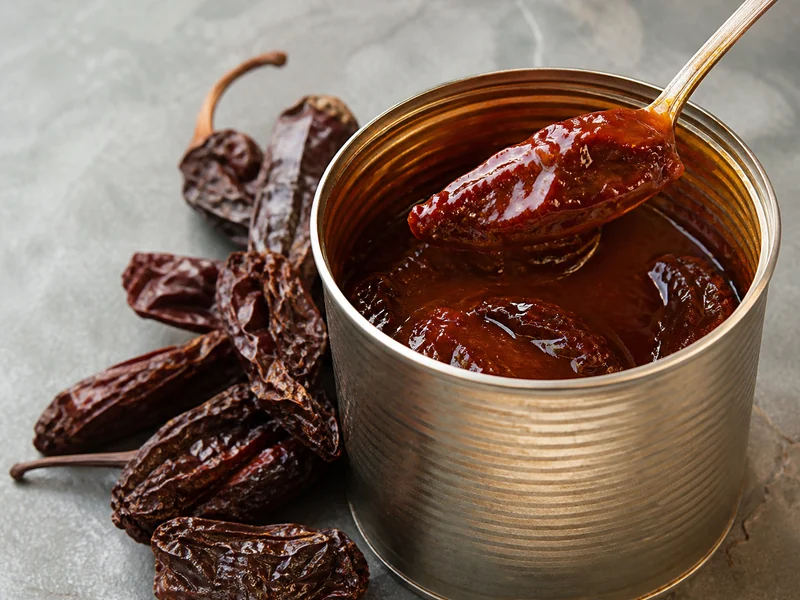
Chipotle morita is smoked while the pepper still has significant moisture content, producing a small, dark-purple, supple pod with intense smoke flavor and residual fruitiness. This is what you find in most canned chipotle en adobo products, the soft texture survives canning well.
Morita is the dominant commercial form outside Mexico.
Chipotle meco (also called chipotle grande or chipotle típico) is smoked much longer, often 2-3 days, until the pod becomes dry, leathery, and grayish-tan in color. The extended smoking develops a stronger, more complex smoke character with less residual fruitiness.
Meco is more common in Mexican markets and used primarily in dry applications: ground into powder, used in adobo rubs, or reconstituted for sauces where stronger smoke character is wanted.
Heat-wise, chipotles carry the full jalapeño range - 2,500-8,000 SHU - with some perception of additional heat from the smoke compounds and concentration during drying. In practice, a rehydrated chipotle delivers noticeably more heat than its SHU number suggests, because drying concentrates capsaicin per gram.
| Stage | What changed | What it is for |
|---|---|---|
| Green jalapeno | Picked before full ripeness | Sharp and grassy, the default for pico de gallo and poppers |
| Red jalapeno | Left on the plant, starches turning to sugars | Sweeter and fruitier at the same heat, better in glazes and cooked salsas |
| Chipotle | The red pod smoke-dried | Smoke and dried-fruit depth, used from a can or ground |
Where Did Chipotle Originate?
The chipotle's origins trace to the Aztec Empire, where smoking and drying chiles was a preservation technique for a pepper that doesn't dry as efficiently as thinner-walled chiles. The word 'chipotle' derives from the Nahuatl chilpoctli - 'smoked chile'.
Pre-Columbian Mesoamerican cooks smoked jalapeños precisely because the thick walls and high moisture content made sun-drying impractical in humid environments.
Spanish chroniclers documented the smoked jalapeño as early as the 16th century, noting it as a distinct preservation technique in the Veracruz region, where most jalapeños were grown. The traditional smoking technique used mesquite wood in stone or adobe smokehouses, with peppers arranged on metal grates above smoldering coals for 48-72 hours.
Commercial canned chipotle en adobo (chipotle in adobo sauce) entered the US market in the late 1970s and early 1980s, gaining wider distribution as Mexican-American cuisine became part of mainstream American cooking.
By the 1990s, chipotle had become a recognized flavor profile in US cooking beyond Mexican applications, appearing in BBQ sauces, spice rubs, dressings, and the Chipotle restaurant chain (founded 1993), which made the name synonymous with a particular style of American-Mexican cooking.
How Hot Is Chipotle, and What Does It Taste Like?
The Chipotle delivers 2.5K–8K Scoville Heat Units, placing it in the Medium tier (1K-10K SHU). That makes it roughly the same heat range as a jalapeño because their published ranges overlap.
Flavor notes: smoky and sweet.
Chipotle Nutrition Facts
Dried chipotle contains concentrated nutrients from jalapeños, with significant vitamin A (from beta-carotene in red jalapeños), vitamin C, and iron. Per 14g serving (roughly 1 whole chipotle chile): approximately 35 calories, 0.8g protein, 7g carbohydrates, and 3.5g fiber.
The drying process concentrates capsaicin per gram compared to fresh jalapeños, this is why rehydrated chipotles often feel hotter than fresh jalapeños at the same SHU rating. The SHU measures capsaicin concentration per unit mass.
When mass decreases through drying, the same amount of capsaicin occupies less volume and registers as more intense per bite.
Canned chipotle en adobo adds sodium from the adobo sauce, typically 200-300mg per chile with sauce. For low-sodium applications, dried chipotles rehydrated in plain water give more control over sodium content.
For heat-source context and data caveats, see our methodology.
How Do You Use Chipotle in the Kitchen?
Canned chipotle en adobo is one of the most versatile pantry items for adding smoke and heat simultaneously. The adobo sauce, made from tomato, vinegar, garlic, and spices, picks up the chipotle's flavor and is itself a seasoning ingredient.
Blend the entire can (chiles + sauce) for a smooth, smoky base.
Chipotle mayo: blend 1-2 chipotles in adobo + 2 tablespoons of adobo sauce with 1 cup of mayonnaise. This 5-second preparation produces the chipotle mayo that appears across American restaurants and is used as a spread, dipping sauce, or dressing base.
For chipotle BBQ sauce: start with your standard barbecue sauce base (ketchup, vinegar, brown sugar, Worcestershire) and add 2-3 chipotles blended smooth per cup of sauce. The smoke from the chipotle reinforces and extends the smoke flavor of grilled or smoked meats without adding raw wood smoke taste.
Dried whole chipotles (morita or meco) rehydrate in hot water for 20-30 minutes to become soft and blendable. The soaking water is flavorful and can be added to sauces in small amounts for deeper smoke character.
When substituting, dried guajillo or ancho provides dried-chile depth without smoke. Adding liquid smoke to fresh jalapeños produces a rough approximation of chipotle flavor but doesn't replicate the texture.
The substitutes for chipotle peppers article covers the closest options in detail.
| Type | How it is made | What it tastes like |
|---|---|---|
| Morita | Smoked for a shorter time, staying softer and darker red | Fruitier, with the smoke sitting beside the chile rather than over it |
| Meco | Smoked longer until grey-brown and leathery | Drier and far smokier, closer to a cigar-ash depth |
| Canned in adobo | Usually morita, rehydrated in a tomato and vinegar sauce | The version most cooks meet, where the sauce carries as much flavour as the pod |
How Do You Buy and Store Chipotle?
Canned chipotle en adobo (whole chipotles in tomato-based sauce) is the most accessible format at virtually every US supermarket, usually in the Mexican foods aisle. La Costeña and San Marcos are reliable commercial brands.
Once opened, transfer unused chipotles and all the sauce to a sealed glass jar, they keep refrigerated for 3-4 weeks, or freeze for up to 6 months.
Dried whole chipotles (morita or meco) appear at Mexican grocery stores and specialty spice shops. Morita is small and slightly purplish.
Meco is larger and grayish-tan. Both keep sealed in a cool, dark place for 12 months before significant potency loss.
Chipotle powder is available at most spice retailers. Quality varies significantly, darker-colored, more aromatic powder indicates better quality.
It loses smoke character faster than dried whole pods. Expect 6-9 months of good quality before flavor fades.
The capsaicin and smoke compounds in ground powder oxidize faster than in whole dried pods.
Which Peppers Can Replace Chipotle?
Compare substitutes for Chipotle by form, flavor, and heat before choosing a ratio. Measured adjustments must account for the dish and the concentration of the replacement.
Direct comparisons show where flavor, form, and preparation differ in the Chipotle vs Jalapeno and Chipotle vs Pasilla matchups.
Compare Chipotle with: Chipotle vs Morita · Chipotle vs Ancho · Chipotle vs Guajillo
What Does Chipotle Need to Grow Well?
You don't grow chipotles, you make them from jalapeños you've grown. The process is fully achievable at home with a backyard smoker or kettle grill.
Start with home-grown jalapeños left to ripen to fully red on the plant, red jalapeños have the necessary sugar content for the smoking process to develop complex flavor. Green jalapeños can be smoked but produce a less complex result.
Home smoking process: 1. Wash and dry red jalapeños thoroughly 2.
Set up indirect heat in a smoker or kettle grill, target 200-225°F 3. Use mesquite or pecan wood (traditional choices for chipotle) 4.
Arrange peppers in a single layer on the grate over indirect heat 5. Smoke for 6-10 hours, turning every 2 hours 6.
Continue until pods are fully shriveled and leathery
The result is chipotle morita-style, softer than commercial meco. For a drier, longer-smoked meco style, continue smoking another 12-24 hours at lower heat with occasional wood additions.
A pound of fresh red jalapeños produces approximately 3-4 ounces of dried chipotle - about a 4:1 reduction in weight from moisture loss. Store homemade chipotles sealed in a cool, dark location for up to 12 months.
Chipotle FAQ


- Capsicum annuum L. - USDA GRIN Taxonomy
- USDA FoodData Central, Peppers, jalapeno, raw
Species classification: C. annuum - based on published botanical taxonomy.