Chipotle or Guajillo? Build the Sauce Before the Smoke
Use guajillo as the red sauce base for birria, enchilada sauce, pozole rojo, adobo, and marinades. Use chipotle as the smoky accent for beans, braises, barbecue sauce, mayonnaise, or a red sauce that is meant to taste smoked. Their canonical heat ranges overlap, but a long guajillo supplies more red skin and sauce body while a compact smoke-dried chipotle changes aroma and heat with much less chile material.

Chipotle
MediumGuajillo Pepper
MediumQuick Comparison
| Attribute | Chipotle | Guajillo Pepper |
|---|---|---|
| Scoville evidence | 2.5K-8K SHU | 2.5K-5K SHU |
| Heat Tier | Medium | Medium |
| vs Jalapeño | 1x hotter | 1x hotter |
| Flavor | smoky and sweet | tangy and sweet |
| Species | C. annuum | C. annuum |
| Origin | Mexico | Mexico |
Which Should Build the Sauce, Guajillo or Chipotle?
Choose guajillo for the red sauce base and chipotle for a deliberate smoky turn.
Mexico's National Institute for Forestry, Agriculture and Livestock Research, known as INIFAP, names guajillo as a fundamental chile for moles, adobos, hot sauces, and dishes with red or white meat. Its long pod supplies enough red skin and softened flesh to build the sauce rather than merely season it.
The United States Department of Agriculture petition for chipotle identifies a smoke-dried jalapeno with smoke as a defining part of the product.
Because that aroma is concentrated, one or two small pods can move a full pot toward smoke without supplying the volume of several guajillos.
Fast answer. Start with guajillo for birria, enchilada sauce, chile colorado, pozole rojo, or a red marinade.
Add chipotle only when smoke belongs in the intended result, while beans, barbecue sauce, braises, and mayonnaise can let chipotle lead.
What Fresh Peppers Become Guajillo and Chipotle?
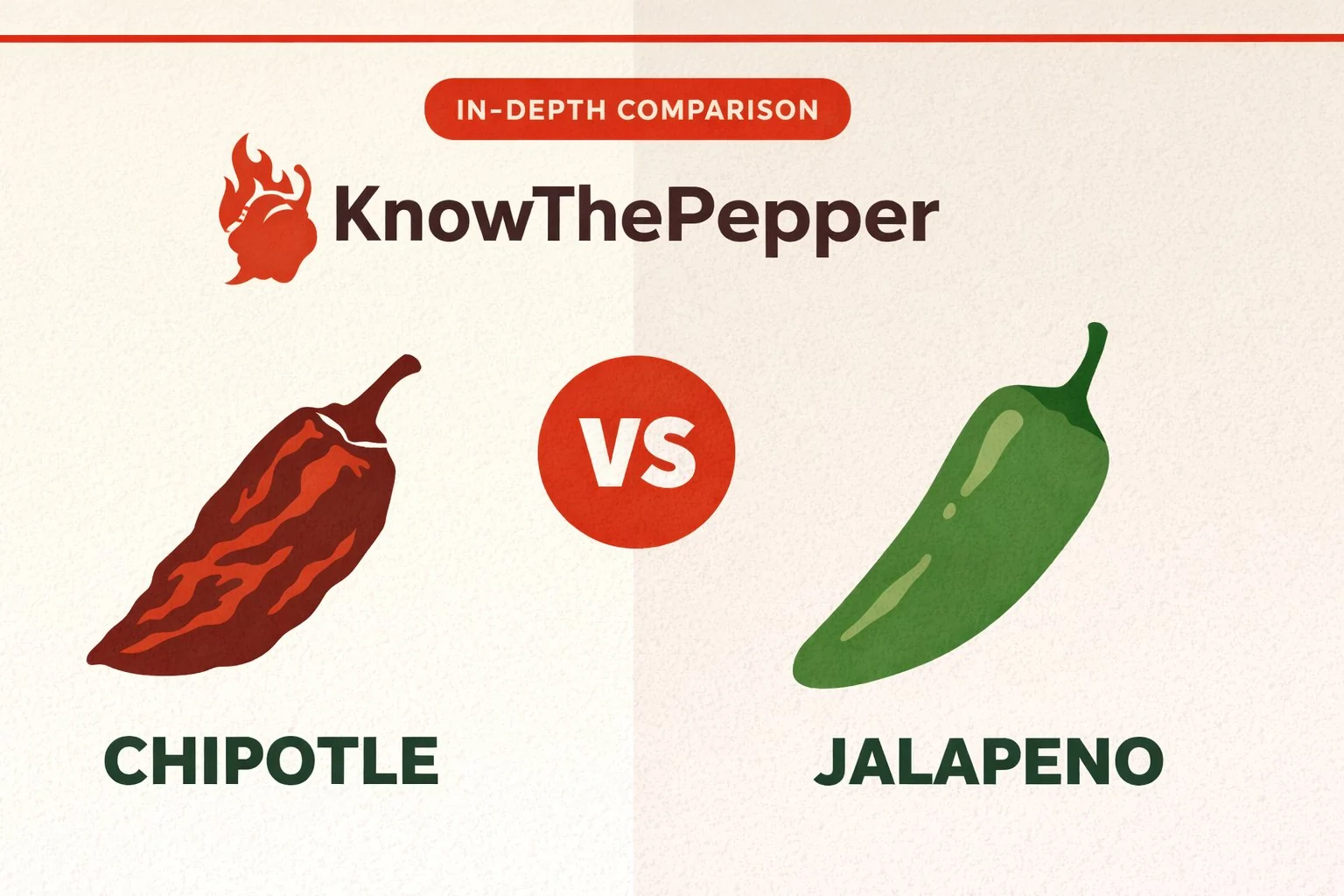
Guajillo is the dried form of the mirasol chile, while chipotle is a ripe jalapeno preserved by smoke-drying. Both belong to Capsicum annuum, but the postharvest method makes their kitchen identities diverge.
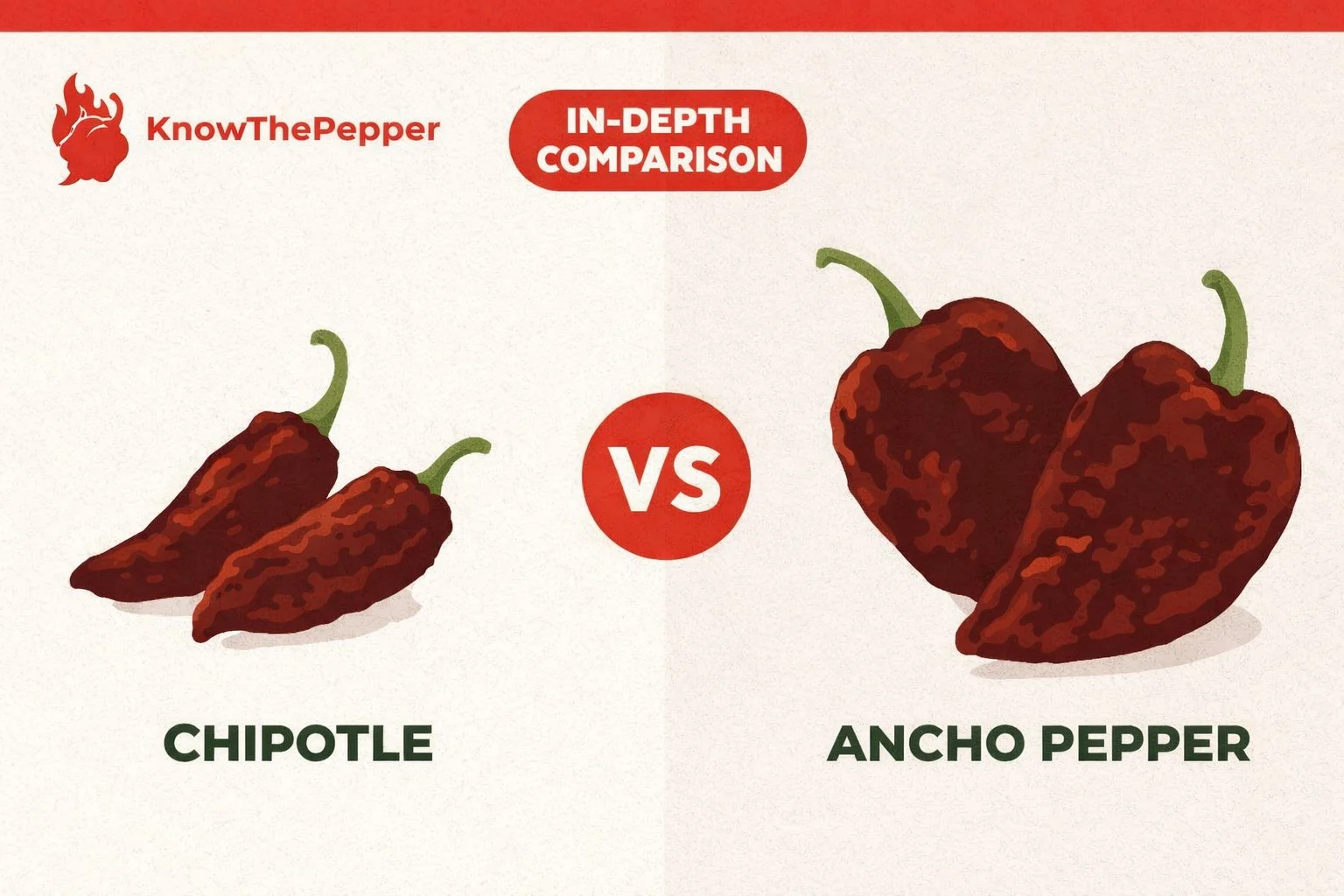
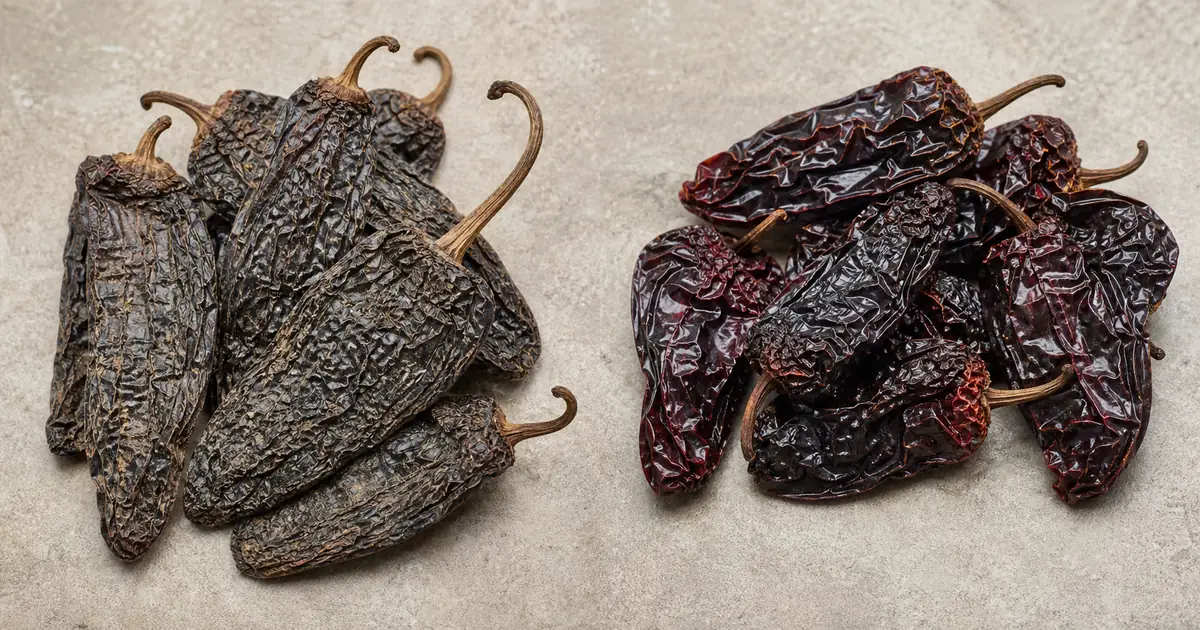
INIFAP describes dried guajillo or mirasol as red-brown with smooth skin and an elongated triangular shape averaging about 10 cm long and 3 cm wide. A whole guajillo should therefore look long and fairly sleek rather than short, black, and heavily wrinkled.
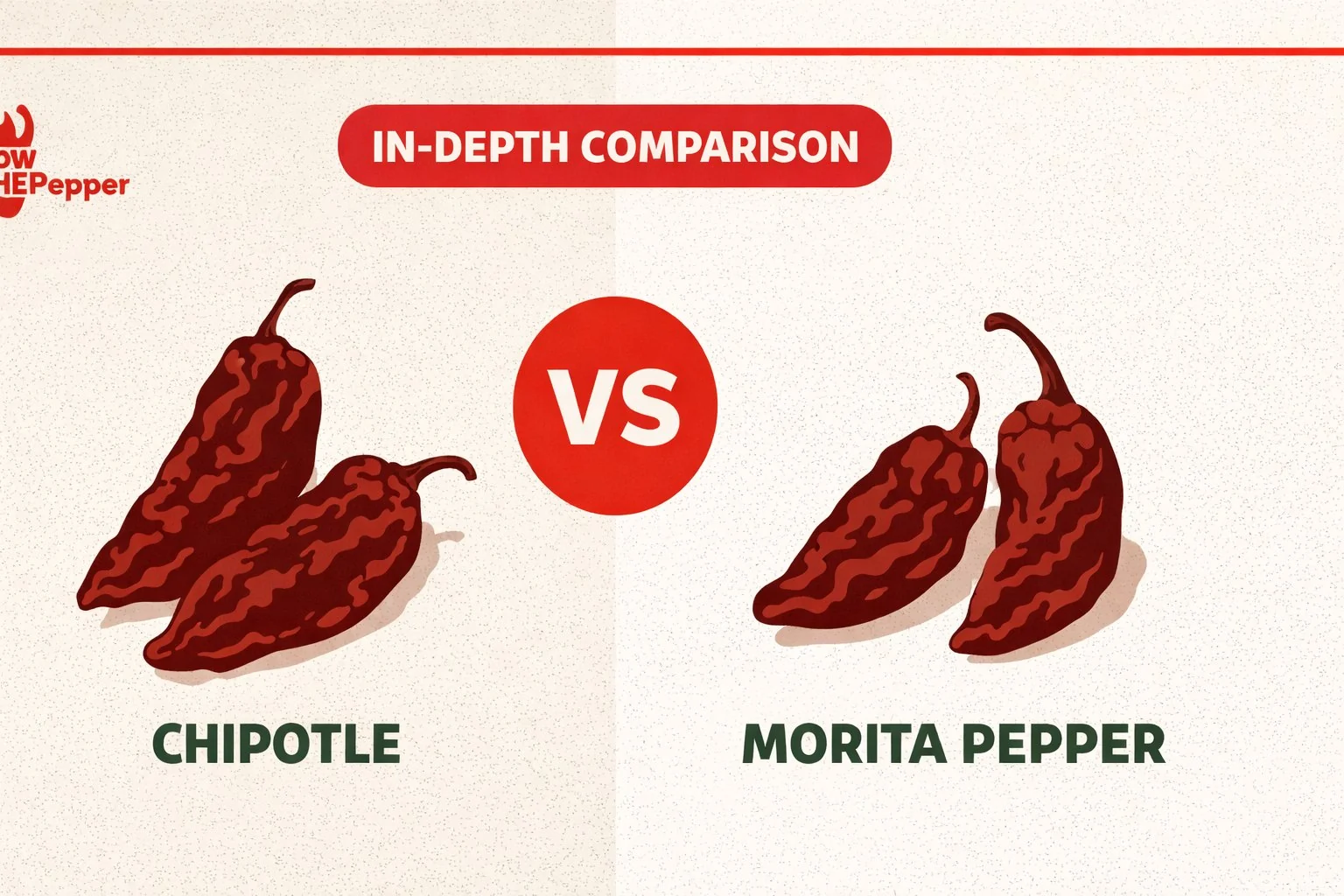
The USDA petition separates chipotle forms too. Morita is small, dark, and relatively flexible, while meco or chile ahumado is tan-gray, more heavily smoked, and often compared in shape to a cigar end.
Names on a package can hide those form differences.
Read the ingredient line and look at the pod, because a bag of dry moritas and a can of chipotles in adobo share a chile identity but do not enter a recipe in the same way.
Is Chipotle Hotter Than Guajillo?
The canonical ranges overlap at the bottom. This comparison uses 2,500-8,000 SHU for chipotle and 2,500-5,000 SHU for guajillo, so either batch can land near 2,500 SHU while chipotle has the higher ceiling.
That overlap does not create a one-pod conversion.
A guajillo is normally much longer and carries more skin and sauce-building material, while a compact chipotle can contribute more heat and smoke per pod.
When heat tolerance is the deciding constraint, start with half of the planned chipotle and reserve the rest until the sauce has simmered for 5 minutes. Guajillo can usually be adjusted by puree volume because its main job is often color and chile body.
Scoville figures describe capsaicinoid pungency, not smoke, acidity, salt, or texture. Canned adobo adds several of those variables, so its tablespoon cannot be inferred from the dry pod's SHU range.
Build A Clean Red Puree Before Adding Smoke
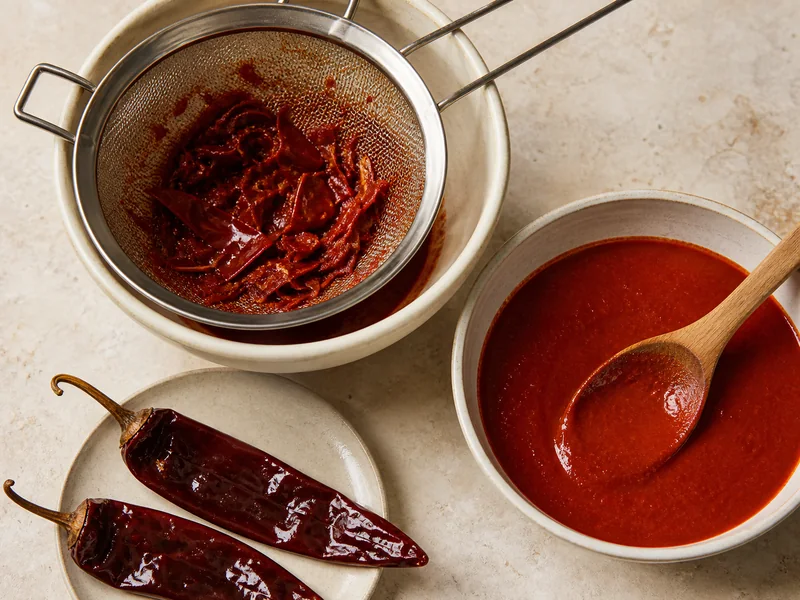
Guajillo earns its place through a smooth red puree, but the skin can remain noticeable after blending. INIFAP specifically recommends soaking the pods, grinding them thoroughly, and straining to remove excess epidermis.
- Remove stems and loose seeds from the guajillos.
- Press each pod on a dry skillet for 5-10 seconds per side, stopping before any surface blackens.
- Cover with hot water and soak for 20 minutes.
- Blend with fresh water or stock until the puree looks uniform.
- Press through a fine sieve when the sauce must be silky.
Straining is a texture decision rather than a ritual.
A rustic bean pot can accept small skin flecks, while enchilada sauce, consomm?, or a table sauce usually benefits from the smoother finish.
Add chipotle after the guajillo base is smooth enough to judge. Holding smoke until that point prevents a texture correction from turning into another chipotle addition.
If the puree tastes sharply bitter, check for blackened spots and taste a cooled spoonful of soaking liquid. Rebuild the liquid with fresh stock or water before adding sugar, because sweetness can hide bitterness without removing the scorched flavor.
How Does Chipotle in Adobo Change the Recipe?
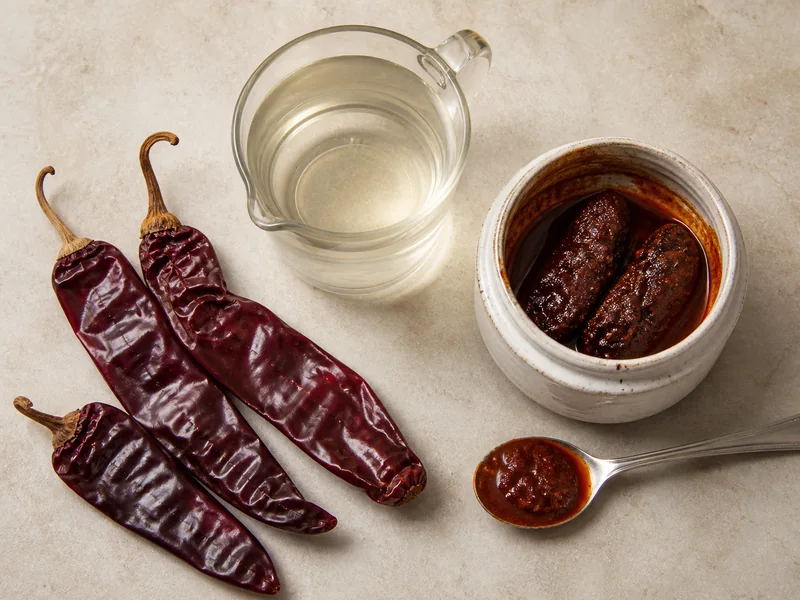
A whole dried guajillo contributes chile material and requires added liquid. Chipotle in adobo contributes a wet sauce that commonly includes tomato, vinegar, salt, garlic, and sometimes sugar.
Measure canned chipotle pods and adobo sauce separately.
One chopped pod controls the smoky chile dose, while a teaspoon or tablespoon of the surrounding sauce controls moisture and seasoning.
| Form | What enters the dish | First control |
|---|---|---|
| Whole guajillo | Red skin, mild chile flesh, and no added seasoning | Soak, blend, and strain |
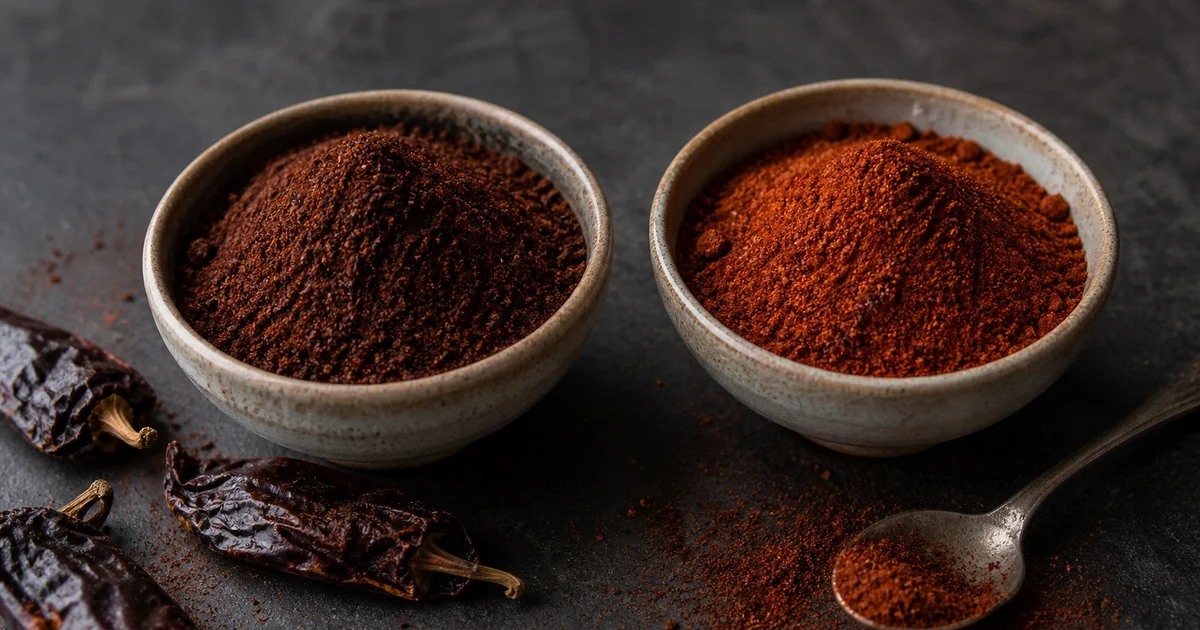
| Guajillo powder | Color and dried-chile flavor without puree body | Bloom briefly, then hydrate |
| Whole dried chipotle | Smoke, heat, and a small amount of chile flesh | Soak and add in fractions |
| Chipotle powder | Concentrated smoke and heat without liquid | Start at 1/4 teaspoon |
| Chipotle in adobo | Chile, smoke, acid, salt, tomato, and water | Separate pod from sauce |
That package check prevents the most common false equivalence in this comparison. Equal tablespoons can represent powder, puree, or seasoned liquid, so volume alone does not describe the ingredient.
When the sauce becomes too salty after canned chipotle, dilute a reserved portion with unsalted guajillo puree before changing the acid or heat. Adding more adobo to regain smoke would repeat the salt problem.
Which Dishes Need Guajillo and Which Need Chipotle?
INIFAP's guajillo guidance supports a broad red-sauce role across meat dishes, moles, adobos, and hot sauces. Chipotle belongs where that red base should also carry a clear smoked-jalapeno identity.
| Reader task | Better first move | Why it fits | Controlled start |
|---|---|---|---|
| Birria or chile colorado base | Guajillo | Builds red color and chile body without forcing smoke | Puree 4 soaked guajillos |
| Enchilada sauce | Guajillo | Strained puree stays clean and adaptable | Start with 3 guajillos per 2 cups liquid |
| Black beans or beef braise | Chipotle | Dense food distributes smoke and heat | Add 1 chopped adobo pod to 4-6 servings |
| Red meat marinade | Guajillo | The chile supports aromatics and acid | Use strained puree before final seasoning |
| Mayonnaise or crema | Chipotle | Fat spreads a small smoky dose evenly | Start with 1 teaspoon adobo sauce per cup |
| Pozole rojo | Guajillo | Red chile can lead without masking the broth | Add puree in stages and simmer |
A full birria recipe can determine the complete chile blend, liquid, and cooking time.
Within that formula, this comparison only decides whether guajillo or chipotle should carry the chile job.
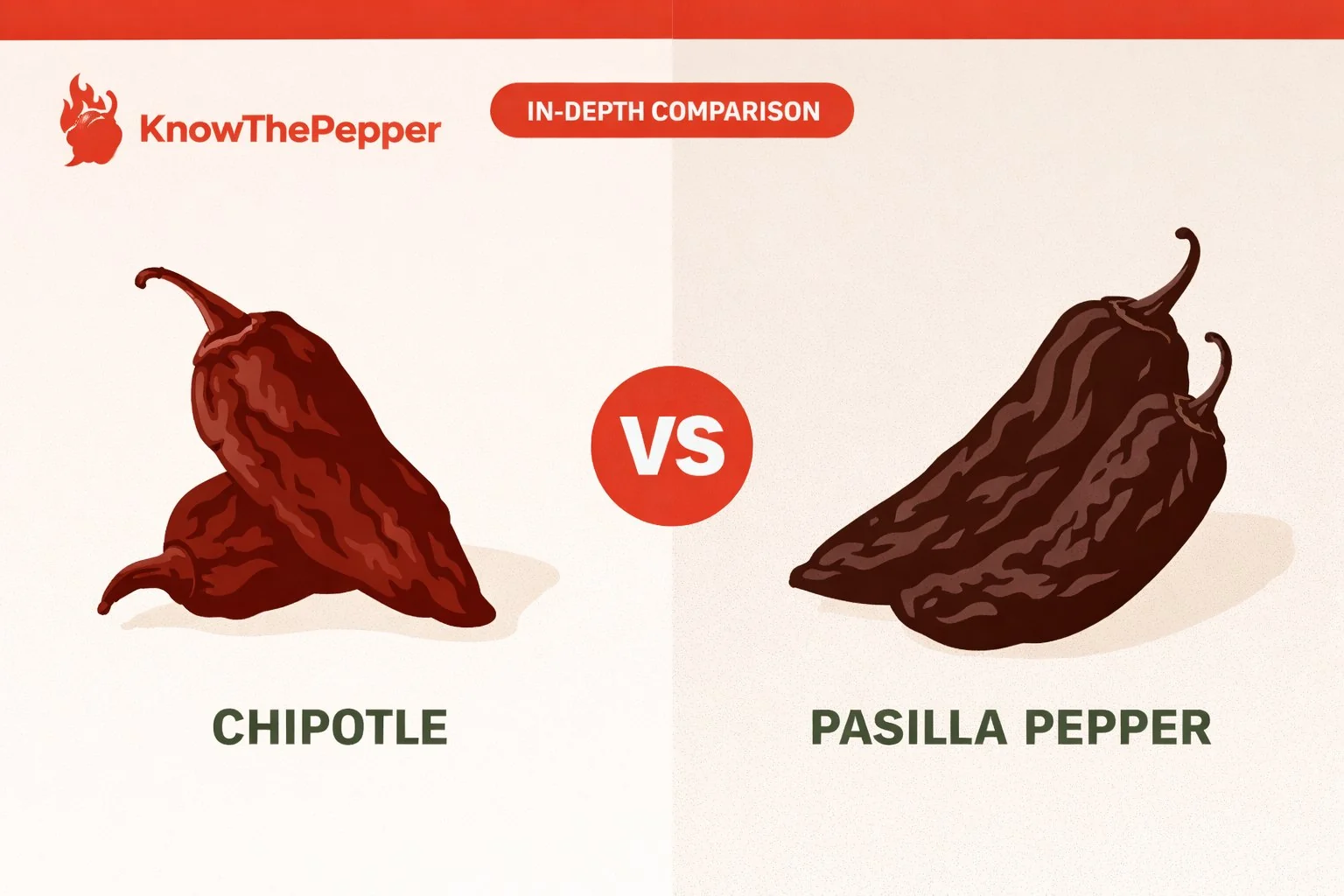
When the intended sauce needs raisin-like body rather than smoke, raisin-like body rather than smoke is the closer decision. When the question is earthiness against brightness, guajillo versus pasilla handles that separate pair.
Can Chipotle and Guajillo Replace Each Other?
A usable swap separates red body, smoke, heat, and seasoning.
Replacing only the chile name leaves at least one of those jobs uncovered.
| Missing ingredient | Start with | What remains missing | Correct next |
|---|---|---|---|
| 1 whole guajillo | 1/4 to 1/2 dried chipotle plus 2 tablespoons roasted tomato puree | Clean red color and guajillo volume | Add tomato before more chipotle |
| 1 teaspoon guajillo powder | 1/4 teaspoon chipotle powder plus 3/4 teaspoon sweet paprika | Guajillo's unsmoked fruit | Stop if smoke already leads |
| 1 whole dried chipotle | 1 guajillo plus 1/8 teaspoon smoked paprika | Chipotle heat | Add cayenne separately only if needed |
| 1 chipotle in adobo | 1/2 guajillo plus 1 teaspoon tomato puree | Adobo acid, salt, and smoke | Add vinegar, salt, and smoked paprika separately |
Because pod size and products vary, these measures are controlled starts rather than fixed equivalents.
Powder grind, adobo formula, and the amount of recipe liquid still change the final result.
For a sauce that cannot accept smoke, do not use chipotle to replace guajillo. The closer red-chile options preserve the sauce direction without changing the sauce's direction.
Can You Use Guajillo and Chipotle Together?
The two chiles can share one sauce when their roles remain unequal. Start with 4 whole guajillos to 1 whole chipotle, which gives guajillo enough volume to remain the base while chipotle supplies a smaller smoky edge.
Blend and strain the guajillos first.
Add half of the prepared chipotle, simmer for 5 minutes, then decide whether the sauce needs the remaining half.
Reserve the irreversible ingredient. More guajillo can restore color and body after dilution, but extra stock cannot remove an excessive smoke aroma.
Holding back chipotle protects the part of the balance that is hardest to reverse.
For powder, begin at 4 parts guajillo to 1 part chipotle. Mix the powders before blooming them so the chipotle does not collect in one hot, smoky patch.
How Do You Choose Good Dried Pods?
Useful guajillos should be deep red to red-brown, fairly smooth, and flexible enough to bend without shattering. INIFAP's description and Mexican quality specifications distinguish that normal uniform color from discoloration, burns, scrapes, or dusty damage.
Reject pods with visible mold, insect activity, a damp musty smell, or extensive pale patches.
Brittle guajillos can still color a sauce, but they often require longer soaking and more careful straining.
Choose dried chipotle by form and aroma. A dark morita should smell clearly smoky and chile-like, while a tan meco can carry heavier smoke without being defective merely because it is lighter.
Store both dry forms tightly closed in a cool, dark cabinet away from stove steam. Refrigerate opened adobo in a covered container and follow its maker's direction because a wet tomato-and-vinegar sauce does not share the storage behavior of a dry pod.
Buy for the next process. Whole guajillo suits a strained red puree, dry chipotle suits measured smoke without adobo seasoning, and canned chipotle suits a fast dish that can accept its wet sauce.