
Jalapeño vs Chipotle in Adobo vs Morita: What's the Difference?
Fresh jalapeño brings green crunch. Dried morita brings concentrated fruity smoke. Chipotle in adobo brings a soft smoked chile plus seasoned, acidic sauce.

Jalapeño
Fresh pepperChipotle in Adobo vs Morita
Two smoked formats- Texture: Crisp, water-rich flesh vs Dry chile solids or soft chile plus sauce
- Flavor: Green, grassy heat vs Fruity smoke or smoky, acidic seasoning
- Prep: Slice, dice, roast, or char vs Rehydrate morita. Spoon or blend canned chipotle
Jalapeño vs Chipotle in Adobo vs Morita at a glance
| Attribute | Jalapeño | Chipotle in Adobo vs Morita |
|---|---|---|
| Form | Fresh green jalapeño | Dried morita or canned chipotle in adobo |
| Texture | Crisp, water-rich flesh | Dry chile solids or soft chile plus sauce |
| Flavor | Green, grassy heat | Fruity smoke or smoky, acidic seasoning |
| Prep | Slice, dice, roast, or char | Rehydrate morita. Spoon or blend canned chipotle |
| Best job | Fresh salsa, garnish, stuffing | Morita for dry control. Canned for fast wet dishes |
Jalapeño and Chipotle in Adobo vs Morita side by side
Choose jalapeño when the dish needs crisp flesh and green flavor.
Choose dry control or a ready-seasoned wet ingredient before choosing the amount.
When Should You Use Jalapeño, Morita, or Chipotle in Adobo?
Use fresh jalapeño for green crunch and clean, grassy heat. Use dried morita for concentrated fruit and smoke with no built-in sauce.
Use chipotle in adobo when you want a soft smoked chile plus a seasoned, acidic liquid that can be blended or spooned straight into food.
All three belong to the jalapeño story, but they are different kitchen ingredients. Mexico's agriculture ministry describes chipotle as red jalapeño subjected to heat and smoke.
The Mexican chipotle quality standard defines it as whole red jalapeños that are dried or dehydrated and wood-smoked.
A fresh green pod has not undergone either transformation.
The canned product adds another layer. A label that says “chipotle peppers in adobo sauce” promises chiles packed in sauce.
It does not prove which commercial chipotle style was used.
Treat the can as chipotle plus its listed sauce unless the producer identifies morita.
One Pepper Line Three Packages
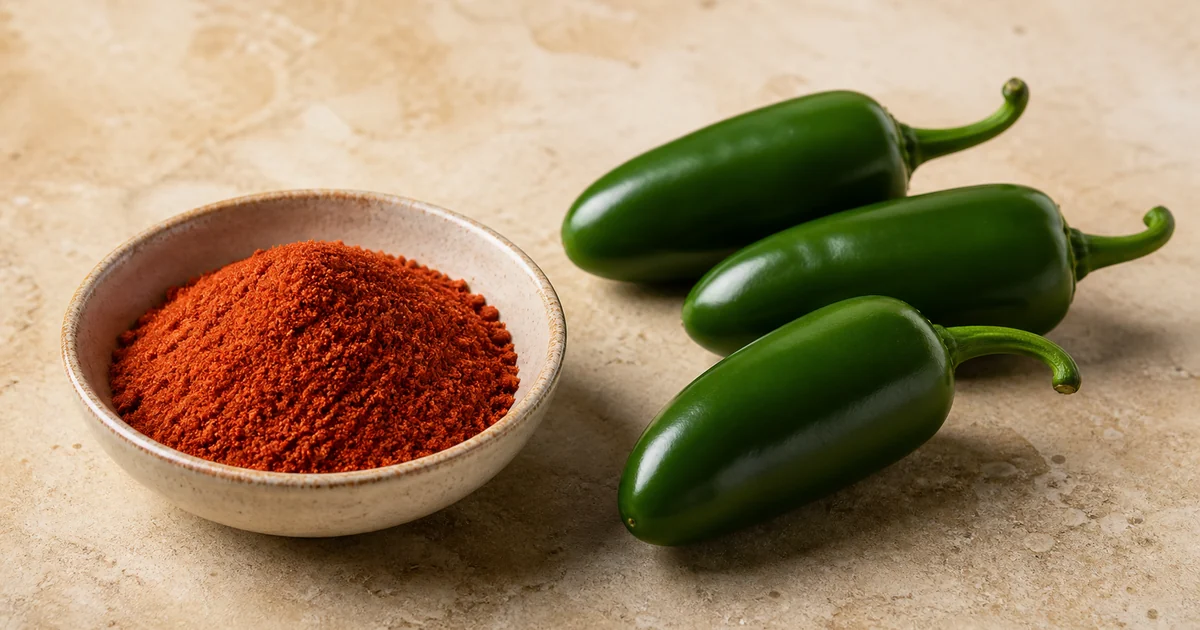
A fresh jalapeño is commonly harvested green before full red ripeness. Its thick, water-rich wall stays firm enough for rings, dice, roasting, and stuffing.
The jalapeño gives the familiar 2,500 to 8,000 Scoville Heat Unit range reported by Clemson Cooperative Extension.
Morita is sold as a whole dried and smoked chile. It is usually dark red to purple-brown and pliable rather than papery.
Smoke and dehydration remove the fresh pod's crunch and concentrate chile solids into a small ingredient that usually needs stemming and softening before blending.
Chipotle in adobo is already hydrated. The pod is soft, and the sauce may carry tomato, vinegar, onion, garlic, salt, sugar, or spices depending on the brand.
FDA ingredient-order rules make the exact label the authority because ingredients appear in descending order by weight.
| Ingredient | Package | First effect |
|---|---|---|
| Fresh jalapeño | Water-rich raw chile | Crunch, green aroma, fresh heat |
| Dried morita | Smoked dehydrated chile | Fruit, smoke, concentrated solids |
| Chipotle in adobo | Soft smoked chile and seasoned sauce | Smoke, moisture, acid, salt, body |
This form map is more reliable than treating chipotle and morita as automatic synonyms.
Is Morita Hotter Than Fresh Jalapeño?
Removing water changes how much pepper material fits into a spoon or gram. A fresh jalapeño contributes substantial water and firm tissue.
A dried morita contributes less water, so a small piece can deliver a dense combination of smoke, fruit, pigment, and capsaicinoids.
That concentration does not create a fixed heat ranking. NMSU explains that capsaicinoid levels vary with cultivar, genetics, fruit age, and growing conditions.
Drying changes weight, while a canned product distributes chile through sauce.
Comparing one whole pod with another mixes different sizes, moisture levels, and serving doses.
Control the result by tasting the actual lot. Taste fresh flesh near the placenta, a little rehydrated morita puree, and the canned sauce separately from a tiny piece of chile.
Each sample answers a different dose question.
Prepare Each Form Differently
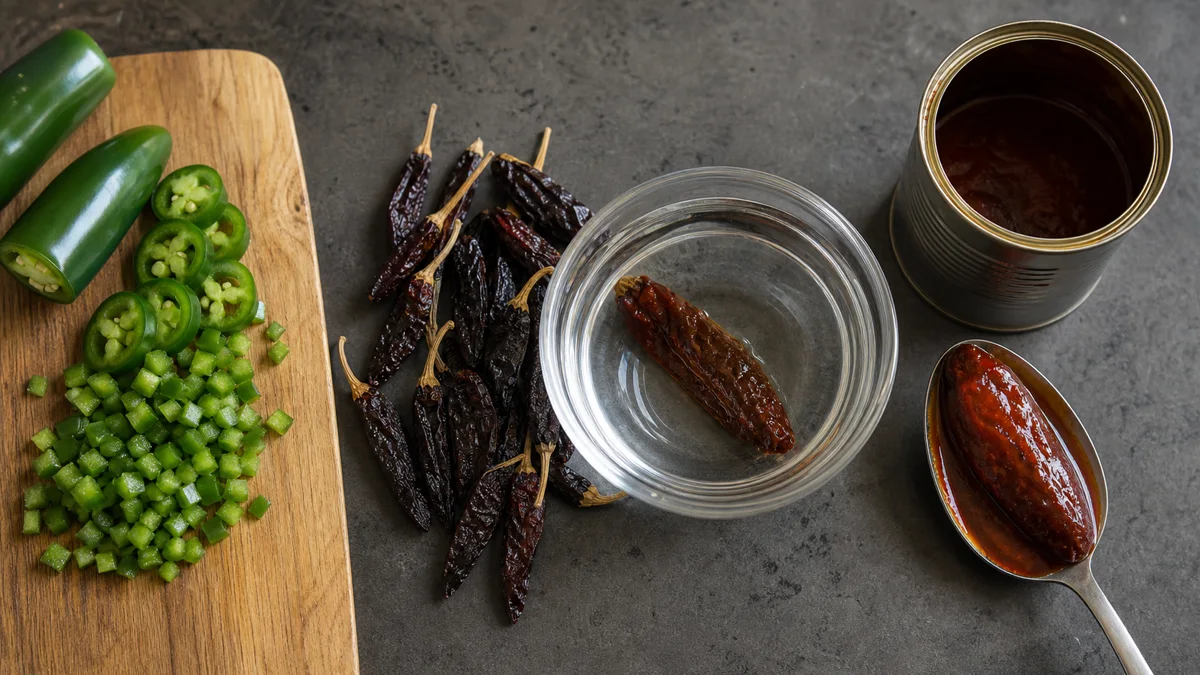
Fresh jalapeño needs knife or direct-heat preparation. Dice it for pico de gallo, cut rings for tacos, or blister the whole pod before peeling and chopping.
Keep some pale placenta for more heat.
Remove it when crunch matters more.
Morita needs cleaning and usually rehydration. Wipe the pod, remove the stem, and shake out loose seeds if a smooth sauce is the goal.
Toast only briefly because scorched skin tastes bitter.
Cover with hot water until pliable, then blend with fresh liquid, tomatoes, or broth. Taste the soaking water before deciding whether it belongs in the dish.
Chipotle in adobo needs portion control, not soaking. Mince a soft chile when visible pieces are useful.
Blend chile and sauce for an even marinade, soup base, or crema. Use only the sauce when the dish needs a small smoky-acidic adjustment without another whole pod.
The preparation-state image below makes the distinction practical: chop the fresh pod, rehydrate the dried pod, and spoon the canned product.
Match Form To Dish
Fresh salsa and raw toppings favor jalapeño because smoke and soft texture erase the crisp contrast. It also fits stuffed peppers, nachos, eggs, and quick pickles where the flesh remains visible.
Morita works when the cook wants to build salsa from scratch and control every liquid.
Blend it with roasted tomato, grind a fully dry pod for a rub, or add rehydrated puree to beans. Canned chipotle cannot enter a dry spice blend without turning it into a paste.
Chipotle in adobo is the fast route for marinades, braises, soups, taco fillings, mayonnaise, and crema. The soft chile disappears in a blender, while the sauce distributes smoke and seasoning without soaking.
- Need crunch: fresh jalapeño.
- Need a dry rub or independent liquid control: morita.
- Need a ready-to-blend smoky sauce: chipotle in adobo.
For the narrower dried-style distinction, see chipotle meco vs morita.
Can Morita or Chipotle Replace Fresh Jalapeño?
Replacing fresh jalapeño with either smoked option removes crunch and introduces smoke.
That can work in beans, soup, cooked salsa, or a marinade. It is a poor direct swap in pico de gallo, fresh relish, stuffed jalapeños, or any topping meant to stay crisp.
When morita replaces fresh jalapeño in a cooked dish, begin with a small amount of rehydrated puree.
Bell pepper or another mild fresh chile can restore missing bulk without doubling the heat. Add cooking liquid only after distributing the puree.
When chipotle in adobo replaces fresh jalapeño, reduce another wet or acidic ingredient before adding the sauce.
Check salt after simmering because commercial adobo is seasoned. The result will be smoky, soft, and sauce-like, not a smoked version of fresh dice.
Can Morita and Chipotle in Adobo Replace Each Other?
Dried morita can stand in for canned chipotle when the recipe allows a preparation step.
Rehydrate and puree it, then add tomato or cooking liquid for body, vinegar or citrus for tang, and salt after tasting. This rebuilds adobo's functions without pretending soaking water is sauce.
Chipotle in adobo can replace morita in wet salsa, marinade, soup, or braise.
Reduce another liquid, account for vinegar and salt on the label, and add the product gradually. It does not belong in a dry rub unless the recipe is redesigned as a wet paste.
Match function instead of using a universal pod ratio. Pod size varies, canned chiles carry sauce, and dried lots differ in moisture. Chipotle substitutes cover broader options when neither smoked form is available.
Smoke is the hardest element to subtract. If a dish already contains smoked meat, charred vegetables, or smoked paprika, use less smoked chile and build additional heat with fresh jalapeño.
Buy And Store By Form
Buy fresh jalapeños that are firm and free of wet soft spots.
Refrigerate them dry and use them while the walls still snap. Choose moritas that smell clean and smoky, bend slightly, and show no damp patches or fuzzy growth.
Store dried pods airtight, away from heat and light.
For cans, read the full product name and ingredients. “In adobo” signals a seasoned wet product, while “dried chipotle” or “morita” signals a whole dry chile. Follow the manufacturer's refrigeration instructions after opening, keep peppers covered with sauce, and use a clean utensil.
Freeze small portions when the package permits and the can will not be finished promptly.
Keep the form that matches the food you cook: fresh for raw texture, morita for dry control, and canned chipotle for speed.
Jalapeño vs Chipotle in Adobo vs Morita
Reach for Jalapeño when you want Fresh salsa, garnish, stuffing.
Reach for Chipotle in Adobo vs Morita when you want Morita for dry control. Canned for fast wet dishes.
Jalapeño vs Chipotle in Adobo vs Morita FAQ
- Mexico Ministry of Agriculture - Smoked and Dehydrated Chipotle
- Diario Oficial de la Federación - NMX-FF-108-SCFI-2007 Chipotle Standard
- Clemson Cooperative Extension - Pepper
- New Mexico State University - Chile Pepper Cultivars for New Mexico
- FDA Food Labeling Guide - Ingredient Lists
- GOYA - Chipotle Peppers in Adobo Sauce Ingredients