Is Picante Sauce the Same as Salsa or a Different Sauce?
Picante sauce is a type of salsa in everyday U.S. grocery use, usually a cooked tomato sauce with a smoother, more pourable texture. Salsa is the broader category, so it can be raw or cooked, thin or chunky, mild or hot. Choose by consistency and ingredient list, not by the word picante alone.

Picante Sauce
Smooth cooked salsaSalsa
The larger sauce family- Typical texture: Loose, blended, and easy to pour vs Ranges from thin and blended to thick and chunky
- Typical preparation: Usually cooked and commercially jarred vs May be raw, roasted, simmered, blended, or chopped
- Heat clue: The name means spicy, but products can be mild vs The pepper and heat label matter more than the category
Picante Sauce vs Salsa at a glance
| Attribute | Picante Sauce | Salsa |
|---|---|---|
| Category | A smooth, cooked salsa style in U.S. stores | A broad family of Mexican and Mexican-inspired sauces |
| Typical texture | Loose, blended, and easy to pour | Ranges from thin and blended to thick and chunky |
| Typical preparation | Usually cooked and commercially jarred | May be raw, roasted, simmered, blended, or chopped |
| Heat clue | The name means spicy, but products can be mild | The pepper and heat label matter more than the category |
| Best fit | Pouring, dipping, simmering, and mixing into cooked dishes | Depends on style, from fresh toppings to cooked sauce bases |
| Swap start | Begin 1:1 by volume, then correct the liquid | Begin 1:1 only when texture and ingredients are comparable |
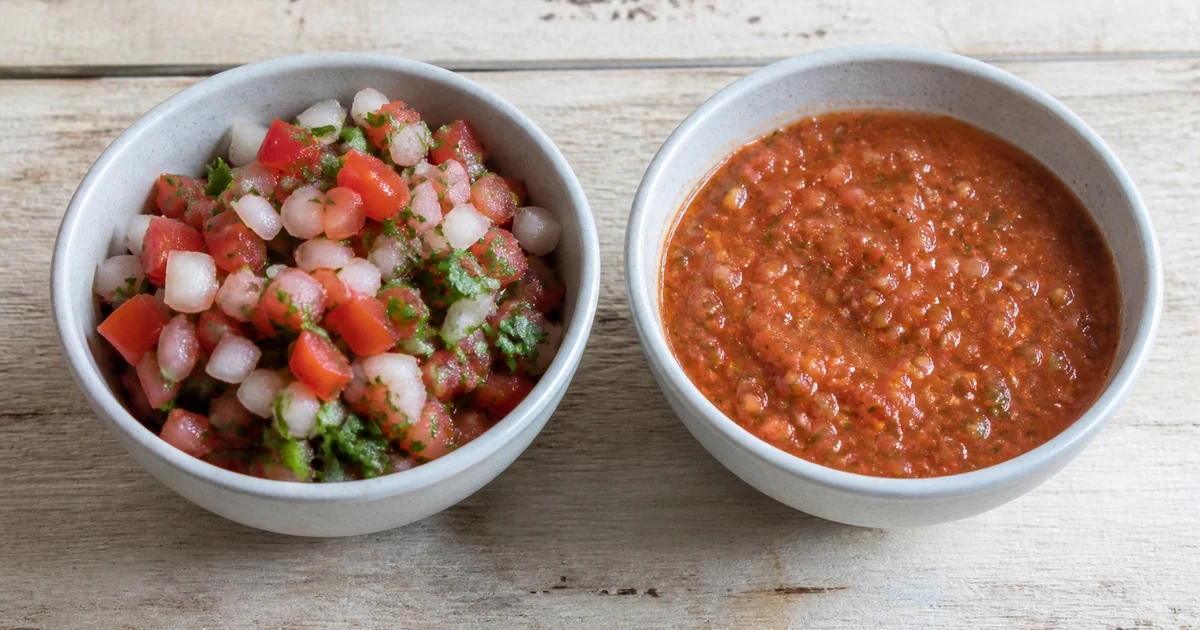
Picante Sauce and Salsa side by side
A practical label for a smooth tomato, onion, and chile sauce that moves easily from jar to bowl or skillet.
A broad category that includes smooth table sauces, roasted blends, tomatillo sauces, fruit salsas, and fresh chopped mixtures.
Is Picante Sauce a Type of Salsa?
Yes, in everyday American grocery use, picante sauce is best understood as one style within the larger salsa category, not a separate family of condiment. Merriam-Webster defines salsa broadly as a usually spicy sauce made with chopped tomatoes, onions, and peppers, while allowing other main ingredients.
The word on the jar still does not create a reliable texture standard. Pace describes its Picante Sauce as smooth and saucy, but another producer may use the term differently, so the ingredient list and visible consistency settle the practical question.
This distinction keeps the answer narrow. Fresh chopped pico de gallo is also commonly grouped with salsa, yet its crisp pieces and low free liquid give it a different cooking job from pourable picante sauce.
How Does Texture Separate Picante Sauce From Salsa?
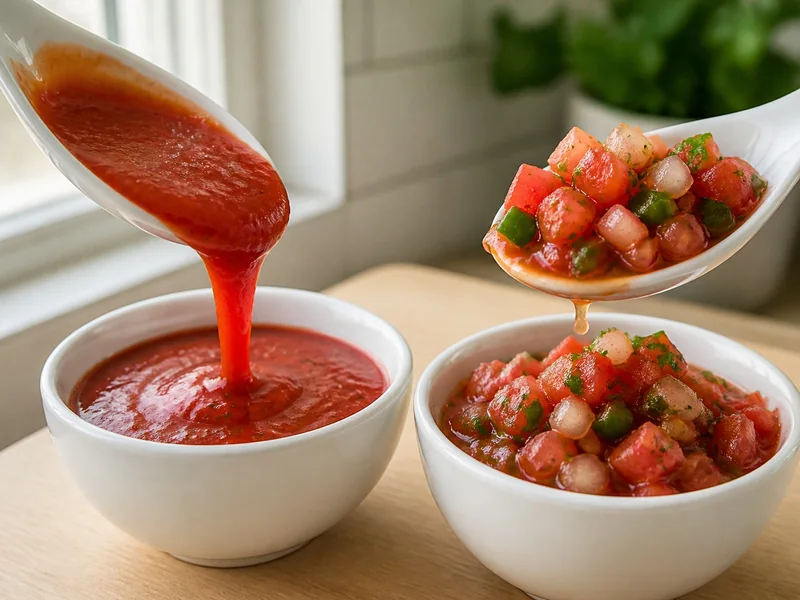
Texture changes what happens after the sauce leaves the spoon. A smooth picante sauce spreads through taco filling, rice, beans, or a skillet without leaving large pieces, while a chunky salsa keeps separate pieces of tomato, onion, and pepper in each bite.
University of Minnesota Extension explains that paste tomatoes such as Roma produce thicker salsa, while slicing tomatoes produce a thinner, wetter result. Draining chopped tomatoes or adding tomato paste can change the body, which is why two jars labeled salsa may differ more from each other than one salsa differs from picante sauce.
Preparation also affects the flavor. Cooking softens onion and tomato and reduces the raw edge, while roasting can add browned flavor and a fresh chopped mixture keeps sharper onion, chile, and herb notes.
Use a simple spoon check before choosing. If the sauce falls in a continuous stream, treat it as a pourable sauce.
If a spoon lifts distinct pieces with little liquid, treat it as a chunky topping.
Is Picante Sauce Hotter Than Salsa?
Cambridge translates the Spanish adjective picante as spicy or hot, but the name does not tell you how hot a supermarket sauce will taste. Pace sells Mild, Medium, and Hot Picante Sauce, so the heat label and pepper variety outrank the product name.
Pace says its range uses jalapeños and that its mild products can use a specially bred no-heat jalapeño. A salsa made with serrano or habanero can therefore be much hotter than a jar marked picante, while a mild roasted salsa may contain little perceptible heat.
Acid, salt, sugar, serving temperature, and the amount of sauce in each bite also change how heat registers. Compare products by the named chile and the manufacturer heat level, then taste a small amount before using a full recipe quantity.
What Ingredients Are in Picante Sauce and Salsa?
Pace Medium Picante Sauce lists crushed tomatoes, water, jalapeño peppers, onions, distilled vinegar, dehydrated onions, salt, natural flavoring, and garlic extract. That formula explains why it pours easily and tastes consistent from one spoonful to the next.
Salsa has no equally narrow ingredient pattern. Merriam-Webster notes that the main ingredient can be something other than tomato, and store shelves include tomatillo, chile, corn, bean, and fruit versions alongside tomato salsa.
Check the first five ingredients when a recipe depends on a particular result. Water near the top predicts a looser sauce, tomato pieces predict more texture, and vinegar or citrus shifts the acidity that reaches the finished dish.
Salt deserves a separate check because jarred sauces can contribute meaningful sodium. Pace Medium lists 250 milligrams of sodium per two-tablespoon serving, so season the food after the sauce is mixed in rather than salting the base first.
Ingredient order provides another useful clue because U.S. labels list ingredients by weight from most to least. In the Pace formula, crushed tomato and water appear before the vegetables, which supports the expectation of a loose, evenly blended sauce.
Compare nutrition panels at the same serving size when salt matters. Pace reports 250 milligrams of sodium in two tablespoons, and a recipe using one cup would add eight labeled servings before any other salt enters the pan.
Acid deserves attention apart from heat. Distilled vinegar gives the Pace product a predictable tang, while a salsa based on lime, tomatillo, or roasted tomato can move the finished dish toward a different balance even when both jars carry the same mild or medium label.
When Should You Use Picante Sauce Instead of Salsa?
Choose picante sauce
When the sauce must spread
Cooked fillings, queso, beans, rice, casseroles, marinades, and smooth dips benefit from a sauce that distributes tomato, chile, acid, and salt evenly.
Choose another salsa style
When texture must stay visible
Tacos, grilled meat, eggs, chips, and composed plates often benefit from distinct tomato, onion, tomatillo, chile, or herb pieces.
Pace specifically recommends its smooth Picante Sauce for topping and cooking, and the brand uses it as a measured skillet ingredient in dishes such as chickpea stew and sloppy joes. Those examples show the product acting as a seasoned cooking liquid rather than a garnish alone.
For chips, neither label wins automatically. A loose sauce coats a chip evenly but can drip, while a chunky salsa gives a more substantial scoop and may slide from a thin chip.
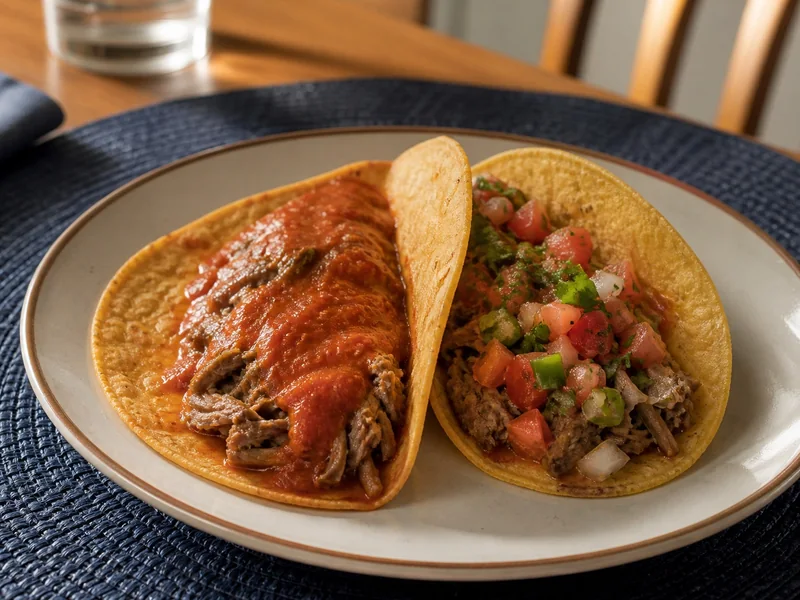
For tacos and eggs, decide whether the sauce should become part of the food or sit on top as a fresh contrast. Use the smoother sauce for coverage and a chunkier or raw salsa when separate texture is the point.
Cooking time changes which texture matters. Add a smooth sauce early when it should season beans, meat, or rice and lose some water during simmering, but reserve a chunky salsa for the end when the pieces should remain identifiable.
Queso and bean dips expose the difference quickly. A loose picante sauce spreads flavor through the mixture, while a watery salsa can thin melted cheese and a very chunky one can create pockets of tomato rather than an even base.
Cold dishes reward the opposite choice when contrast matters. Crisp onion and tomato can lift eggs, grilled meat, or tacos, while smooth picante sauce is more useful when every bite needs the same amount of chile and acid.
Can You Substitute Picante Sauce for Salsa?
Start with a 1:1 swap by volume only when both products are tomato-based and reasonably close in heat. This is a starting conversion for the cook, not a claim that every salsa has the same density or seasoning.
When picante sauce replaces a chunky salsa in a cooked dish, hold back another liquid in the recipe by about one to two tablespoons per cup of sauce. Simmer uncovered if the pan still looks loose, then adjust salt only after the sauce reduces.
When chunky salsa replaces picante sauce, blend it briefly for a smooth dip or cooking base. If the mixture becomes too thick, add water, stock, or lime juice one tablespoon at a time until it spreads as the recipe requires.
Do not swap by label alone
A tomatillo salsa changes color and acidity, a fruit salsa adds sweetness, and a raw pico-style salsa adds crisp solids. Match the base ingredient, heat, and consistency before relying on the 1:1 starting point.
For cold serving, there is no reduction step to hide excess liquid. Drain a very wet salsa before spooning it onto tacos, or serve a thin picante sauce in a deeper bowl where drips are less likely.
How to Fix a Picante or Salsa Swap That Went Wrong
A poor swap usually reveals itself before serving, and the correction depends on what changed. Fix the physical problem first, then adjust heat, acid, and salt after the sauce reaches the intended consistency.
- Too thin: hold back another liquid by one to two tablespoons per cup, or simmer the dish uncovered before adding more seasoning.
- Too thick: add water, unsalted stock, or lime juice one tablespoon at a time, choosing the liquid that already belongs in the recipe.
- Too chunky: pulse the salsa briefly instead of extending the blend until it becomes foamy or fully puréed.
- Too smooth: add drained diced tomato, onion, or fresh chile only when the dish can accept a raw garnish.
- Too hot: increase the unsalted tomato or other non-spicy base rather than adding plain water that weakens every flavor.
- Too salty: dilute with an unsalted base and postpone any additional salt until the final reduction is complete.
- Too acidic: add more of the dish's neutral base before reaching for sugar, because sweetness changes the flavor as well as the perceived acidity.
These are measured starting corrections, not universal formulas. A cold dip cannot reduce on the stove, and a casserole may already contain stock or tomato, so use the ingredient that preserves the dish's existing direction.
What Can You Buy When the Store Has No Picante Sauce?
The label is easiest to find in the U.S. aisle built around Pace-style products. Pace says David Pace developed its branded Picante Sauce in 1947, which helps explain why shoppers often associate the term with a smooth jarred red sauce rather than every salsa that tastes spicy.
If the store has no product labeled picante, look for a smooth or restaurant-style red salsa with tomato, jalapeño, onion, and acid near the top of the ingredient list. That match matters more than finding the same word on the front label.
- Look through the jar: choose small, soft pieces and enough liquid to pour.
- Read the first ingredients: match tomato, chile, onion, and vinegar or citrus.
- Match the heat label: mild, medium, or hot is more useful than picante alone.
- Avoid a flavor detour: roasted, smoky, fruit, or tomatillo salsa will change the dish on purpose.
Availability works in the other direction too. When a recipe simply asks for salsa, picante sauce is suitable only if a smooth cooked texture fits the dish, because it cannot provide the crisp pieces of a fresh topping.
Shelf position can also signal the likely role. A refrigerated fresh salsa usually preserves more raw texture, while a shelf-stable jar beside cooking sauces is more likely to deliver the soft, processed consistency expected from picante sauce.
The front label still cannot settle the choice by itself. Turn the jar, check whether the first ingredients and visible pieces match the recipe, and choose the closest physical behavior before comparing brand names.
Why Do Store-Bought and Homemade Salsa Store Differently?
A factory-sealed jar is processed and labeled for a specific shelf life, but it normally needs refrigeration after opening according to its package directions. FDA labeling guidance identifies salsa among products that may carry a refrigerate-after-opening statement to slow deterioration.
Homemade salsa needs a different decision. University of Minnesota Extension says an untested creative salsa should be refrigerated for up to one week or frozen, while shelf-stable home canning requires a research-tested formula.
The safety reason is measurable. Extension guidance says tomato salsa needs added acid and a tested process to reach the pH 4.6 or lower boundary that prevents botulism growth, and it warns against increasing low-acid peppers, onions, or garlic in a canning formula.
Texture adjustments that are harmless at the table can be unsafe before canning. Do not add flour or cornstarch to thicken home-canned salsa, because Extension warns that a thickened product may not heat evenly enough during processing.
Picante Sauce vs Salsa
Reach for Picante Sauce when you want Pouring, dipping, simmering, and mixing into cooked dishes.
Reach for Salsa when you want Depends on style, from fresh toppings to cooked sauce bases.