
Chili Paste vs Chili Sauce: Which Form Fits the Dish?
Chili paste usually adds concentrated chile solids with little liquid, while chili sauce adds pourable seasoning plus water, vinegar, sugar, or salt. Because the labels overlap, choose by the first ingredients, consistency, and cooking step rather than the category name alone.

Chili Paste
Concentrated chile solidsChili Sauce
Pourable seasoning- Main cooking effect: Adds chile solids with little liquid vs Adds seasoning plus moisture
- Best timing: Often early, with controlled frying vs Often during simmering or near the finish
- Label risks: Oil, salt, fermentation, spices vs Water, vinegar, sugar, salt, thickeners
Chili Paste vs Chili Sauce at a glance
| Attribute | Chili Paste | Chili Sauce |
|---|---|---|
| Default texture | Dense and spoonable | Pourable or easily spread |
| Main cooking effect | Adds chile solids with little liquid | Adds seasoning plus moisture |
| Best timing | Often early, with controlled frying | Often during simmering or near the finish |
| Label risks | Oil, salt, fermentation, spices | Water, vinegar, sugar, salt, thickeners |
| Directional swap | Loosen gradually with suitable liquid | Reduce other liquid and correct seasoning |
| Universal ratio | No | No |
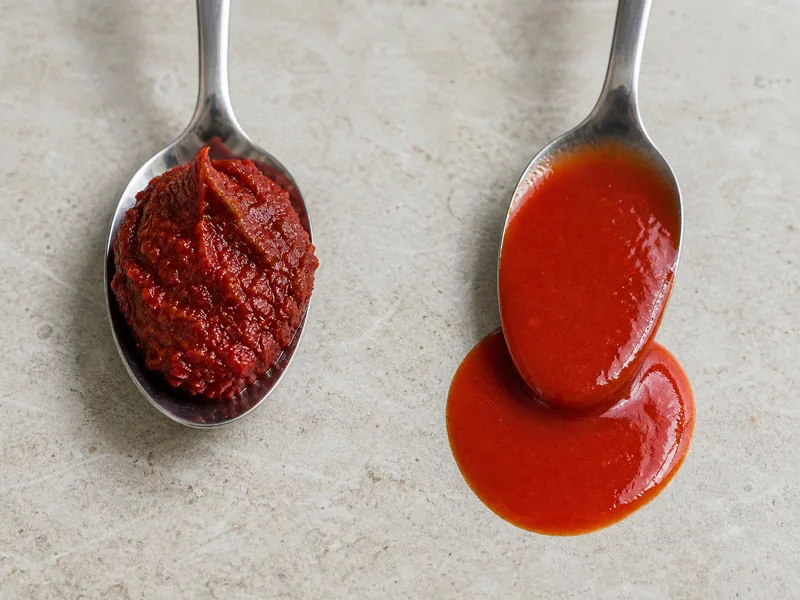
Chili Paste and Chili Sauce side by side
Choose paste when body and concentrated chile flavor must enter without thinning the dish.
Choose sauce when the recipe benefits from flow, ready-made acidity, sweetness, or salt.
What Is the Difference Between Chili Paste and Chili Sauce?
Choose chili paste when a dish needs concentrated chile solids with little added liquid. Choose chili sauce when the cook needs a pourable condiment or an ingredient whose water, vinegar, sugar, and salt already belong in the result.
The names do not settle the choice. The Codex Alimentarius standard for chili sauce permits ground pulp, flakes, pieces, seeds, and crushed pulp, so products sold as sauce can range from thin and strained to chunky and spoonable.
Use the label and a spoon test together: the ingredient list explains what enters the dish, while mound versus flow predicts how much liquid and solid material it contributes.
Read The First Ingredients And Watch The Spoon
Start with the first three ingredients because FDA labeling rules place ingredients in descending order by weight. A sauce that begins with water or vinegar will dilute and acidify differently from a product that begins with chiles.
Added sugar changes the cooking margin.
A sweet sauce can glaze quickly, but it can also scorch before dense food cooks through. Salt near the front of the list means the jar should season the dish before extra soy sauce, fish sauce, or table salt is added.
Then tilt or spoon the product. A paste that holds a ridge supplies more solids, while a sauce that runs off the spoon spreads with less stirring and changes the dish's liquid balance sooner.
Thickness still does not prove chile concentration because starch, gums, fruit puree, or cooked vegetables can create body.
Is Chili Paste Hotter Than Chili Sauce?
Form does not predict heat. A spoon of mild, sweet paste can be gentler than a few drops of concentrated pepper sauce, so the chile variety, amount of chile in the formula, serving size, and balancing sugar or acid matter more than whether the product pours.
The label gives clues without giving a complete Scoville answer. Chiles near the front suggest a larger share by weight, while water, fruit, or sugar ahead of them can spread the heat across more product.
Serving dose changes the comparison again. TABASCO lists Original Red at 2,500 to 5,000 SHU, but a recipe may use it by the dash.
A milder paste used by the tablespoon can deliver more total chile material to one serving.
Flavor follows the non-chile ingredients as much as consistency. Vinegar makes heat feel sharp and bright, sugar rounds it and supports glazing, oil carries spices and coats the palate, and fermentation adds savory or tangy notes that plain dilution cannot reproduce.
Choose by the dominant flavor job: fresh chile, vinegar tang, fermented savoriness, sweetness, garlic, or spice. Then adjust heat through dose instead of assuming paste means stronger.
Water And Chile Solids Change The Pan
Chile solids provide body, color, and particles that can toast against hot oil. Water lowers the pan temperature until it evaporates.
That difference decides whether a stir-fry sears or simmers.
A dense paste can fry briefly with aromatics to distribute flavor, but a watery sauce is better added after the ingredients brown. If the sauce enters first, vegetables can release more water before their surfaces color.
Braises and soups are more forgiving because they already contain liquid. Paste adds concentration without moving the broth level much, while sauce can supply both seasoning and part of the cooking liquid.
Cold use reverses the advantage: sauce coats dumplings or noodles immediately, while paste needs water, oil, citrus juice, or vinegar to become a dressing or dip.
When Should You Add Chili Paste or Chili Sauce?
Use paste early when brief frying will deepen its aromatics and the recipe has enough fat to prevent sticking. Keep the heat moderate when the label lists sugar, fermented beans, or ground spices.
Use sauce during simmering when its liquid belongs in the recipe. For glazing, add a sweet or thickened sauce near the end so it can cling without burning during the full cooking time.
Marinades require checking acid and salt before volume.
Sauce distributes easily but may already contain both, while paste needs loosening before it can coat food evenly. Finishing favors sauce because diners can drizzle it, whereas paste works best as a small dab or a separately loosened condiment.
When Can't You Swap Chili Paste and Chili Sauce?
Do not swap by category when the product supplies structure the recipe cannot lose. A paste that thickens a dry stir-fry coating, binds a sandwich spread, or forms the base of a curry paste cannot be replaced by thin sauce through liquid adjustment alone.
Fermented identity is another stop sign. When gochujang or a fermented chile-bean paste provides sweetness, salt, and savory fermentation together, a simple vinegar hot sauce changes the dish rather than substituting for it.
The reverse failure appears in glazes. A sauce formulated with sugar and thickener can set into a glossy coating, while a chile-heavy paste loosened with water may add flavor but never create the same surface.
Table-condiment flow can also be essential. A sauce meant for drizzling across tacos or dumplings should spread in small doses.
A dense paste leaves concentrated pockets unless it is deliberately turned into a new condiment.
Acid, sugar, and salt are not interchangeable with water. If correcting the substitute would require rebuilding several of those controls, choose a closer product family instead.
Can You Use Chili Paste Instead of Chili Sauce?
When paste replaces sauce, start with less paste than the missing sauce volume and loosen it with a liquid already appropriate to the dish. Water preserves the jar's basic flavor, stock adds savoriness, and vinegar or citrus restores acidity.
There is no universal ratio. Sambal oelek, gochujang, and harissa differ in salt, sugar, fermentation, oil, and aromatics.
For a stir-fry sauce, whisk paste with the recipe's stock or water before it reaches the hot pan. For a cold dip, oil and acid may be more useful because they change both flow and flavor.
Check the mixture before it touches the food: correct salt first, then sweetness and acidity, and heat last.
More paste can be added after full distribution, but excess salt or fermented flavor is difficult to remove.
Can You Use Chili Sauce Instead of Chili Paste?
When sauce replaces paste, reduce another liquid or allow extra simmering time so the dish does not become thin. Add the sauce in stages because vinegar, sugar, and salt can shift the balance before enough chile flavor arrives.
A thin vinegar-forward hot sauce may provide heat and acid but almost no body.
In a braise, that may be acceptable because the sauce can reduce with the cooking liquid. In a dry stir-fry or sandwich spread, another ingredient must supply the missing texture.
Sweet chili sauce creates a different problem: its sugar and starch can add shine and body while making the result sweeter and less chile-forward. Add it late, then reduce other sweeteners before increasing the sauce.
If the original paste was fried at the start, build the aromatic base first and add the replacement sauce only after searing.
Correct Texture First, Then Salt, Acid, and Heat
Correct substitutions in the order that affects the cooking method first. In a stir-fry, fix thickness and water before salt or heat so the pan can still sear.
In a braise or soup, liquid is less risky. Match the core flavor, let the dish simmer, then correct salt, acidity, sweetness, and heat after reduction changes their concentration.
For a glaze, solve sugar and cling before chile intensity. Add the substitute late, watch browning, and adjust heat only after the coating reaches the intended consistency.
For a marinade, check acid and salt before adding more product because both alter the whole formula. Loosen a paste separately, coat one test piece, and reserve extra heat for the final sauce when possible.
Cold dips expose every imbalance immediately. Mix the substitute into the full dairy, oil, or puree base, correct texture, then acidity, salt, sweetness, and heat in that order.
Are Sambal Oelek and Sriracha Pastes or Sauces?
Named products prove that paste and sauce are overlapping commercial descriptions. Huy Fong calls Sambal Oelek a full-bodied sauce with a simple chile focus, while its Sriracha is a smooth, squeezeable sauce made from pureed chiles.
Roland Foods lists oil, water, red pepper, garlic, cumin, lemon juice, and sugar in one coarse harissa spread. That product brings fat, aromatics, acid, and sweetness before a cook changes its consistency.
TABASCO Original Red sits at another edge of the category. Its official label lists distilled vinegar, red pepper, and salt, and the company gives a 2,500 to 5,000 SHU range, so it provides sharp acid and doseable heat with almost no paste-like body.
Gochujang, thin pepper sauce, sweet chili sauce, sambal, harissa, and Sriracha should therefore be compared as formulations, not category synonyms. The exact jar owns the final decision.
What Can Replace a Named Chili Paste or Sauce?
When the named product is absent, match its cooking role before matching thickness. Decide whether the recipe needs a fried aromatic base, fermented seasoning, acidic hot sauce, sweet glaze, dipping condiment, or visible chile solids.
Next compare the first ingredients. A fallback for a chile-forward sambal should not begin with sugar if the dish needs clean chile flavor, while a fallback for sweet chili sauce must replace sweetness and coating power as well as heat.
Then compare flow at the amount the recipe uses. A thick product can be loosened, but that does not erase garlic, oil, fermentation, fruit, or spices already in the jar.
Choose the candidate that requires the fewest corrections. If every available option changes body, acid, sugar, and identity, use the closest canonical substitute guidance or change the dish rather than force a category swap.
Buying and Storing Chili Paste and Chili Sauce
Buy a small jar when fermentation, sweetness, or high heat could dominate the dish. A clear container can reveal separation, seeds, pulp, and flow that a front label does not explain.
Storage instructions belong to the manufacturer because formulas and processing methods differ. Refrigerate after opening when directed, use clean utensils, and discard a jar with mold, swelling, leakage, or an unexpected odor.
University of Minnesota Extension advises monitoring acidity during home fermentation, so an improvised fermented paste needs a tested preservation process rather than a commercial jar's storage habits. Buy by ingredient order and consistency, then store by the package.
Chili Paste vs Chili Sauce
Reach for Chili Paste when you want Often early, with controlled frying.
Reach for Chili Sauce when you want Often during simmering or near the finish.
Chili Paste vs Chili Sauce FAQ
- FDA Food Labeling Guide - Ingredient Lists
- FDA - Types of Food Ingredients
- Codex Alimentarius CXS 306-2023 - Standard for Chili Sauce
- Roland Foods - Harissa Red Chili Spread
- TABASCO - Original Red Sauce Product Information