

Sambal Oelek Substitutes for Stir-Fries, Soups, and Sauces
For the closest quick replacement, mash 2 teaspoons chopped red chile with 1/4 teaspoon vinegar and a pinch of salt for each tablespoon of sambal oelek. Chili-garlic sauce is faster, but reduce garlic elsewhere.
Heat at a glance
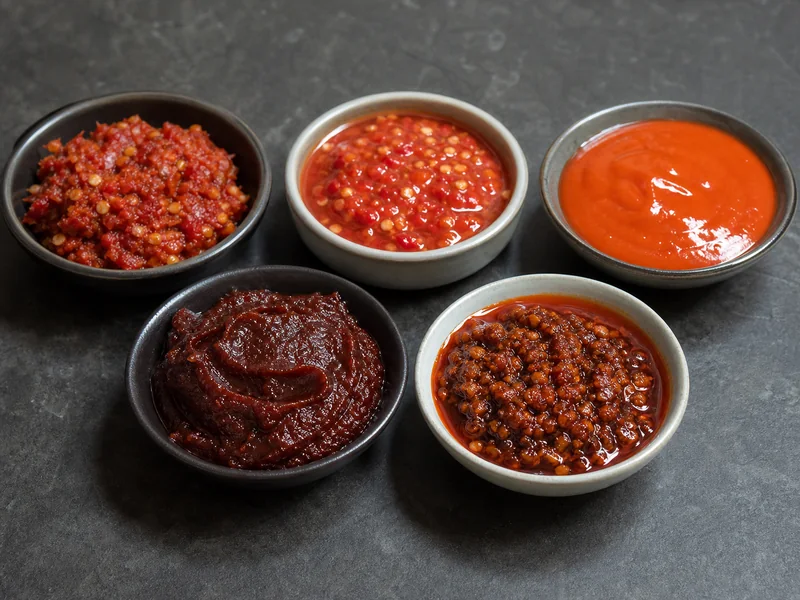
Choose the Swap from Texture and Seasoning
Sambal oelek works as concentrated chile with a coarse, spoonable texture. The Codex standard for chilli sauce recognizes that products can vary in texture and added ingredients, so a substitute should match the specific jar and the recipe rather than the category name alone.
| What the recipe needs | Best starting substitute | Main correction |
|---|---|---|
| Coarse chile in a stir-fry | Fresh chile mash | Add salt after cooking |
| Fast jarred option | Chili-garlic sauce | Reduce garlic |
| Smooth glaze | Sriracha | Reduce sugar |
| Thick marinade | Gochujang blend | Add water and vinegar |
| Warm-spiced sauce | Harissa blend | Account for cumin and caraway |
| Pantry paste | Hydrated pepper flakes | Allow 10 minutes to soften |
Texture often decides before heat. A smooth sauce disappears into mayonnaise and glaze.
A coarse mash leaves visible chile pieces on noodles or eggs.
Fresh chile also contributes water, while gochujang contributes starch and sriracha contributes sugar.
Taste the available sambal if possible. Some jars are sharply acidic, some salty, and some relatively plain.
Match chile first, then correct acid and salt in small amounts.

Seven Sambal Oelek Swaps by Texture and Seasoning
Fresh red chile mash
Closest MatchA coarse mash of fresh red chile, vinegar, and salt replaces sambal oelek's central qualities without adding garlic or sugar. It also lets the cook choose a mild Fresno-type pepper or a hotter Thai chile.
This is the best option for stir-fries, noodle sauce, soup, eggs, marinades, and table service. The homemade sambal method gives a larger-batch process when more than a few tablespoons are needed.
Chili-garlic sauce
Runner-UpChili-garlic sauce has a similar coarse texture and chile base, making it the fastest jarred replacement. Garlic is the main difference, and some products contain more sugar or acid.
It fits stir-fries, dumpling sauce, noodles, fried rice, and marinades. In a dish where garlic should stay quiet, a fresh chile mash or crushed-flake slurry is cleaner.
Sriracha
Also GreatSriracha sauce contributes fermented chile, garlic, sugar, and vinegar in a smooth, pourable form. It brings sweetness and no coarse pepper pieces.
Use it in glazes, mayonnaise, dipping sauces, marinades, and smooth soup. In a dry stir-fry, add sriracha after liquid because its sugar can scorch in a hot empty pan.
Gochujang loosened with vinegar
Gochujang is thick, sweet, fermented, and built on rice and soybean as well as chile. It can replace sambal in a glaze or marinade, but it changes the flavor direction more than sriracha.
The gochujang substitute reference explains its dense fermented body. Use this swap with grilled meat, roasted vegetables, or a rich noodle sauce.
Skip it in a clear soup or bright dipping sauce.
Harissa thinned with vinegar
Harissa supplies chile paste, garlic, oil, and often cumin, coriander, or caraway. Those warm spices make it a useful but clearly different replacement.
Choose it for lentils, roasted vegetables, grilled meat, tomato sauce, or a marinade. The harissa replacement guide helps when the available paste is itself missing.
Avoid this swap in a Southeast Asian dish where caraway or cumin would stand out.
Red pepper flakes with vinegar
Crushed red pepper creates a coarse, seed-rich texture after hydration. It lacks fresh chile flesh, so the paste is drier and sharper.
This pantry mix works in soup, stew, noodles, and cooked sauce. Grind the flakes briefly when large skins would remain tough.
The result is less suited to a raw table condiment.
Cayenne with roasted red pepper
Roasted red pepper provides wet pulp and sweetness, while cayenne supplies clean heat. The combination makes a smoother and milder-looking paste than sambal.
Use it in smooth soup, sauce, mayonnaise, or a mild marinade. Increase cayenne by pinches, not another spoonful, because its heat rises faster than the red-pepper body.
Add the Substitute at the Right Stage
The cooking stage controls whether the replacement tastes fresh, toasted, sweet, or burnt.
- Add fresh chile mash early for a cooked sauce, or late for a brighter table condiment.
- Add chili-garlic sauce after aromatics so its garlic does not scorch.
- Add sriracha with liquid because sugar burns on a dry hot wok.
- Add gochujang after loosening it so the thick paste spreads.
- Add hydrated flakes early enough for the skins to soften.
- Add harissa according to the dish. Long cooking softens its warm spices.
For a stir-fry, clear a small space in the pan, add the paste for 10 to 15 seconds, then toss it through the food. For soup, dissolve it in a ladle of hot broth before returning it to the pot.
This prevents one concentrated red pocket.
A table sauce needs no frying. Mix, rest, and taste it with the food rather than from the spoon because rice, noodles, and unsalted vegetables dilute heat and acid differently.

Repair Sweetness, Salt, Acid, and Thickness
Correct one variable at a time after the substitute is mixed into the dish.
Add fresh chile, vinegar by the drop, or more unsweetened base.
Increase the unsalted food or liquid before adding acid.
Add chile pulp or a little oil, not another sweet sauce.
Loosen with water, stock, or recipe liquid one teaspoon at a time.
Garlic is not easily removed once present. When chili-garlic sauce tastes aggressive, enlarge the dish and hold back other garlic rather than trying to cover it with sugar.
Warm spices in harissa behave similarly.
More chile will not erase cumin or caraway.
Heat comes last. Once salt, acid, sweetness, and texture are balanced, add Thai chile heat or cayenne by the pinch if the dish remains mild.

Replacements That Add Too Much Sugar or Spice
Do not replace sambal oelek with ketchup and hot sauce. The combination adds sugar, tomato, and thin vinegar without the dense chile texture.
Do not use straight cayenne 1:1. One tablespoon would add far more heat and no moisture or pulp.
Do not treat every red chile paste as neutral. Curry paste, harissa, gochujang, and Thai roasted chile paste carry aromatics, fermentation, sugar, or oil that may redirect the dish.
Make a Five-Minute One-Tablespoon Batch
A mortar gives the best coarse texture, but a knife and bowl work for a single serving.
2 tsp finely chopped red chile + 1/4 tsp rice vinegar + pinch of salt + up to 1 tsp water
Mash until the chile releases juice but still shows small pieces. Rest for five minutes, taste, and use 1:1.
Add water only when the mixture is too dry to spread.
This is a same-day cooking mixture. Refrigerate leftovers in a clean covered container and follow conservative fresh-food handling rather than treating vinegar and salt as a preservation process.
The chile paste storage guide explains why formulas and labels matter.
Sambal Oelek Substitution Questions
- Codex Alimentarius - Standard for Chilli Sauce CXS 306-2023
- Huy Fong Foods - Sambal Oelek
- KnowThePepper - How to Make Sambal Oelek
- KnowThePepper - Homemade Sriracha Sauce