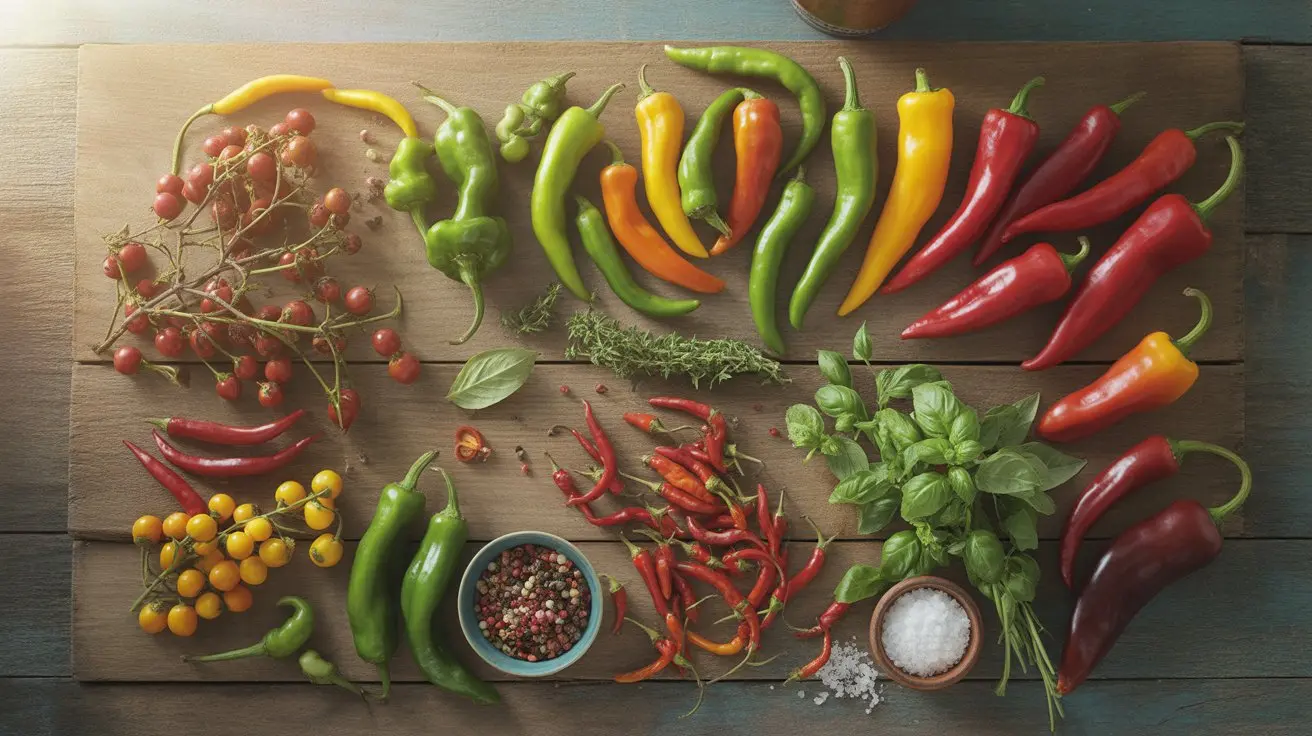
Does Chili Paste Need Refrigeration? Classify It First
The product category determines which storage rule applies. An opened commercial jar follows its own label, while a fresh homemade paste defaults to refrigeration and homemade chile or garlic submerged in oil requires a stricter refrigerated time-control branch.
Classify the Paste Before Choosing a Shelf
Chili paste does not have one universal storage rule because the name covers products with different water, oil, acid, salt, protein, and fermentation profiles. Identify the product type and package state before deciding between pantry and refrigerator.
An intact commercial jar sold from a room-temperature shelf can usually remain in a cool, dry pantry until opening, subject to its label and date.
After opening, the printed instruction on that exact jar controls the next step.
A coarse vinegar-style paste, fermented bean paste, oil-rich chili crisp, shrimp paste blend, and fresh pepper puree should not inherit one another's rules. The ingredient list helps classify the product, while the storage statement supplies the actual commercial direction.
When the direction is missing or cannot be read, refrigerate the closed jar at 40°F or below, which is 4°C or below, and contact the manufacturer. Cold storage is a conservative fallback, not proof of a universal shelf life.
Which Storage Rule Applies to Each Chili Paste Type?
This table separates the major branches without pretending that every brand in a branch has the same formula.
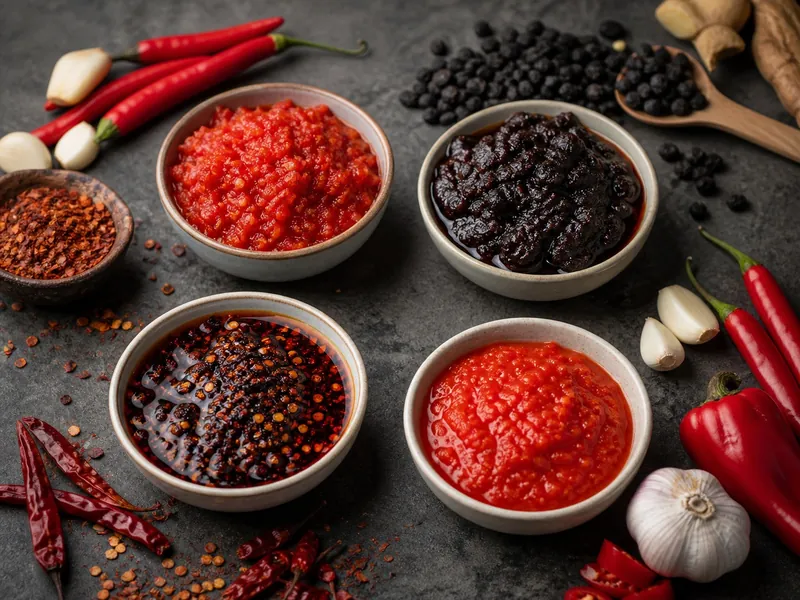
It sends each paste to the evidence that can actually answer its storage question.
| Paste type | Clue in the jar | After opening | Decision owner |
|---|---|---|---|
| Commercial vinegar-style paste | Chile solids in an acid-forward base | Follow the label | Manufacturer |
| Commercial fermented bean paste | Beans or soybean paste with salt and chile | Follow the label | Manufacturer |
| Commercial chili crisp or oil paste | Solids submerged in visible oil | Follow the label exactly | Manufacturer |
| Paste with shrimp, fish, or meat | Animal ingredient in the list | Refrigerate when directed and never generalize from plant-only paste | Manufacturer and food-safety guidance |
| Fresh homemade pepper paste | Fresh produce blended at home | Refrigerate promptly | Tested recipe or cold-storage guidance |
| Homemade garlic or chile in oil | Low-acid pieces submerged in oil | Refrigeration and strict time control | Extension food-safety guidance |
The label owns a commercial jar. A tested recipe owns a home-preserved jar, while a fresh homemade paste defaults to cold storage.
Let Package State and Label Override Assumptions
Before opening, inspect the lid, safety seal, glass, seams, and any flexible pouch. New Mexico State University says leaking, swelling, broken seals, loose lids, and cracked containers are reasons not to use packaged food.
Do not open a damaged package merely to smell the contents.
Return it when possible, or discard it according to local waste guidance without tasting.
After opening, distinguish a mandatory statement from a quality suggestion. “Keep refrigerated” and “refrigerate after opening” are direct instructions, while “refrigerate for best quality” describes a benefit that should still be taken seriously for a slow-use paste.
Do not calculate permission for pantry storage from the order of ingredients. A label does not disclose every processing control, and two jars with peppers, salt, vinegar, and garlic may have different finished acidity and heat treatment.
General guidance on whether hot sauce goes bad can explain quality change, but it cannot replace a chili paste label.
The paste category carries enough variation that product-specific evidence must stay first.
Does Homemade Chili Paste in Oil Need Refrigeration?
University of Minnesota Extension says homemade chili oil, garlic-in-oil, and other oil-based products require refrigeration for safety. Oil creates a low-oxygen environment, and low-acid garlic, herbs, or chiles submerged in oil can support Clostridium botulinum growth when low acidity and room temperature combine.
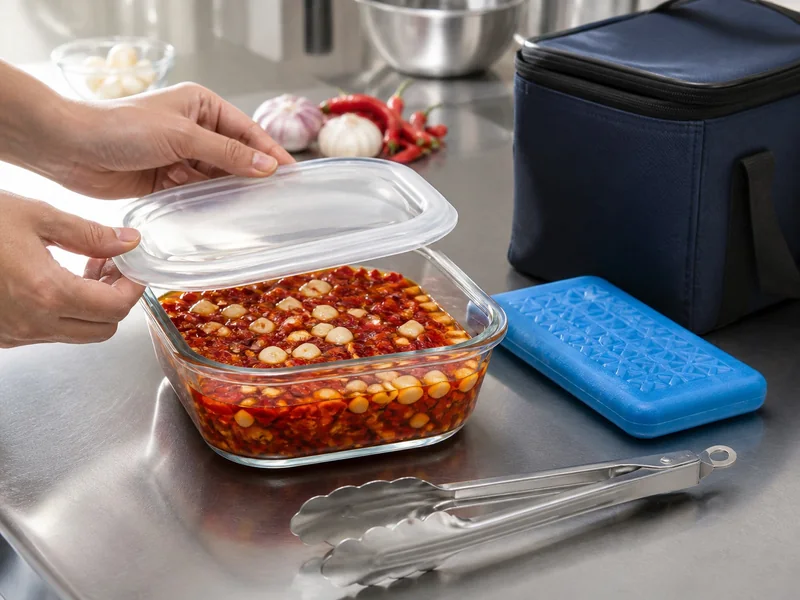
Homemade chili or garlic in oil is not a pantry paste. Prepare a small batch, move it into a clean covered container, refrigerate it promptly, and follow a research-based time limit for the exact recipe.
A commercial oil-rich paste may use controls that a home cook cannot see or reproduce.
Follow its label rather than assuming the visible oil makes it unsafe or the sealed factory jar makes it shelf-stable after opening.
UMN also notes that acidified hot sauce requires pH 4.6 or less plus adequate heat treatment. That pairing is the reason sour taste or a single casual pH reading cannot validate a homemade paste for room-temperature storage.
The separate guide to chili garlic sauce refrigeration covers a narrower product. This oil branch is stricter because low-acid pieces under oil create a specific low-oxygen concern.
Treat Fresh Homemade Paste as Perishable
A blender mixture of fresh peppers, garlic, onion, herbs, or fruit has no commercial process behind it.
Refrigerate it in a clean covered container unless a recognized preservation authority supplied and you followed a complete tested process.
FoodSafety.gov says perishable food should not remain at room temperature for more than two hours, reduced to one hour above 90°F or 32°C. Apply that boundary to a fresh homemade paste rather than inventing a longer window from its heat or saltiness.
A refrigerator recipe and a canning recipe are not interchangeable. Changing vegetable quantity, acid, water, jar size, or processing time can invalidate the process that made a tested preserve safe.
A homemade hot sauce intended for refrigerator storage should remain cold even when it looks similar to a retail paste.
The appearance of a vacuum seal also cannot substitute for a validated formula and process.
Chile heat, sour flavor, oil coverage, and a tight lid do not prove shelf stability. Use a complete tested process or keep the fresh paste refrigerated.
Is Bubbling in Chili Paste Fermentation or Spoilage?
A deliberately fermented paste starts with a defined salt concentration, container method, temperature range, and endpoint. Its bubbles belong to a planned process rather than an ordinary jar changing during storage.
Making a fermented hot sauce is a deliberate, controlled process, but it does not authorize spontaneous counter fermentation in an unrelated commercial or fresh paste.
Once a finished fermented product is packaged, its own recipe or label still controls storage.
Unexpected swelling, spurting, pressure, or bubbling in a paste that was not meant to remain active is a discard signal. Do not release pressure and taste the product to decide whether the activity is benign.
Fermented aroma is also product-specific. A normal smell for salted soybean-chile paste may be abnormal for fresh pepper puree, which is why the original baseline and label matter.
Protect a Thick Paste from Spoon Contamination
Use a clean, dry spoon to portion paste into a separate dish, then close the main jar.
Thick paste clings to utensils and jar threads, so direct dipping can return food, water, or sauce from the meal.
Never pour an unused serving back into the original container. Once the portion has touched hands, meat, rice, noodles, or a used utensil, it no longer shares the jar's handling history.
Wipe the rim with a clean paper towel and make sure the lid seats correctly. Keep refrigerated jars covered because FoodSafety.gov recommends sealed containers or bags for refrigerated food.
Mark the opening date when the product moves slowly and rotate older jars forward.
New Mexico State University recommends first-in, first-out storage so old products do not disappear behind new ones.
- Dry utensil keeps added water out of the paste.
- Separate serving dish protects the main supply.
- Clean rim supports a complete closure.
- Opening date preserves the storage history.
- Interior refrigerator shelf avoids frequent door-temperature swings.
When Should You Throw Out Chili Paste?
New Mexico State University tells consumers not to use packaged food with leaking, staining, swelling, serious dents, cracks, broken seals, loose lids, foul odor, or color change. For a glass chili paste jar, the applicable package warnings are leaking, swelling, cracks, a broken seal, or a loose lid.
Visible mold means discard the entire soft, wet paste rather than scraping the surface. Unexpected gas, spurting, or a clearly changed texture also ends the storage decision without a taste test.
Oil separation can be normal in some chili crisps, while it may signal an unwanted change in another product. Check the label for mixing instructions and compare with the product's established appearance rather than applying one visual rule to every paste.
A normal smell cannot prove safety, especially when required refrigeration was ignored or the storage history is unknown. NMSU permits smelling questionable food but says never to taste it, and its practical rule is to throw it out when in doubt.
- Commercial unopened paste follows package condition, date, and shelf-stable status.
- Commercial opened paste follows its own after-opening label.
- Oil-rich homemade paste receives refrigeration and strict time control.
- Fresh homemade paste is treated as perishable.
- Damaged or abnormal paste is discarded without tasting.
Does Chili Paste Need Refrigeration? Classify It First FAQ
- University of Minnesota Extension - Chili oil and oil-based products
- New Mexico State University - Storing Food Safely
- FoodSafety.gov - FoodKeeper App
- FoodSafety.gov - Maintain Food Safety While Cutting Food Waste
- Ohio State University Extension - Pantry Food Storage