Does Chili Garlic Sauce Need Refrigeration After Opening?
The after-opening instruction on the jar owns the answer because commercial chili garlic sauces use different formulas and processes. Refrigerate at 40°F or below when the label requires it, choose refrigeration when the direction is unclear, and treat a fresh homemade batch as refrigerator food unless a recognized authority supplied the complete tested shelf-stable process.
Use the Label as the Storage Rule
The after-opening instruction on the jar comes first.
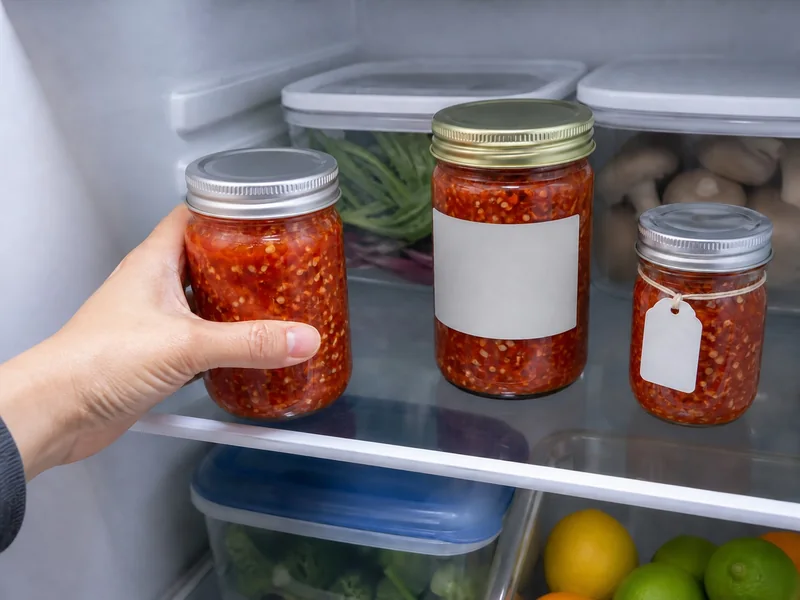
Refrigerate when it says to refrigerate, and choose refrigeration when the direction is missing, damaged, or unclear because formulations differ by brand.
An unopened commercial bottle sold as shelf-stable can stay in a cool, dry pantry until opening, subject to its printed date and package condition. Opening removes the factory seal and starts the product-specific instruction on the label.
Look on the back panel, neck band, lid, and manufacturer website when the front label says nothing. Keep the product name, package size, and lot code available if you contact the company because similarly named sauces can use different formulas.
A dented lid, broken safety button, leak, swelling, or dried product under an unopened cap changes the decision before storage begins.
Return or discard a damaged package instead of assuming refrigeration can correct a failed seal.
FoodSafety.gov sets the refrigerator boundary at 40°F or below, which is 4°C or below. Put the closed jar on an interior shelf rather than the warmer door when you want the most stable temperature.
Unopened shelf-stable commercial sauce goes in the pantry. After opening, follow that jar's label, and refrigerate whenever the direction is absent or uncertain.
| Sauce | Before opening | After opening | Decision owner |
|---|---|---|---|
| Shelf-stable commercial jar | Cool, dry pantry | Follow the label | Manufacturer instructions |
| Commercial jar with unclear label | Pantry while sealed and sound | Refrigerate | Conservative fallback |
| Commercial jar labeled keep refrigerated | Refrigerate | Refrigerate promptly | Manufacturer instructions |
| Fresh homemade sauce | Not a pantry product | Refrigerate promptly | Tested recipe or cold-storage guidance |
| Properly home-canned tested recipe | Follow the tested process | Refrigerate after opening | Published process authority |
Do Not Borrow Another Sauce Label
One brand's storage answer cannot prove the answer for another chili garlic sauce. Garlic amount, pepper solids, salt, acid, preservatives, packaging, and thermal processing can all change the finished product.
The same limit applies when comparing a coarse paste with a thin table sauce.
Our guide to whether hot sauce goes bad explains general quality and spoilage questions, but the label on this jar still owns its after-opening storage.
Do not transfer a rule from sriracha merely because both sauces contain red chiles and garlic. The separate question of whether sriracha needs refrigeration belongs to that product and its own manufacturer guidance.
A restaurant squeeze bottle also does not establish a home-storage rule because the bottle may be refilled daily, held under a food-service plan, or contain a different product. Use evidence from the package in your hand.
Ingredient lists can explain why two sauces taste different, but they do not reveal the complete validated process. A consumer cannot calculate shelf stability from the apparent amounts of vinegar, salt, garlic, or preservatives on an ingredients panel.
Likewise, chile heat does not preserve a sauce by itself.
The burn from capsaicin affects the eater, while product safety depends on formulation, processing, packaging, and storage conditions.
Is Refrigeration About Safety or Quality?
A mandatory refrigeration statement is a storage instruction, while a suggestion to refrigerate for best quality addresses flavor, color, or texture. Read the exact wording instead of turning every cold-storage recommendation into the same claim.
Cold storage can slow darkening and flavor change, but that benefit does not authorize pantry storage when the label requires refrigeration. A jar can also become unsafe without developing a smell that a person recognizes.
FoodSafety.gov's FoodKeeper was developed with USDA FSIS and Cornell to provide storage guidance across many foods. Use it when the product category is covered, then defer to a more specific manufacturer direction when one is printed.
Use an appliance thermometer when the refrigerator setting is uncertain. FoodSafety.gov recommends a constant 40°F or below, and a closed middle shelf usually changes temperature less than the door during frequent opening.
Quality dates and safety instructions perform different jobs.
A best-quality date does not cancel a refrigeration direction, and refrigeration does not extend a jar beyond a manufacturer limit that says to discard it.
- Keep refrigerated means the jar belongs in the refrigerator.
- Refrigerate after opening begins when the seal is broken.
- Refrigerate for best quality describes a quality benefit, but cold storage remains the cautious fallback.
- No readable direction means refrigerate and contact the manufacturer for a product-specific answer.
Does Homemade Chili Garlic Sauce Need Refrigeration?
A fresh homemade mixture of peppers, garlic, salt, and vinegar does not become shelf-stable because a commercial jar looks similar. Home recipes vary in acidity, ingredient ratio, heat treatment, container sanitation, and final pH.
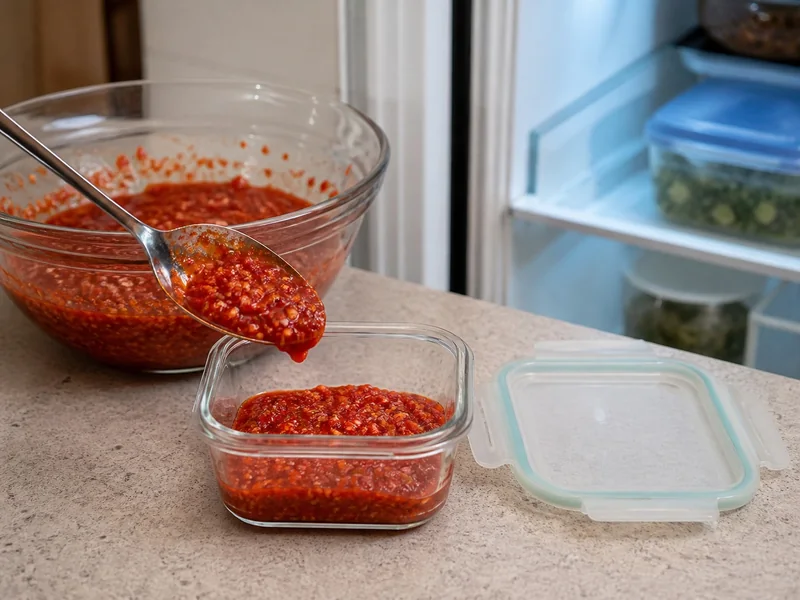
An untested homemade batch belongs in a covered refrigerator container as soon as practical. FoodSafety.gov applies a two-hour room-temperature limit to perishable foods, reduced to one hour above 90°F or 32°C.
A tested canning process is a different category. The National Center for Home Food Preservation publishes a cayenne pepper sauce with fixed ingredient amounts and a defined boiling-water process, which demonstrates why safe shelf storage depends on the whole formula and procedure.
Do not change garlic, vegetable, vinegar, water, jar size, or processing time in a tested canning recipe unless that authority permits the change.
A homemade hot sauce made for refrigerator use should stay refrigerated rather than being treated as a canning formula.
Fresh sauce and tested shelf-stable sauce are different products. A sealed lid does not turn an untested recipe into a safe pantry preserve.
Fresh garlic and peppers also make an improvised recipe different from a dry spice blend. Adding extra vinegar by taste or checking one strip of pH paper does not reproduce a tested process with controlled ingredient ratios, heat treatment, jar size, and processing time.
If a tested recipe leaves a small amount after filling the prescribed jars, follow that authority's leftover direction. The National Center for Home Food Preservation tells cooks to refrigerate leftover hot pepper relish rather than treating the remainder as shelf-stable.
Keep the Jar Closed and the Serving Utensil Clean
Use a clean, dry spoon to move sauce into a separate dish, then close the jar promptly. Dipping a utensil that touched meat, noodles, dumplings, or another sauce can introduce food and moisture that the original formulation did not contain.
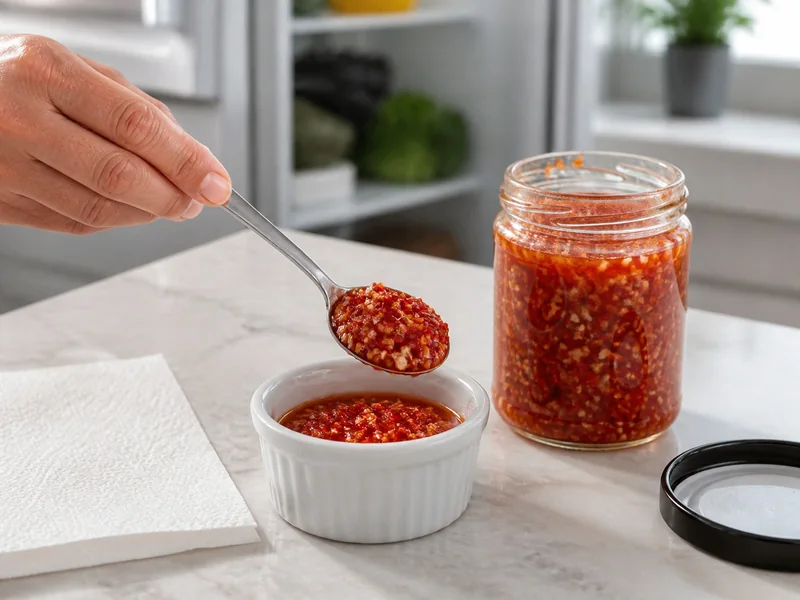
Wipe residue from the rim with a clean paper towel before replacing the lid.
Thick pepper and garlic pieces can interfere with a clean closure and leave material exposed around the threads.
FoodSafety.gov recommends storing refrigerated foods in covered containers or sealed bags. A tightly closed original jar follows the same practical goal by protecting the sauce from drips, odors, and repeated contact inside the refrigerator.
Write the opening date on a removable tag if the sauce moves slowly. The date does not replace the label limit, but it prevents a jar from becoming an unknown leftover.
Do not pour sauce from a serving dish back into the original jar. Once it has touched another food, hands, or a used utensil, it no longer has the same handling history as the product left in the container.
For a shared meal, portion only what the table is likely to use and return the closed jar to the refrigerator.
This keeps the main supply cold and reduces repeated utensil contact.
How Do You Know Chili Garlic Sauce Has Gone Bad?
Discard sauce with visible mold, a swollen or leaking package, a broken seal before first opening, unexpected spurting, or a container that no longer closes correctly. Do not taste it to decide whether the abnormality is harmless.
Unexpected bubbling or pressure is also a warning when the product was not sold as an active fermented sauce. A deliberately fermented hot sauce follows a controlled process, which is different from an ordinary jar changing on its own.
Color darkening, slight oil separation, or settling can be quality changes, but appearance alone cannot establish safety. Compare the product with its label description and discard it when the change is unexplained or accompanied by package damage, mold, leaking, or off odor.
A normal smell cannot prove that the sauce is safe. When storage history is unknown or label-required refrigeration was ignored for an extended period, disposal is more prudent than a taste test.
Do not scrape mold from the top and keep the rest of a soft, wet sauce. Mold growth can extend below the visible surface, so the entire jar should be discarded.
People who are pregnant, older, very young, or immunocompromised should not be asked to accept an uncertain storage history. FoodSafety.gov identifies these groups as more vulnerable to serious foodborne illness.
Use This Order Every Time You Open a New Jar
First identify whether the product was sold shelf-stable or refrigerated. Second read the exact after-opening statement, then place the jar in a refrigerator at 40°F or below whenever the label requires it or gives no clear answer.
Third keep the rim clean, use a separate clean utensil, close the lid, and record the opening date when useful. These steps protect the manufacturer's storage assumptions from avoidable contamination.
For homemade sauce, skip the commercial-label branch and refrigerate promptly unless a recognized authority supplied the complete tested shelf-stable process. Do not infer safety from vinegar taste, chile heat, garlic pungency, or a vacuum-looking lid.
When a power outage or long trip interrupts required refrigeration, consult the manufacturer or FoodSafety.gov guidance for the closest exact product category. Do not invent a recovery time from the fact that the jar still feels cool.
The decision ends with the specific package, not a universal chili garlic sauce lifespan. That boundary keeps a useful quality tip from becoming an unsupported safety promise.
- Unopened commercial shelf-stable sauce stays in a cool, dry pantry.
- Opened commercial sauce follows its own label.
- Missing or unclear direction defaults to refrigeration.
- Fresh homemade sauce is refrigerator food.
- Abnormal package or sauce is discarded without tasting.
Does Chili Garlic Sauce Need Refrigeration After Opening? FAQ
- FoodSafety.gov - FoodKeeper App
- FoodSafety.gov - Cold Food Storage Chart
- FoodSafety.gov - Maintain Food Safety While Cutting Food Waste
- National Center for Home Food Preservation - Cayenne Pepper Sauce
- National Center for Home Food Preservation - What's In Your Choice Salsa?