

What to Use Instead of Sriracha: Another Brand, Then Chili Garlic Sauce
Use another sriracha brand when only Huy Fong is missing. If no sriracha is available, chili garlic sauce is the best single-jar substitute for savory cooking, while sambal oelek, loosened gochujang, and measured pantry blends work for different textures and dishes.
Heat at a glance
Can Another Brand Replace Huy Fong Sriracha?
If the recipe calls for Huy Fong Sriracha and another brand of sriracha is available, use the other sriracha first. It is the only option designed around the same combination of red chile, sugar, salt, garlic, vinegar, and smooth squeeze-bottle texture.
Tabasco's official sriracha ingredient list provides a useful example: red jalapeno, water, sugar, salt, garlic, distilled vinegar, xanthan gum, and Tabasco pepper sauce. The brand tastes different, but the ingredient jobs and physical form stay much closer than sambal, gochujang, or a thin hot sauce.
Identify the four jobs before choosing
| Job in the dish | What sriracha contributes | Best substitute direction |
|---|---|---|
| Chile body | Pureed red pepper flavor | Chili garlic sauce or sambal |
| Garlic | Savory aroma without large pieces | Chili garlic sauce or corrected pantry blend |
| Sweet and sour balance | Sugar rounded by vinegar | Another sriracha or measured blend |
| Cling | Smooth sauce that coats and drizzles | Another sriracha, loosened paste, or thick blend |
A teaspoon stirred into fried rice mostly needs heat and garlic. A quarter cup in a glaze also controls sugar, acid, color, and thickness, so the substitute needs more correction.
Decide whether the cook is replacing a specific brand or every form of sriracha. That boundary prevents an obvious direct replacement from being mixed with emergency pantry fixes.
The Best Sriracha Substitutes by Sauce Behavior
Chili garlic sauce
Closest MatchChili garlic sauce is the strongest single-jar substitute when a cooked dish needs pepper body, garlic, and enough thickness to cling. It is usually chunkier and less sweet than sriracha, so it keeps chile flavor forward in noodles, stir-fries, marinades, soups, and dumpling sauce.
Start with the same measured amount as the sriracha in the recipe. After the sauce has mixed through the food, add a small pinch of sugar only when the missing sweetness is obvious.
Texture matters in a smooth mayonnaise or squeeze-bottle drizzle. Blend or press the chili garlic sauce through a fine sieve when visible seeds and skin would interrupt the finished texture.
Sambal oelek with garlic and sugar
Runner-UpSambal oelek supplies a direct, bright chile paste with light acidity, but it lacks the garlic and rounded sweetness expected from sriracha. Huy Fong describes its sambal oelek as a full-bodied sauce with the pure taste of chilies and no other added flavors.
Use equal volume in a cooked dish, then correct the missing notes. For each tablespoon of sambal, begin with a small pinch each of garlic powder and sugar, stir, and taste before adding more.
Sambal stays visibly coarse, which works in soup, noodles, fried rice, and chunky dips. Blend it with a few drops of water or vinegar when the recipe needs a smooth drizzle rather than a paste.
This substitute lets the cook control sweetness instead of accepting a sweet bottled sauce. It is especially useful in savory food where sriracha was meant to support chile flavor rather than act as a glaze.
Gochujang loosened with water and vinegar
Also GreatGochujang can replace sriracha in marinades, glazes, rice bowls, and cooked sauces that welcome a deeper fermented flavor. The Codex standard defines gochujang as a fermented grain and red-pepper paste, so it brings more savory depth and starch body than a pourable chile sauce.
For each tablespoon of sriracha, whisk two teaspoons gochujang with one teaspoon water. Add a few drops of rice vinegar only when the dish needs sriracha's brighter edge.
Do not add sugar before tasting because many commercial gochujang products are already sweet. Check the label for soy or wheat when allergens matter, since formulas differ by manufacturer.
The paste can overpower delicate eggs, seafood, and clear broth. It performs better in food that already has soy sauce, sesame, roasted meat, mushrooms, or a caramelized glaze.
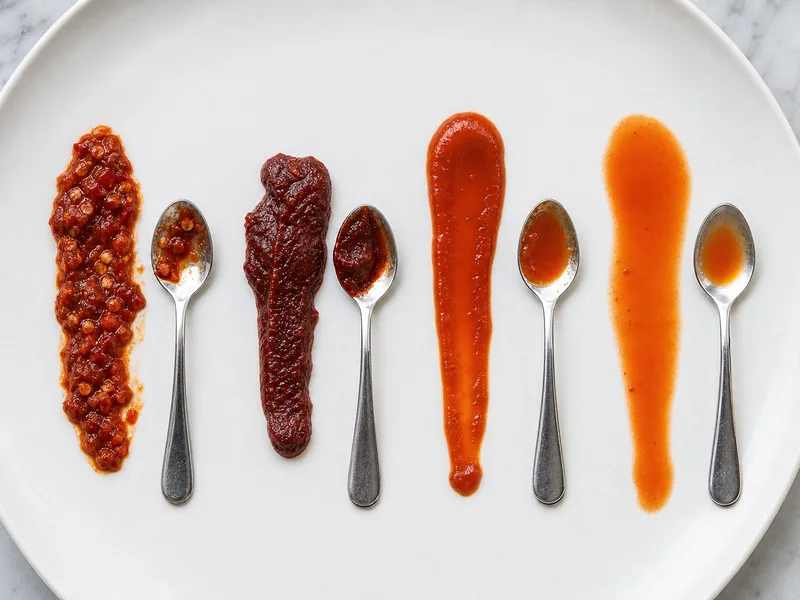
A thick red hot sauce corrected with ketchup and garlic
A cayenne-style red hot sauce can rebuild sriracha when the pantry also has ketchup and garlic powder. Hot sauce supplies heat and vinegar, while ketchup returns body and sweetness.
For one tablespoon of sriracha, mix two teaspoons ketchup with one teaspoon red hot sauce and a small pinch of garlic powder. Taste it before adding salt because both bottled ingredients may already contain enough.
This blend works in burger sauce, spicy mayonnaise, meatloaf glaze, dipping sauce, and casual marinades. Tomato flavor makes it less convincing in pho, delicate seafood, and recipes where a clean chile taste should remain visible.
Harissa for savory roasted dishes
Harissa replaces heat, garlic, and paste body, but its spices move the dish toward North African flavors. It fits roasted vegetables, lamb, chicken, chickpeas, couscous, tomato sauce, and yogurt dips better than noodles or pho.
Start with two teaspoons harissa for each tablespoon sriracha. Add the final teaspoon only after tasting because cumin, coriander, caraway, smoke, or preserved lemon may already dominate the blend.
Harissa paste may contain oil, while dry harissa seasoning does not provide sauce texture. Read the package before using the ratio, and loosen a dense paste with water only when the recipe needs a pourable result.
Sweet chili sauce sharpened with hot sauce
Thai sweet chili sauce matches garlic, sweetness, gloss, and cling, but it is much sweeter and usually milder than sriracha. A sharper hot sauce can restore heat and acidity without adding more sugar.
Start with two teaspoons sweet chili sauce plus one teaspoon vinegar-forward hot sauce for each tablespoon of sriracha. This blend is useful for spring rolls, fried chicken, shrimp, tofu, and sticky glazes.
Keep it out of recipes that already contain sugar, honey, or a sweet bottled glaze until the total sweetness is checked. Visible garlic pieces and a translucent texture also make it look different from opaque red sriracha.
Cayenne or red pepper flakes as a heat-only fallback
Cayenne powder and crushed red pepper can replace heat when sriracha contributes only a small background amount. They cannot replace moisture, garlic, sweetness, acid, or sauce body.
Begin with a small pinch for each tablespoon of missing sriracha, then let the spice disperse before tasting. Cayenne spreads evenly through smooth sauces, while flakes leave visible particles and delayed pockets of heat.
Add liquid only from an ingredient that already belongs in the recipe, such as broth, vinegar, tomato sauce, or citrus. This keeps an emergency substitution from changing the water balance without a cooking reason.
Choose by How the Sauce Enters the Food
The same substitute will not behave equally as a drizzle, dip, marinade, and cooked sauce. Match the physical job first, then correct flavor after the ingredient reaches its final form.
For a table drizzle
Use another sriracha brand or a smooth corrected chili garlic sauce. The sauce needs to flow in a narrow line, stay on the food, and taste balanced without cooking.
Gochujang must be loosened and fully whisked before it can drizzle. Sambal needs blending if seeds and chile skin would block a squeeze bottle.
For mayonnaise and creamy dips
Chili garlic sauce works when a little texture is acceptable, while the ketchup and hot sauce blend stays smooth. Add the substitute to a small portion of the creamy base first because vinegar and salt become harder to dilute after the full batch is mixed.
Chili crisp can separate a lean yogurt dip by adding oil and solids. Harissa works when its spices suit the food, especially beside roast vegetables or grilled meat.
For marinades and glazes
Gochujang and harissa cling well to meat and vegetables, but both carry stronger flavor identities. Sweet chili sauce works in a glossy glaze, provided the recipe's other sugar is reduced after tasting.
Thin hot sauce alone contributes too much free liquid for the same measured volume. Pair it with a thicker ingredient or reduce another liquid already present in the recipe.
For soup, noodles, and stir-fries
Sambal oelek and chili garlic sauce dissolve into hot food without requiring a smooth appearance. Add either early for integrated chile flavor or at the end when a brighter raw pepper note is useful.
Gochujang suits an opaque broth or sauce that can accept fermented grain depth. A clear soup may become cloudy and heavier, even when the heat level feels right.
Mix One Tablespoon Before Scaling the Recipe
A one-tablespoon test exposes sweetness, acidity, heat, and thickness before a substitute enters the whole dish. Use level measuring spoons and keep each trial separate.
| Pantry base | Starting blend for 1 tablespoon sriracha | Best use |
|---|---|---|
| Sambal oelek | 1 tablespoon sambal, then tiny pinches of garlic powder and sugar | Cooked savory food |
| Gochujang | 2 teaspoons paste plus 1 teaspoon water, with vinegar to taste | Glazes and marinades |
| Ketchup and hot sauce | 2 teaspoons ketchup, 1 teaspoon hot sauce, tiny pinch garlic powder | Dips, burgers, and glaze |
| Sweet chili and hot sauce | 2 teaspoons sweet chili, 1 teaspoon hot sauce | Fried foods and sticky sauce |
Taste the blend on a plain piece of the food when possible. A spoon tasted alone can seem hotter and saltier than the same sauce spread through rice, mayonnaise, broth, or meat.
Scale only after the small blend works. Hold back the final portion in a large batch because heat and acid distribute more completely after stirring and cooking.

Swaps That Solve Only the Color or Heat
- Ketchup alone gives red color, sweetness, and body but no chile heat or garlic. It can support a hot sauce blend, but it cannot carry the substitution by itself.
- Original Tabasco or another thin vinegar sauce used one-for-one makes the dish wetter and much sharper. Use it as the heat and acid part of a blend rather than the whole replacement.
- Chili crisp brings oil, fried aromatics, and crunchy solids. It is useful as a topping, but it can break a creamy dressing or turn a lean marinade oily.
- Gochugaru or paprika alone adds red pepper flavor without sauce moisture, garlic, or balanced acidity. A dry spice belongs only when the recipe can supply those missing jobs elsewhere.
- Buffalo sauce carries butter flavor and fat that sriracha does not. It changes both texture and the way the sauce behaves when chilled.
Rebalance the Recipe After the Swap
A sriracha substitute often matches three properties and misses the fourth. Correct one property at a time so the cook knows which addition improved the dish.
Correct thickness before seasoning
Water or broth loosens a paste, while ketchup, tomato paste, mayonnaise, or another recipe ingredient can give a thin sauce more body. Choose a thickener already compatible with the dish instead of adding a generic starch by reflex.
Heat changes thickness too. A glaze may tighten as water evaporates, while a mayonnaise mixture will not reduce after mixing.
Set sweetness and acid separately
Sambal may need a small amount of sugar, while sweet chili sauce and many gochujang products may need none. Add sugar only after tasting the substitute in the complete recipe.
Rice vinegar gives a softer correction in many Asian-style sauces, while distilled vinegar tastes sharper. Lemon or lime can work when citrus already belongs in the dish.
Check salt last
Hot sauce, chili paste, ketchup, and bottled marinades all contribute sodium. Finish the substitution before adding the recipe's final salt, soy sauce, fish sauce, or other salty seasoning.
Read the ingredient label when allergens or dietary limits matter. Gochujang can contain soy or wheat, and blended sauces may include preservatives or sweeteners absent from the original bottle.