
Gochujang vs Sriracha: Thick Paste to Cook With or Sauce to Pour On?
Choose gochujang for fermented savoriness, sweetness, and a thick coating sauce. Choose sriracha for pourable garlic-chile heat, brighter acidity, and easy finishing at the table.

Gochujang
Fermented Korean pasteSriracha
Pourable chili sauce- Texture: Dense, sticky, and spoonable vs Smooth and squeeze-bottle thin
- Flavor: Sweet, salty, savory, and fermented vs Bright chile, garlic, sweetness, and acid
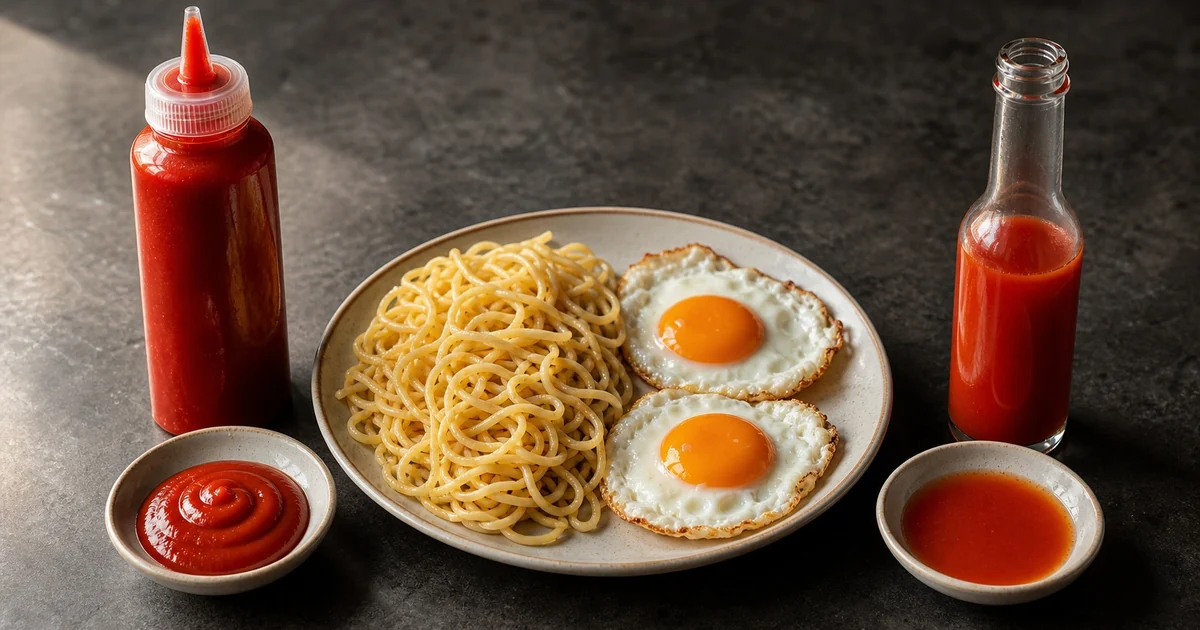
- Best use: Glazes, braises, marinades, and sauce bases vs Table seasoning, dips, noodles, eggs, and quick sauces
Gochujang vs Sriracha at a glance
| Attribute | Gochujang | Sriracha |
|---|---|---|
| What it is | Fermented Korean red pepper paste | Pourable chili sauce |
| Texture | Dense, sticky, and spoonable | Smooth and squeeze-bottle thin |
| Flavor | Sweet, salty, savory, and fermented | Bright chile, garlic, sweetness, and acid |
| Best use | Glazes, braises, marinades, and sauce bases | Table seasoning, dips, noodles, eggs, and quick sauces |
| Heat comparison | Brand-dependent, with no universal SHU range | Brand-dependent, with no universal SHU range |
| Swap start | Sriracha blended with mild miso | 2 tsp gochujang plus 1 tsp water and rice vinegar |
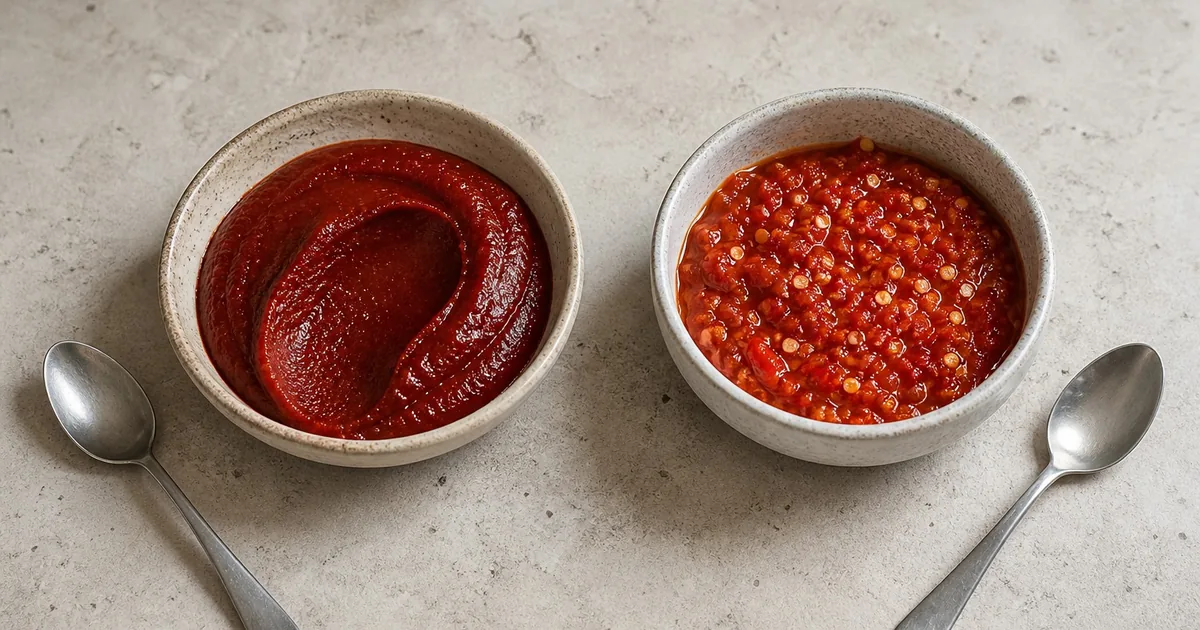
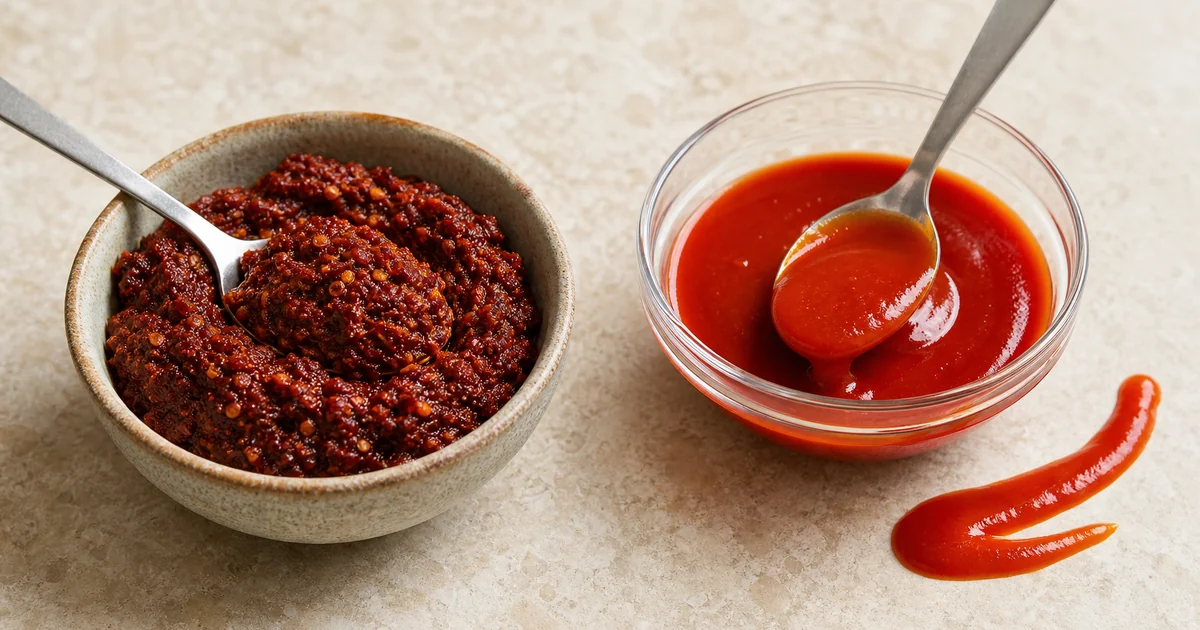
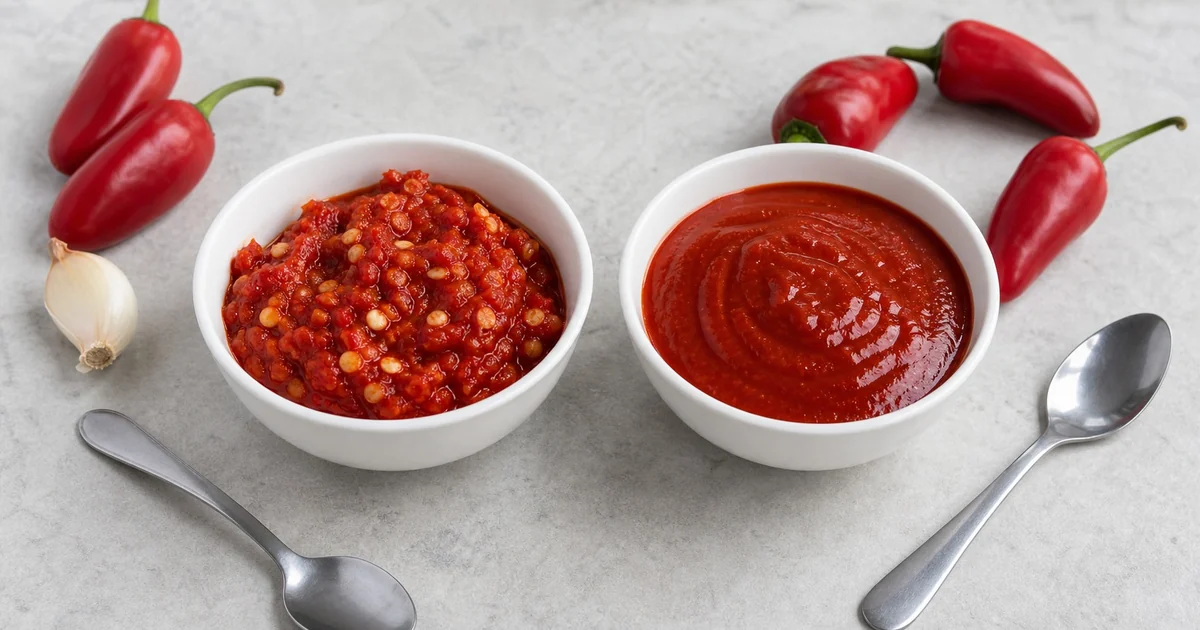
Gochujang and Sriracha side by side
Codex defines gochujang as a fermented red paste based on saccharified grain, red pepper powder, salt, and water.
Huy Fong describes its sriracha as sun-ripened chiles pureed into a smooth paste and packed for squeeze-bottle use.
What Is the Difference Between Gochujang and Sriracha?
Gochujang is a fermented cooking paste, while sriracha is a pourable chili sauce. That format difference changes flavor, thickness, browning, and how much correction a recipe needs.
The Codex Standard for Gochujang defines the Korean product around saccharified grain, red pepper powder, salt, water, fermentation, and aging, with optional meju powder, soybeans, fermented soybean paste, sugars, and seasoning vegetables.
Korea's Ministry of Agriculture, Food and Rural Affairs also identifies gochujang as a fermented food distinct from chili sauce. That distinction matters more than the shared red color.
Sriracha names a style rather than one fixed formula. Huy Fong's official description presents its best-known U.S. version as sun-ripened chiles pureed smooth for a squeeze bottle, while Sriraja Panich traces its Thai product to Si Racha in 1935.
A spoonful of gochujang can build a sauce base with solids, salt, sweetness, and fermented savoriness, while sriracha quickly spreads chile, garlic, acid, and sweetness.
For a recipe decision, ask whether the dish needs body or a bright finishing sauce. Gochujang usually supplies the first, and sriracha usually supplies the second.
Which Is Hotter, Gochujang or Sriracha?
Neither condiment has one dependable Scoville range across every brand. Any chart that assigns a single heat number to all gochujang or all sriracha products hides real differences in peppers, formulas, and serving concentration.
Codex requires standardized gochujang to contain at least 10 parts per million of capsaicin by gas chromatography, a minimum quality specification rather than a retail rating or upper limit.
The same standard allows enough ingredient variation to change perceived heat. Grain solids and sugar can soften the first impression, while a reduced glaze can concentrate chile, salt, and sweetness as water cooks away.
Huy Fong publishes no SHU figure on its main sriracha product page. Other sriracha makers use different chiles and acid levels, so the bottle in your refrigerator may land above or below another brand.
Our editorial recommendation is to compare the products in the complete dish by starting with one teaspoon, mixing fully, and tasting again after heating or dilution.
That method also accounts for serving size. A tablespoon of gochujang dispersed through a braise may feel gentler than a concentrated line of sriracha placed directly on one bite.
Fat and starch can change apparent burn without changing capsaicin because mayonnaise spreads sriracha across the palate, while a starchy rice cake sauce dilutes gochujang through a larger serving.
Temperature changes the tasting sequence as well. A hot reduced glaze delivers aroma and sweetness before the burn settles, while a cool table sauce makes acid and garlic feel sharper at the first bite.
How Each Changes A Dish
Texture decides more cooking outcomes than raw heat. Gochujang clings to food and contributes dissolved solids, while sriracha flows, disperses, and brings acid without building the same body.
| Cooking job | Better starting choice | What changes |
|---|---|---|
| Sticky glaze | Gochujang | Coats the surface and concentrates as moisture leaves |
| Bibimbap or rice bowl sauce | Gochujang | Keeps a dense, savory base that can be thinned to taste |
| Tteokbokki or braise | Gochujang | Builds color, sweetness, salt, and fermented depth into the liquid |
| Eggs, pizza, or finished noodles | Sriracha | Adds a clean line of heat without turning the dish into a paste sauce |
| Spicy mayonnaise | Sriracha | Mixes quickly and contributes acid as well as chile |
| Broth needing a late heat adjustment | Sriracha | Disperses with less added body or grain flavor |
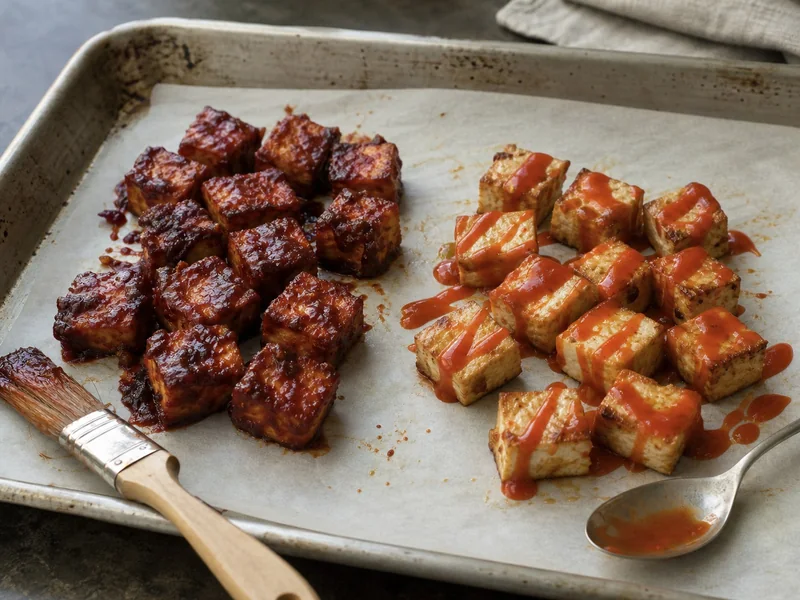
A gochujang glaze needs stock, water, rice vinegar, or soy sauce before high heat so its sugar and solids do not catch before the food cooks.
Sriracha needs the opposite check in a coating sauce. Its loose texture may run off roasted vegetables or meat, so the recipe may need honey, starch, reduced liquid, or another thick base.
The Korea Tourism Organization notes that grain choice changes gochujang itself. Glutinous rice can make it sweeter, while barley can produce a less sweet and deeper flavor, which is another reason to taste the actual tub.
Sriracha products vary because Thai and U.S. styles do not have to share the same pepper, sweetness, thickness, or garlic level.
A brushed glaze and a finishing drizzle also meet heat at different times. Apply gochujang mixtures in controlled layers during cooking, while sriracha can wait until the food leaves the pan.
When gochujang cooks into a thick sauce, a small amount can season many bites because the paste adheres to the food. Sriracha distributes less evenly when drizzled at the table, which gives each diner more control.
Which Dishes Suit Gochujang and Which Suit Sriracha?
Choose gochujang when the condiment must become part of the dish, and choose sriracha when the finished food needs adjustable heat, garlic, and acidity.
- Korean braises and tteokbokki: gochujang keeps the fermented grain and chile character that defines the sauce.
- Bulgogi-style marinades: gochujang gives cling and browning, but it should be diluted before direct heat.
- Fried rice and noodle finishing: sriracha spreads quickly without adding a dense paste base.
- Spicy mayo and dipping sauce: sriracha supplies chile and acid in one easy-to-mix ingredient.
- Roasted vegetables: gochujang works when you want a lacquered coating, while sriracha suits a lighter drizzle after roasting.
- Eggs and sandwiches: sriracha is easier to dose bite by bite.
Cuisine still matters. Korea's tourism authority lists bibimbap, jeyuk-bokkeum, tteokbokki, and spicy seafood salads among foods built with gochujang-based sauces.
Sriraja Panich connects the sauce name to Thailand's Si Racha district, while the Huy Fong bottle represents a later U.S. formulation with its own flavor and texture.
Use the named condiment when it is central to a traditional dish. A swap can make dinner work, but it cannot preserve every fermented, regional, or brand-specific flavor.
Substitution Ratios
A workable substitution rebuilds the missing function instead of matching red color. The following ratios are KnowThePepper editorial starting points, and the product labels should decide the final sugar, salt, and acid adjustments.
| Replace | Start with | Best fit | Final adjustment |
|---|---|---|---|
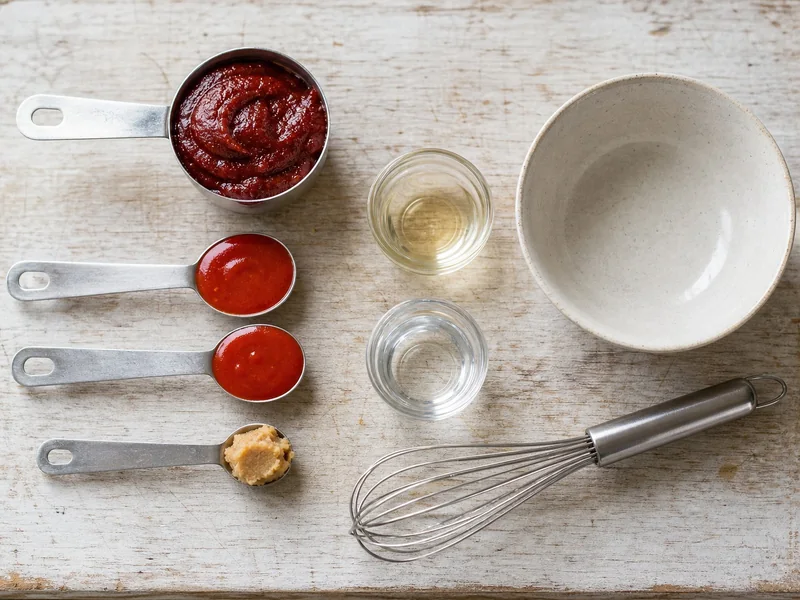
| 1 tbsp gochujang | 2 tsp sriracha plus 1 tsp mild miso | Marinade, noodle sauce, quick glaze | Add up to 1/4 tsp honey only if the original paste was sweeter |
| 1 tbsp gochujang | 2 tsp sriracha plus 1 tsp miso and 1/2 tsp starch-thickened liquid | Coating sauce | Check salt before adding soy sauce |
| 1 tbsp sriracha | 2 tsp gochujang plus 1/2 tsp water and 1/2 tsp rice vinegar | Dip, mayo, cooked sauce | Add a small pinch of grated garlic if needed |
| 1 tbsp sriracha | 2 tsp gochujang plus 1 tsp warm water | Soup or braise | Add acid at the end so it stays bright |
Miso helps sriracha replace gochujang by restoring fermented soybean savoriness and paste body, so mix them fully before judging sweetness.
Water and rice vinegar help gochujang replace sriracha because they loosen the paste and sharpen the finish. Garlic may still be needed, but adding it is a flavor correction rather than part of a universal ratio.
These swaps work best when either condiment is one part of a larger sauce. They are weaker in bibimbap sauce, tteokbokki, or a simple table squeeze where the original condiment remains easy to identify.
Salt check: because gochujang, miso, and sriracha all contribute salt, taste the mixture before adding soy sauce, fish sauce, or extra salt.
For a larger batch, test one tablespoon before scaling because brand variation becomes expensive when an untested ratio is multiplied across a whole pot.
For mayonnaise or yogurt, make a one-teaspoon test before adjusting a full bowl because fat softens chile perception and cold temperatures delay the burn. In thin broth, taste after thirty seconds so the condiment has time to disperse.
Labels, Allergens, and Storage
Read both labels before treating these condiments as interchangeable. Gochujang commonly uses grain and soybean ingredients, while Huy Fong states that its products contain sulfites but no wheat or soybean in its February 2024 allergen statement.
That manufacturer statement applies only to Huy Fong because another sriracha may use a different thickener, acid, preservative, or allergen control process.
Codex permits several optional ingredients in gochujang, including fermented soybean products, wheat protein, sugars, vinegar, and seasoning vegetables. A gluten-free or soy-free assumption therefore needs confirmation from the exact tub.
That ingredient check begins with package form. A rectangular tub usually signals a concentrated paste meant to be spooned and diluted, while a squeeze bottle usually signals a sauce intended for direct dosing.
Follow the label's refrigerate-after-opening direction instead of borrowing another product's rule because acidity, moisture, and preservatives vary.
For clean flavor and less contamination, use a dry spoon in gochujang and wipe sriracha residue from the cap. Replace either product if the package swells, develops mold, spurts unexpected gas, or smells unlike its normal fermented or garlicky aroma.
Nutrition panels use different serving sizes, so compare sodium and added sugar per equal teaspoon rather than per listed serving. That calculation prevents a smaller label serving from looking lighter than it is.
For people tracking sodium or sugar, weigh the amount added to the recipe because a tablespoon of paste and a table drizzle are different doses.
When Neither Fits
Sometimes the right answer is a third condiment. Gochujang and sriracha both add sweetness and seasoning, which makes either one a poor choice when a dish needs plain chile flavor.
Use gochugaru for dry Korean red pepper flavor without paste body, or sambal oelek for a coarse, chile-forward sauce with less built-in sweetness.
A vinegar-forward hot sauce fits when sharp acid matters more than garlic or body. Fresh chopped chiles fit when the dish needs crisp texture and a green or fruity aroma that neither processed condiment can supply.
The decision can be reduced to one question. If the sauce needs fermented body, choose gochujang, and if it needs pourable garlic-chile heat, choose sriracha.
When the recipe needs neither function, changing condiments keeps the food's texture, salt, sweetness, and regional character under control without a complicated correction.
Gochujang vs Sriracha
Reach for Gochujang when you want Glazes, braises, marinades, and sauce bases.
Reach for Sriracha when you want Table seasoning, dips, noodles, eggs, and quick sauces.
Gochujang vs Sriracha FAQ
- Codex Alimentarius, Standard for Gochujang CXS 294-2023
- Korean Ministry of Agriculture, Food and Rural Affairs, Spiciness of Korean Food in Global Standards
- Korea Tourism Organization, Jang: The Story Behind Sunchang's Renowned Flavors
- Huy Fong Foods, Allergen Statement, February 2024
- Sriraja Panich, The Taste of the Original