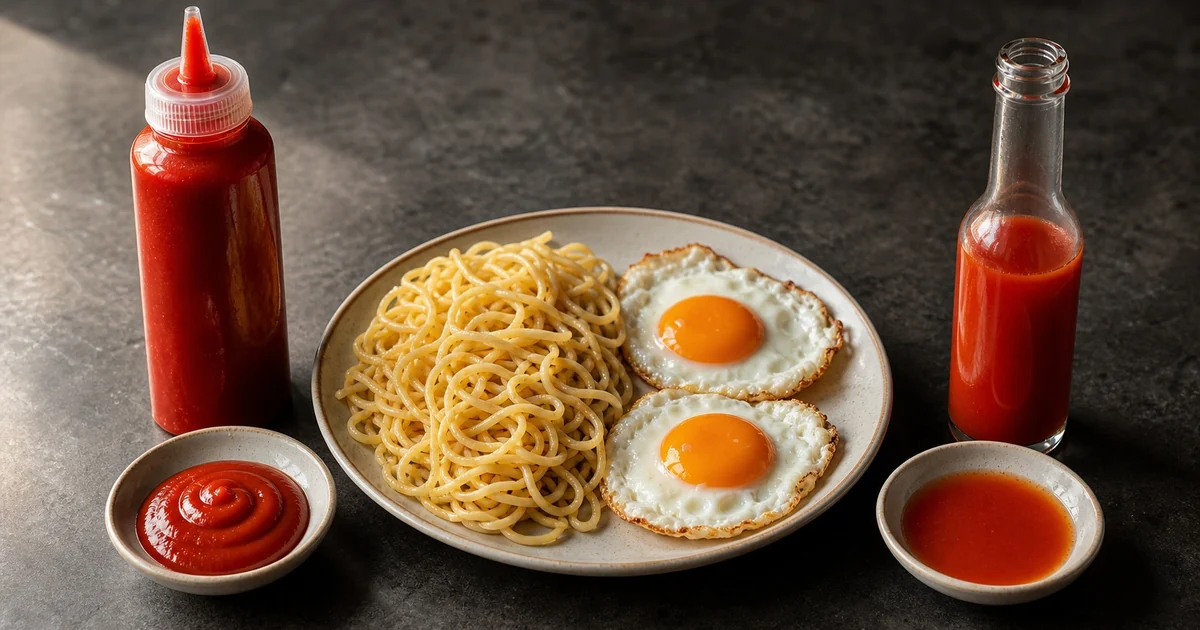
Sambal Oelek vs Sriracha: Texture and Sugar Matter More Than Heat
Choose sambal oelek for coarse, chile-forward heat with little automatic sweetness. Choose sriracha for a smooth, pourable sauce whose garlic and sugar belong in the dish.

Sambal Oelek
Chile-forward pasteSriracha
Sweet garlic chile sauce- Main flavor: Direct chile, salt, and light acidity vs Chile balanced with garlic, sugar, salt, and acid
- Sweetness: Usually low in plain commercial versions vs Usually noticeable, but the amount varies by brand
- Cooking behavior: Adds chile solids and texture without much extra sugar vs Disperses quickly and can brown sooner because of sugar
Sambal Oelek vs Sriracha at a glance
| Attribute | Sambal Oelek | Sriracha |
|---|---|---|
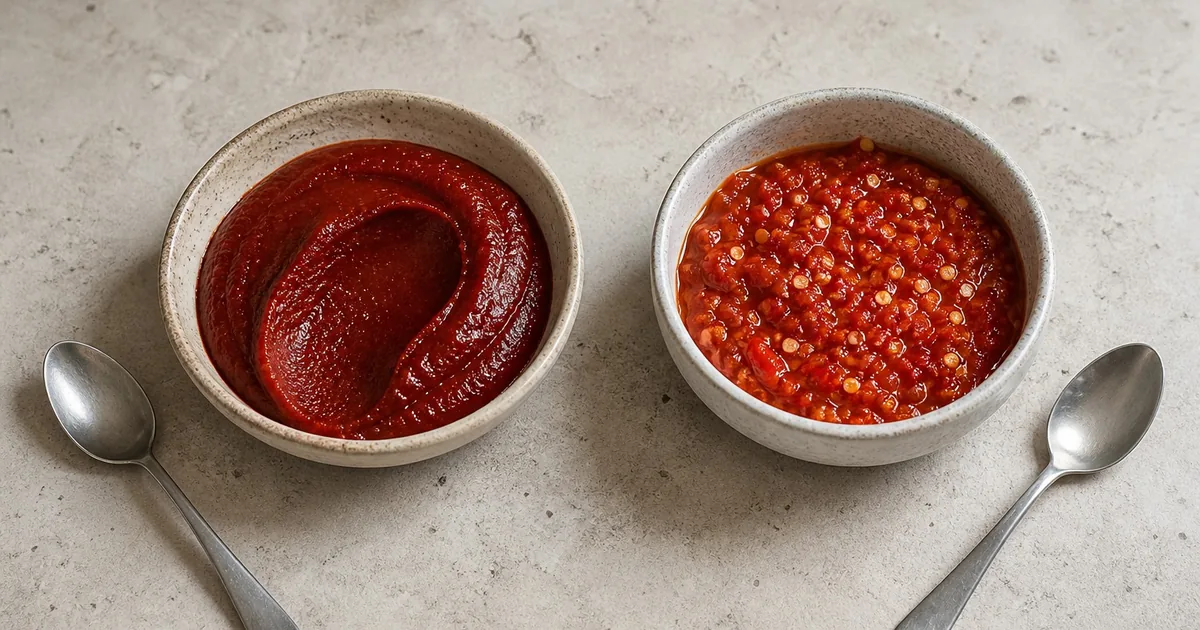
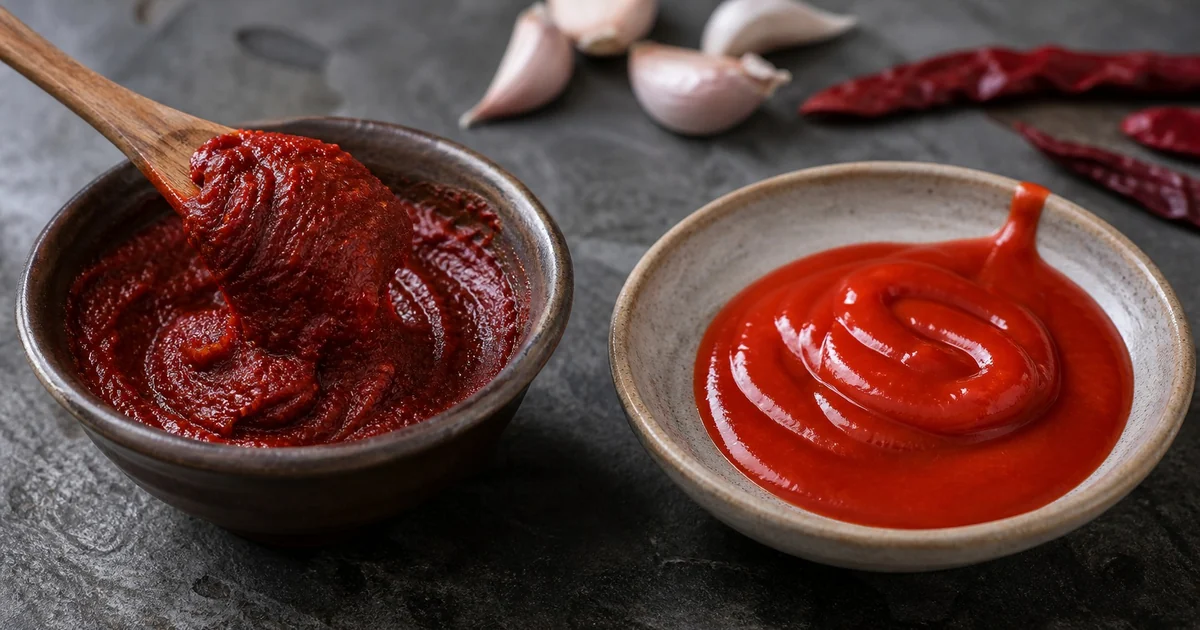
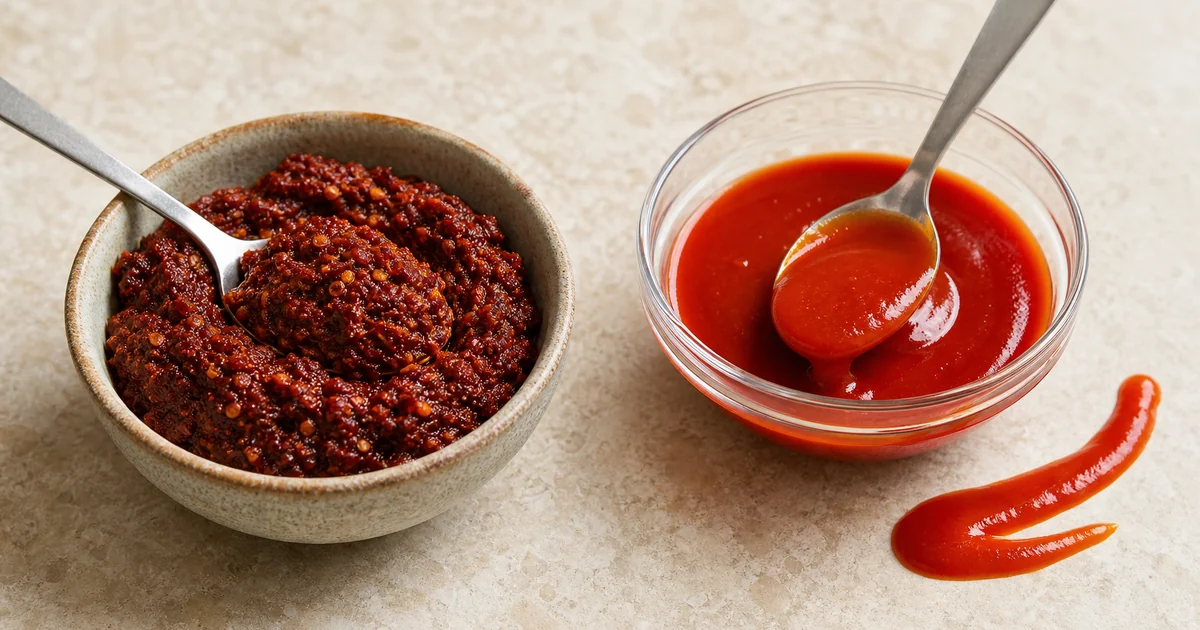
| Form | Coarse chile paste with visible pulp and seeds | Smooth, squeezeable chile sauce |
| Main flavor | Direct chile, salt, and light acidity | Chile balanced with garlic, sugar, salt, and acid |
| Sweetness | Usually low in plain commercial versions | Usually noticeable, but the amount varies by brand |
| Cooking behavior | Adds chile solids and texture without much extra sugar | Disperses quickly and can brown sooner because of sugar |
| Best fit | Stir-fries, broths, marinades, and dishes that need clean chile heat | Noodles, eggs, sandwiches, dips, and finishing |
| Swap risk | Can make a smooth sauce coarser and less sweet | Can make a savory dish sweeter, garlickier, and looser |
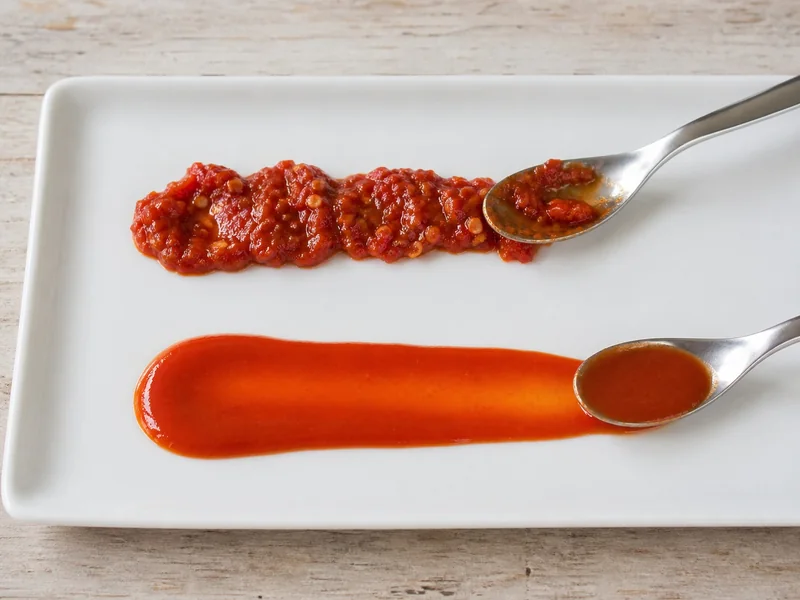
Sambal Oelek and Sriracha side by side
Commercial sambal oelek is the more direct choice when the recipe needs chile body without automatically adding garlic or much sugar.
Sriracha spreads evenly through a dish and works especially well as a finishing sauce, but its sugar and garlic become part of the recipe.
What Goes Into Sambal Oelek and Sriracha?
Sambal oelek and sriracha are product styles, not fixed formulas. The label gives a useful clue about texture and flavor, but the ingredient list decides what a particular jar will do in a dish.
Huy Fong describes its sambal oelek as a full-bodied sauce with the pure taste of chiles and no added flavoring ingredients. Its 2019 sriracha specification describes a smooth, slightly thick sauce made with chile, sugar, salt, garlic, acid, preservatives, and xanthan gum.
That brand comparison explains the familiar grocery-store difference, but it does not define every sambal or every sriracha. Indonesia has many sambal traditions with aromatics, shrimp paste, oil, citrus, or sugar, while the Thailand Foundation notes that Thai sriracha styles can taste distinct from the garlic-forward Huy Fong version common in the United States.
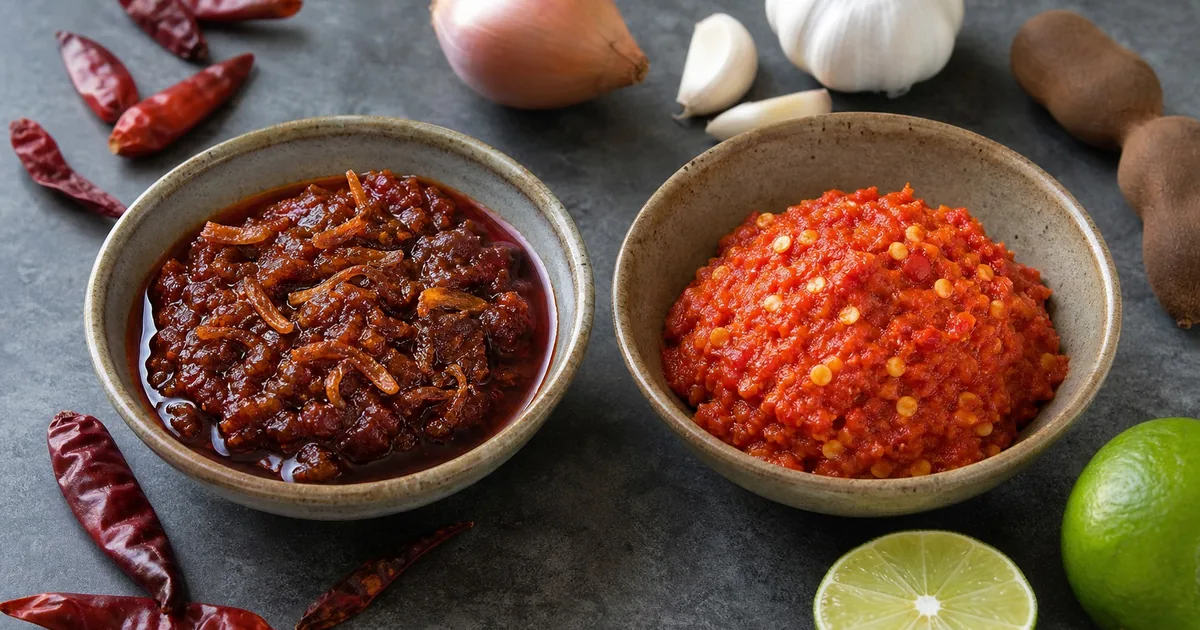
Read the front label as a category and the back label as the formula. A jar with garlic, sugar, or shrimp paste needs different adjustments from a plain chile-and-salt sambal, even when both products use the word sambal.
How Does Texture Separate Sambal Oelek From Sriracha?
Texture is the most reliable difference you can see before tasting. Sambal oelek carries pieces of chile flesh and seeds, while sriracha has been pureed into a uniform sauce that flows through a squeeze tip.
Those solids make sambal useful when a stir-fry, noodle sauce, or braise needs small bursts of chile and a little body. Stirring a spoonful into hot oil also leaves visible chile throughout the finished dish instead of turning the entire sauce uniformly red.
Sriracha disperses faster through mayonnaise, broth, scrambled eggs, and dipping sauces. It gives every bite a similar level of heat, which is helpful for a smooth dressing but less useful when the recipe depends on the texture of crushed chile.
The two products also coat food differently. Sambal clings as a paste to meat or vegetables, while sriracha forms a thinner film and blends more readily with other liquids.
Is Sambal Oelek Hotter Than Sriracha?
Neither name guarantees the hotter product. Heat depends on the chile variety, the percentage of chile in the formula, the harvest, and how much sugar or other material dilutes the burn.
Huy Fong's own product specification warns that heat can vary because the sauce is made from a natural agricultural ingredient. The company's manufacturing brochure says its three sauces begin with the same ground red jalapeño base, yet the finished formulas add different ingredients and create different impressions of heat.
A plain sambal can feel sharper because chile remains the dominant flavor. Sriracha may feel gentler at the same capsaicin level because sweetness and garlic share the palate, although another brand can reverse that result by using hotter peppers or less sugar.
For a new jar, compare equal quarter-teaspoon tastes in the same neutral food rather than relying on an unsupported Scoville number. Yogurt, plain rice, or unsalted broth makes the difference easier to judge without turning tasting into a dare.
For a more useful kitchen comparison, mix 1/4 teaspoon of each condiment into separate tablespoons of the same plain food. That controlled dilution compares the jars under equal conditions and shows whether sweetness, acid, or garlic changes the way the heat reads.
When Should You Use Sambal Oelek or Sriracha?
Choose sambal oelek when the dish already has its own aromatics and needs chile without another layer of sweetness. It fits a ginger-garlic stir-fry, coconut curry, savory broth, or marinade in which the cook wants to control sugar separately.
Sriracha earns its place when smooth coverage and a sweet garlic finish help the food. Eggs, fried rice served at the table, sandwiches, noodle bowls, dumpling dips, and mayonnaise-based sauces all benefit from a condiment that squeezes and mixes easily.
The cooking stage changes the choice. Sambal can go into the pan early with enough oil and moisture because its chile solids contribute body, while sriracha is often better added later so its sugar does not catch on a very hot surface.
For fried rice, cook sambal briefly after the aromatics and before the rice if the goal is to spread chile through the grains. Add sriracha after the rice is seasoned or serve it at the table when a sweet garlic accent should remain distinct.
A broth or coconut curry usually needs a condiment that changes heat without taking over the base seasoning, which favors plain sambal. A creamy dip, burger sauce, or egg topping values uniform texture and easy dispensing, which favors sriracha.
Use these dish cues instead of treating either jar as the universal winner:
- For broth or curry that is already sweet, use sambal oelek to add heat with less flavor drift.
- For a smooth dip or spicy mayonnaise, use sriracha because it blends without coarse pieces.
- For a glaze, use sriracha when sweetness is intentional and watch the heat so the sugar does not scorch.
- For a stir-fry sauce with measured sugar, use sambal and keep the recipe's original sweetener under separate control.
- For table service, choose sriracha for easy squeezing or sambal when diners prefer a concentrated spoonful.
Can You Substitute Sambal Oelek for Sriracha?
Start a swap at the same volume, then correct the properties that changed. One teaspoon of sambal oelek can replace one teaspoon of sriracha as an editorial starting point, but a finished sauce may need more liquid, garlic, or sweetness after tasting.
When sambal replaces sriracha, add only the missing quality the dish needs. A few drops of water or vinegar can loosen the paste, while a small pinch of sugar and a little grated garlic can move it toward the flavor of a sweet garlic sauce.
When sriracha replaces sambal, first reduce another sweetener or garlic in the recipe rather than trying to cancel those flavors afterward. If the dish needs chile pieces or extra body, sriracha cannot supply them, so the swap remains a texture compromise even when the heat tastes right.
Scale gradually in uncooked dips because every addition stays concentrated. In a large soup or stew, mix the first amount through the full pot before deciding whether the chile level is too low.
How to Season Around Sambal or Sriracha
Treat the condiment as part of the seasoning, not as heat added in isolation. Both products bring salt and acid, while many srirachas also bring sugar and garlic, so the rest of the recipe should wait until the condiment is mixed through.
In soup, broth, or stir-fry sauce, add the chile condiment before the final salt adjustment. A spoonful that tastes balanced alone can push a reduced sauce past its intended salinity once water cooks away.
For a sriracha glaze, reduce honey, brown sugar, or another sweetener at the start and restore it only after tasting. Sambal makes the opposite job easier because a plain version lets the cook choose the sweetener and its amount separately.
Garlic needs the same distinction. Processed garlic inside sriracha supplies a rounded background note, while fresh grated garlic remains sharper, so replacing one with the other by volume does not reproduce the same aroma.
Acid should be corrected last because simmering changes how a sauce tastes. Rice vinegar or lime can brighten sambal after cooking, but adding acid automatically can make an already tangy brand too sharp.
When Does a One-to-One Swap Fail?
A one-to-one starting swap fails when the condiment provides structure, not just heat. Sambal can thicken a loose stir-fry sauce with chile solids, while sriracha cannot replace that body without another ingredient.
The reverse problem appears in dressings and squeeze sauces. Coarse sambal may clog a narrow bottle or leave uneven pieces in a smooth emulsion, so thinning it solves flow but does not remove the pulp.
Regional formulas create another limit. A sambal with shrimp paste, shallot, citrus, or fried aromatics carries flavors that plain commercial sambal oelek and sriracha do not reproduce, while a Thai sriracha may differ from the familiar American garlic-forward bottle.
The safest decision is to identify the condiment's job before measuring the swap. Match heat by taste, match texture by form, then correct sweetness, garlic, salt, and acid only where the finished dish shows a gap.
When Should You Add Each Condiment While Cooking?
Sambal tolerates early cooking better when the goal is to season the oil with chile. A short fry can spread its color and aroma through the pan, but the paste still needs movement and moisture so the chile solids do not burn.
Sriracha carries sugar and garlic in many commercial formulas, including the Huy Fong specification. On high heat, that combination browns faster than a plain chile paste, so adding it near the end preserves a brighter garlic note and lowers the chance of a scorched glaze.
Cold preparations reverse the priority. Sriracha disappears smoothly into mayonnaise or dressing, while sambal keeps a rougher texture that can be desirable in a chunky dip or distracting in a squeeze-bottle sauce.
This timing difference matters more than a small heat difference. A well-timed condiment keeps the intended aroma and texture, while the wrong timing can turn either product bitter.
What to Check on the Label Before Swapping Brands
Check the current label for sugar, garlic, preservatives, and allergens before treating two brands as equivalent. Sambal is a broad Indonesian condiment family, and some versions contain shrimp paste even though a plain commercial sambal oelek may not.
The FDA requires packaged-food ingredients to appear in descending order by weight. That order shows whether sugar or garlic is a major part of the formula, but it does not reveal an exact amount, so compare the Nutrition Facts panels on the same serving size when sodium or added sugar matters.
Huy Fong's February 2024 allergen statement identifies sulfites as present in its products or plant and reports no wheat, peanuts, soy, milk, egg, fish, shellfish, tree nuts, mustard, or sesame in the listed survey. That statement belongs to one manufacturer, so anyone managing an allergy should verify the exact jar rather than generalizing from the product name.
The company's 2019 sriracha specification recommends a cool, dry place for opened or unopened product and says refrigeration is allowed. Other brands may print different directions, so the package instruction remains the controlling storage rule.
Refrigeration can preserve color and flavor after opening even when a shelf-stable sauce is safe in a cool pantry under its maker's instructions. Discard a jar that develops mold, gas, a swollen lid, or an odor that is not normal for that product.
Manufacturer directions for a commercial acidified sauce do not transfer to a homemade chile paste. A fresh homemade sambal belongs under the storage instructions of its tested recipe rather than the shelf-life claim printed on a factory-sealed jar.
Sambal Oelek vs Sriracha
Reach for Sambal Oelek when you want Stir-fries, broths, marinades, and dishes that need clean chile heat.
Reach for Sriracha when you want Noodles, eggs, sandwiches, dips, and finishing.