
Hungarian vs Spanish Paprika: Choose by Smoke and Grade
Choose Hungarian paprika when clean ripe-pepper flavor, color, and a named sweet or hot style matter. Choose Spanish paprika by region: La Vera supplies oak smoke, while Murcia PDO is a sweet, unsmoked alternative.

Hungarian
Grade-led Central European spiceSpanish Paprika
Region-led Spanish pimenton- Typical profile: Sweet red pepper, fruit, gentle earthiness vs Ranges from sweet and clean to deep oak smoke
- Texture: Fine, uniform powder vs Fine powder; La Vera PDO allows sweet, bittersweet, and hot styles
- Best use: Goulash, paprikash, soups, eggs, and cream sauces vs Paella, beans, potatoes, chorizo-style seasoning, and grilled food
Hungarian vs Spanish Paprika at a glance
| Attribute | Hungarian | Spanish Paprika |
|---|---|---|
| Main buying clue | Hungarian style and heat grade | Region and whether the label says smoked |
| Typical profile | Sweet red pepper, fruit, gentle earthiness | Ranges from sweet and clean to deep oak smoke |
| Texture | Fine, uniform powder | Fine powder; La Vera PDO allows sweet, bittersweet, and hot styles |
| Best use | Goulash, paprikash, soups, eggs, and cream sauces | Paella, beans, potatoes, chorizo-style seasoning, and grilled food |
| Smoke | Usually not the defining trait | Defining for Pimenton de la Vera, not every Spanish paprika |
| Swap start | 1:1 when smoke is absent | Use 1/2 amount first when replacing with smoked pimenton |
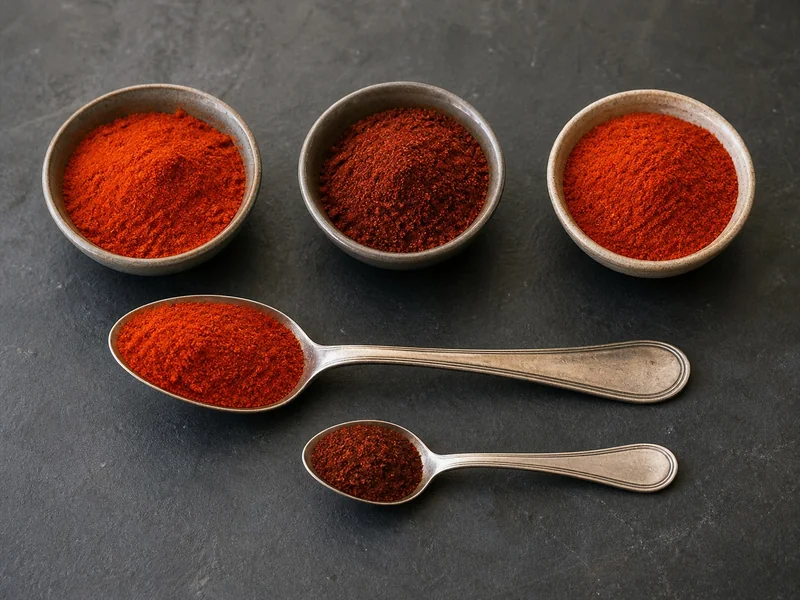
Hungarian and Spanish Paprika side by side
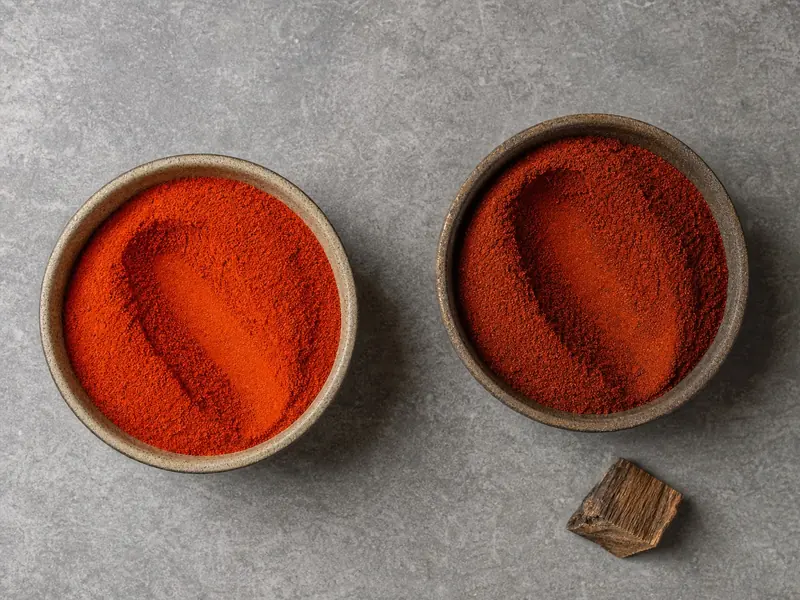
The Szeged PDO describes a uniform bright-red powder with sweet, ripe vegetable character. Pungent cultivars create medium-hot and hot grades.
Spanish paprika is not one flavor. La Vera PDO is smoke-dried over oak, while other regional styles can be sun-dried and clean rather than smoky.
When Should You Use Hungarian or Spanish Paprika?
Choose Hungarian paprika when the dish needs clean red-pepper sweetness, color, and optional heat without a dominant smoke note. It fits goulash, paprikash, cabbage, potatoes, eggs, sausages, and dairy-rich sauces.
Choose Pimenton de la Vera when oak smoke belongs in the dish. Its official PDO specification ties the intense smoky aroma to slow drying over oak or holm oak wood.
Do not treat Spanish as a synonym for smoked. Read the region and style because a Spanish jar from outside La Vera may deliver sweet pepper color without the same smoke.
How Do You Cook Paprika Without Burning It?
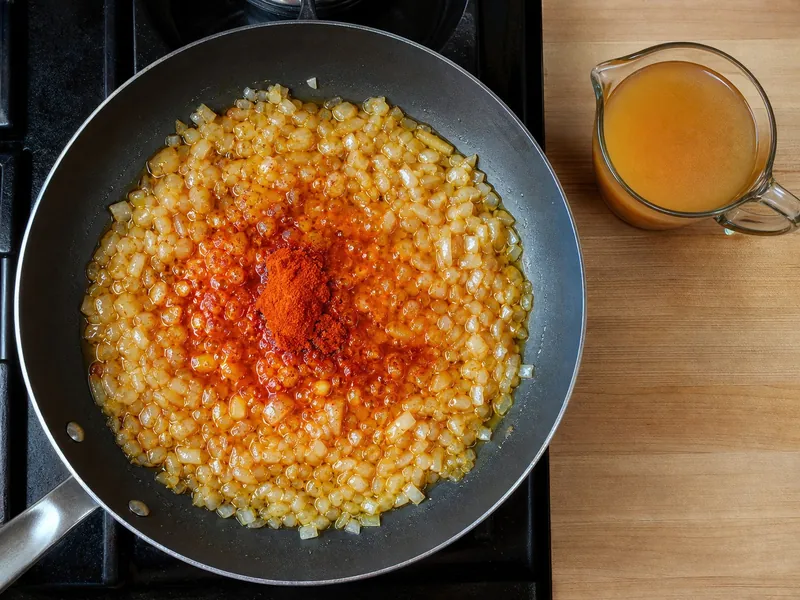
Bloom either paprika briefly in warm fat to release color and aroma, then add liquid. High heat can scorch the powder and turn its sweetness bitter.
For paprikash or goulash, pull the pan from direct heat before stirring paprika into onions and fat. Return it to the burner after stock or another liquid is ready.
Smoked pimenton needs restraint because smoke concentrates as sauce reduces, so add half the planned amount first, simmer, then decide whether the dish needs more.
Dish Choice Matrix
Match the powder to the dish instead of asking which country makes the better spice.
| Dish | Better first choice | Why |
|---|---|---|
| Chicken paprikash | Hungarian sweet paprika | Clean pepper flavor supports sour cream |
| Goulash | Hungarian sweet or hot grade | Red color and heat without forced smoke |
| Paella | Spanish paprika named by the recipe | Smoke can be intentional or distracting |
| Beans and lentils | La Vera agridulce | Smoke and mild heat deepen the pot |
| Roasted potatoes | La Vera dulce or picante | Dry heat carries smoky aroma well |
A chili powder blend is a different seasoning category. A recipe that only says paprika usually expects a clean sweet powder.
Introduce smoke only when the rest of the ingredient list supports it.
How Do Hungarian and Spanish Paprika Labels Differ?
Hungarian and Spanish labels answer different questions. Hungary sells sweet and pungent powders under terms such as édesnemes, csemege, and csípős, while protected names such as Szeged and Kalocsa identify origin and production rules.
Hungary's food-safety authority, Nébih, has tested retail paprika in separate csemege, édesnemes, csípős, and protected-origin groups, so the word beside paprika matters more than a Hungarian flag alone.
Spanish labels combine heat words with place. La Vera PDO uses dulce for sweet, agridulce for gently pungent, and picante for pronounced heat.
Murcia PDO is a separate product made from fully red Bola peppers and is known for sweet pepper character rather than La Vera's smoke.
Color cannot predict pungency because pepper pigments create red intensity while capsaicinoids create burn. Read the style word first, then confirm the protected region when origin or drying method matters.
Is All Spanish Paprika Smoked?
Pimentón de la Vera gets its defining smoke during slow drying over oak or holm oak. That aroma remains obvious in beans, roasted potatoes, grilled meat, and tomato sauces, and it becomes stronger as liquid reduces.
Spanish paprika does not automatically mean smoked paprika. The 2025 Pimentón de Murcia PDO specification identifies ripe Bola peppers from Murcia.
It is the clean, sweet Spanish branch to compare with Hungarian sweet paprika when a recipe wants color without smoke.
Szeged and Kalocsa PDO powders also center ripe pepper, a fine grind, and strong red color rather than smoke. Their fruit-forward flavor integrates quietly with onions, stock, sour cream, cabbage, and meat.
This process difference, not nationality by itself, decides whether a 1:1 swap will preserve the dish.
Can Hungarian and Spanish Paprika Replace Each Other?
Swap unsmoked Spanish sweet paprika and Hungarian sweet paprika at 1:1 by volume, then taste because cultivar, freshness, and bitterness still vary by jar. The alternatives when paprika is unavailable covers other options when neither regional style is available.
When smoked Pimentón de la Vera replaces Hungarian paprika, start with 1/2 teaspoon for every 1 teaspoon. Restore missing red color with sweet paprika instead of doubling the smoke.
When Hungarian paprika replaces smoked pimentón, use the full paprika amount and add smoke separately only if the recipe depends on it. Smoked salt can help in a small dose, but reduce other salt so the correction does not change seasoning.
Read The Package Before Buying
For Hungarian paprika, read the style or heat word and then look for Szeged or Kalocsa PDO when protected origin matters. For Spanish paprika, identify both the region and the taste word: La Vera plus dulce, agridulce, or picante describes a different jar from sweet Pimentón de Murcia.
A PDO seal gives stronger process information than a flag graphic. Nébih found retail powders with Hungarian, mixed EU, and non-EU origins in the same market, so a front label that only says Hungarian style does not prove where every pepper was grown.
Buy a quantity you can use while the aroma and red color remain strong. Review ground chile storage, keep the container closed and away from heat and light, and replace powder that smells dusty or contributes little color.
Adding more stale paprika increases bitterness without restoring fresh aroma.
Hungarian vs Spanish Paprika
Reach for Hungarian when you want Goulash, paprikash, soups, eggs, and cream sauces.
Reach for Spanish Paprika when you want Paella, beans, potatoes, chorizo-style seasoning, and grilled food.
Hungarian vs Spanish Paprika FAQ
- European Union - Szegedi Paprika PDO Product Specification
- European Union - Kalocsai Fűszerpaprika-őrlemény PDO Specification
- European Union - Pimentón de la Vera PDO Specification Amendment
- European Union - Pimentón de Murcia PDO Specification Amendment
- Nébih - Hungarian Paprika Retail Product Test