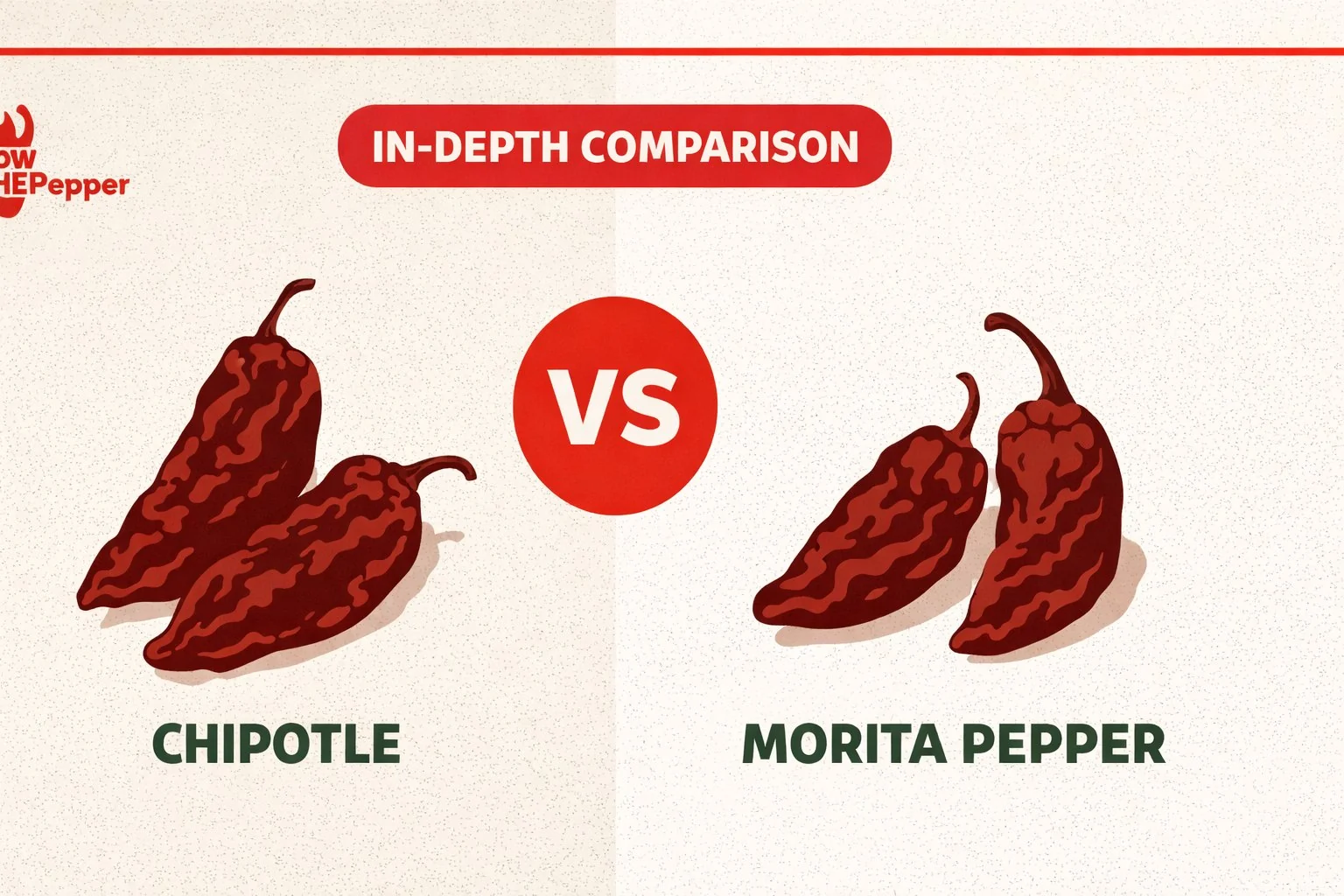
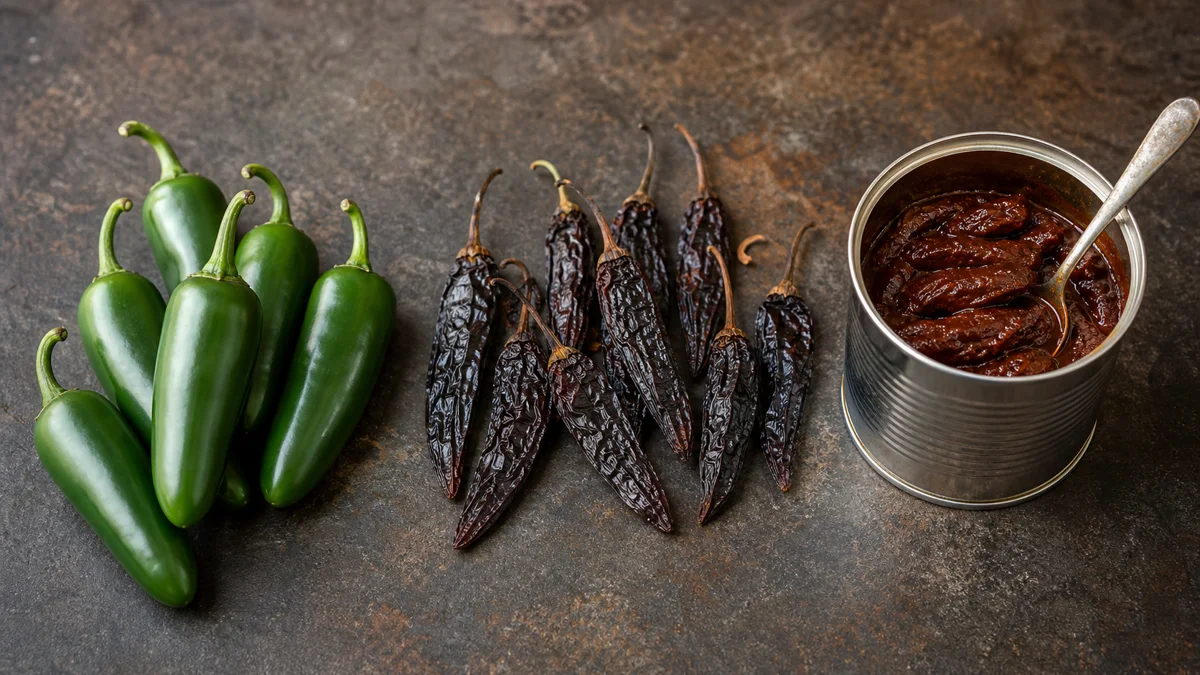
Chipotle Meco vs Morita: Which Smoked Jalapeño Belongs in Salsa and Adobo?
Meco is drier and more intensely smoky. Morita is darker, fruitier, and easier to blend into salsa and adobo.

Chipotle Meco
Long-smoked chipotleMorita Pepper
Shorter-smoked chipotle- Smoking and drying: Longer, until firm and tan-brown vs Shorter, retaining darker red color and some pliability
- Dominant flavor: Deep, dry, assertive smoke vs Smoky, fruity, and slightly sweeter
- Best use: Slow sauces, beans, braises, dry grinding vs Salsas, marinades, adobo, quick sauces
Chipotle Meco vs Morita Pepper at a glance
| Attribute | Chipotle Meco | Morita Pepper |
|---|---|---|
| Starting pepper | Ripe red jalapeño | Ripe red jalapeño |
| Smoking and drying | Longer, until firm and tan-brown | Shorter, retaining darker red color and some pliability |
| Dominant flavor | Deep, dry, assertive smoke | Smoky, fruity, and slightly sweeter |
| Best use | Slow sauces, beans, braises, dry grinding | Salsas, marinades, adobo, quick sauces |
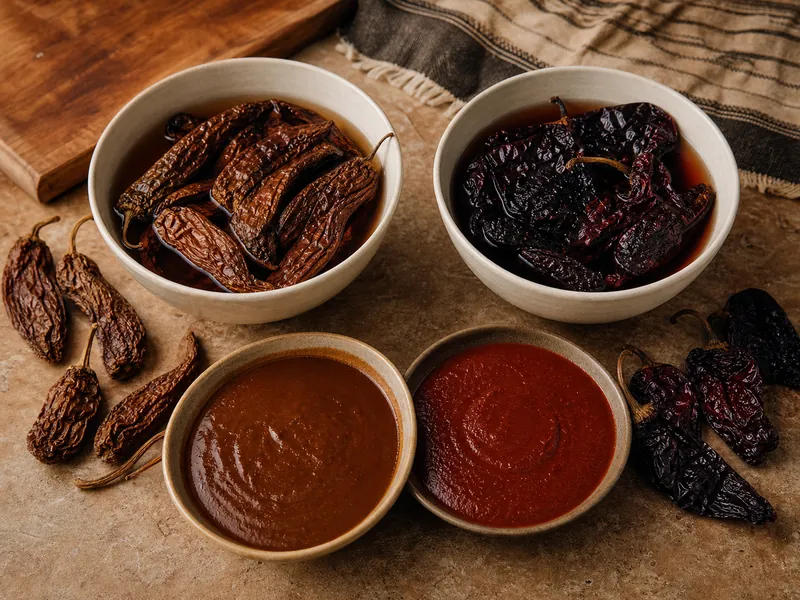
Chipotle Meco and Morita Pepper side by side
Meco is the firmer, more thoroughly smoked form of a ripe jalapeño.
Morita keeps more fruit character and is the chipotle most shoppers encounter.
Are Chipotle Meco and Morita the Same Pepper?
Chipotle meco and morita are not two unrelated pepper cultivars. Both begin as ripe red jalapeños.
Producers change the final ingredient through smoking time, drying, and moisture retention. That processing explains why the two forms can taste and behave differently even when their basic heat overlaps.
Meco is smoked and dried more completely. It is usually tan to gray-brown, firm, and deeply smoky.
Morita, Spanish for ‘little blackberry’, is darker red to purple-brown, somewhat softer, and fruitier. It receives enough smoke to preserve the chipotle identity without pushing every other flavor into the background.
Is Chipotle Meco Hotter Than Morita?
Both forms generally stay within the jalapeño family’s mild-to-medium range, often cited around 2,500 to 10,000 Scoville Heat Units. Individual lots vary because the starting jalapeños, ripeness, seeds, growing conditions, and processing are not identical.
Neither name guarantees that one bag will be hotter than the other.
Smoke concentration can make meco seem more forceful even when its capsaicin level is similar. Morita’s fruit and acidity can make the heat feel rounder.
Choose between them for flavor and texture first, then control heat by tasting the soaked chile or sauce before adding more.
Flavor, Texture, and Color
| Trait | Chipotle meco | Morita |
|---|---|---|
| Appearance | Tan, gray-brown, or tobacco colored | Dark red, purple-brown, sometimes glossy |
| Texture | Firm, dry, and leathery | More flexible and slightly moist |
| Smoke | Strong and persistent | Clear but less dominant |
| Fruit character | Earthy and restrained | Ripe, raisin-like, and mildly sweet |
| Sauce color | Brown and rustic | Deep brick red |
The color difference is practical. Meco can darken a pale broth or cream sauce and make it taste strongly smoked.
Morita produces a redder salsa and leaves more room for tomato, fruit, herbs, and acidity, so it suits dishes that want the pepper's color to show.
When Should You Use Meco or Morita?
Use meco in long-cooked beans, beef or pork braises, rustic moles, smoky broth, and spice blends that need a dry campfire note. Its firm skin benefits from soaking, and a fine strainer can remove stubborn fragments after blending.
Use morita in salsa, adobo, marinades, tomato sauces, and glazes. It rehydrates more quickly and blends into a smoother puree.
Its fruitier profile works especially well with roasted tomato, garlic, piloncillo or brown sugar, citrus, and vinegar.
- For a dry rub: grind a very dry meco, or use ready-ground chipotle and adjust for smoke.
- For table salsa: morita usually gives a brighter red color and less dominant smoke.
- For beans or braised meat: meco stays noticeable through long cooking.
- For canned chipotles in adobo: morita is the closer whole-dried starting point.
How to Prepare and Swap Meco and Morita
Wipe whole chiles clean, remove the stem, and shake out loose seeds if a smoother sauce is wanted. Toast only briefly over moderate heat.
Both types already carry smoke, and scorching makes them bitter.
Cover with hot water until pliable, then blend with fresh liquid rather than automatically using bitter soaking water.
They can replace one another by pod count as a cautious starting point, but the result will change.
Replacing morita with meco makes a sauce browner, drier, and smokier. Use one small pod, then add more only after blending.
Replacing meco with morita makes the sauce fruitier and less smoky.
A small amount of smoked paprika can restore aroma without adding another whole hot chile.
Buying And Storage Checklist
- Look for intact pods without fuzzy growth, damp patches, or a rancid odor.
- Choose meco when the pod is dry and firm. Choose morita when it is flexible but not wet.
- Store either form airtight, away from light and stove heat.
- Freeze a tightly sealed bulk purchase if the kitchen is humid or use will be slow.
- Label ground meco and morita separately because powder removes their easiest visual clues.
Whole pods preserve aroma longer than powder. Grind only the amount needed for the next few recipes, and let the grinder dust settle before opening it.
Bottom Line
Choose chipotle meco for maximum smoke and a dry, earthy finish. Choose morita for fruit, red color, and easier blending.
Both are smoked ripe jalapeños, so the decision is about processing and the flavor the dish needs rather than a dependable heat ranking.
When a recipe says only ‘chipotle,’ morita is often the practical default because it is more widely sold. Meco is worth seeking when the smoke must remain clear after a long cook.
How Can You Tell Meco From Morita at the Store?
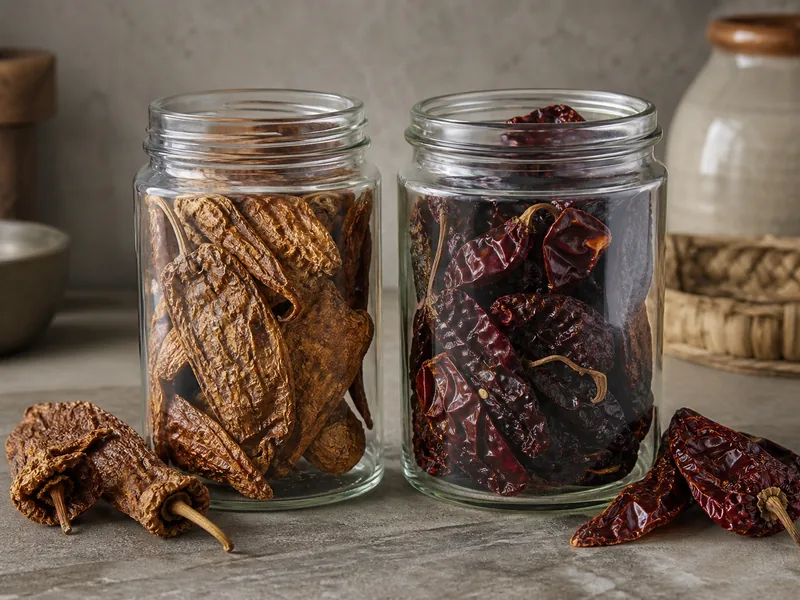
When bins are unlabeled, color and texture provide the fastest clues. Meco looks dusty tan or gray-brown and feels rigid.
Morita looks deep red to nearly purple and bends more easily. Neither should smell musty or feel wet.
Online photographs can exaggerate color, so read the product description for smoking time, moisture, and intended use. A seller that uses ‘chipotle’ without specifying the form may be offering morita, but confirm before ordering a large bag for a recipe that depends on meco’s stronger smoke.
| Clue | Meco | Morita |
|---|---|---|
| Color | Tan to gray-brown | Deep red to purple-brown |
| Texture | Dry and rigid | More pliable |
| Smoke role | Deep, dry, assertive | Smoky with more fruit |
| Best first use | Beans, braises, grinding | Salsa, adobo, marinades |
What Sources Confirm About Meco and Morita
Chipotle meco and morita are processing forms made from ripe jalapeños, not separate fresh cultivars. The Chile Pepper Institute supplies the pepper-science context, while the color, texture, and preparation evidence in this article distinguishes the finished ingredients.
The stored sources do not establish the former claims about Aztec smokehouses, a specific 16th-century Veracruz record, exact 48 to 72 hour smoking, or a 1990s Morita introduction. Those details have been removed rather than used to decorate a cooking decision.
The reliable identification test remains physical: meco is tan to gray-brown and rigid, while morita is red to purple-brown and more pliable. A seller should state the form instead of relying on the umbrella word chipotle.
Why Serving Form Matters More Than Nutrition Data
No product-specific nutrient analysis was located for the meco and morita pods described here. Generic pepper data cannot establish exact calories, fiber, vitamins, or sodium for a dried pod, ground powder, or canned adobo product.
The useful comparison is water, smoke, and added ingredients. A dry whole pod gives control over salt and liquid, while canned chipotle in adobo brings sauce, acid, and sodium that must be counted in the recipe.
Drying concentrates solids per gram because water has left the pod, but it does not justify a claim that one form becomes hotter at the same stated SHU. Measure by weight or start with one small pod, blend fully, and adjust after the smoke is distributed.
Chipotle Meco vs Morita Pepper
Reach for Chipotle Meco when you want Slow sauces, beans, braises, dry grinding.
Reach for Morita Pepper when you want Salsas, marinades, adobo, quick sauces.