
Canned Jalapenos vs Fresh: Which Does Your Dish Need?
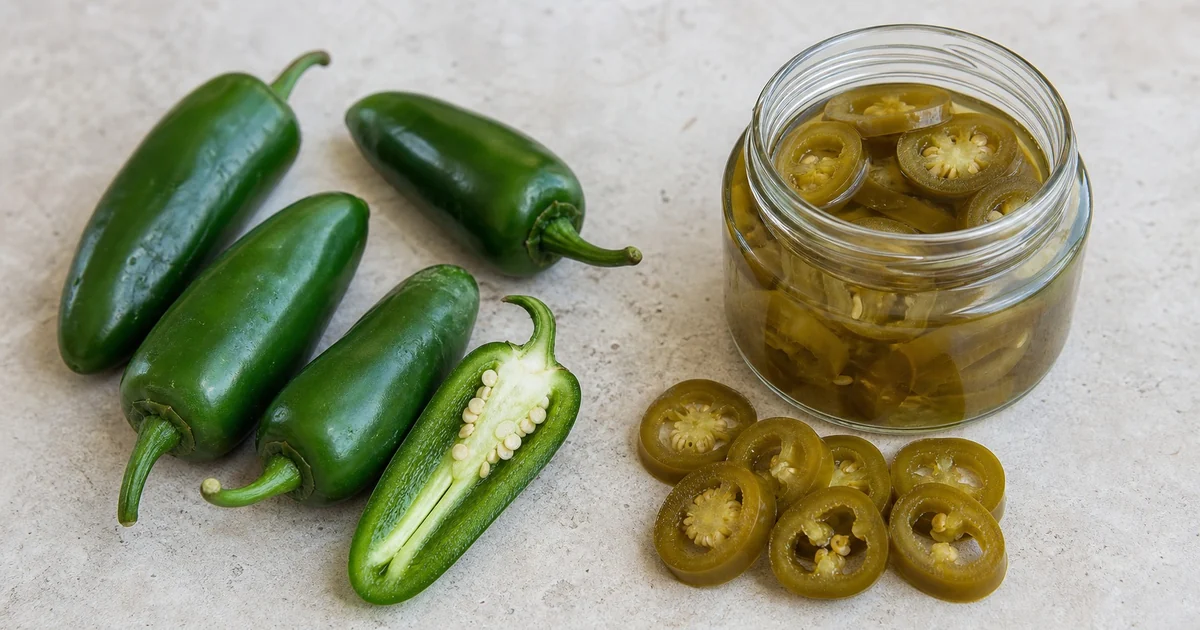
Fresh jalapenos bring crisp texture and green aroma, while canned or jarred rings bring soft texture, vinegar tang, and convenience.

Canned Jalapenos
Preserved jalapenoFresh
Fresh jalapeno- Flavor: Vinegar tang and salt lead vs Green, grassy jalapeno flavor
- Heat control: Heat is partly diluted by brine vs Varies by pod and white tissue
- Best use: Nachos, burgers, queso, cooked fillings vs Salsa, garnish, roasting, stuffing
Canned Jalapenos vs Fresh at a glance
| Attribute | Canned Jalapenos | Fresh |
|---|---|---|
| Texture | Soft, pliable rings | Firm, crisp flesh |
| Flavor | Vinegar tang and salt lead | Green, grassy jalapeno flavor |
| Heat control | Heat is partly diluted by brine | Varies by pod and white tissue |
| Best use | Nachos, burgers, queso, cooked fillings | Salsa, garnish, roasting, stuffing |
| Storage | Shelf-stable sealed, refrigerate after opening | Refrigerated for a short fresh window |
| Swap start | Drain and use about 3/4 cup | Use 1 cup sliced fresh jalapeno |
Canned Jalapenos and Fresh side by side
Best when the dish wants tang, convenience, and a pepper that bends instead of crunches.
Best when the pepper needs to taste fresh, hold shape, or release aroma during chopping and roasting.
What Does Canning Do to Jalapenos?
Canning changes three properties at once. Heat and acid soften the cell walls.
Brine brings salt and vinegar into the ring. The preserved pepper bends and blends into food, while a fresh jalapeno keeps the snap needed for salsa, garnish, and stuffing.
Fresh pods also lead with green aroma. Preserved rings lead with pickle tang.
National Center for Home Food Preservation recipes use 5% vinegar, water, and canning salt in a tested process. Commercial formulas differ, but acid and heat still explain the softer texture and forward vinegar flavor.
The practical choice is based on the job. Use fresh when the dish needs crisp pepper flesh.
Use canned when the dish benefits from a soft, acidic condiment that is ready to scatter.
Are Canned Jalapenos Milder Than Fresh?
Fresh jalapeno heat varies with cultivar, ripeness, growing conditions, and how much white placental tissue remains. Chopping a whole pod spreads that hotter tissue through salsa.
Outer-wall slices can taste much milder.
Brining does not remove all capsaicin. Soft tissue and liquid spread the burn more evenly, while vinegar can make the first bite feel sharper.
One can is often easier to portion across nachos because many rings share the same brine, but the cook loses the control gained by opening and trimming a fresh pod.
Use the jalapeno heat and flavor profile for the raw ingredient. Read the package when sodium, added seasonings, or a named hot variety matters.
Preserved jalapenos are not one standard formula.
For mixed heat tolerance, put canned rings on individual servings. For fresh salsa, start with one trimmed pod, wait for the heat to spread through the bowl, then adjust.
Choose By Dish
The dish decides faster than a general fresh-versus-canned rule. Match the form to the texture, acid, and structure the food needs.
| Dish | Better starting form | Why |
|---|---|---|
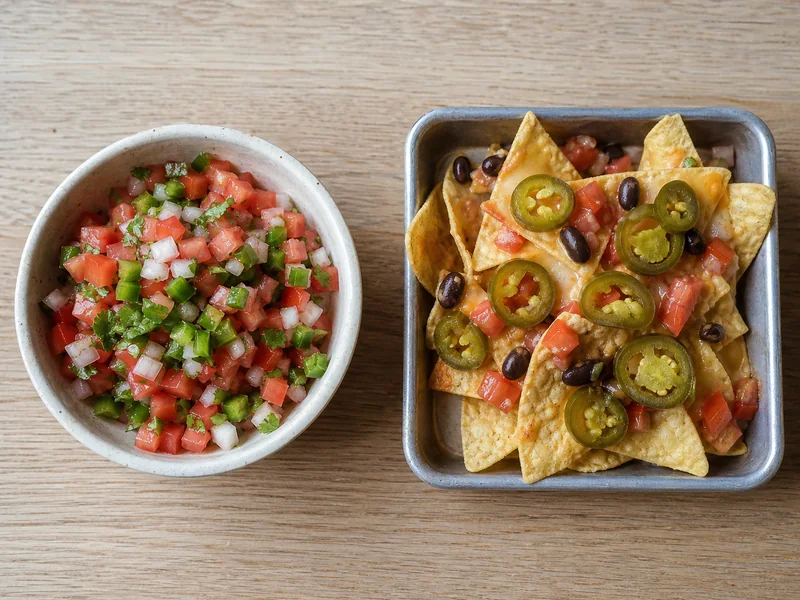
| Pico de gallo | Fresh | Crisp dice and green aroma support tomato and onion |
| Nachos or queso | Canned | Soft rings spread easily and add acid to rich food |
| Burgers and sandwiches | Either |
Canned folds under the bun | | Stuffed jalapenos | Fresh | An intact firm wall must hold the filling | | Chili or baked filling | Either | Cooking softens fresh pepper, while canned adds late acidity | | Eggs or cornbread | Canned, well drained | Soft chopped rings disappear into the crumb |
Use the jalapeno cutting method for even fresh dice. The jalapeno popper method depends on a whole pod that stays intact during filling and baking.
A canned ring cannot perform that structural job.
Can You Substitute Canned Jalapenos for Fresh?
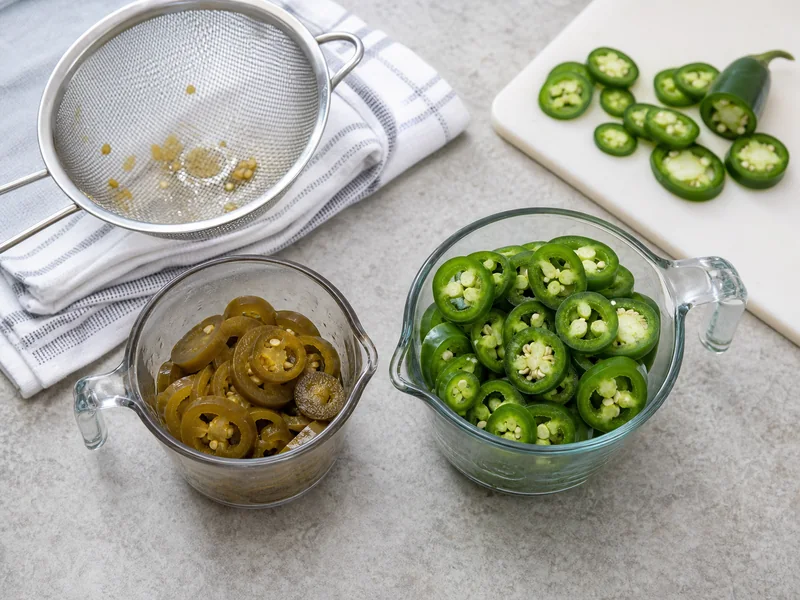
A volume-for-volume swap can add too much liquid. Start with about 3/4 cup drained canned rings for 1 cup sliced fresh jalapeno.
Check the dish before adding the rest. In the other direction, begin with 1 cup fresh slices for 3/4 cup drained rings and restore acid separately.
- For nachos, a quick shake in a strainer is enough.
- For cornbread or creamy dip, drain for several minutes and blot the rings.
- Add vinegar or lime by the teaspoon when fresh replaces canned.
- Rinse only when the product is too salty for the dish.
For a refrigerator pickle that keeps more snap, use the pickled jalapeno method and control slice thickness, acid, and resting time.
Can You Reuse the Brine From Canned Jalapenos?
Use brine only where acid and salt already help. A teaspoon can sharpen queso, bean dip, burger sauce, dressing, or chili.
Measure, stir, and taste before adding more salt.
Do not reuse leftover brine for a new shelf-stable canning batch. Vegetables change the liquid during storage, so it no longer has the tested starting acidity.
Fresh salsa usually needs lime instead because lime supports tomato and cilantro without adding a preserved-pepper flavor.
Discard cloudy, fizzy, moldy, or unpleasant-smelling liquid from a product that was not designed to ferment. Do not taste a questionable opened container to decide whether it is safe.
Do Canned Jalapenos Have More Sodium Than Fresh?
Added sodium is the largest practical nutrition difference. Utah State University Extension lists raw green chile at very low sodium and canned chile much higher because of the preserving liquid.
The package label owns the exact number because brands differ.
USDA FoodData Central lists raw jalapeno at 29 calories per 100 grams, with 6.5g carbohydrate, 2.8g fiber, 0.91g protein, 118.6mg vitamin C, 248mg potassium, 1,078 IU vitamin A, and 18.5 micrograms vitamin K. Those figures describe raw pepper flesh, not a pickled or cheese-stuffed serving, and canning's added brine changes the sodium math well beyond what the raw numbers suggest.
Draining removes liquid carried into the dish. It does not pull out all salt already absorbed by the pepper.
Heat and storage can also reduce some heat-sensitive vitamins compared with a raw pod.
Treat canned jalapenos as a salty condiment. Taste queso, nachos, canned beans, and processed meats before adding more salt.
Choose fresh when sodium is the deciding factor.
Storage After Opening
An unopened commercial can or jar follows its own date and storage directions. After opening, refrigerate promptly in the container the label recommends and use a clean fork so fingers do not introduce contamination.
Fresh jalapenos can keep about two to three weeks under good refrigeration according to Utah State University Extension. Bruised and cut pods lose quality sooner.
The fresh pepper storage guide explains why dry surfaces and airflow matter.
Keep preserved rings under their liquid. Discard the container when mold, gas, a damaged seal, or an off odor appears.
A long date on the original package does not apply after opening.
For a large fresh harvest, freeze peppers for cooked dishes. Frozen slices soften after thawing, so reserve them for sauces, soups, and fillings.
Which One To Keep
Keep fresh jalapenos when salsa, garnish, roasting, stuffing, or green aroma appears often in your cooking. Whole pods give control by the slice and can move into several dishes.
Keep canned rings when nachos, sandwiches, queso, pizza, or chili need a fast acidic topping. Their value comes from soft texture, vinegar, salt, and immediate readiness.
A kitchen can assign separate jobs to both. Fresh is the produce ingredient, and canned is the pickled condiment.
If buying one, follow the recipe in front of you: texture points to fresh, while acid and speed point to canned.
Where Does the Name Jalapeno Come From?
The name jalapeno points back to Jalapa, the older English spelling associated with Xalapa in Veracruz, though that origin clue does not mean every modern jalapeno in a grocery bin came from Veracruz. Modern jalapeno identity is also shaped by breeding: NMSU lists named cultivars such as NuMex Primavera, NuMex Vaquero, and NuMex Jalmundo, with the Vaquero pedigree tracing back through Early Jalapeno and TAM Jalapeno.
That cultivar layer explains why seed packets can feel different from supermarket pods. A grocery jalapeno usually stays around 2,500-8,000 SHU, while specialty breeding lines may be selected for mildness, size, disease resistance, color, or much stronger heat.
For cooks, the more relevant historical split is fresh versus smoked rather than canned versus fresh. Green jalapenos became the fresh salsa, pickle, and stuffed-pepper workhorse, while fully ripe red jalapenos became the base material for chipotle, a separate preservation tradition that predates commercial canning by centuries.
Commercial vinegar-brine canning, by contrast, is a 20th-century industrial process built on tested acidification, not a folk preservation method with deep regional roots the way smoking is.
Canned Jalapenos vs Fresh
Reach for Canned Jalapenos when you want Nachos, burgers, queso, cooked fillings.
Reach for Fresh when you want Salsa, garnish, roasting, stuffing.
Canned Jalapenos vs Fresh FAQ
- National Center for Home Food Preservation - Pickled Jalapeno Rings
- Utah State University Extension - How to Preserve Chiles
- Utah State University Extension - Pepper Harvest and Handling
- University of Minnesota Extension - Pickling Produce