
Crushed Red Pepper vs Cayenne: Why Flakes and Powder Heat Food Differently
Crushed red pepper adds visible flakes and uneven bursts. Cayenne powder adds denser, uniform heat.

Crushed Red Pepper
Coarse chile blendCayenne Pepper
Fine single-pepper spice- Pepper source: Often a blend of dried red chiles vs Ground cayenne peppers
- Heat delivery: Slower, uneven bursts vs Immediate and evenly dispersed
- Best control: Visible finishing heat and infused oil vs Precise heat in sauces, rubs, and batters
Crushed Red Pepper vs Cayenne Pepper at a glance
| Attribute | Crushed Red Pepper | Cayenne Pepper |
|---|---|---|
| Typical form | Coarse flakes with visible seeds | Fine, uniform powder |
| Pepper source | Often a blend of dried red chiles | Ground cayenne peppers |
| Heat delivery | Slower, uneven bursts | Immediate and evenly dispersed |
| Best control | Visible finishing heat and infused oil | Precise heat in sauces, rubs, and batters |
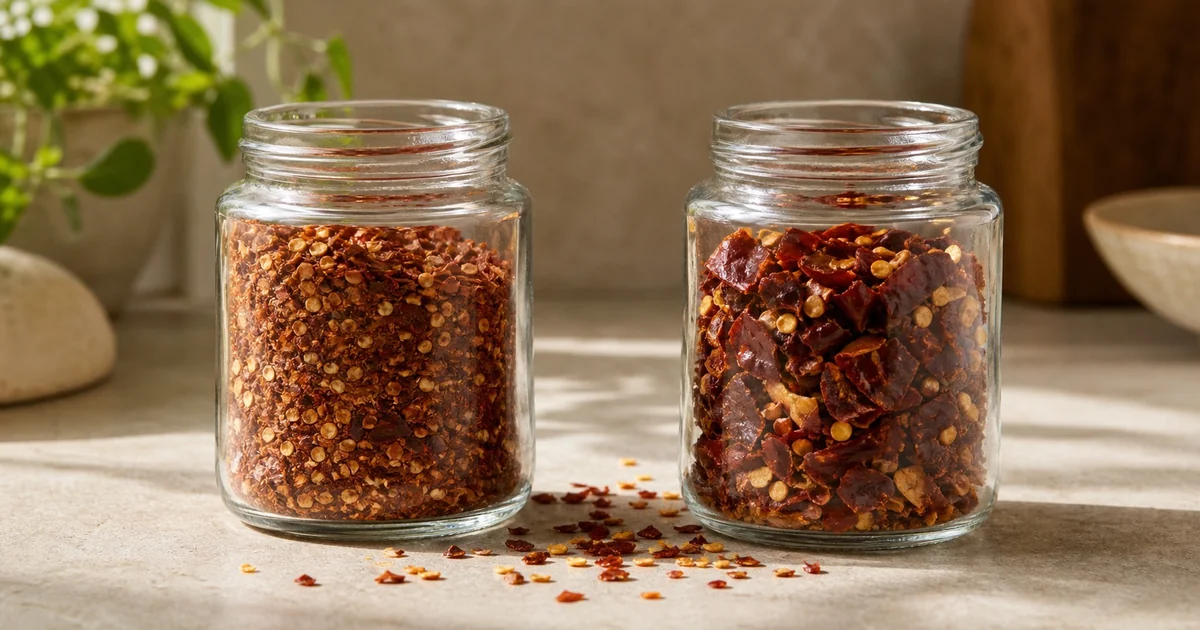
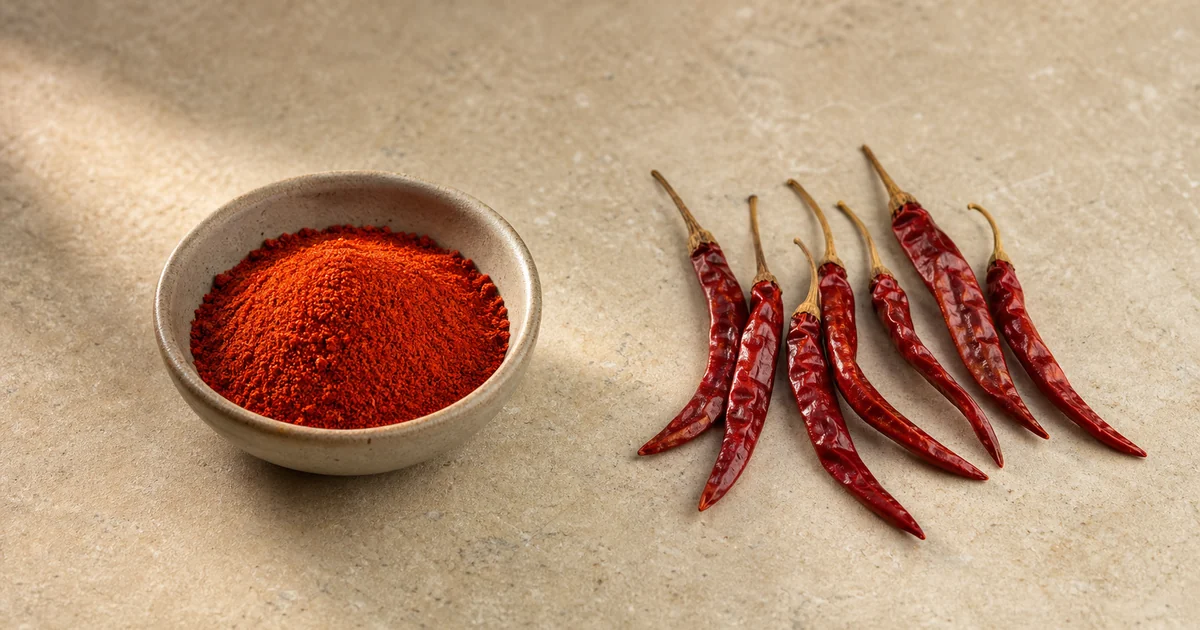
Crushed Red Pepper and Cayenne Pepper side by side
Crushed red pepper is a texture and blend category, so its exact peppers can change by brand.
Ground cayenne delivers concentrated heat without visible flakes.
Is Crushed Red Pepper the Same as Cayenne?
Crushed red pepper and cayenne are both dried red-chile seasonings, but they are not the same product ground to different sizes. Crushed red pepper is usually a coarse mixture of skin, flesh, and seeds from one or more hot pepper varieties.
Cayenne powder is finely ground cayenne pepper, typically listed at 30,000 to 50,000 Scoville Heat Units.
The coarse flakes remain visible and release heat in small bursts as they hydrate or sit in oil. Fine cayenne spreads through the whole dish quickly.
A bite of pizza may land on one hot flake. A pot of soup seasoned with cayenne tends to carry the same heat from spoon to spoon.
Is Crushed Red Pepper Hotter Than Cayenne?
Cayenne has a defined cultivar range, but the heat of crushed red pepper depends on the blend. Some brands lean on cayenne-type peppers.
Others include milder or hotter dried chiles.
Seeds are visible, yet most capsaicin originates in the pale inner tissue that can cling to them rather than inside the seeds themselves.
Do not assume equal spoonfuls. Fine powder packs more chile into the same volume and disperses more completely, so cayenne can seem much hotter.
Brand age also matters: opened flakes and powder gradually lose aroma and perceived punch, especially beside a warm stove.
Form Changes The Result
| Recipe | Crushed red pepper | Cayenne |
|---|---|---|
| Pizza or pasta finish | Visible flakes and occasional hot bites | Powdery surface and uniform heat |
| Chile oil | Texture, color, and gradual infusion | Fast color and heat but possible sediment |
| Smooth soup or sauce | Flecks remain unless strained or blended | Disappears into the liquid |
| Dry rub | Coarse texture may fall off | Mixes evenly with salt and fine spices |
| Bread or batter | Distinct pockets of heat | Even heat throughout |
Texture is part of the seasoning decision. Flakes can signal heat visually and add contrast.
Cayenne is better when the cook wants the heat present but the chile itself invisible.
When Should You Use Crushed Red Pepper or Cayenne?
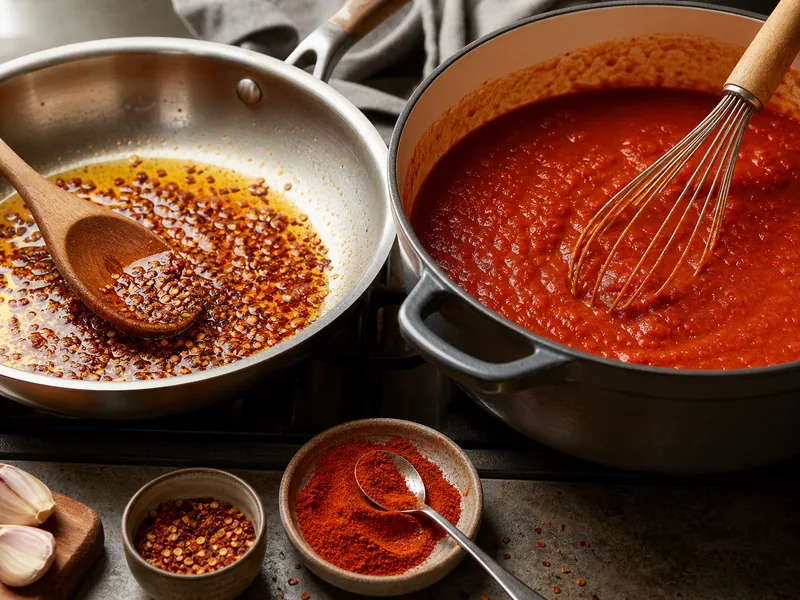
Use crushed red pepper on pizza, pasta, roasted vegetables, sautéed greens, and noodle dishes. It also suits oil infusions because the flakes are easy to see and strain.
Bloom them gently. Burnt flakes become bitter before they improve the oil.
Use cayenne in hot sauce, barbecue rubs, soups, creamy dips, egg dishes, fried-chicken seasoning, and baking mixtures. Add it by the pinch, stir thoroughly, and wait for the spice to hydrate before deciding that the dish needs more.
- Choose flakes when visible texture and small bursts of heat are welcome.
- Choose cayenne when every serving needs the same heat.
- Choose neither blindly when the recipe gives a brand-specific quantity. Blend strength can vary.
Can You Substitute Cayenne for Crushed Red Pepper?
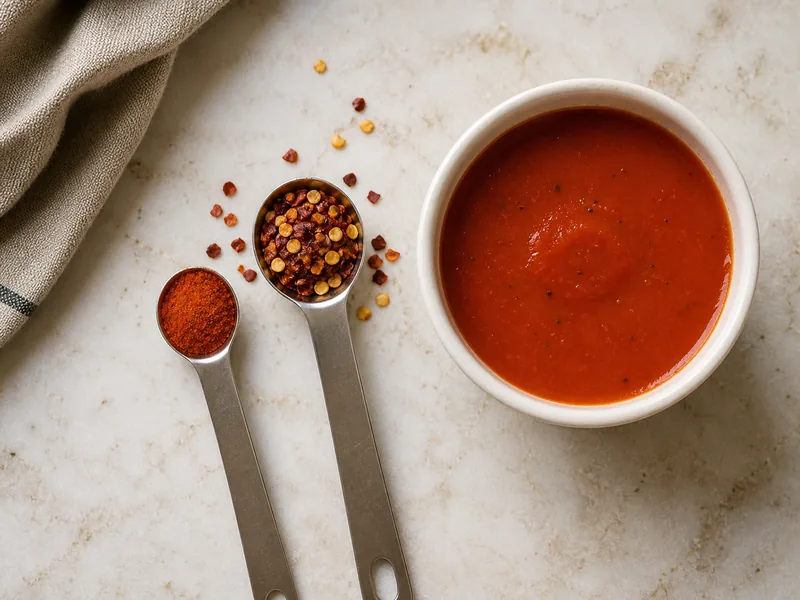
When replacing crushed red pepper with cayenne, begin with roughly one-quarter to one-half of the stated volume. The exact amount depends on the flake blend, but starting low protects the dish from the denser powder.
Add more only after stirring and simmering.
When replacing cayenne with crushed red pepper, start near the stated quantity, then decide whether the dish can accept visible flakes and uneven heat. Grind the flakes in a spice grinder for a closer texture, but let the airborne dust settle before opening the lid.
The ground blend may still taste different from pure cayenne.
| Dish needs | Use first | Adjustment |
|---|---|---|
| Visible finishing heat | Crushed red pepper | Add after cooking or at the table |
| Smooth even heat | Cayenne powder | Stir fully and wait before adding more |
| Chile-infused oil | Crushed red pepper | Bloom gently, then strain if needed |
| Fine dry rub | Cayenne powder | Mix with salt and other fine spices |
Storage and Freshness
- Keep both seasonings airtight and away from sunlight, steam, and stove heat.
- Replace a jar when its aroma is faint, the color is dull, or normal amounts no longer season the dish.
- Buy small quantities if the kitchen uses hot pepper only occasionally.
- Label homemade ground flakes with the source pepper and date.
- Use a clean, dry spoon so moisture does not enter the container.
Whole dried chiles generally hold aroma longer than crushed or powdered forms. Grinding a small batch as needed offers stronger flavor and a clearer understanding of which pepper is in the jar.
Bottom Line
Crushed red pepper provides texture and scattered heat. Cayenne provides compact, uniform heat.
Cayenne is more predictable because it names the pepper, while crushed red pepper may name only the finished form.
For a substitution, reduce the dose when moving from flakes to fine cayenne. When moving from cayenne to flakes, decide first whether the recipe can tolerate visible pieces and a less even burn.
Measure Small Then Scale
For a large pot, season a cup of the finished base before changing the whole batch. Add a measured pinch of cayenne or a measured amount of flakes, simmer briefly, and scale that result to the remaining volume.
This method accounts for the actual brand rather than an average conversion.
Write the successful amount on the recipe. ‘One teaspoon’ becomes useful only when the product and batch size are known; ‘add to taste’ gives the next cook no safe starting point.
What Does the Crushed Red Pepper Label Tell You?
Crushed red pepper names a finished form rather than one fixed cultivar. The label may list red pepper, chile pepper, cayenne, or a blend, so the ingredient line and the first measured taste are more reliable than assuming every shaker matches.
Cayenne powder names a narrower product category, but cultivar and lot still affect pungency. New Mexico State University groups dried Capsicum powder by measured pungency and notes that genetics, weather, growing conditions, and fruit age all influence capsaicinoid content.
For repeatable cooking, record the brand and batch with the successful amount. That turns a vague instruction such as add flakes to taste into a usable starting point the next time the same jar reaches the stove.
Why Nutrition Tables Do Not Decide This Choice
Generic nutrient tables do not decide between a coarse blend and a fine cayenne powder. The amounts used are small, the flake blend may change, and the recipe question is heat distribution rather than which teaspoon promises more vitamins.
Form controls the result. Flakes remain visible and can create concentrated bites, while fine cayenne disperses through sauce, batter, brine, or a rub.
Avoid breathing dust when grinding flakes and allow the grinder jar to settle before opening it. Keep both products dry and use a clean spoon because steam and moisture make ground spices clump and lose usable quality.
Crushed Red Pepper vs Cayenne Pepper
Reach for Crushed Red Pepper when you want Visible finishing heat and infused oil.
Reach for Cayenne Pepper when you want Precise heat in sauces, rubs, and batters.
Crushed Red Pepper vs Cayenne Pepper FAQ
- USDA FoodData Central - Red pepper or cayenne
- New Mexico State University Chile Pepper Institute
- KnowThePepper — Cayenne Pepper
- KnowThePepper — Red Pepper Flakes Guide