Chile de Arbol vs Cayenne: Pods or Powder?
Whole dried chile de arbol adds toasted aroma and removable pod heat; cayenne adds stronger, uniform heat as a fine powder.

Chile De Arbol
Whole dried chileCayenne Pepper
Fine heat powder- Common form: Whole dried pod or flakes vs Fine powder
- Flavor role: Toasted, nutty red-chile aroma vs Direct, neutral pepper heat
- Best fit: Salsa, chile oil, broth vs Dry rubs, smooth sauces, heat correction
Chile De Arbol vs Cayenne Pepper at a glance
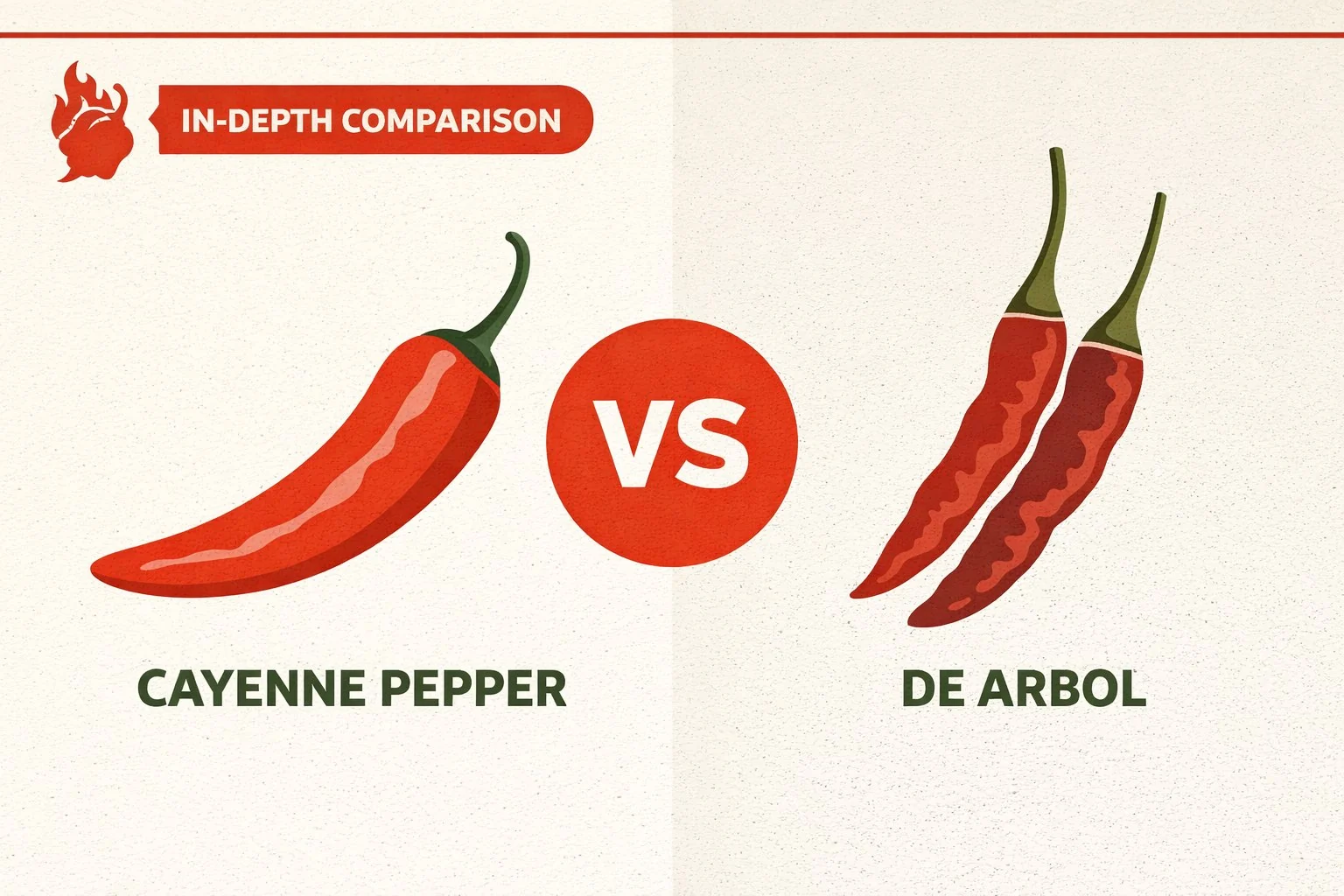
Chile De Arbol and Cayenne Pepper side by side
A thin dried pod that can be toasted, steeped, blended, or removed.
A concentrated powder that disperses evenly through liquids and seasoning blends.
Choose The Shape Of Heat First
Chile de árbol and cayenne can both make a dish decisively hot, but they usually arrive in different forms. Whole dried árbol pods can be toasted, steeped, blended, or removed. Cayenne is most often sold as a fine powder that disperses immediately. The form changes how precisely a cook can place the heat.
Choose árbol when the recipe benefits from a dried-chile aroma, visible seeds, or an infused oil that can be strained. Choose cayenne when the finished dish should have even heat without pieces of chile or a pronounced toasted flavor.
Heat Comparison
Cayenne occupies the higher range at 30,000 to 50,000 Scoville Heat Units. Chile de árbol is listed at 15,000 to 30,000 SHU. Their ranges meet around 30,000 SHU, so a strong árbol pod can approach a mild cayenne, but cayenne is generally the hotter ingredient.
Volume comparisons are unreliable. A teaspoon of compact cayenne powder contains more chile material than a teaspoon filled with broken árbol flakes. Whole pods also vary in size, and oil extracts capsaicin differently from a watery soup. Start below the recipe's stated amount whenever the form changes.
Flavor Comparison
Chile de árbol has a clean red-chile flavor with nutty and lightly smoky notes that become stronger after a brief toast. Its thin flesh dries well and contributes aroma as well as heat to salsa, chile oil, and broths. Cayenne tastes sharper and more direct. It raises the burn while staying comparatively quiet behind other spices.
Toasting árbol is useful but unforgiving. A few seconds in a dry pan wakes up its aroma; blackened pods turn bitter and can release irritating fumes. Cayenne needs no toasting and can scorch if it hits very hot oil without enough liquid or other ingredients to protect it.

Culinary Uses
Árbol is the stronger choice for salsa roja, table sauce, infused oil, pozole broth, and recipes that begin by toasting whole dried chiles. The pod can be blended for body or removed after steeping for a cleaner liquid. Cayenne is better for dry rubs, hot sauce, egg dishes, creamy sauces, and last-minute heat correction.
For substitution, one small árbol pod should be treated as a starting point, not as a fixed teaspoon conversion. When replacing árbol with cayenne, add a pinch and taste after the dish simmers. When replacing cayenne with árbol, grind the pod finely or accept flakes and a more noticeable dried-chile flavor.
Which One Fits The Recipe
| Dish | Better first choice | Reason |
|---|---|---|
| Toasted red salsa | Chile de árbol | Whole pods supply aroma, color, and blendable body |
| Chile oil | Chile de árbol | Broken pods can infuse the oil and remain visible or be strained |
| Dry seasoning blend | Cayenne | Fine powder distributes evenly through salt and spices |
| Cream sauce | Cayenne | A small pinch changes heat without adding flakes |
| Soup or stew | Either | Steep árbol for chile character; use cayenne for uniform heat |
Three Ways To Control The Result
- Keep the Pod Whole: Steep ?rbol in broth or oil, then remove it. This gives gradual heat and keeps the liquid smooth.
- Blend the Pod: Stem ?rbol, toast it briefly, then soak and blend. The chile becomes part of the sauce's color and body.
- Use a Fine Powder: Add cayenne in pinches for an immediate, even adjustment. Let the dish cook before deciding whether it needs more.

The Practical Verdict
Chile de árbol is the better whole dried chile; cayenne is the better precision powder. Árbol earns its place when toasted aroma and pod form matter. Cayenne wins when a cook needs compact, predictable heat that disappears into the dish.
If a recipe names one specifically, preserve its intended form before chasing an exact heat match. The right texture and aroma usually matter more than forcing a one-to-one Scoville conversion.
Seeds Toast And Strain
Leaving árbol seeds in a blended salsa changes texture more reliably than it predicts heat. Much of a pepper’s capsaicin sits in the pale internal tissue around the seeds. Remove loose seeds for a smoother sauce, but still dose the flesh cautiously.
For chile oil, warm whole or broken árbol gently and stop before the pods blacken. Strain for a clear oil or leave a few flakes for appearance. Cayenne powder cannot be strained cleanly after it disperses, so whisk it into a small test portion of oil before seasoning the full batch.
Chile De Arbol vs Cayenne Pepper
Reach for Chile De Arbol when you want Salsa, chile oil, broth. Reach for Cayenne Pepper when you want Dry rubs, smooth sauces, heat correction.