
Paprika vs Chili Powder: One Is a Ground Pepper, the Other a Spice Blend
Paprika is usually a mild ground red pepper used for color, sweet pepper aroma, and gentle warmth. Chili powder is usually a seasoning blend with ground chile, cumin, garlic, oregano, salt, or other spices. Choose paprika when color and soft pepper flavor matter. Choose chili powder when the dish needs a chili base.

Paprika Pepper
One red pepperChili Powder
Seasoning blend- Ingredients: Usually just paprika vs Chile, cumin, garlic, oregano, often salt
- Heat: Mild, often near 250 to 1,000 SHU vs Varies by blend, usually mild to medium
- Main job: Red color and sweet pepper aroma vs A ready-made chili and taco base
Paprika Pepper vs Chili Powder at a glance
| Attribute | Paprika Pepper | Chili Powder |
|---|---|---|
| What it is | One red pepper, ground | A seasoning blend built on chile |
| Ingredients | Usually just paprika | Chile, cumin, garlic, oregano, often salt |
| Heat | Mild, often near 250 to 1,000 SHU | Varies by blend, usually mild to medium |
| Main job | Red color and sweet pepper aroma | A ready-made chili and taco base |
| Swap start | Color only, rebuild the spices | 1/4 to 1/2 tsp powder per 1 tsp paprika |
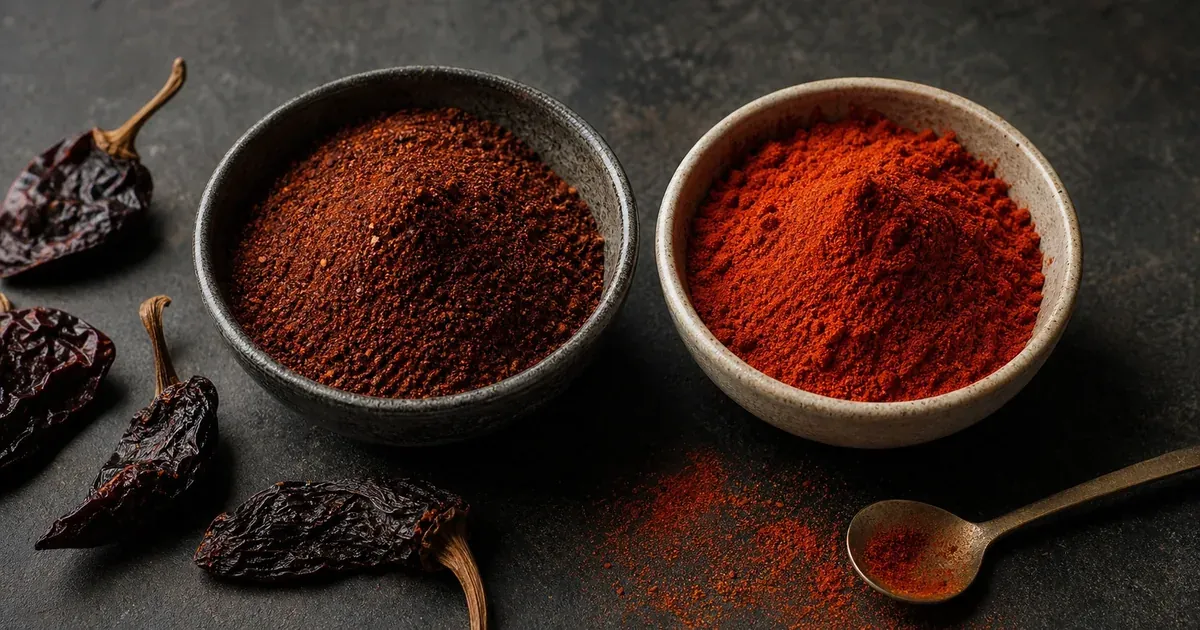
Paprika Pepper and Chili Powder side by side
A color-and-aroma tool that lets a dish keep tasting like itself.
A blend that steers a dish toward chili-house flavor.
What Is the Difference Between Paprika and Chili Powder?
Paprika supports a dish. Chili powder tends to redirect it.
That is the fastest way to keep these two red jars straight.
Paprika is mostly a color and aroma tool. It brings ripe red pepper sweetness and a warm finish without steering the recipe anywhere new.
Chili powder is usually a blend, so one spoon can move the whole dish toward chili, tacos, beans, or enchilada filling.
That is why deviled eggs, chicken paprikash, roasted potatoes, and cream sauces usually start with paprika, while chili, taco meat, and tomato-heavy sauces usually start with chili powder.
What Is in Paprika and Chili Powder?
The label explains the flavor jump. McCormick paprika lists paprika plus silicon dioxide, built for ripe red color and gentle warmth.
Its chili powder lists chili pepper, spices, salt, silicon dioxide, and garlic.
So swapping one for the other is not only a heat move. You are deciding whether cumin, garlic, oregano, and salt belong in the dish at all.
If smoke is the real question instead, paprika against smoked paprika is the cleaner split. If heat is the real question, paprika against cayenne separates color from burn.
What Kinds of Paprika Are There?
The word paprika hides a lot of range. Most American jars are sweet, mild paprika built for color, but the same shelf can hold hot paprika and smoked paprika, which behave nothing alike.
Hungarian and Spanish traditions each grade it further, from delicate and sweet to sharp and hot. A recipe written in one tradition assumes a paprika that a generic supermarket jar may not match, so the safe habit is to taste the jar before you trust it.
This matters next to chili powder because a hot Hungarian paprika can out-burn a mild chili powder, while a sweet one adds almost none. Neither jar has a fixed heat, so treat the label as a starting hint and let a small taste settle it.
When Should You Use Paprika?
Paprika wins when color is part of the recipe. It turns deviled eggs, potato salad, chicken skin, buttered noodles, and roasted vegetables red without pushing the plate into taco territory.
A quick smell test helps. Paprika should smell like sweet or lightly toasted red pepper.
If the first aroma is cumin, you are holding a blend, and that cumin will show up in the dish.
In better jars, paprika also adds a toasted edge that works with fat, which is why it belongs in a pan of goulash or a spoon of warm butter.
Paprika earns its keep in a few dishes where it is the whole point. Chicken paprikash and goulash lean on spoonfuls of sweet paprika stirred into fat and onions, where it turns the sauce deep red and faintly sweet.
Deviled eggs, potato salad, and roasted potatoes use it as a finishing dust that reads as color first and flavor second.
When Should You Use Chili Powder?
Chili powder earns its space when the dish wants a built spice base. Chili, taco meat, black beans, enchilada filling, tomato soup, and skillet dinners all expect that cumin-and-garlic backbone, and one spoon does the work of several.
It can also add color, but it brings seasoning along with it. That works in a pot of beans and tastes out of place on egg salad or delicate fish, where the cumin reads like a mistake.
Heat is the other reason to keep them separate. Sweet paprika sits near the bottom of the pepper heat scale, often 250 to 1,000 SHU, while a chili powder blend can land anywhere depending on the chiles the maker used, which is the same gap behind cayenne against chili powder.
So swapping paprika for chili powder can quietly raise the burn along with the seasoning.
For a homemade version, paprika often becomes one component inside a homemade chili powder blend. That does not make the two jars equal.
It means paprika can support the blend without replacing it.
Chili powder is built for the pot, not the garnish. It carries a chili con carne or a batch of taco meat on one spoon because the cumin, garlic, and oregano are already in the mix.
Drop it into beans, enchilada sauce, or a skillet of ground meat and the dish tastes seasoned almost immediately, which is exactly what you do not want on a plate of eggs.
How Paprika Colors A Dish
Paprika's red is not just decoration. The carotenoid pigments that make the pepper red dissolve into fat, so a spoon stirred into warm oil or butter blooms into a deep red that coats everything after it.
That is why paprika belongs early in a paprikash or a pan of onions, where it has fat and time to open up. It is also why it scorches easily: dropped into a dry, ripping-hot pan it turns brown and bitter in seconds, so add it after there is some fat and moisture to protect it.
Chili powder colors a dish too, but it brings its whole seasoning along with the color. When a recipe wants red without the taco-spice detour, paprika is the tool that keeps the dish looking rich while still tasting like itself.
What Does a Recipe Mean by Chili Powder or Paprika?
When a recipe just says chili powder, the writer usually means the American blend, so cumin, garlic, and oregano are part of the plan. When it says paprika, it almost always means color and mild sweetness, not heat.
Regional wording muddies this. A recipe translated from Hungarian or Spanish may use paprika to mean the main pepper spice, closer to how an American cook thinks of chili powder.
If the dish is goulash or paprikash, trust the paprika.
If it is chili, tacos, or a Tex-Mex skillet, trust the blend.
When you are unsure, taste the jar you have. If the first thing you smell is cumin, it will steer the dish, so treat it as chili powder no matter what the label says.
Quick call at the stove:
- Dish should stay its own color and flavor (eggs, potatoes, cream sauce)? Paprika.
- Dish should taste like chili, tacos, or a Tex-Mex skillet?
Chili powder. - Recipe already lists cumin, garlic, and oregano separately?
Paprika, so you do not double them. - One spoon has to carry the whole seasoning? Chili powder.
Can You Substitute Chili Powder for Paprika?
Swap only after deciding whether cumin belongs
Chili powder for paprika: start with 1/4 to 1/2 teaspoon per teaspoon of paprika, then stop as soon as the cumin note appears.
Paprika for chili powder: add paprika for color, then follow chili powder substitute ratios to rebuild cumin, garlic, oregano, and salt.
Creamy or egg dishes: skip chili powder unless the dish is meant to taste like chili seasoning.
How Can You Tell If Paprika or Chili Powder Is Stale?
Paprika tells on itself by color and aroma. When it turns dull brick-brown or smells flat, it will not brighten eggs, potatoes, or sauces the way a fresh jar does.
Chili powder fades differently. The cumin and garlic can turn dusty before the chile flavor is gone, so the jar still smells spicy while the top notes are already tired.
Replace paprika first when color matters.
Replace chili powder first when the dish depends on a clean seasoning base. For longer timing, chili powder freshness signs sets the pantry rule.
Paprika Pepper vs Chili Powder
Paprika Pepper vs Chili Powder FAQ
- McCormick Paprika Product Details
- McCormick Chili Powder Product Details
-
Sourcing note: grower and seed-catalogue documentation only No university, government or research body publishes data on this cultivar. The figures on this page come from grower reports and seed-catalogue listings, which are the only documentation that exists for it.