
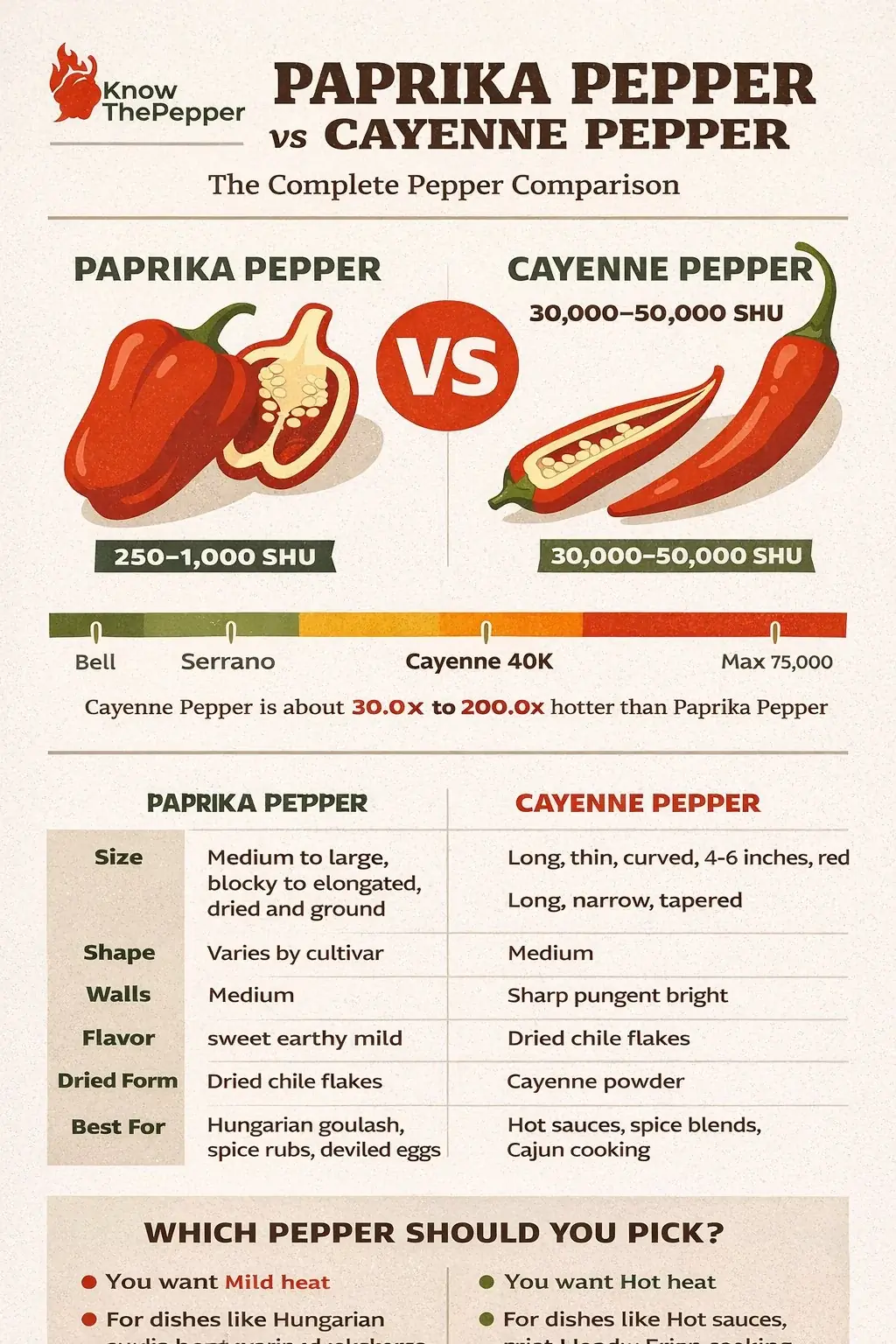
Paprika vs Cayenne: 0-1,000 SHU for Color, 30,000-50,000 SHU for Heat
Paprika and cayenne are both red pepper powders, but they do different jobs. Paprika is mostly color, sweet pepper flavor, and mild warmth at 0-1,000 SHU. Cayenne is a small-dose heat tool at 30,000-50,000 SHU. Use paprika for color and body. Use cayenne when the recipe needs real heat.

Paprika Pepper
MediumCayenne Pepper
HotQuick Comparison
| Attribute | Paprika Pepper | Cayenne Pepper |
|---|---|---|
| Scoville evidence | 0-1K SHU | 30K-50K SHU |
| Heat Tier | Medium | Hot |
| vs Jalapeño | n/a | 6x hotter |
| Flavor | sweet and mild | direct pepper heat with a mild earthy note; the dried powder is less aromatic than a fresh pod |
| Species | C. annuum | C. annuum |
| Origin | Hungary | Cayenne, French Guiana (namesake) |
How Much Hotter Is Cayenne Than Paprika?
The gap here is staggering. Paprika sits in the mild pepper classification at 0-1,000 SHU, which means most paprika you buy delivers essentially zero heat, it's selected and processed specifically to minimize capsaicin.
Cayenne lands firmly in the hot spice intensity zone at 30,000-50,000 SHU.
To put that in perspective using a familiar benchmark: a smoked chipotle typically runs around 2,500-8,000 SHU. Cayenne is roughly 6-20 times hotter than chipotle, depending on where each falls in their respective ranges.
Paprika doesn't even register on that comparison, it's closer to bell pepper territory than anything remotely spicy.
The heat character differs too. Cayenne's burn is sharp and immediate, hitting the front of the mouth and spreading quickly.
It's the kind of heat tied to TRPV1 molecular activation - a clean, fast signal that fades within a few minutes.
Paprika's negligible capsaicin means you get none of that response. Any warmth you perceive from paprika is psychological, not chemical.
Hot paprika does exist, some Hungarian varieties reach 1,000 SHU, but even that ceiling sits 30 times below cayenne's floor.
These two spices are not interchangeable on heat grounds under any circumstances. Substituting one for the other in equal quantities would either leave a dish completely flat or blow it out entirely.
How Do Paprika and Cayenne Taste Different?
This is where the comparison gets genuinely interesting.
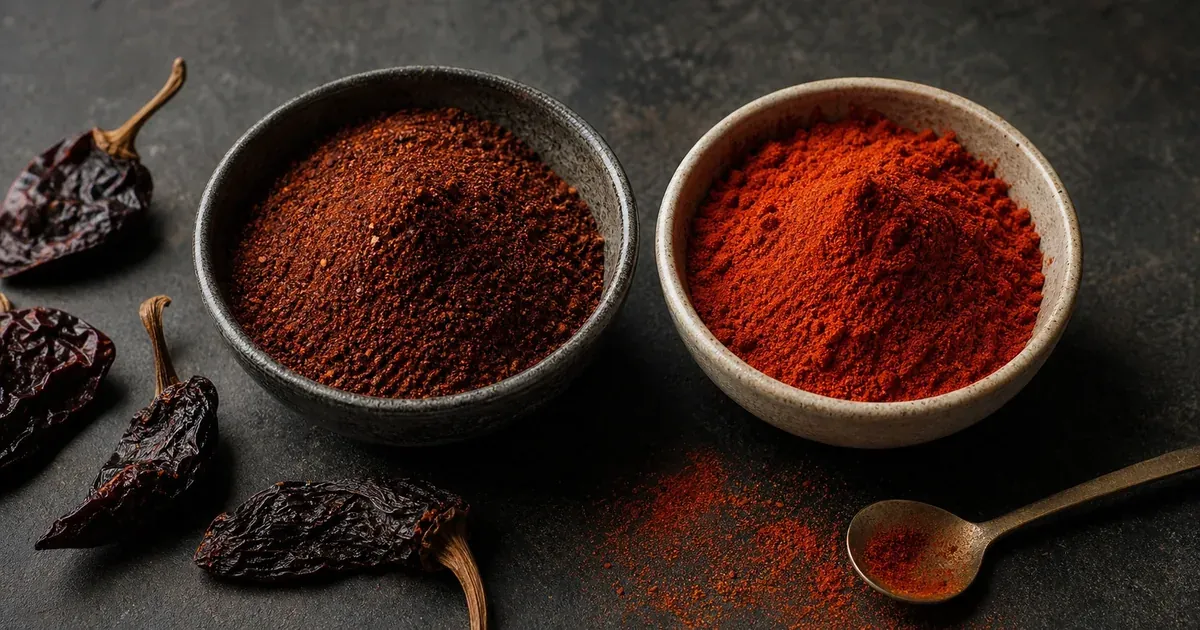
Paprika carries the flavor legacy of Hungary's centuries-old pepper cultivation - sweet, slightly fruity, with an earthy undertone that comes from the drying and grinding process. Good paprika has complexity: a faint bitterness, a whisper of dried fruit, and that distinctive red-orange color that bleeds into oil beautifully.
Smoked paprika adds a whole additional dimension, wood smoke layered over the sweet pepper base.
Cayenne is comparatively one-dimensional in flavor, and that's not a criticism, it's a feature. The spice is neutral and peppery, designed to deliver heat without competing with other flavors.
Its South American pepper origins gave us a pepper bred for capsaicin intensity, not flavor complexity.
When you add cayenne to a dish, you're adding fire, not flavor.
Aroma tells the same story. Paprika smells like dried sweet pepper, warm, slightly dusty, inviting.
Cayenne's aroma is sharp and slightly acrid, a warning signal before the heat arrives.
Both belong to the Capsicum annuum species profile, which is why they share certain baseline characteristics, the same dried-pepper backbone, similar fat-soluble pigments. But selective breeding pulled them in completely opposite directions: one toward sweetness and color, the other toward pure heat.
For a spice that sits between them in both color and heat, the contrast between Kashmiri chili and paprika is worth understanding, Kashmiri adds mild warmth with similarly vivid color.
Culinary Uses
Paprika's primary job in many recipes is color. That deep red-orange hue, from carotenoid pigments like capsanthin, transforms the visual appearance of dishes without changing their heat level.
Hungarian goulash, chicken paprikash, deviled eggs, potato salad, hummus garnishes: paprika works as both flavoring and natural food dye.
It blooms beautifully in hot oil or butter, releasing its pigments and flavor compounds within 30-60 seconds.
The blooming technique matters: dry paprika added directly to a cold dish tastes flat and dusty. Heat it in fat first and it opens up entirely.
This is why paprika-heavy dishes like goulash start with paprika in the oil, before the liquid goes in.
Cayenne operates differently, it's a background heat builder. A pinch goes into chocolate desserts, spice rubs, hot sauces, marinades, and soups where you want warmth without a specific pepper flavor.
It's the spice that makes you wonder why the dish tastes so good without being able to identify what's in it.
Substitution ratios require real attention. Replacing paprika with cayenne at a 1:1 ratio would make most dishes inedible.
A reasonable starting point: use 1/8 teaspoon cayenne for every 1 tablespoon paprika called for, and even that may be aggressive depending on the dish.
Going the other direction, paprika for cayenne, simply won't work if heat is the goal.
For spice rubs, paprika provides the color and bulk while cayenne provides the kick. They work as a layered pairing rather than substitutes.
A classic BBQ rub might use 2 tablespoons paprika alongside 1/4 teaspoon cayenne, they complement rather than replace each other.
If you're working with a recipe that calls for cayenne but want something with more complexity and less raw heat, the peri-peri vs cayenne head-to-head covers a useful alternative. Similarly, the Kashmiri chili vs cayenne contrast explores a spice that splits the difference, more color than cayenne, more warmth than paprika.
Verdict
Reach for paprika when color and sweet pepper flavor are the goal, goulash, spice rubs that need visual appeal, egg dishes, roasted vegetables, anything where a rich red hue matters. It contributes without challenging.
Reach for cayenne when heat is the objective and you don't want the spice to announce itself. It's the workhorse of background heat in hot sauces, spice blends, and dishes where the pepper flavor should stay invisible.
They're not competitors, most serious spice drawers hold both. The mistake is treating them as interchangeable because they're both red powders.
Their SHU ranges (0-1,000 vs 30,000-50,000) make them fundamentally different tools.
Think of paprika as a coloring and flavoring agent, cayenne as a heat delivery system. Used together in a spice rub or chili, they do things neither can accomplish alone, paprika provides the color and body, cayenne provides the fire.
Which Should You Choose, Paprika or Cayenne?
Choose paprika when the recipe needs red color, mild sweetness, and enough spice bulk to coat food without making the dish hot. It is the better fit for goulash, chicken paprikash, deviled eggs, roasted vegetables, hummus garnish, and spice rubs where color matters.
Choose cayenne when the recipe needs a small dose of clean heat without changing the color or flavor profile very much. It is the better fit for hot sauce, chili, marinades, spice blends, and dishes where the pepper should stay in the background.
Do not swap them spoon for spoon.
Paprika is a color-and-flavor spice. Cayenne is a heat spice.
In rubs and chili, the strongest result often uses both: paprika for body and cayenne for the burn.
Can You Substitute Cayenne for Paprika?
Paprika is usually 0-1,000 SHU, while cayenne is 30,000-50,000 SHU. At midpoint, cayenne is roughly 80x hotter than paprika, so equal-volume substitution is the wrong starting point.
If a recipe calls for paprika and you only have cayenne, use cayenne only for heat correction, not color replacement. Start with 1/8 teaspoon cayenne for every tablespoon of paprika, then add a mild red powder or another color source if the dish depends on paprika color.
If a recipe calls for cayenne and you only have paprika, the dish will lose heat. Paprika can keep the red color and sweet pepper flavor, but you need another hot chile powder if the recipe actually depends on capsaicin.
Paprika Pepper vs Cayenne Pepper FAQ
- Capsicum - USDA GRIN Taxonomy
- USDA Agricultural Research Service
- Peppers - UC Small and Organic Farm Advisor, UC ANR