Espelette vs Paprika: Finishing Spice or Sweet Base
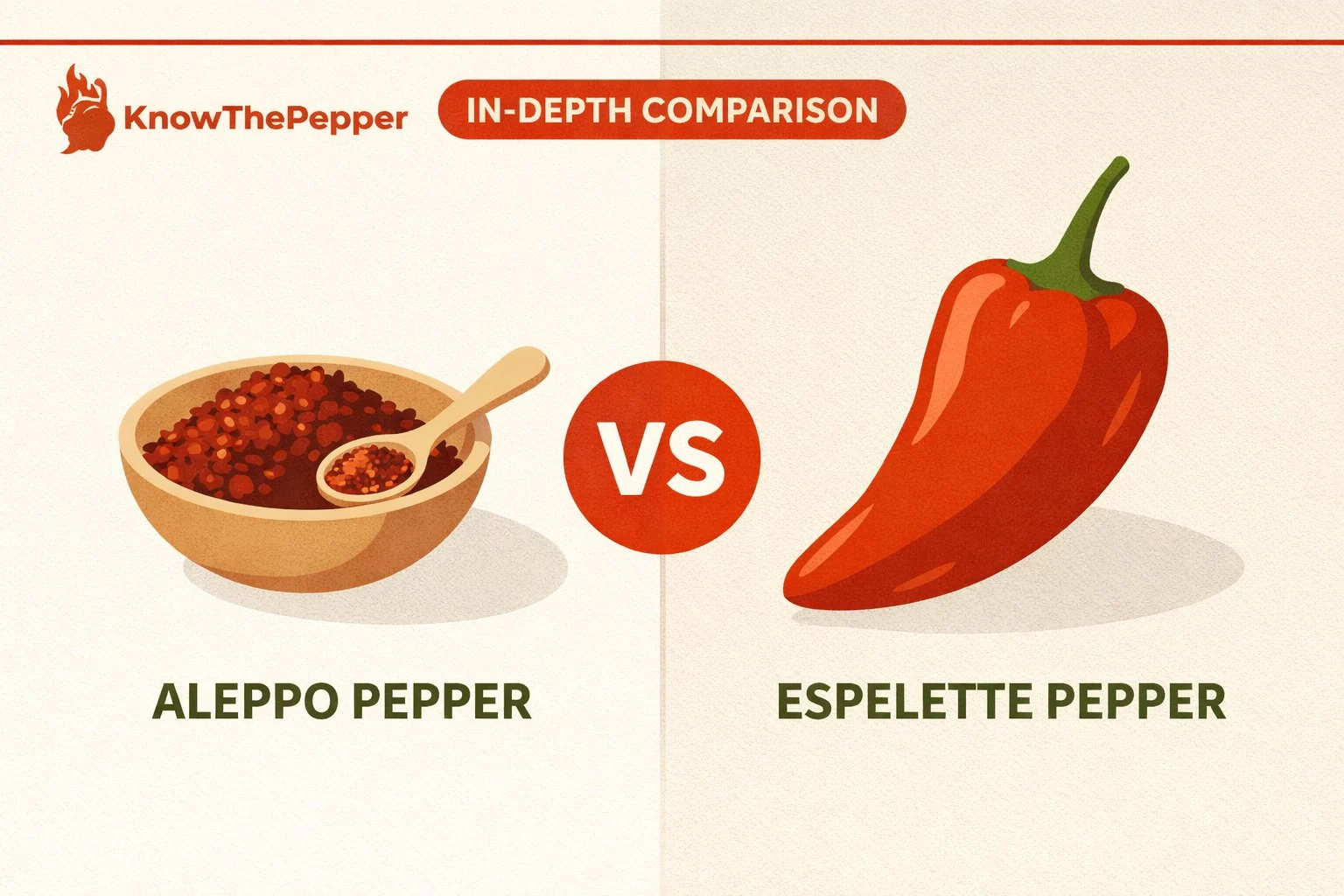
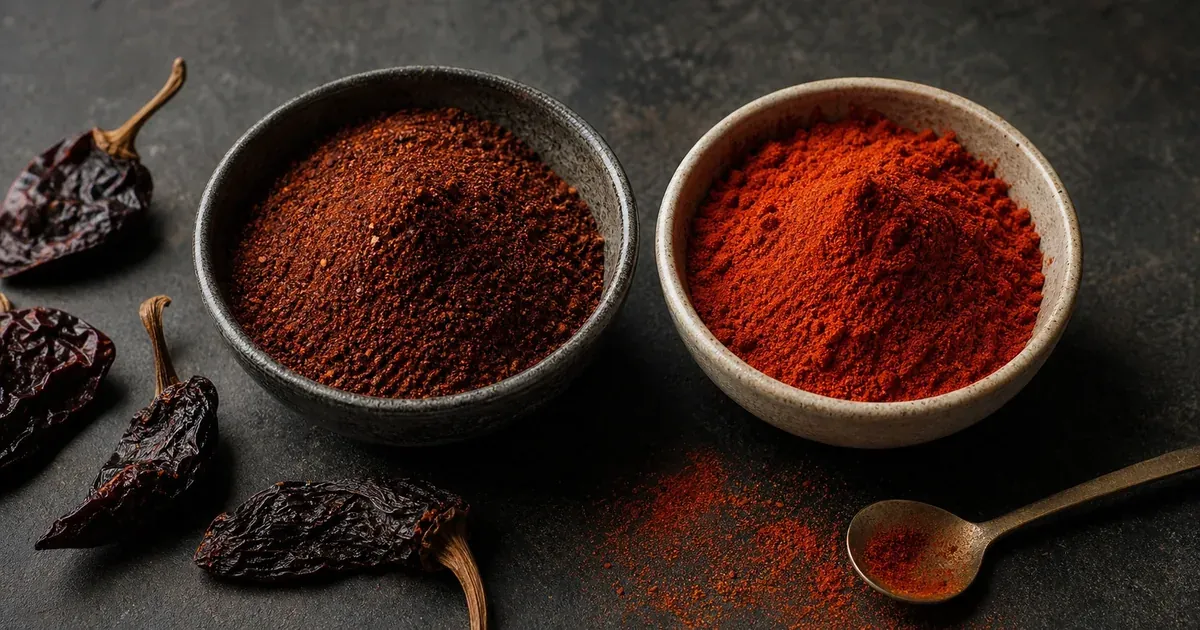
Paprika Pepper is the better first jar when a dish needs sweet red color and body in the pan. Espelette Pepper is the better buy when a pinch should stay on the surface and give gentle heat you can still taste at the table. They are both C. annuum powders, but paprika works like a base ingredient while Espelette works like a finishing pepper.

Espelette Pepper
MediumPaprika Pepper
MediumQuick Comparison
| Attribute | Espelette Pepper | Paprika Pepper |
|---|---|---|
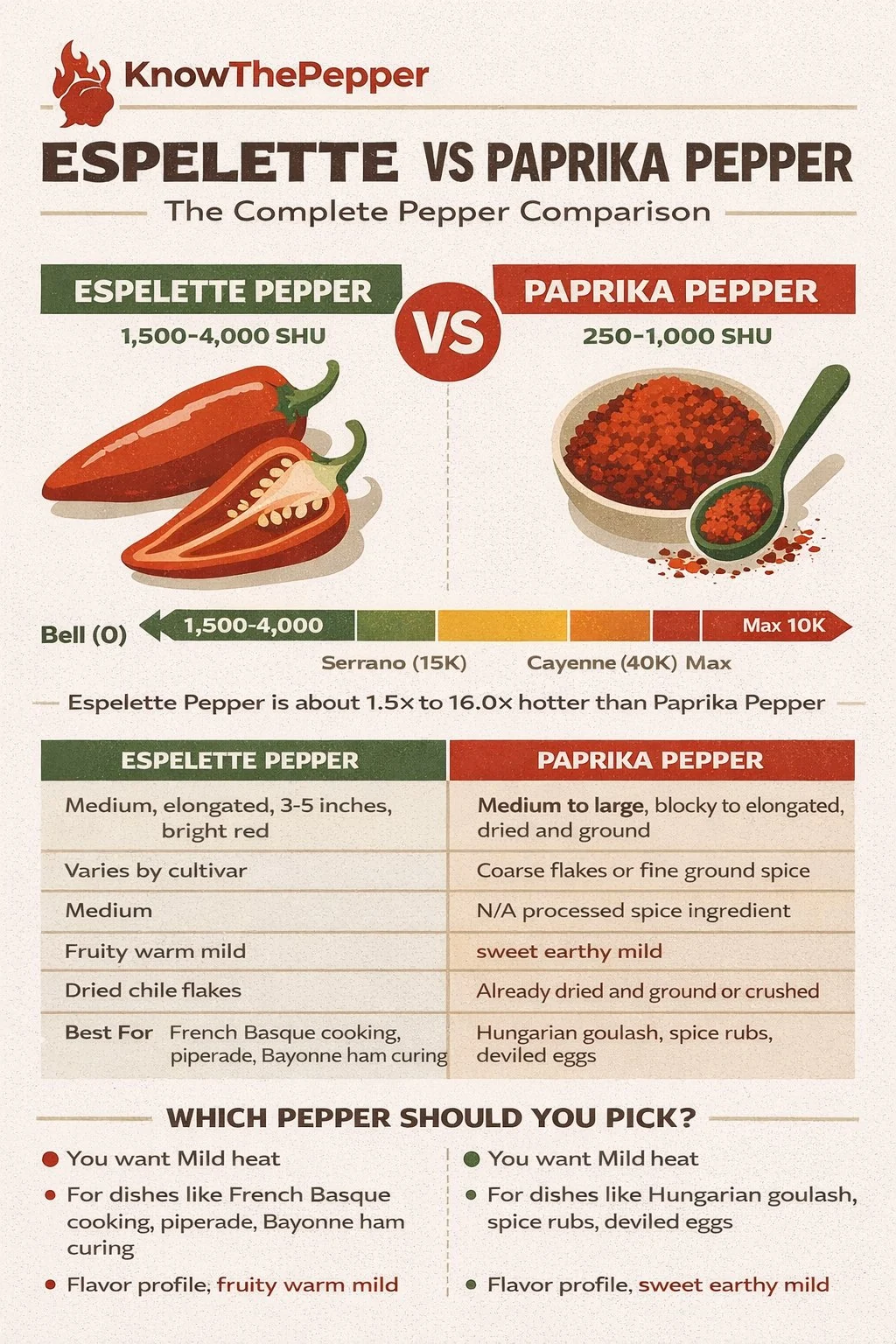
| Scoville evidence | 1.5K-4K SHU | 0-1K SHU |
| Heat Tier | Medium | Medium |
| vs Jalapeño | 1x hotter | n/a |
| Flavor | sweet and smoky | sweet and mild |
| Species | C. annuum | C. annuum |
| Origin | France | Hungary |
Which Is Hotter, Espelette or Paprika?
The heat gap matters less than the way you dose the powder. Sweet paprika lives in spoon territory.
Espelette lives in pinch territory.
Paprika Pepper sits around 0-1,000 SHU, which keeps it in the mild heat range SHU range. Espelette Pepper runs 1,500-4,000 SHU, so it starts where mild paprika ends and brings a gentle but real burn.
A tablespoon of paprika colors a stew without changing how spicy it feels. The same tablespoon of Espelette would take over eggs, mayo, or butter sauces.
If you want a true jump past paprika, paprika versus cayenne shows how steep the next heat step gets.
Both powders come from Capsicum annuum, but breeders pushed them in different directions. Paprika was selected for sweetness and pigment.
Espelette kept enough capsaicin to stay noticeable after the first bite.
How Do Espelette and Paprika Taste Different?
Flavor is the real separator. Paprika tastes sweet, soft, and round.
Espelette tastes warmer, fruitier, and drier on the finish.
The PDO Espelette specification describes powder with fruity, grilled, or hay-like notes and a spicy taste that builds without burning. That is why it works on eggs, cheese, fish, and roast chicken where the pepper stays exposed.
Standard sweet paprika acts more like a color-and-body spice. It blooms into oil, deepens the red look of a sauce, and gives food a sweet pepper smell without asking for attention.
Texture matters too. Paprika usually disappears faster because the powder is finer and the flavor is gentler.
Espelette tends to stay more visible on buttered or oily foods, which helps a last pinch keep its own identity.
When both powders disappear into a long braise, paprika's sweetness tends to melt in. Espelette still leaves a small pepper edge, which is why it reads more clearly at the table.
Which Dishes Suit Espelette and Which Suit Paprika?
Start by asking where the powder will sit in the dish. If it will bloom in fat, dissolve into a sauce, or color a rub, paprika usually fits better.
Paprika handles big volume well. We use it by the teaspoon or tablespoon in goulash, deviled eggs, roasted potatoes, chicken rubs, and creamy sauces because it adds red color and sweet pepper depth without taking over.
Espelette works better when the pepper should stay distinct at the end. A pinch over fried eggs, grilled fish, roast chicken, sheep's milk cheese, or buttered vegetables gives a gentle lift that paprika rarely achieves.
Paprika can feel flat on a finished plate if nothing in the dish gives it fat or moisture to bloom in. Espelette can feel wasteful in a long simmer where its finer details get buried.
If your real goal is red color with barely any heat, Kashmiri chili versus paprika is the closer pantry decision. If your goal is a finishing pepper with a clear surface note, Espelette stays the better fit.
Verdict
Buy paprika first if you cook stews, rubs, pan sauces, and everyday eggs more often than you finish plates at the table. It is cheaper, easier to replace, and built for bigger spoonfuls.
Buy Espelette if you want one premium red pepper powder that still tastes alive after the food leaves the stove. It earns its price on simple foods where a last pinch matters.
What Do the Espelette and Paprika Labels Mean?
The jar names do not work the same way. Espelette is a protected origin product from one Basque growing area.
Paprika is a broad label that can cover sweet, hot, or smoked powders from different peppers and different countries.
For this article, paprika means the mild sweet style behind the Paprika Pepper profile. If your jar says hot paprika or smoked paprika, you are no longer comparing the same job.
Country and label detail matter here. A jar that only says paprika tells you far less about style than a jar that says Espelette AOP, because paprika can describe several spice jobs while Espelette names one narrow product with one regional standard.
Read the front and back label before you judge the spice. If the recipe wants color and sweet pepper body, buy sweet paprika.
If it wants a named Basque pepper with gentle heat, buy Espelette.
Is Smoked Paprika Closer to Espelette?
Most shoppers who hesitate between these two actually mean Espelette versus smoked paprika, not sweet paprika. Smoke changes the answer fast.
Smoked paprika gets closer in aroma because it brings wood smoke and red color at once. It still behaves like paprika in the pan, though.
You can use it by larger spoonfuls, and it usually does not leave the same gentle sting that Espelette leaves on the lips.
That is why smoked paprika is often the better pantry backup for braises, sauces, and rubs, while Espelette stays stronger on finished eggs, fish, and vegetables. If your real pantry fork is Korean flakes versus mild red powder, gochugaru versus paprika is the better comparison to read next.
When Espelette is missing, start from sweet or smoked paprika and correct heat with a tiny touch of cayenne. If the recipe only needs color and sweet pepper body, our paprika substitute options stay closer than Espelette does.
Why Does Espelette Cost More Than Paprika?
Price makes the decision easier. Paprika is pantry powder.
Espelette is a small-jar spice.
Real Espelette costs more because the PDO product comes from a limited area, the fruit is hand-picked when red, and the final powder is sold as 100 percent Espelette without fillers or added color. You pay for identity, not raw heat.
The jar size changes behavior too. Paprika often sits beside salt and garlic powder because you reach for it often and use it by the spoon.
Espelette behaves more like finishing salt.
You open it when one last small move will still change the plate.
That premium matters only when the pepper stays noticeable. In chili, braised meat, or a big rub, the difference can get lost.
On eggs, fish, butter sauces, and fresh cheese, a small pinch goes a long way and the price makes more sense.
When Does Swapping Paprika and Espelette Fail?
Swaps fail when the powder is doing two jobs at once. A recipe may need color and sweetness, or it may need a pepper note that stays near the surface.
Those are not the same problem.
Paprika replacing Espelette on fried eggs, white fish, or aioli keeps the red color but loses the gentle edge that makes Espelette worth using. Espelette replacing paprika in goulash, creamy fillings, or a big dry rub can add a dusty heat the recipe never asked for.
Use a two-step rule when you improvise. If the dish is red and mixed, correct color with paprika first and heat second.
If the dish is pale and finished at the table, correct the finishing note with Espelette first and worry about color only if the plate still needs it.