
Gochugaru vs Cayenne: Smoky-Sweet Flavor or Sharp, Much Hotter Burn?
Gochugaru and cayenne are both Capsicum annuum peppers, but they land in completely different cooking worlds. Gochugaru brings a smoky, fruity sweetness at 1,500-10,000 SHU, while cayenne delivers a sharp, clean burn at 30,000-50,000 SHU. The gap between them is wider than the numbers alone suggest because their flavor profiles also differ.

Gochugaru
HotCayenne Pepper
HotQuick Comparison
| Attribute | Gochugaru | Cayenne Pepper |
|---|---|---|
| Scoville evidence | 1.5K-10K SHU | 30K-50K SHU |
| Heat Tier | Hot | Hot |
| vs Jalapeño | 1x hotter | 6x hotter |
| Flavor | smoky and sweet | direct pepper heat with a mild earthy note; the dried powder is less aromatic than a fresh pod |
| Species | C. annuum | C. annuum |
| Origin | Korea | Cayenne, French Guiana (namesake) |
Which Is Hotter, Gochugaru or Cayenne?
Flavor shapes how heat lands, and this is where the divide starts. Gochugaru's smokiness and natural sweetness soften its burn even at the top of its range : the heat feels rounded, almost gentle.
Cayenne's neutral, peppery profile strips away any cushioning, so the heat arrives clean and immediate.
The numbers back this up. Gochugaru sits at mild-to-medium SHU territory : 1,500 to 10,000 SHU depending on the batch and drying method.
At its hottest, it barely reaches the lower edge of what most people consider genuinely spicy. Cayenne runs 30,000 to 50,000 SHU, placing it firmly in the hot heat tier where casual spice tolerance starts to sweat.
For a jalapeño reference point: a standard jalapeño tops out around 8,000 SHU. Gochugaru at its mildest is actually cooler than a jalapeño, and at its hottest is roughly on par.
Cayenne, by contrast, runs 4 to 6 times hotter than that same jalapeño : a substantial jump that fundamentally changes how you'd use each pepper.
The capsaicin chemistry behind this is straightforward : more capsaicinoids mean more TRPV1 activation and the burn response that follows. Both peppers share the same Capsicum annuum species, but selective breeding pushed cayenne toward high capsaicin yield while Korean gochugaru varieties were cultivated for color and flavor depth over raw heat.
You can verify exact measurements using the Scoville testing methodology : results vary by crop year and processing.
How Do Gochugaru and Cayenne Taste Different?
Gochugaru's flavor is what makes it irreplaceable in Korean cooking. Dried Korean chiles bring a layered sweetness with a faint smokiness : the result of sun-drying, which concentrates sugars and creates mild Maillard-adjacent complexity.
There's also a subtle earthiness, almost like dried fruit, that makes gochugaru taste more like an ingredient than a seasoning.
Cayenne tastes like heat first, pepper second. Its flavor profile is intentionally neutral : a clean, sharp peppery note that functions as a background amplifier rather than a featured flavor.
This is not a criticism because it is precisely why cayenne works in so many applications. It adds fire without redirecting a dish.
The aroma difference is equally telling. Gochugaru smells rich and slightly sweet when you open the bag : it's an inviting scent.
Cayenne's aroma is sharper, more volatile, with a nose-tingling quality that signals the heat to come.
For side-by-side context, Aleppo pepper's fruity, moderate warmth actually sits closer to gochugaru's flavor character than cayenne does, despite the three being categorized similarly in some spice racks.
Gochugaru also has a visual role : its deep red color stains dishes a vibrant crimson, which is part of kimchi's signature look. Cayenne contributes color too, but the orange-red hue is secondary to its heat function.
These are peppers built for different jobs, and their flavors reflect that.
How Are Gochugaru and Cayenne Used in Cooking?
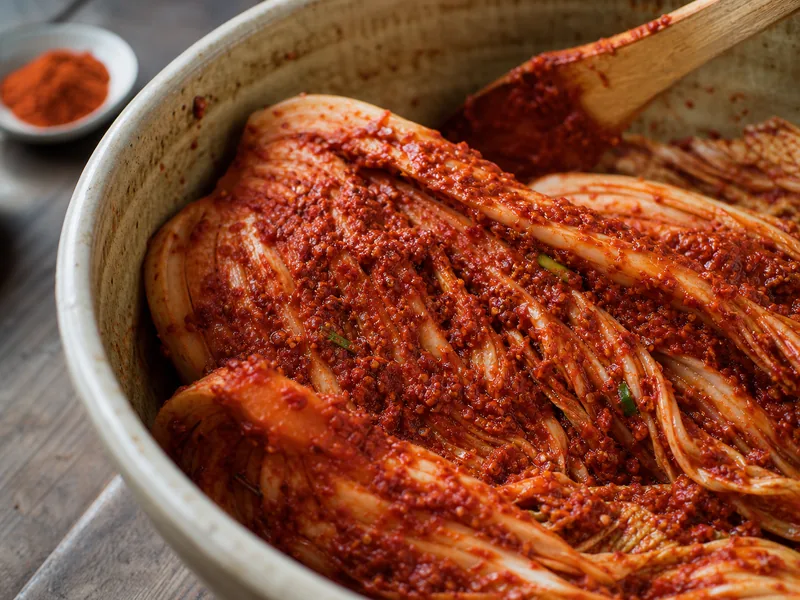
Gochugaru is the backbone of Korean fermentation. Kimchi requires it : not just for heat but for the fermentation environment it creates and the color it imparts.
Gochugaru also anchors gochujang (fermented chili paste), tteokbokki sauce, and sundubu-jjigae (soft tofu stew). It's used in quantities that would be unthinkable with cayenne : tablespoons, not pinches.
Cayenne belongs to a different pantry category.
It's a finishing spice, a heat-booster, a background note.
It shows up in hot sauces, Cajun spice blends, dry rubs, and anything where you want heat without flavor competition. The cayenne-vs-jalapeño heat gap is useful context here : cayenne runs much hotter, so recipes that call for fresh jalapeños cannot simply swap in cayenne powder without significant adjustment.
Substitution ratios matter here. If a recipe calls for 1 tablespoon gochugaru and you're using cayenne, start with 1/4 teaspoon and adjust upward : you'll get comparable heat but lose the smoky-sweet depth entirely.
Going the other direction (cayenne to gochugaru), use roughly 4:1 gochugaru to cayenne and expect a milder, sweeter result.
For gochugaru substitutes with more complete flavor coverage, the gochugaru swap options page explains combinations like Aleppo plus smoked paprika that better replicate the full profile.
Cayenne also differs from cayenne vs red pepper flakes comparisons : both are hot but the grind, blend, and flavor differ. When cooking Korean dishes, gochugaru's coarse, slightly oily texture contributes to sauce body in ways a fine cayenne powder cannot replicate.
For non-Korean applications where you just need heat, cayenne is the more versatile workhorse.
Verdict
Choose gochugaru when the dish is built around it : Korean BBQ marinades, kimchi, jjigae, or any recipe where deep red color and smoky-sweet flavor are load-bearing elements. It belongs to the Korean pepper tradition of prioritizing flavor complexity over raw heat, and that philosophy is baked into every application.
Choose cayenne when heat is the point and flavor neutrality is an asset. It's the right call for hot sauces, spice rubs, and dishes from South American chile traditions where sharp, clean fire is the goal.
Both belong to the broader annuum pepper group, but they've been bred in opposite directions.
They are not interchangeable. The heat gap is too large and the flavor profiles too different for casual swapping.
If you only stock one, cayenne is more broadly applicable : but gochugaru is irreplaceable for what it does specifically. Serious cooks keep both.
Which Dishes Suit Gochugaru and Which Suit Cayenne?
Choose gochugaru when the recipe needs Korean red pepper character: coarse flakes, red color, gentle fruit, and moderate warmth. It is the better choice for kimchi, gochujang-style sauces, cucumber salad, braised tofu, and stews where pepper flavor matters as much as heat.
Choose cayenne when the recipe needs direct heat in a fine powder.
It works better in dry rubs, chili, eggs, hot sauce, and spice blends where the pepper should disappear and raise the burn without adding flake texture.
The two are not equal even when the color looks close. Gochugaru adds body and visible red flecks.
Cayenne adds sharper heat with less volume. A spoonful-for-spoonful swap can make Korean dishes too hot and not red enough.
Can You Substitute Cayenne for Gochugaru?
To replace gochugaru, use 2 parts mild paprika plus 1 part cayenne, then adjust after tasting. That blend gets closer to color and heat than cayenne alone.
It still lacks gochugaru's soft fruity dried pepper note.
To replace cayenne with gochugaru, start with 2 to 3 times the volume if texture is acceptable. Gochugaru is usually milder by volume, so equal amounts can taste weak in a dry rub.
Do not use cayenne 1:1 in kimchi. The heat gets harsh before the cabbage gets the red color and mild pepper flavor it needs.
| Starting blend | What it restores | What remains different |
|---|---|---|
| 2 parts mild paprika | Red color and volume | Less coarse chile texture |
| 1 part cayenne | Concentrated heat | Less sweetness and aroma |
How Each Behaves in a Quick Sauce and Hot Oil
In a quick sauce, cayenne raises heat almost immediately but adds little aroma.
Gochugaru needs more volume, but it gives the sauce a warmer color and rounder pepper taste.
In oil, gochugaru blooms into visible red specks and a toasted-fruit aroma. Cayenne blooms fast and can turn bitter if the oil is too hot.
Keep heat lower when blooming either powder.
Serve gochugaru where the pepper is meant to be seen. Serve cayenne where the pepper is meant to disappear.
Buying, Prep, and Storage
Buy gochugaru by grind and freshness. Coarse flakes are best for kimchi and visible seasoning, while finer powder works better in sauces and pastes.
Good gochugaru should smell sweet, red, and gently fruity, not dusty or bitter.
Buy cayenne when you need a fine, predictable heat powder. It should smell sharp and clean.
If the jar has lost aroma, it may still look red but will taste flat and harsh.
Store both away from light and heat. Gochugaru's color fades quickly in a warm cabinet, while cayenne loses its clean bite.
Freezing gochugaru in a sealed bag is practical if you buy large Korean-market bags.
The Korean Food Research Institute's processing work makes grind and capsaicinoid range part of the product choice. Coarse flakes build visible body in kimchi, while a finer grind disperses more evenly through paste and sauce.
Read the package for origin, grind, and heat information because two equally red bags can require different spoonfuls when one batch is finer or substantially hotter.
For cayenne, a small container usually makes more sense because recipes use pinches rather than tablespoons. That buying pattern keeps the powder fresher and reduces the chance of treating its concentrated heat like gochugaru volume.
Common Mistakes
The biggest mistake is replacing gochugaru with straight cayenne in kimchi. The cabbage gets heat before it gets color, body, or the mild dried-pepper sweetness the recipe expects.
The second mistake is using gochugaru as a direct cayenne swap in a dry rub without accounting for texture. Flakes can burn on a grill or make a rub gritty unless they are ground finer.
The third mistake is blooming either powder in oil that is too hot.
Red pepper powders scorch quickly, and bitterness is hard to remove once it is in the fat.
Service Examples
Service example: for kimchi, gochugaru is the base pepper because it colors the cabbage and gives mild dried sweetness. Cayenne can raise heat in tiny amounts, but it cannot replace the red flake body.
Service example: for deviled eggs or roasted nuts, cayenne is cleaner because the powder spreads evenly. Gochugaru can look attractive, but the larger flakes may not stick evenly unless oil or moisture is present.
Service example: for noodle sauce, choose gochugaru when sesame oil, soy, garlic, and sugar are present. Choose cayenne when the sauce already has tomato, vinegar, or another flavor base and only needs sharper heat.
Gochugaru vs Cayenne Pepper FAQ
- Scoville, W.L. (1912) - Note on Capsicums, Journal of the American Pharmaceutical Association