
Habanada vs Habanero: Tropical Floral Flavor With or Without the Burn
The habanada and the habanero share nearly identical genetics and flavor DNA, but one registers 0 SHU and the other tops out at 350,000 SHU. If you want that distinctive tropical, floral character without any burn, the habanada delivers it cleanly. If heat is the point, the habanero remains one of the most flavorful peppers in the extra-hot pepper bracket.

Habanada
Habanero
Extra-HotQuick Comparison
| Attribute | Habanada | Habanero |
|---|---|---|
| Scoville evidence | 0-0 SHU | 100K-350K SHU |
| Heat Tier | n/a | Extra-Hot |
| vs Jalapeño | n/a | 44x hotter |
| Flavor | fruity and sweet | fruity and citrusy |
| Species | C. chinense | C. chinense |
| Origin | USA | Mexico |
Does Habanada Have Any Heat Compared With Habanero?
The heat gap here is about as absolute as it gets. The habanada measures 0 SHU, containing no measurable capsaicin, making it genuinely heat-free, not just mild.
The habanero sits at 100,000-350,000 SHU, placing it firmly in territory that demands respect from most cooks. To put that habanero range in perspective, a dried guajillo typically measures around 2,500-5,000 SHU.
That means a habanero can run 20 to 140 times hotter than a guajillo depending on the specific specimen. Habaneros vary considerably within that range, since growing conditions, stress, and ripeness all affect final capsaicin content.
The habanada's zero rating isn't a marketing claim. It was bred through traditional plant selection by Michael Mazourek at Cornell University and released commercially through Row 7 Seed Company, without any genetic modification, by selecting for naturally occurring traits that suppressed capsaicin production while preserving the pepper's aromatic compounds.
The burn mechanism that makes habaneros so intense, capsaicin binding to TRPV1 receptors, simply doesn't activate with habanada. For a deeper look at why that receptor response feels so different from pepper to pepper, the chemistry is genuinely fascinating.
Practically speaking, this means habanada is accessible to anyone regardless of heat tolerance. Habanero, on the other hand, sits in a tier that stops many home cooks from using it at full concentration.
Most recipes call for half a habanero where they'd use a whole of something milder. The habanada removes that calculation entirely.
Does Habanada Taste Like Habanero?
Start with the nose: both peppers carry a distinctive floral, tropical aroma that separates C. chinense species peppers from virtually everything else in the kitchen. That scent, somewhere between ripe mango, apricot, and a faint floral note, is present in both varieties before you even take a bite.
On the palate, the habanada tastes like a habanero with the volume knob turned all the way down on heat but kept at full on fruit. You get bright citrus, stone fruit sweetness, and that characteristic chinense depth without any of the capsaicin interference.
Many tasters actually perceive the habanada's flavor as more complex than habanero because the burn isn't competing with the fruit notes. The habanero's flavor is genuinely fruity and citrusy, and that's not marketing language, it's the pepper's actual profile.
But for anyone sensitive to heat, those flavors arrive wrapped in significant fire, which can make it hard to appreciate them fully. Cooking affects them differently too.
Habanada holds its fresh, bright character well through light heat, and sauteing or quick roasting amplifies the sweetness. Habanero develops a slightly deeper, more complex flavor when cooked, with the heat mellowing somewhat but never disappearing.
Raw habanero in a salsa or mango salad hits differently than the same pepper in a slow-cooked sauce. The habanada performs consistently across applications, which makes it easier to predict in a recipe.
Culinary Uses
The habanada opened up a category of cooking that was previously off-limits for heat-sensitive cooks or dishes where capsaicin would overwhelm other flavors. Think habanada-infused cream sauces, habanada sliced raw into fruit salads, habanada blended into cocktails.
The fruity Caribbean heat of the habanero inspired all of these applications, and the habanada just removes the barrier to entry.
For habanada, the best applications lean into its sweetness: - Slice raw into ceviche or aguachile for tropical aroma without heat, Blend into vinaigrettes, since the fruity notes work beautifully with citrus dressings, Roast and puree into compound butter for seafood, Pickle whole for a sweet-tangy condiment, Use in salsas where guests have varying heat tolerance
For habanero, the heat is part of the point: - Classic Caribbean jerk seasoning relies on habanero's specific fruity-hot combination, Mango habanero hot sauce, where the fruit pairing is almost mandatory, Habanero salsa for those who want serious heat with complexity, Dried and ground into powder for spice rubs, Fermented hot sauces where the heat mellows over time
Substitution ratios: If a recipe calls for habanero and you want to use habanada to reduce heat, use a 1:1 ratio by volume, since the flavor profile is close enough that the dish won't taste different, just cooler.
Going the other direction, habanada recipe wanting heat, start with half a habanero and taste. The habanada also works as a direct substitute in fruit salsas, ceviches, and marinades where the aroma matters more than the burn.
For a look at how habanero stacks up against other high-heat options, the habanero vs. manzano matchup shows how much flavor varies even within the hot pepper world.
Which Should You Choose, Habanada or Habanero?
Choose habanada when the flavor is the goal and heat is an obstacle: cooking for mixed groups, building sauces where capsaicin would dominate, or simply wanting that tropical chinense aroma in dishes that can't handle fire. It's also the better choice for raw applications where habanero's heat would be punishing.
Choose habanero when the heat-fruit combination is specifically what you're after. Jerk chicken, mango hot sauce, fermented pepper mash: these dishes are built around habanero's dual identity.
The difference from Red Savina shows just how much variation exists even within the habanero family if you want to push heat further.
For gardeners, both are worth growing, since the habanada's germination and growing requirements mirror the habanero closely. If you can grow one, you can grow the other, so plant both and cover every occasion.
Buying And Prep Notes
Habanada pods should smell fruity and feel firm, with no soft wrinkled spots around the stem. Because they lack heat, you can taste a raw sliver safely to judge sweetness and aroma before adding them to a dish.
Habaneros need glove handling when you are chopping more than a small piece. The placenta carries most of the capsaicin, so trimming the inner membrane can reduce heat, but it will not turn a habanero into habanada.
For sauce testing, blend habanada first, then add measured habanero in small increments. That order protects the fruit flavor instead of forcing you to dilute heat after it is already too strong.
The common mistake is assuming habanada is a weak habanero. It is a no-heat pepper bred for aroma, so add heat separately if the recipe needs burn.
Can You Swap Habanada and Habanero?
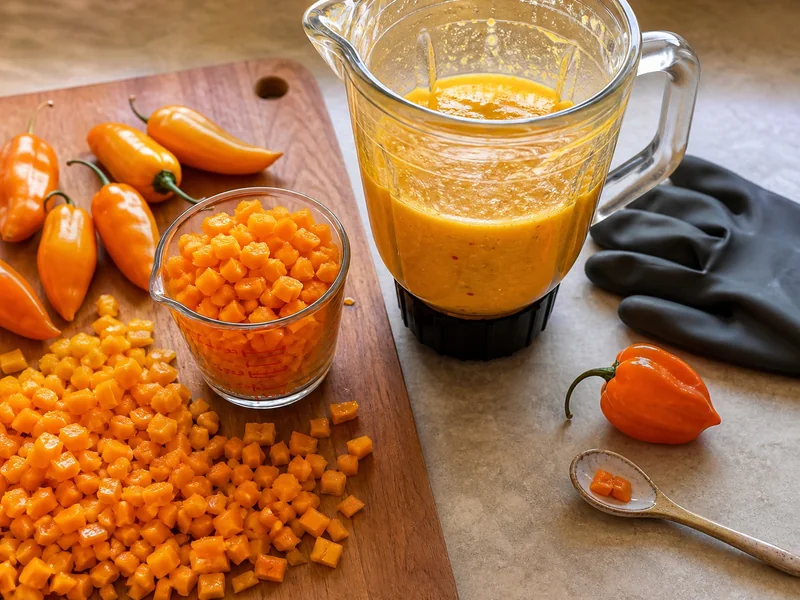
Habanada lets a cook build pepper flavor with volume. You can dice several pods into salsa or puree them into a sauce without making heat the main event.
Habanero works the opposite way. A small amount can season a full bowl, so the pepper is measured for heat first and flesh second.
That design difference matters in fruit sauces. Habanada can carry peach, mango, pineapple, and citrus without forcing dilution, while habanero gives the same style of aroma but quickly becomes the hottest ingredient in the bowl.
Do not make the substitution by pod count. Make it by purpose: habanada for perfume and flesh at the 1:1 volume ratio already covered above, habanero for heat, starting with a sliver rather than a full pod when replacing habanada.
| Sauce goal | Habanada role | Habanero role |
|---|---|---|
| Fruit and pepper body | Use several pods for volume | Omit or add a tiny measured piece |
| Mixed heat tolerance | Build the shared base | Add to a separate hot portion |
| Hot sauce | Use for aromatic volume | Increase heat gradually |
| Raw garnish | Slice freely for aroma | Use a very small dice and gloves |
Where Did the Habanada Pepper Come From?
Cornell plant breeder Michael Mazourek developed Habanada through conventional selection for a heatless Capsicum chinense pepper that retains the family's aromatic character. Row 7 Seed Company identifies the commercial cultivar and supplies the current seed description.
The stored evidence supports that breeding distinction, but it does not establish the old claims about an exact 2014 to 2015 release window, an ancient Amazon date, Havana transit history, or an etymology narrative. Those details have been removed because the cooking decision rests on cultivar identity, aroma, and capsaicin expression.
Buy Habanada by the named cultivar rather than by yellow-orange color alone. For habanero, verify the variety and stated heat range because pod color and lantern shape do not guarantee one fixed pungency.
Is Habanada More Nutritious Than Habanero?
No cultivar-specific nutrient comparison in the stored sources establishes Habanada as nutritionally better or worse than habanero. Generic 100 gram values also describe far more hot habanero than most recipes use.
Serving role is the useful difference. Several Habanada pods can supply fruit aroma and pepper flesh, while a small piece of habanero may supply all the heat a sauce needs.
Handle habanero with gloves, avoid touching the face, and wash tools after cutting. Habanada removes the capsaicin dosing problem, but ordinary produce hygiene and removal of spoiled tissue still apply.
Habanada vs Habanero FAQ
- Capsicum - USDA GRIN Taxonomy