Habanero vs Jalapeno: Roughly 40x the Heat

The real split is not only heat. Habanero brings 100,000-350,000 SHU plus fruit and citrus. Jalapeno stays at 2,500-8,000 SHU with a greener, thicker bite that survives slicing, stuffing, and pickling.

Habanero vs Jalapeno comparison
Quick Comparison

Habanero measures 100K–350K SHU while Jalapeño registers 3K–8K SHU. That makes Habanero about 44x hotter by upper SHU range. Habanero is known for its fruity and citrusy flavor (C. chinense), while Jalapeño offers Grassy, crisp, lightly sweet when red notes (C. annuum).

Habanero
100K–350K SHU
Extra-Hot · fruity and citrusy
Jalapeño
3K–8K SHU
Medium · Grassy, crisp, lightly sweet when red
  • Heat difference: Habanero is about 44× hotter by upper SHU range
  • Species: C. chinense vs C. annuum
  • Best for: Habanero excels in hot sauces and extreme dishes, Jalapeño in fresh salsas and mild recipes

Habanero vs Jalapeño Comparison

Attribute Habanero Jalapeño
Scoville (SHU) 100K–350K 3K–8K
Heat Tier Extra-Hot Medium
vs Jalapeño 44x hotter 1x hotter
Flavor fruity and citrusy Grassy, crisp, lightly sweet when red
Species C. chinense C. annuum
Origin Mexico Mexico

Habanero vs Jalapeño Heat Levels

Habanero runs about 100,000-350,000 SHU at the top of the extra-hot tier. Jalapeno runs 2,500-8,000 SHU in the medium tier. A single habanero can heat a batch that would otherwise need several jalapenos.

That gap changes batch size more than bragging rights. A salsa for four can hold a whole jalapeno without much drama. The same bowl can become too hot fast once habanero enters.

Heat also arrives differently. Habanero keeps building after the bite. Jalapeno reads earlier and fades sooner, which is why it stays easier to share at the table.

Flavor Profile Comparison

Habanero
100K–350K SHU
fruity citrusy
C. chinense

Few peppers balance heat and flavor as well as the habanero.

Jalapeño
3K–8K SHU
Grassy crisp lightly sweet when red
C. annuum

Jalapeño is a thick-walled Capsicum annuum species chile tied to the Mexican pepper tradition.

Jalapeno brings green crunch and a thicker wall. Habanero brings fruit and citrus that ride beside the burn.

If the recipe needs the pepper to taste bright and tropical, jalapeno will never fake that even if you add more.

If the recipe needs fresh green bite, habanero can overwhelm it before the same volume goes in.

The species split matters here. C. chinense peppers like habanero carry a different aroma from C. annuum peppers such as jalapeno.
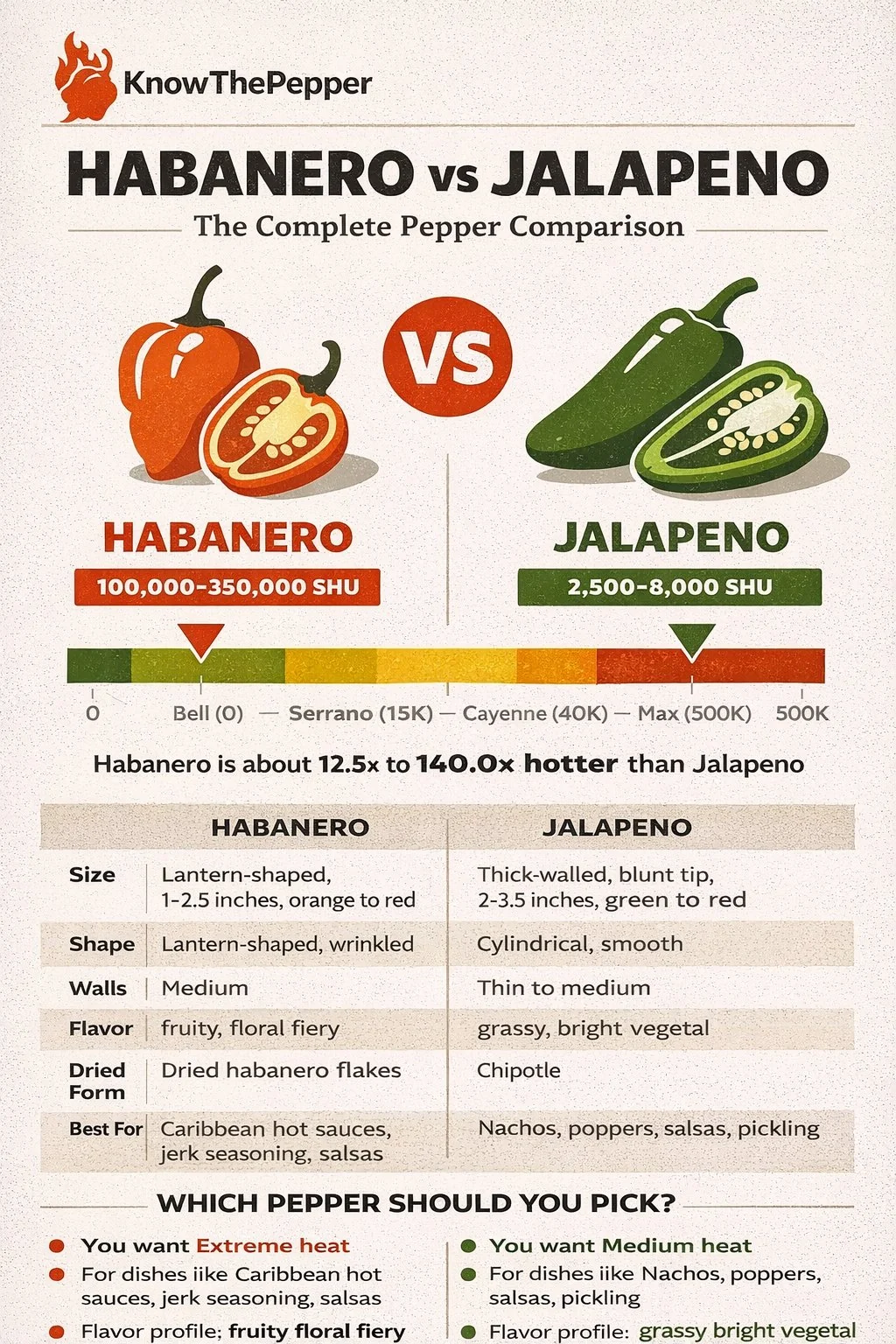
Habanero and Jalapeño comparison

Culinary Uses for Habanero and Jalapeño

Habanero
Extra-Hot

Habanero salsa is where most cooks start - and for good reason. The citrus-fruit notes amplify mango, pineapple, and peach in ways that milder peppers simply can't.

View full profile
Jalapeño
Medium

Use raw green jalapeños when you want crunch and grassy heat. Dice them small for pico de gallo, slice them thin for tacos and sandwiches, or mince one pod into guacamole when serrano would be too sharp.

View full profile

Jalapeno wins in pico de gallo, poppers, nachos, and pickles because the slices still feel like part of the food.

Habanero wins in fruit salsa, Caribbean-style pepper sauce, and small-batch hot sauce where the pepper is supposed to smell as loud as it burns.

If you want something between them, the aji amarillo versus habanero comparison shows a fruit-forward pepper that does not hit the same ceiling. For a greener fresh step above jalapeno, the habanero versus serrano comparison shows why serrano climbs heat without copying habanero aroma.

Which Should You Choose?

Choose jalapeno when the pepper needs to act like a vegetable. Choose habanero when the pepper needs to steer the whole sauce.

The mistake is to treat habanero like an upgraded jalapeno. It is a different tool with a much smaller margin for error.

Can You Substitute One for the Other?

Hotter replacement

Replacing Jalapeño with Habanero

Use approximately 1/44 the amount. Start with less and add gradually.

Milder replacement

Replacing Habanero with Jalapeño

Use 5× the amount, but you still won’t reach the same heat intensity.

Growing Habanero vs Jalapeño

Growing notes

Habanero

Starting habaneros from seed requires patience. Germination takes 10–21 days at soil temperatures of 80–85°F - a heat mat is essential, not optional.

Transplant seedlings outdoors only after nighttime temperatures stay consistently above 55°F. Habaneros are more temperature-sensitive than jalapeños and won't set fruit reliably if temperatures dip unexpectedly.

Full sun - 8+ hours daily - produces the best yield and heat. Habaneros in shade-stressed conditions produce smaller pods with less capsaicin accumulation.

Growing notes

Jalapeño

Jalapeños are forgiving, but they still want warm pepper conditions. Start seed indoors about 8 weeks before transplanting or buy sturdy starts, then move plants outside after frost risk has passed and nights are reliably warm.

University of Minnesota Extension notes that peppers need warm soil, full sun, and steady moisture. In a garden bed, space jalapeño plants about 18-24 inches apart so air can move around the canopy.

Use a container only if it gives the roots enough room. A 5-gallon pot is a practical minimum for one plant, with drainage holes and a potting mix that does not stay soggy.

Where They Come From

Origin & background

Habanero

Mexico · C. chinense

The habanero's origins trace to the Yucatan Peninsula of Mexico, where it has been cultivated for centuries. Archaeological evidence suggests C. chinense peppers were consumed in the Amazon basin as far back as 8,500 years ago, though the habanero as a distinct cultivar is more closely tied to Mesoamerican and Caribbean agricultural traditions.

The name likely derives from La Habana (Havana, Cuba) - not because the pepper originated there, but because Cuba served as a major transit point for produce moving between the Americas and Europe during the colonial trade era. Spanish traders moved the pepper along these routes, and it became associated with the port it passed through.

Origin & background

Jalapeño

Mexico · C. annuum

The name jalapeño points back to Jalapa, the older English spelling associated with Xalapa in Veracruz. That origin clue is useful, but it does not mean every modern jalapeño in a grocery bin came from Veracruz.

Modern jalapeño identity is also shaped by breeding. NMSU lists named jalapeño cultivars such as NuMex Primavera, NuMex Vaquero, and NuMex Jalmundo, and the Vaquero pedigree includes Early Jalapeño and TAM Jalapeño.

Buying & Storage

Whether you’re shopping for Habanero or Jalapeño, the same quality indicators apply. Fresh peppers should feel firm and heavy for their size, with taut, glossy skin and no soft or wet spots. Minor stem cracks known as “corking” are perfectly normal and often indicate a mature, flavorful pod.

Selection

What to look for

  • Firm pods with taut skin and consistent color
  • Should feel heavy relative to size
  • Minor stem cracks (“corking”) are normal
  • Avoid anything soft, shriveled, or with dark wet spots

Storage

How to store them

  • Fresh: Paper bag, crisper drawer, 1 to 2 weeks
  • Frozen: Wash, dry, freeze on sheet pan, 6+ months
  • Dried: Airtight and away from light, up to 1 year

Mistakes to avoid

Common misses

Habanero

  • Skipping gloves. Capsaicin absorbs through skin.
  • Using too much. Start with a quarter pod.
  • Drinking water for the burn. Use dairy instead.

Common misses

Jalapeño

  • Equating green with unripe. Different products.
  • Overcooking. Cell walls break down fast.
  • Sealed plastic storage. Causes rot. Use paper bags.
Final call

Habanero vs Jalapeño

Habanero and Jalapeño occupy very different positions on the heat spectrum. Habanero delivers about 44× more upper-range heat with its distinctive fruity and citrusy character. Jalapeño, with its Grassy, crisp, lightly sweet when red profile, excels in everyday cooking.

Heat gap about 44× by upper range Habanero fruity and citrusy Jalapeño Grassy, crisp, lightly sweet when red

Batch Size

Habanero changes how much food you can season at once. One pod can carry a bottle of sauce or a whole pot of beans. Jalapeno usually asks for more than one pod before the batch shifts that hard.

If you are cooking for mixed heat tolerance, start with jalapeno in the base and add habanero to a smaller side portion. That keeps the table flexible.

Swap Ceiling

When habanero replaces jalapeno, start with a tiny piece, not a straight ratio. You are trading grassy bulk for concentrated heat and aroma.

When jalapeno replaces habanero, you can raise volume, but the sauce will still lose the same fruit note. Add more only if the dish can absorb the extra moisture and green flavor.

For a milder fresh comparison, the banana pepper versus jalapeno page is a better guide than another superhot jump.

Prep Rule

Gloves are optional for many jalapeno tasks. They stop being optional once you cut several habaneros.

Storage also splits. Jalapenos often move through the week as fresh produce. Habaneros freeze well and still work in sauce later, which makes them easier to keep as a heat reserve.

Fact-Checked & Expert Reviewed
Editorial Standards: Head-to-head comparisons include blind tasting when applicable. Heat levels cross-referenced with multiple sources. All substitution ratios tested side-by-side.
Review Process: Written by James Thompson (Lead Comparison Reviewer) , reviewed by Karen Liu (Lead Fact-Checker & Science Editor) . Last updated June 30, 2026.

Habanero vs Jalapeño FAQ

Start with a very small piece of habanero and taste. The heat jump is large enough that a full pod can replace several jalapenos in some cooked dishes.

Yes, but the salsa will taste greener and much less aromatic. Jalapeno gives fresh crunch, while habanero gives tropical fruit notes along with the heat.

The fruit aroma comes from volatile compounds that sit alongside the capsaicin, not from the heat itself. That is why habanero can smell bright and still burn hard.

Jalapeno is usually easier because it sets faster and handles a wider range of garden conditions. Habanero needs more warmth and a longer season to hit its stride.

Sources & References
KL
Fact-checked by Karen Liu
Research Contributor
SHU Verified
Sources Cited
Expert Reviewed
All Comparisons Browse Peppers Scoville Scale