Holy Mole vs Pasilla: Are They the Same Mole Chile?
Holy Mole is a modern pasilla-type hybrid, while pasilla is the dried form of chilaca. Choose dried pasilla when a mole, adobo, or salsa names that ingredient, and choose Holy Mole when a mild garden-grown variation is acceptable. The practical rule is match the form before matching the heat.

Bayer Seminis reports Holy Mole at 150-1,500 SHU, and Iowa State University Extension lists pasilla at 1,000-2,500 SHU. The ranges overlap, so form and water content decide the swap.
- Species: Both are Capsicum annuum
Holy Mole Pepper
MildPasilla Pepper
MediumQuick Comparison
| Attribute | Holy Mole Pepper | Pasilla Pepper |
|---|---|---|
| Scoville evidence | 150-1,500 SHU | 1,000-2,500 SHU |
| Heat Tier | Mild | Medium |
| vs Jalapeño | n/a | n/a |
| Flavor | n/a | earthy and rich |
| Species | Capsicum annuum | C. annuum |
| Origin | n/a | Mexico |
Which Is Hotter, Holy Mole or Pasilla?
Both chiles are mild enough for layered sauces, and their published ranges overlap. Bayer Seminis lists Holy Mole at 150 to 1,500 SHU, while Iowa State University Extension lists pasilla at 1,000 to 2,500 SHU, while the New Mexico State University Chile Pepper Institute classifies it as mild.
Pasilla can be warmer, but the overlap is too broad to support a fixed heat multiplier. Bayer also notes that location, soil, weather, and season affect cultivar performance, so form and flavor should decide the chile before heat becomes the final adjustment.
For a milder sauce, remove more placenta, hold back some chile puree, and add it after the base has blended. That approach responds to the actual batch instead of promising precision that either range cannot provide.
How Is Holy Mole Related to Pasilla?
Holy Mole and pasilla are related choices, but they are not two names for the same chile. Bayer Seminis describes Holy Mole as a mild pasilla-type hybrid, while the New Mexico State University Chile Pepper Institute identifies pasilla as the dried form of a Mexican chile used in mole and salsa.
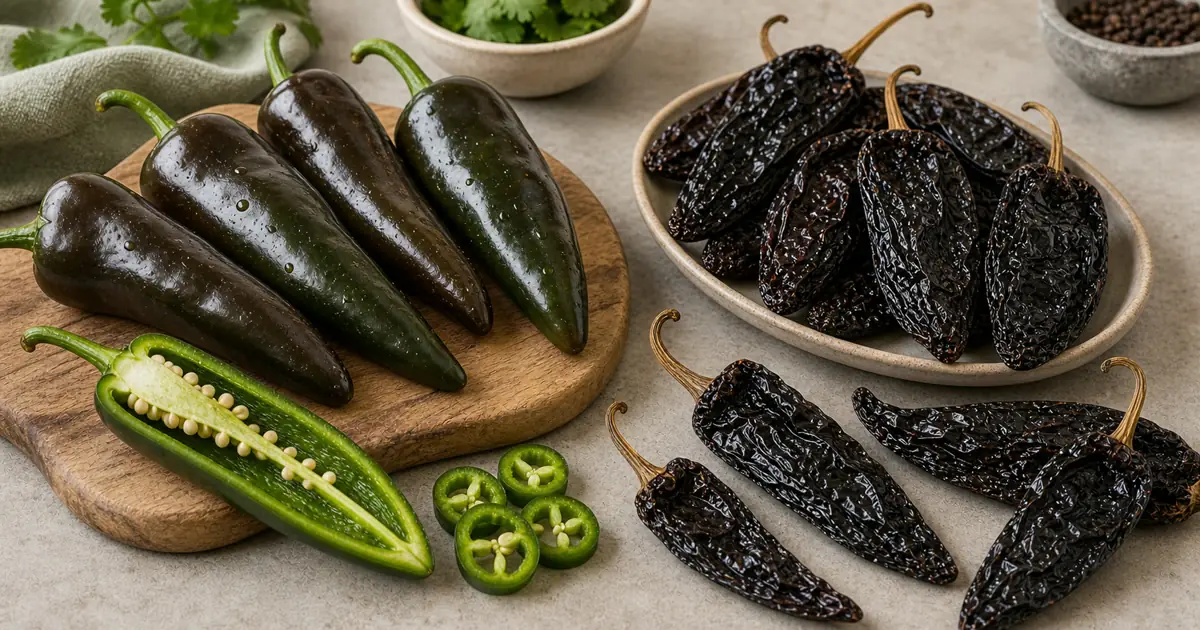
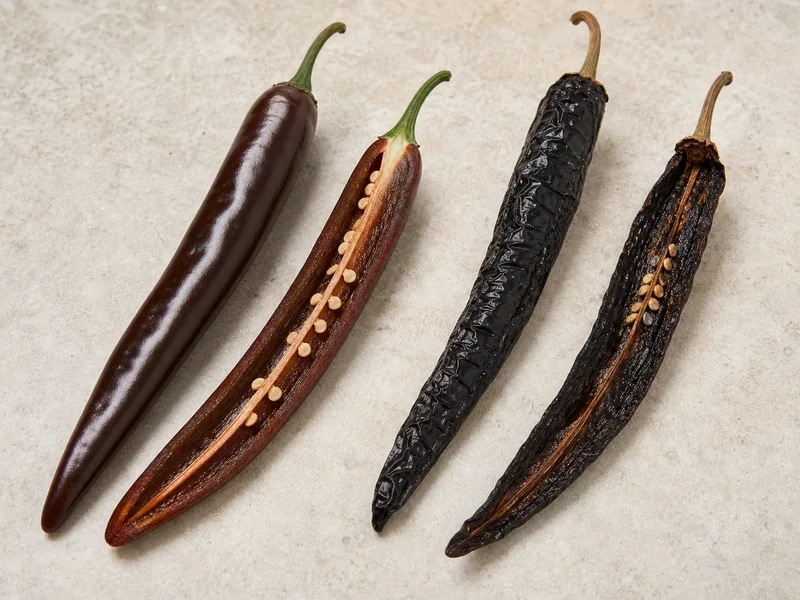
Bayer lists Holy Mole fruit at about 9.8 inches long and 1.2 inches wide, with smooth pods that mature from dark green toward chocolate brown. North Carolina Cooperative Extension recorded the cultivar as a 2007 All-America Selections winner bred for earlier maturity and heavier yields than traditional pasilla-type peppers.
Pasilla begins as chilaca and becomes long, narrow, dark, and wrinkled after drying. The Chile Pepper Institute connects its name with a raisin-like appearance and aroma, which explains the darker fruit character and concentrated dried-chile flavor expected in a bag of pasilla.
Holy Mole brings a milder, tangy, nutty profile from a fresh or home-dried garden pod. Pasilla brings the more concentrated earthy and dried-fruit character that a traditional dried-chile recipe expects.
Which Is Better for Mole, Holy Mole or Pasilla?
Pasilla is the stronger default for mole, adobo, table sauce, and salsa when the recipe names a dried Mexican chile. The Chile Pepper Institute specifically identifies those uses, so dried pasilla protects both the expected form and the sauce's dark foundation.
Holy Mole approaches the same sauce category from the garden. North Carolina Cooperative Extension describes its mature fruit as dark chocolate brown with a tangy, nutty flavor, while Bayer positions it as a mild pasilla-type pepper for sauces.
The two can work in the same kind of sauce without producing the same result. Fresh Holy Mole adds water and a brighter pod character, while dried pasilla contributes a denser flavor after toasting and soaking.
Preparation should follow that difference in water content. Our editorial recommendation is to roast and reduce fresh Holy Mole, while a dried pod should be toasted and soaked before blending.
In a mole base, pasilla joins the other dried chiles at the toasting and soaking stage. Fresh Holy Mole enters after roasting and may require longer uncovered reduction before nuts, seeds, or chocolate determine the sauce's final body.
A complex mole often assigns different jobs to several chiles. When a recipe also names ancho, mulato, or guajillo, keep those ingredients in place instead of asking Holy Mole to replace the entire blend.
The form in the package determines the first preparation step and the amount of water entering the sauce. Use this sequence before adjusting salt, sweetness, or heat.
| Form in hand | First preparation | Practical effect |
|---|---|---|
| Fresh Holy Mole | Roast, peel if needed, then blend | Brighter flavor and more water to reduce |
| Dried Holy Mole | Stem, seed, toast briefly, then soak | Closest Holy Mole form for a pasilla swap |
| Whole dried pasilla | Stem, seed, toast briefly, then soak | Best fit when the recipe specifically names pasilla |
| Pasilla powder | Bloom into the sauce and add gradually | Even distribution, but aroma fades faster in storage |
Which Should You Choose, Holy Mole or Pasilla?
Choose pasilla when the recipe names dried pasilla, especially for mole, adobo, or a table sauce whose identity depends on concentrated dried-chile flavor. It is also the practical choice when the sauce must be made today because whole dried pasilla is shelf stable and usually easier to source.
Choose Holy Mole for a mild garden-grown variation when ripe pods are available and a modest flavor shift is acceptable. Its 2007 All-America Selections history, early maturity, and productive set make it a cultivar choice for growers rather than a direct renaming of pasilla.
The deciding question is the form the recipe expects. Pasilla supplies a recognized dried-chile base, while Holy Mole supplies a modern mild cultivar that can be dried or used fresh with a liquid adjustment.
Use pasilla for a recipe that names dried pasilla. Use Holy Mole when a mild garden-grown variation is the intended result.
| What to check | Holy Mole | Pasilla |
|---|---|---|
| Usual form for sale | Seed, plant, or fresh mature pod | Whole dried pod or pure chile powder |
| Surface | Smooth and firm before drying | Wrinkled and leathery |
| Shape | Long and narrow | Long and narrow, not broad or heart-shaped |
| Color cue | Dark green maturing toward chocolate | Deep brown to nearly black after drying |
| Best identity check | Cultivar name on a reputable seed packet | Label says pasilla or dried chilaca |
California markets sometimes use pasilla for fresh poblano peppers, so the pod shape matters when a label is vague. UC Agriculture and Natural Resources identifies pasilla as dried chilaca, which rules out a broad fresh poblano for this comparison.
Substitution
A pod-for-pod swap is unreliable because fresh Holy Mole carries much more water than dried pasilla. New Mexico State University reports an approximate 5 to 1 fresh-weight to dry-yield ratio for commercially dehydrated chile, which is a planning reference rather than a promise for every home-dried pod.
For two dried products, start with equal seeded weight, not pod count. Toast each chile only until fragrant, soak it until pliable, blend it into the sauce, and adjust after tasting.
- Dried Holy Mole for dried pasilla: start at 1 to 1 by seeded weight.
- Fresh Holy Mole for dried pasilla: start near 5 parts fresh to 1 part dried by weight, then reduce another liquid.
- Pasilla for Holy Mole: start below the original amount for a heat-sensitive eater.
Dry Holy Mole before measuring when the recipe depends on dried-chile concentration. If it must be used fresh, roast it first and expect a brighter, less concentrated sauce.
After blending, judge consistency before adding more chile. Simmer a loose sauce uncovered first because concentration raises both flavor and perceived heat.
If a dried Holy Mole swap still tastes light, add chile puree in small increments and blend again. Powder changes the distribution of heat, so it is a poor correction when the recipe began with whole pods.
These ratios do not apply to preservation. UC Agriculture and Natural Resources says tested canning recipes must keep the specified total amount of pepper because changing its volume or weight can make the product unsafe.
Whole dried pasilla is usually the easier same-day purchase, while Holy Mole more often appears as seed, a transplant, or a seasonal harvest. New Mexico State University identifies moisture, oxidation, storage temperature, and physical damage as major quality factors, so choose pliable intact pasilla pods and keep them airtight, dark, and cool.
Buy pure powder only when the recipe needs powder. New Mexico State University reports that ground chile loses color faster than whole pods or flakes, which makes whole pods the better storage choice.