
Guajillo Pepper vs Pasilla: Which One Fits Your Sauce?
Use guajillo for a vivid red sauce with tart dried-fruit lift, and use pasilla for a darker sauce with raisin and cocoa depth. They are different dried chiles, guajillo from mirasol and pasilla from chilaca, so matching the dish matters more than choosing by heat alone.

Guajillo Pepper
MediumPasilla Pepper
MediumQuick Comparison
| Attribute | Guajillo Pepper | Pasilla Pepper |
|---|---|---|
| Scoville evidence | 2.5K-5K SHU | 1K-2.5K SHU |
| Heat Tier | Medium | Medium |
| vs Jalapeño | 1x hotter | n/a |
| Flavor | tangy and sweet | earthy and rich |
| Species | C. annuum | C. annuum |
| Origin | Mexico | Mexico |
Which Is Hotter, Guajillo or Pasilla?
Guajillo is usually the hotter choice, but the ranges touch. The New Mexico State University Chile Pepper Institute range used in the profile records places guajillo at 2,500 to 5,000 SHU and pasilla at 1,000 to 2,500 SHU.
That overlap means a mild guajillo and a strong pasilla can feel close. The upper limits still matter because guajillo can reach twice pasilla's stated ceiling, so a sauce built from several pods may show the difference.
Heat should break a tie, not choose the chile by itself. Both sit below the typical serrano range, while their color and dried-fruit character change a mole or adobo more than the Scoville gap does.
How Do Guajillo and Pasilla Taste Different?
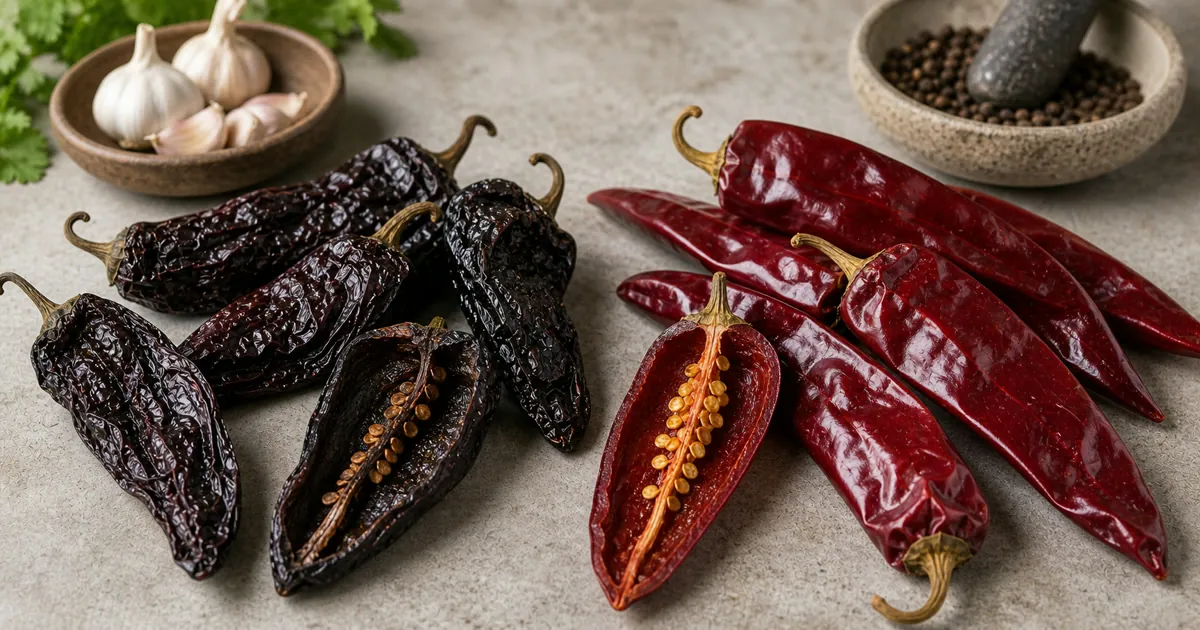
Guajillo gives a sauce a clearer red color and a tart dried-fruit direction. Pasilla pulls the same base toward dark raisin, cocoa and an earthier finish, which is why the two bowls in the visual below do not read as the same sauce.
The distinction starts with the pods. Guajillo skin is smoother, tougher and deep red, while true pasilla is long, narrow, wrinkled and brown-black.
Chef Rick Bayless uses guajillo as the bright, less-spicy part of his bold red chile salsa. In his tortilla soup, he identifies earthy dark pasilla as the flavor that defines the central Mexican version.
Texture matters after soaking. Guajillo's tough skin often leaves fine particles in an ordinary blender, so Bayless presses guajillo puree through a medium-mesh strainer when the blender cannot make it fully smooth.
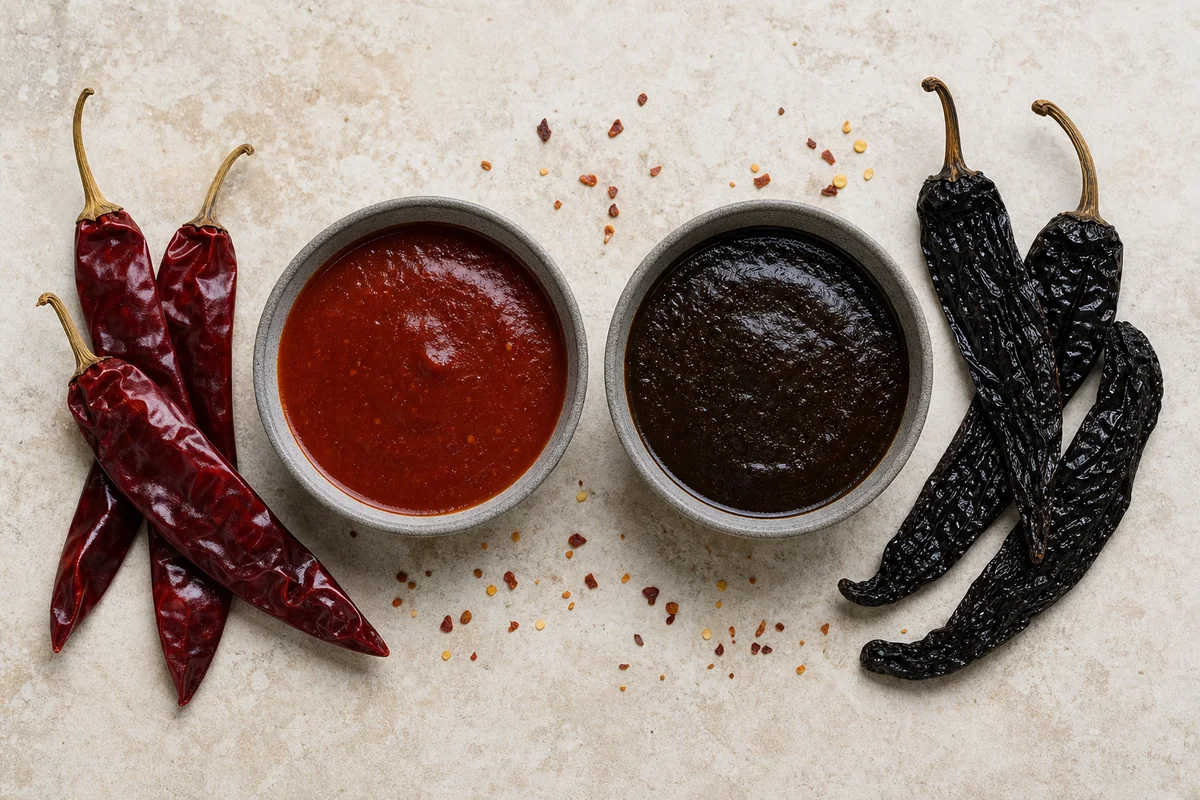
Which Sauces Suit Guajillo and Which Suit Pasilla?
Choose guajillo for a red sauce that needs to stay vivid and focused. Bayless builds a classic red guajillo sauce for shrimp tacos and a separate guajillo sauce for beef, which supports its role in chile colorado-style sauces, marinades and red braises.
Choose pasilla when the chile should deepen a broth or support nuts, seeds and warm spices. Bayless uses pasilla negro in tortilla soup, classic red mole and Oaxacan black mole, where its dark character belongs inside a larger chile blend.
The Mexican Secretariat of Foreign Affairs calls guajillo, ancho and pasilla a fundamental trio in the cooking of interior Mexico. That framing matters because guajillo and pasilla often work together, with one bringing red lift and the other supplying a darker base.
For pozole rojo, enchilada sauce or a vinegar-led marinade, guajillo is the clearer first pick. For tortilla soup, mole-style sauce or a dark braise, pasilla fits the intended direction more naturally.
Verdict
Stock guajillo first if one dried chile must cover the most red sauces. Its color, moderate heat and tart fruit can carry a simple puree without requiring another dark chile.
Buy pasilla for recipes that name it or need a dark, raisin-like background. It is especially hard to replace cleanly in tortilla soup because changing the chile changes the soup's defining flavor, according to Bayless.
The practical decision is guajillo for red lift and pasilla for dark depth. A cook making mole, adobo and soup regularly will get more range by keeping both than by treating either one as a universal substitute.
Are Guajillo and Pasilla the Same Pepper?
Guajillo and pasilla are not two names for the same pepper. Mexico's Agriculture Secretariat identifies mirasol as the fresh parent of guajillo and chilaca as the fresh parent of pasilla.
Both belong to the broad Capsicum annuum group, but drying does not erase the cultivar difference. Guajillo keeps a red, comparatively smooth shell, while chilaca dries into the long, dark and wrinkled pod sold as pasilla.
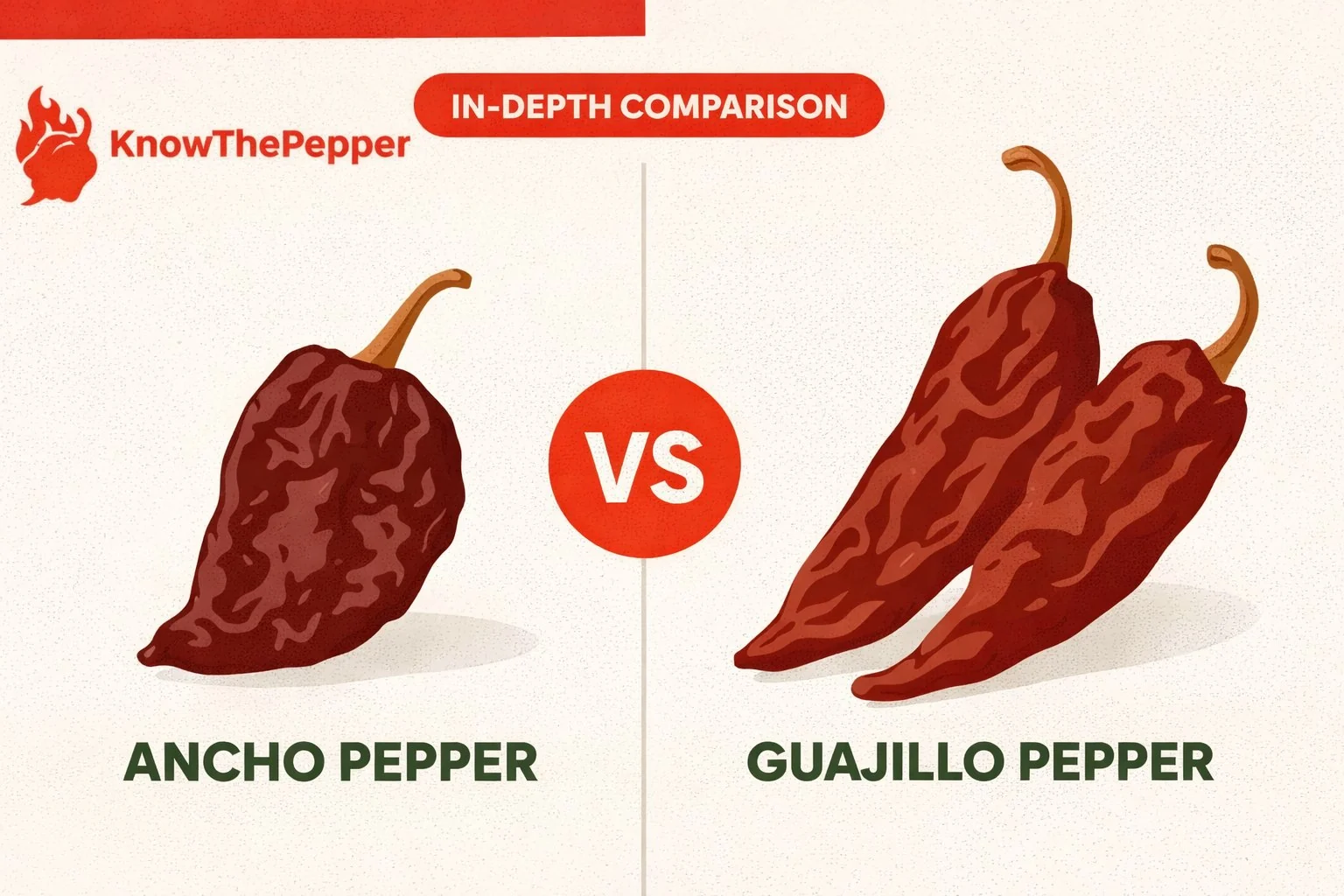
This identity check prevents the most expensive mistake in the aisle. A wide, heart-shaped dried poblano is ancho, even when a West Coast label calls it pasilla.
Match The Chile To The Dish
Use the finished sauce as the decision point. The table separates dishes that need visible red color from dishes that need a darker chile base.
| Dish or task | Better first choice | Why it fits |
|---|---|---|
| Red enchilada sauce | Guajillo | Clear brick-red color and tart fruit |
| Pozole rojo | Guajillo | Colors broth without a dark, raisin-heavy base |
| Citrus or vinegar marinade | Guajillo | The sharper fruit note stays distinct beside acid |
| Tortilla soup | Pasilla | Bayless identifies dark pasilla as the central Mexican signature |
| Mole negro blend | Pasilla | Works with mulato, nuts, seeds, spices and chocolate |
| Dark beef or lamb braise | Pasilla | Deepens the liquid without turning it bright red |
A blend earns its place when a dish needs both signals. Start with guajillo for the red base, then add pasilla for depth instead of increasing pasilla until the sauce becomes muddy.
Can You Substitute Guajillo for Pasilla?
A 1:1 swap by weight is a practical starting point in soups and mixed chile sauces, not a promise of the same result. Bayless's red chile short-rib soup lists roughly six guajillos or four to five pasillas for the same 1.5-ounce chile amount, which shows why pod count is unreliable.
When pasilla replaces guajillo, expect a darker sauce with less tart red-fruit character. Tomato can restore some red color, while a small splash of vinegar can sharpen the finish after the sauce has simmered.
When guajillo replaces pasilla, expect a brighter and redder result. Ancho can restore some dried-fruit roundness in a chile blend, but cocoa is not a direct pasilla substitute and can make a savory sauce taste artificially chocolate-heavy.
Do not make the exchange by counting pods. Guajillos and pasillas differ in length, wall mass and dryness, so a kitchen scale gives a more repeatable starting point.
How to Toast, Soak, and Strain Guajillo and Pasilla
Dried chile skin becomes bitter when it scorches. Bayless toasts guajillo pieces for only a few seconds in his beef sauce, then covers them with hot water and rehydrates them for 30 minutes.
- Wipe the pods, remove stems and shake out loose seeds.
- Press each piece against a warm skillet just until its aroma rises.
- Cover with hot water and keep the pieces submerged until pliable.
- Blend with fresh liquid, then strain if tough skin remains.
Taste the soaking water before adding it. If it carries a strong burnt or acrid note, fresh water protects the sauce better than trying to hide bitterness with sugar.
How Can You Tell Real Pasilla From Guajillo or Ancho?
True pasilla is long, slender, deeply wrinkled and very dark. Mexico's Agriculture Secretariat confirms that it is dried chilaca, while Rick Bayless notes that ancho pods are sometimes sold under the pasilla name on the West Coast.
Guajillo should look smoother and redder, with a narrow body and a tough glossy skin. For either chile, choose pods that still bend slightly and smell like dried fruit or warm spice rather than dust or damp cardboard.
A bag marked pasilla that contains broad, triangular pods is probably ancho. That substitution can still make a good sauce, but it will add ancho's sweeter, fuller body rather than true pasilla's darker and narrower profile.
Is Pasilla Negro the Same as Pasilla de Oaxaca?
For this comparison, pasilla means the unsmoked dried chilaca also called pasilla negro. Mexico's National Forestry, Agriculture and Livestock Research Institute describes pasilla de Oaxaca as a different chile from ordinary pasilla, with a wine-dark color, a hotter profile and an origin in the Mixe region of Oaxaca.
That regional chile is traditionally smoke-dried, so it can move a dish toward the savory smoke associated with chile mora. Ordinary pasilla brings dark fruit and earth without making smoke the main signal.
The distinction changes a substitution. Pasilla de Oaxaca can work in a smoky salsa or regional preparation that asks for it, but it will not quietly reproduce the softer background role described throughout this article.
Read the pod and the recipe name together. A label that says pasilla negro points toward dried chilaca, while pasilla de Oaxaca or pasilla Mixe names a separate regional ingredient.
Can You Use Guajillo and Pasilla Together?
A blend makes sense when guajillo alone tastes too lean but pasilla alone makes the sauce darker than the dish needs. The Mexican Secretariat of Foreign Affairs groups both chiles with ancho in a foundational dried-chile trio, which supports treating them as complementary ingredients.
For a red sauce that needs background depth, the KnowThePepper Editorial Team recommends starting with two parts guajillo to one part pasilla by weight. This is an editorial starting ratio, so the recipe's tomato, nuts, fruit and cooking time still decide the final balance.
Blend and cook the chile base before adjusting it. Add more guajillo if the sauce needs a clearer red color or a tarter edge, and add pasilla in smaller increments when the finish needs more raisin and cocoa.
Use a separate hotter chile when the blend needs more burn. Increasing guajillo or pasilla only to chase heat also changes the color and dried-fruit balance that made the pairing useful.
How Should You Store Dried Guajillo and Pasilla?
Whole pods preserve their identity better than an open bag of powder because color, shape and aroma remain available for inspection. Store them in an airtight container in a cool, dark cupboard, and discard any pod with visible mold or a musty odor.
Grind only what the dish needs when aroma is the priority. A powder can be convenient, but it removes the visual clues that distinguish red guajillo from dark pasilla and makes a mislabeled product harder to catch.
Guajillo Pepper vs Pasilla Pepper FAQ
- Mexico Agriculture Secretariat - Fresh and dried chile names
- Mexico Agriculture Secretariat - Chile diversity and chilaca identity
- Mexico Secretariat of Foreign Affairs - The foundational dried chile trio
- Rick Bayless - Beef Tips with Guajillo Chile Sauce
- Rick Bayless - Sopa Azteca with Pasilla Chile
- Rick Bayless - Oaxacan Black Mole
- Rick Bayless - Red Chile Shortrib Soup
- Diario Oficial de la Federacion - Mexican dried chile standard
- INIFAP - Cultivo del chile en Mexico, pasilla de Oaxaca distinction