Authentic Enchilada Sauce From Whole Guajillo and Ancho Chiles
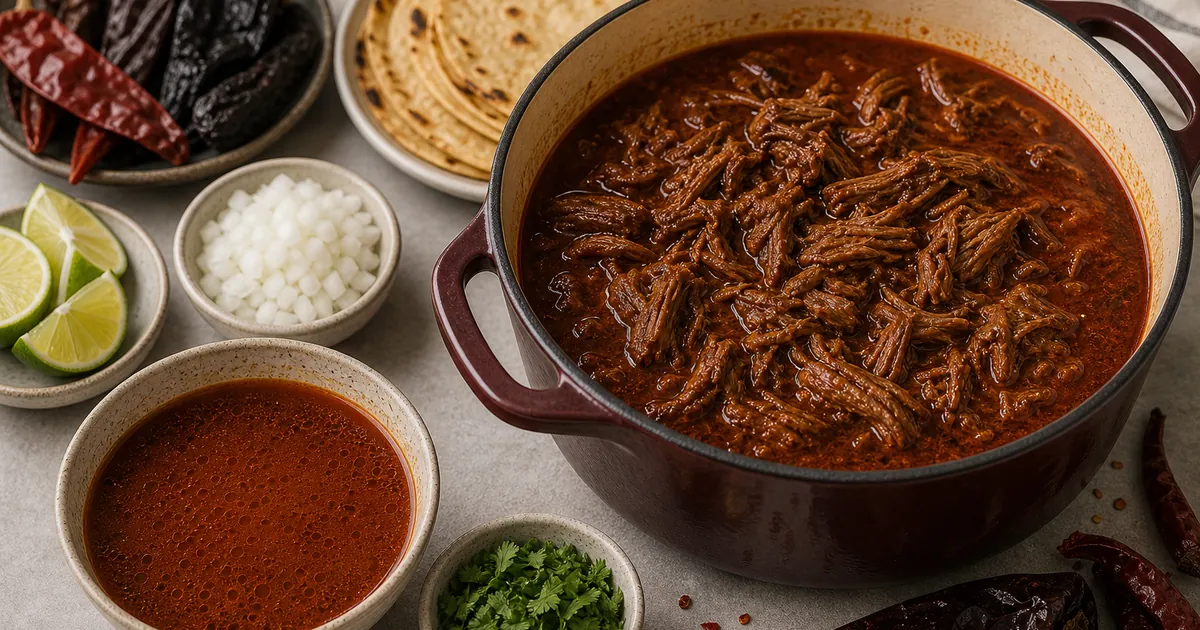
Authentic enchilada sauce should start with whole dried chiles, not chili powder roux. Use guajillo for red color, ancho for body, optional pasilla for depth, and fry the strained sauce before coating tortillas.
Authentic red enchilada sauce should start with whole dried chiles. Chili powder can season a quick sauce, but it cannot give the same body as softened chile skin and flesh.
This version uses 5 guajillos, 2 anchos, and 1 optional pasilla to make about 3 cups. It defines authentic by the method used here: whole dried chiles are toasted, soaked, blended, strained, and fried before the sauce touches tortillas.
Regional and household enchilada sauces vary across Mexico. This recipe does not claim that one chile blend represents every red enchilada sauce.
Build the chile blend
Five guajillos lead with red color and light berry-like acidity. Two anchos add raisin sweetness and enough flesh to thicken the strained puree.
One pasilla is optional. Use it for a darker finish, but keep it behind the guajillo so the color does not turn muddy.
The same dark-fruit behavior drives pasilla chile salsa, but enchilada sauce needs a smoother strain.
This is why the sauce is not just guajillo salsa poured over tortillas. Enchilada sauce needs strainable body, oil frying, and enough thickness to coat.
If a store label is confusing, choose pods by shape and smell. Broad ancho, smooth red guajillo, and long dark pasilla each change the sauce in a different way.
The Mexican dried chile trinity helps when you need to decide which dried chile should lead. Enchilada sauce usually needs more than one note.
Changing that 5:2 base changes more than color. Extra ancho thickens and sweetens the sauce, while extra pasilla adds dark-fruit flavor that can dominate mild cheese or chicken fillings.
Toast without scorching
Open the pods, remove stems, and shake out loose seeds. A few seeds are fine, but piles of seeds make the sauce dusty.
Press each opened chile against a dry skillet for 5 to 10 seconds per side. Stop when the aroma rises and the skin becomes flexible.
Black spots, smoke, or an acrid smell mean the chile has scorched. Discard that piece because broth, tomato, and sugar cannot remove burnt flavor from the finished sauce.
Toast garlic and onion lightly after the chiles, or simmer them with the softened pods. Raw aromatics can make the finished sauce taste sharp.
Set toasted chiles on a plate before soaking. That pause gives you one more chance to smell and reject a scorched piece.
Soak for flexible skins
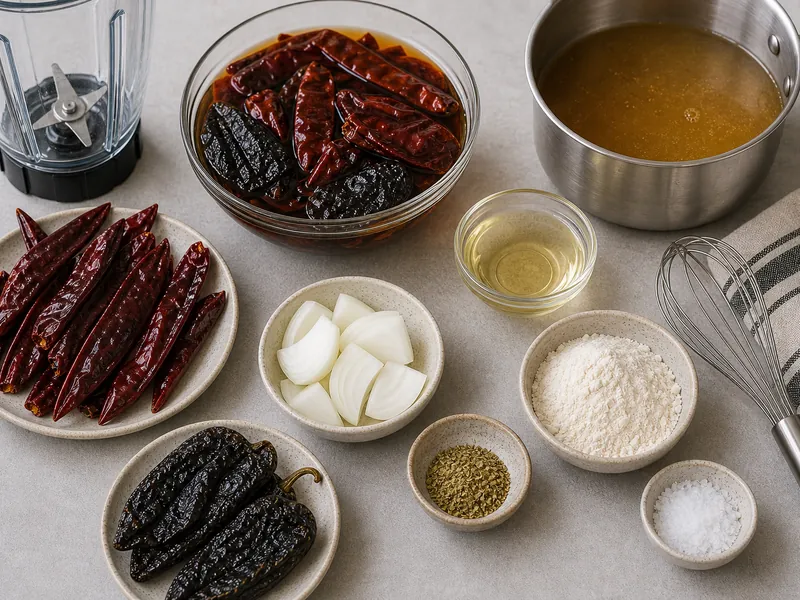
Cover the toasted chiles with hot water for 15 minutes. The skins should fold without cracking, while the flesh should still smell like chile.
Taste the soaking liquid before using it. Keep some only when it tastes clean.
A harsh or bitter liquid should be replaced with broth or clean warm water.
The same tasting check applies when you rehydrate dried peppers. Enchilada sauce is less forgiving than a chunky salsa because its liquid coats every tortilla.
Do not leave the pods soaking until their aroma fades. Fifteen minutes is usually enough for these thin-walled dried chiles, while an older ancho may need another 5 minutes.
If a pod still feels leathery after the soak, tear it smaller before blending. Large tough strips can wrap around the blades.
Blend, then strain the skins
Blend the softened chiles with 2 garlic cloves, 1/4 white onion, 1 teaspoon Mexican oregano, 1/2 teaspoon cumin, 1 teaspoon kosher salt, and 1 cup broth. Add only enough extra liquid to keep the blades moving.
Strain the puree through a medium sieve into a bowl. Press the moist pulp with a spoon until mostly dry skins and seeds remain, which gives the sauce a smooth coating texture.
Press the solids, then stop. Scraping every dry fragment back into the sauce makes the texture sandy.
If the strained sauce looks thin, do not add flour first. Fry it and reduce it, because the chile puree will tighten as water cooks off.
A high-speed blender can reduce straining work, but it does not remove the need to check texture. Enchilada sauce should feel smooth on a tortilla.
Fry the strained puree
Heat 1 tablespoon neutral oil over medium heat, then add the strained sauce carefully. A steady sizzle, slightly darker red color, and rounded chile aroma show that the puree is frying rather than merely warming.
Stir for about 2 minutes before adding broth. The oil cooks the raw onion edge and disperses chile aroma through the sauce.
Keep the heat moderate and stir often. Scorched chile paste tastes bitter and sticks to tortillas in a rough way.
If you want green tomatillo flavor instead, make green enchilada sauce. Do not force tomatillos into this red dried-chile base.
Frying also shows salt balance. A sauce that seemed fine in the blender can taste flat after oil rounds the chile.
Add salt after the first fry, not before. The sauce reduces as it cooks and can become too salty if you season hard in the blender.
If the sauce splatters, lower the heat and stir from the edge. Thick chile puree can jump when it hits hot oil.
Stop at coating consistency
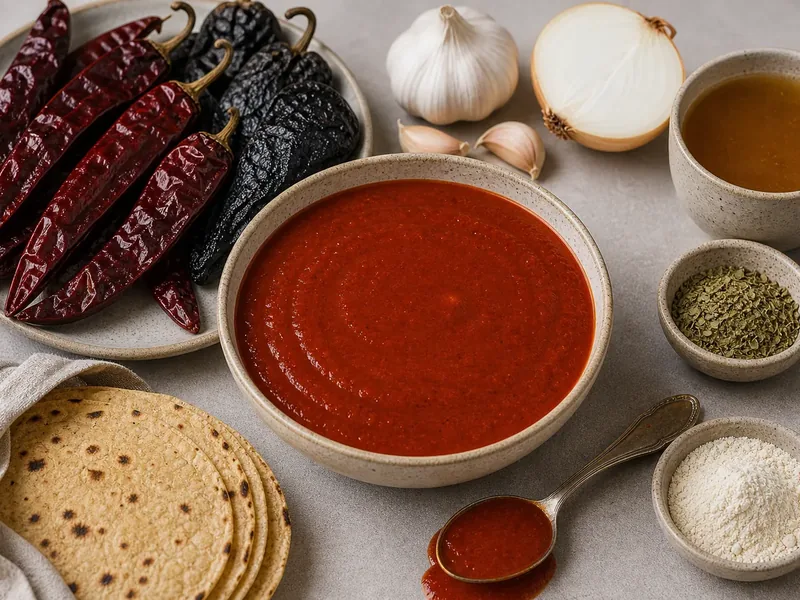
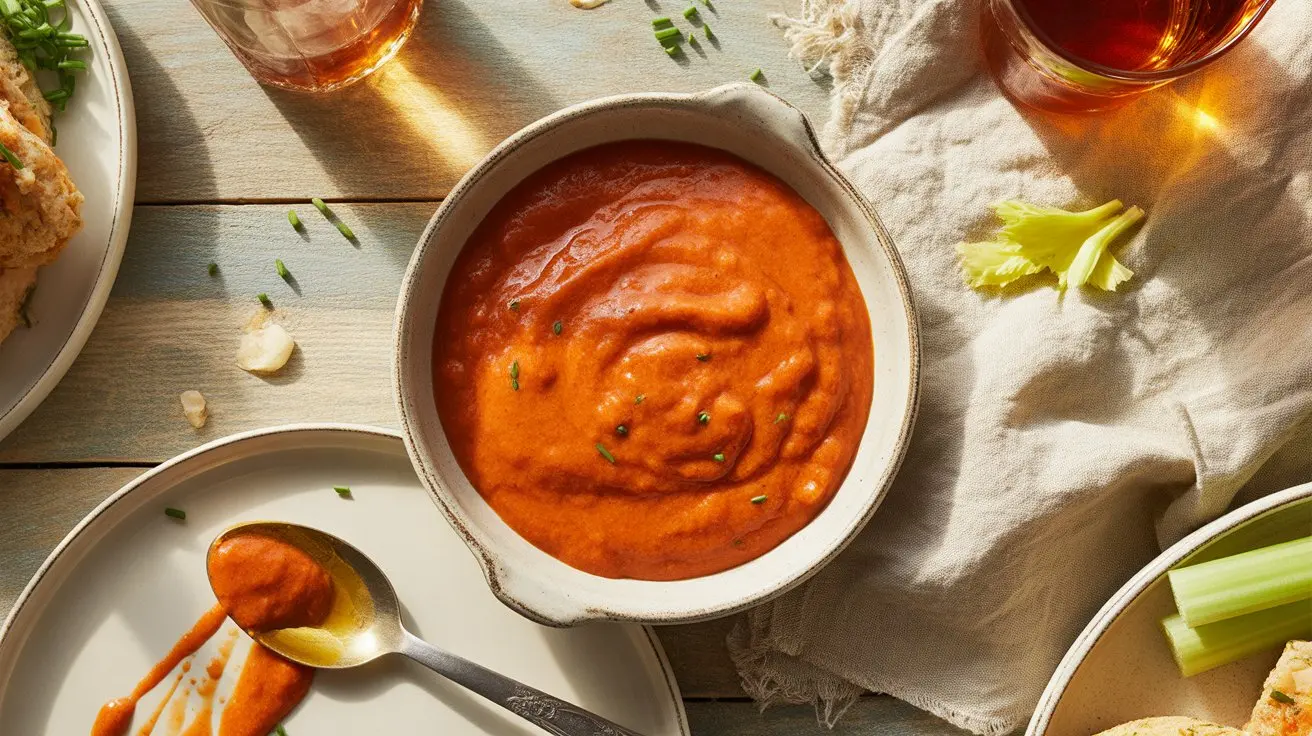
The right sauce coats the back of a spoon and falls slowly. It should not sit like paste or run like broth.
Thin sauce makes soggy enchiladas. Thick sauce tears tortillas and clumps in the pan.
Loosen thick sauce with warm broth, one tablespoon at a time. Tighten thin sauce with an uncovered 8 to 10 minute simmer, stirring often enough to expose the bottom of the pan.
For a darker barbecue-style use of ancho, ancho BBQ sauce uses sugar, vinegar, and tomato in a way this recipe should not.
Coat and roll the tortillas
Warm tortillas before dipping so they bend without cracking. A dry, cold tortilla breaks even when the sauce is perfect.
Dip each warm tortilla briefly, add a restrained line of filling, and roll it immediately. Leaving a tortilla submerged while another is filled makes it too soft to move cleanly.
Use less filling than you think. Overfilled enchiladas split and push sauce out of the pan.
The sauce should support the filling, not hide it. Chicken, cheese, beans, and mushrooms all need slightly different sauce thickness.
Cheese enchiladas can handle a thicker sauce. Chicken needs a little more flow so the tortillas do not feel dry.
For bean enchiladas, add a little more acid. Beans mute dried chile brightness faster than cheese or chicken.
Fix bitterness and texture
Red enchilada sauce thickens in the fridge. Reheat it gently with a splash of broth before using leftovers.
If clean, unscorched sauce tastes slightly bitter after resting, simmer it with a small roasted tomato and correct the salt. A pinch of sugar can soften a minor bitter edge, but it cannot repair blackened chiles.
If you need a pantry backup, match the dried chile role first. The guajillo substitute and ancho substitute pages help when one pod is missing.
Separation after chilling is usually a texture problem rather than spoilage. Warm the sauce gently and whisk before adding broth or reducing it further.
If you use the sauce for chilaquiles, thin it more than you would for rolled enchiladas. Chips soak up sauce faster than tortillas.
Freeze in small containers with headspace because the liquid expands. Thaw in the refrigerator, then reheat and whisk before judging thickness.
Label the container with the date and intended use. A three-cup batch is easier to reuse when frozen in portions sized for one pan.
If thawed sauce separates, whisk it warm before judging. The chile solids and liquid often come back together with gentle heat.
Store safely and work ahead
Make the sauce one day ahead, cool it promptly, and refrigerate it in a covered container. Roll the enchiladas on the day they bake because filled tortillas soften during a long hold.
This formula has no tested shelf-stable canning process. The National Center for Home Food Preservation advises using tested recipes for home canning, so refrigerate or freeze this batch instead of processing it as a pantry sauce.
When reheating, whisk in hot broth by the tablespoon until the sauce again coats a spoon and falls slowly. Hold it warm below a hard simmer so the last portion does not reduce more than the first.
Keep a small amount covered at the side for dry corners after baking. This avoids soaking the assembled tray before it enters the oven.
Use a ladle for final saucing because it distributes a smooth layer without dragging the tortilla surface. If skin pieces appear at this point, the puree needed a finer strain.
For cheese-topped enchiladas, leave a narrow strip of sauce visible at the pan edge. That exposed cue shows whether the tray is drying before the cheese browns.
Chef's Tip
Taste the soaking liquid before using it. Bitter soaking water makes bitter enchilada sauce.
Ingredients
-
5 dried guajillo chilesstemmed and seeded
-
2 dried ancho chilesstemmed and seeded
-
1 dried pasilla chileoptional
-
2 cups hot waterfor soaking
-
2 garlic cloves
-
1/4 white onion
-
1 teaspoon Mexican oregano
-
1/2 teaspoon ground cumin
-
1 teaspoon kosher saltplus more to taste
-
1 tablespoon neutral oil
-
1 to 1 1/2 cups chicken or vegetable broth
Full Recipe Instructions
Open the dried…
Open the dried chiles, remove stems and loose seeds, then toast each piece in a dry skillet for 5 to 10 seconds per side until fragrant and flexible.
Cover the toasted…
Cover the toasted chiles with hot water for 15 minutes. Taste the liquid and discard it if bitter.
Blend the softened…
Blend the softened chiles with garlic, onion, oregano, cumin, salt, and 1 cup broth or clean soaking liquid until smooth.
Press the puree…
Press the puree through a medium sieve and discard the dry skins and seed fragments.
Fry the strained…
Fry the strained puree in 1 tablespoon oil for 2 minutes, add broth as needed, then simmer uncovered for 8 to 10 minutes until it coats a spoon.