Ancho BBQ Sauce Blended From Toasted and Soaked Whole Dried Anchos
This mild dried-chile barbecue sauce is built for dark fruit, tomato, vinegar, and molasses rather than heavy smoke. The method hydrates whole anchos for body, keeps smoke optional, and explains how to use the sauce as a mop, glaze, or make-ahead table sauce.
This barbecue sauce should taste like whole dried ancho before it tastes like tomato or sugar. We toast, soak, and blend the chile so it gives the sauce body, dark fruit, and mild heat instead of acting like a spoonful of chili powder.
Ancho is dried poblano, usually placed around 1,000 to 2,000 Scoville heat units in New Mexico State University Chile Pepper Institute references. That makes it a better base for depth than for fire.
Look for wide, soft pods rather than tiny broken pieces. Big pods are easier to stem, seed, toast evenly, and press under the blender blades.
If you have only ancho powder, treat it as a different shortcut sauce. Bloom the powder gently in tomato and vinegar, but do not expect the same body as a soaked whole chile.
The ancho should be tasted after soaking. A good piece tastes mildly sweet and raisin-like.
A stale one tastes like paper and will not improve with molasses.
Ancho Body
Powder can season a sauce, but whole ancho chile builds one. The same dried-chile body logic separates it from bright guajillo salsa.
The softened skin and flesh give the blender something to turn into a smooth, dark puree.
Choose pods that bend a little and smell like dried fruit, cocoa, or raisin. If they crack into dusty flakes, they can still color the sauce, but the flavor will be flatter.
Remove stems and shake out loose seeds before toasting. Seeds are not the main heat source here, and too many of them can make the sauce taste dry.
Three large anchos are enough for about 2 cups because tomato sauce and molasses need room to taste like barbecue, not mole paste.
Toast and Soak
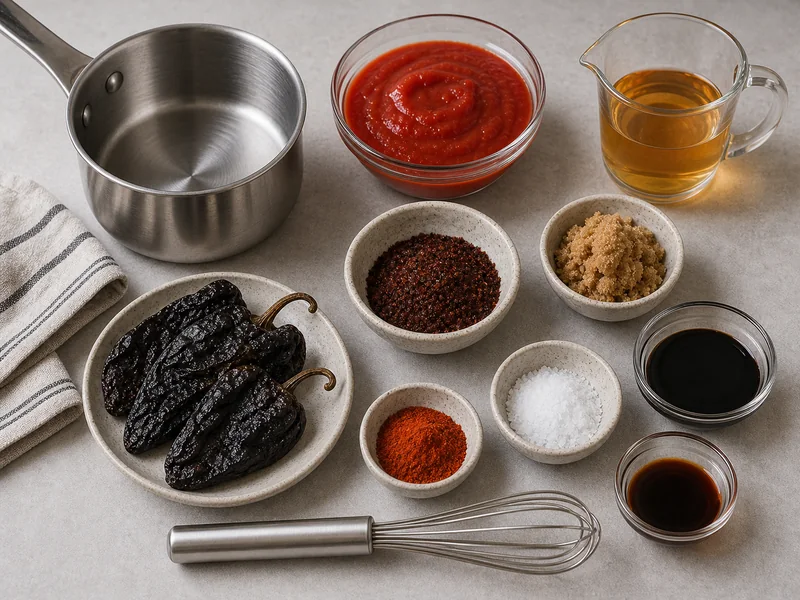
The toast should last seconds per side, much like the timing used for rehydrating dried peppers. Press the opened pods in a dry skillet until they smell warm, then pull them before dark patches turn black.
Hot water softens the flesh for blending. Fifteen minutes is usually enough, but older pods may need a few minutes more.
Taste the soaking liquid before using it. Good soak water tastes like mild chile tea.
Bitter water should be replaced with fresh water in the blender.
For a stronger dried-chile base, blend the soaked ancho with tomato sauce before the rest of the ingredients. That gives the skins the best chance to disappear.
The sauce needs tomato paste because soaked ancho alone can make a puree that tastes like chile soup. Paste gives the cooked BBQ density that sticks to ribs and chicken.
Molasses should be dark but not burnt. Blackstrap can overpower mild ancho, while light molasses gives sweetness without enough depth.
Cider vinegar is friendlier than white vinegar here. It sharpens the sauce without making the dried chile taste metallic.
If you want smoke, add it through smoked salt or a tiny amount of smoked paprika. Do not turn ancho sauce into chipotle meco salsa sauce by overloading smoke.
BBQ Structure
Tomato sauce gives the familiar BBQ shape, tomato paste gives cling, and cider vinegar keeps the ancho from tasting heavy. Molasses adds dark sweetness that fits the dried-chile flavor.
Brown sugar is smaller on purpose. Too much sugar pushes the sauce toward candy and hides the mild chile.
Mustard gives a small sharp edge. Dijon tastes cleaner, while yellow mustard makes the sauce read more classic backyard barbecue.
Cumin should stay quiet. Half a teaspoon can warm the ancho.
More can make the sauce taste like taco filling.
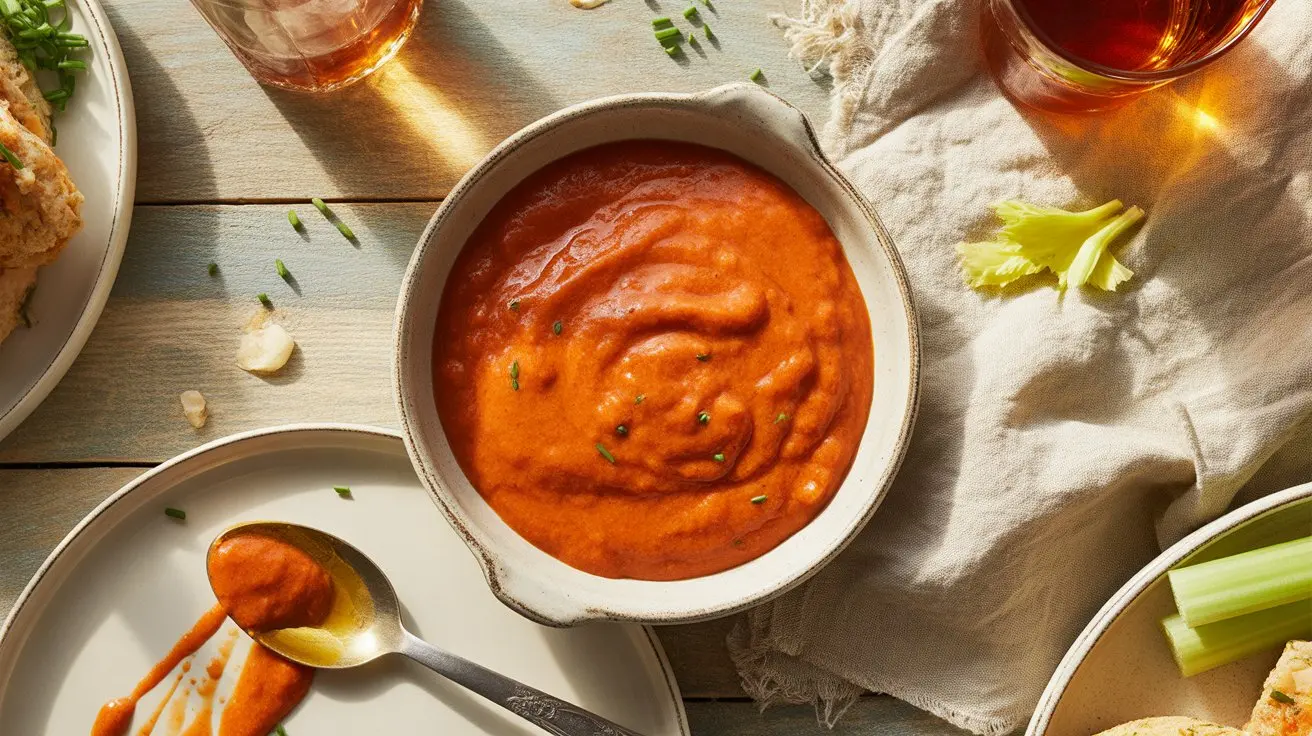
A brush dragged through the sauce should leave a trail for a second before the surface closes. That is the point where the sauce clings without becoming paste.
If the sauce will sit on the table, stop a little looser. It thickens as it cools, and cold ancho puree can feel heavier than hot sauce.
If it is for ribs, simmer slightly thicker and brush in thin layers. One thick coat can burn before it sets.
For pulled pork, thin with cider vinegar after cooking. That makes it mix through meat without turning the pork sweet.
Brush Test
After blending, simmer gently until the sauce coats a spoon and spreads with a brush. That cue matters more than the clock because ancho size and tomato thickness vary.
If the sauce spits, the heat is too high or the pot is too wide. Lower the heat and stir along the bottom because chile puree can stick before tomato sauce does.
For ribs or chicken, keep the sauce brushable. For a burger table sauce, simmer it a little thicker so it does not run into the bun.
Do not grill with it from the start. Sugar and tomato paste scorch over direct heat, so brush it on during the last few minutes.
This sauce also works as a base for beans. Stir a few spoonfuls into cooked beans at the end so the ancho stays clear instead of disappearing into a long simmer.
For mushrooms, brush late and serve more sauce on the side. Mushrooms release water, and a thick sauce can slide off if added too early.
For chicken breast, use a thinner layer than you would on thighs. Lean meat makes sweet sauce feel heavier.
Mild Dark Role
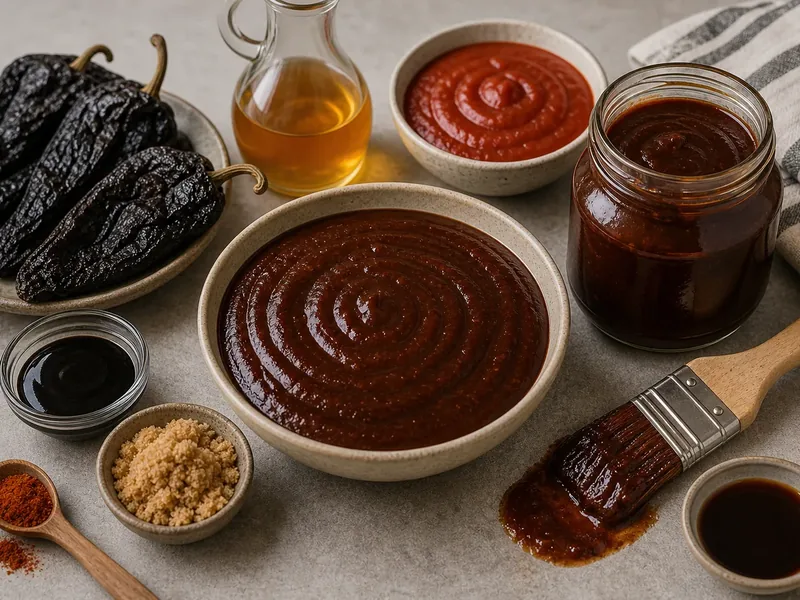
This sauce should taste dark, mild, and rounded. If the flavor starts tasting like red enchilada base, compare it with whole dried-chile enchilada sauce before adding more vinegar.
Habanero BBQ sauce brings fruit and high heat. Honey chipotle BBQ sauce brings smoky-sweet glaze.
Ancho can handle smoke, but it should not taste like chipotle. If the sauce starts moving toward adobo, compare the dried-chile role with authentic enchilada sauce before adding more spice.
The pod gives raisin, cocoa, and soft chile body, so extra smoke or cumin can push it toward adobo instead of barbecue sauce.
- For pork shoulder: keep the molasses note and thin only enough to brush.
- For chicken thighs: let the full brown sugar balance stay in place so the skin does not taste dusty.
- For beans or mushrooms: leave the sauce slightly rustic because ancho pulp gives useful body.
- For ribs: blend smooth and taste warm, since the glaze has to spread in thin layers.
Whole anchos give better control than powder. Pods with exposed seeds, broken walls, and dusty bags often bring bitterness that shows up after the simmer.
A large pot is not the best shortcut. Two normal batches thicken more evenly than one crowded saucepan, and they let you correct vinegar after tasting warm sauce on food.
Freeze leftovers in half-cup portions. Warm thawed sauce gently, then add vinegar after heating if the ancho tastes sleepy.
Cold vinegar can taste sharp before it actually fixes the balance.
Buying Anchos
Body starts with the dried pod. A leathery ancho that bends slightly after a warm soak gives smoother sauce than a brittle pod that breaks into dusty flakes.
We remove loose seeds and dusty veins before toasting because they scorch faster than the wall. That one prep step keeps the sauce dark without making it taste burnt.
- Weak puree: add another soaked ancho and blend before the simmer, so the sauce gains body instead of only reducing water.
- Skin flecks: rest the blender jar for 5 minutes, then blend again. Hydrated skins often break down after the pause.
- Chalky finish: simmer gently and rest before adding more liquid, because under-hydrated chile needs time more than water.
- Too tomato-heavy: correct with chile puree first. Salt sharpens tomato but cannot rebuild ancho texture.
The final spoon test is not enough. Taste on bread, beans, or grilled chicken because starch and protein absorb sugar and salt differently than a bare spoon.
Ancho heat is gentle, so the sauce needs structure from acid, sweetness, and chile mass. We do not chase heat by adding more ancho.
That usually makes the sauce thicker and fruitier without making it much hotter.
Use chile de arbol or cayenne only when the reader wants a sharper burn. Add it in tiny amounts because it changes the finish faster than the body.
- Less sweet: reduce brown sugar before molasses, since molasses carries the dark BBQ note.
- More rustic: leave a little texture for beans or pulled pork.
- More polished: blend smooth for ribs and brushed chicken.
For a thinner mop, use vinegar and water together so the sauce stays bright without becoming sour. For a sticky glaze, use water first and hold acid steady until the sauce is on food.
Use the sauce warm for the last decision. Ancho tastes rounder as it cools, while vinegar gets louder.
Tasting at both temperatures prevents a sauce that seems balanced in the pot but flat on leftovers.
Storage Repairs
This is a cooked refrigerator condiment. Cool it quickly, store it in a clean jar, and use it within about 2 weeks, or freeze small portions for later grilling.
The National Center for Home Food Preservation is the right reference point for canning boundaries. This formula is not written as a tested shelf-stable sauce.
If the sauce tastes bitter, the ancho scorched or the soak water was harsh. A little tomato sauce can soften it, but badly burnt chile is hard to hide.
If the sauce tastes thin, simmer it longer before adding sugar. If it tastes too sweet, add cider vinegar in teaspoon amounts and retest on meat or bread, not from the spoon alone.
USDA FoodData Central is useful for broad nutrition context: the sauce base is mostly vegetables and sweeteners, so serving size matters more than the chile count.
Chef's Tip
Brush ancho BBQ sauce late in cooking so the molasses and tomato do not burn.
Ingredients
-
3 dried ancho chilesstemmed and seeded
-
1 1/2 cups hot waterfor soaking
-
1 cup tomato sauce
-
2 tablespoons tomato paste
-
1/4 cup apple cider vinegar
-
3 tablespoons molasses
-
1 tablespoon brown sugar
-
1 tablespoon Dijon or yellow mustard
-
1 garlic clovegrated
-
1 teaspoon kosher salt
-
1/2 teaspoon ground cumin
Full Recipe Instructions
Toast ancho chiles…
Toast ancho chiles briefly in a dry skillet until fragrant, then soak in hot water for 15 minutes.
Blend softened anchos…
Blend softened anchos with tomato sauce until smooth, using a little soaking liquid only if it tastes clean.
Combine the ancho…
Combine the ancho puree with tomato paste, vinegar, molasses, brown sugar, mustard, garlic, salt, and cumin.
Simmer 15 to…
Simmer 15 to 20 minutes, stirring often, until brushable.
Taste for salt…
Taste for salt and vinegar, then cool and refrigerate.