
De Arbol vs Guajillo: Which Adds the Heat and Which Builds the Sauce?
De arbol and guajillo are two essential Mexican dried chiles, but they do different jobs. De arbol brings sharp, grassy heat in the 15,000-30,000 SHU range, while guajillo brings mild dried-fruit depth at 1,000-2,500 SHU. Use de arbol as the heat dial and guajillo as the sauce base.

De Arbol
HotGuajillo Pepper
MediumQuick Comparison
| Attribute | De Arbol | Guajillo Pepper |
|---|---|---|
| Scoville evidence | 15K-30K SHU | 2.5K-5K SHU |
| Heat Tier | Hot | Medium |
| vs Jalapeño | 4x hotter | 1x hotter |
| Flavor | smoky and nutty | tangy and sweet |
| Species | C. annuum | C. annuum |
| Origin | Mexico | Mexico |
Is De Arbol Hotter Than Guajillo?
The heat gap between these two chiles is substantial.
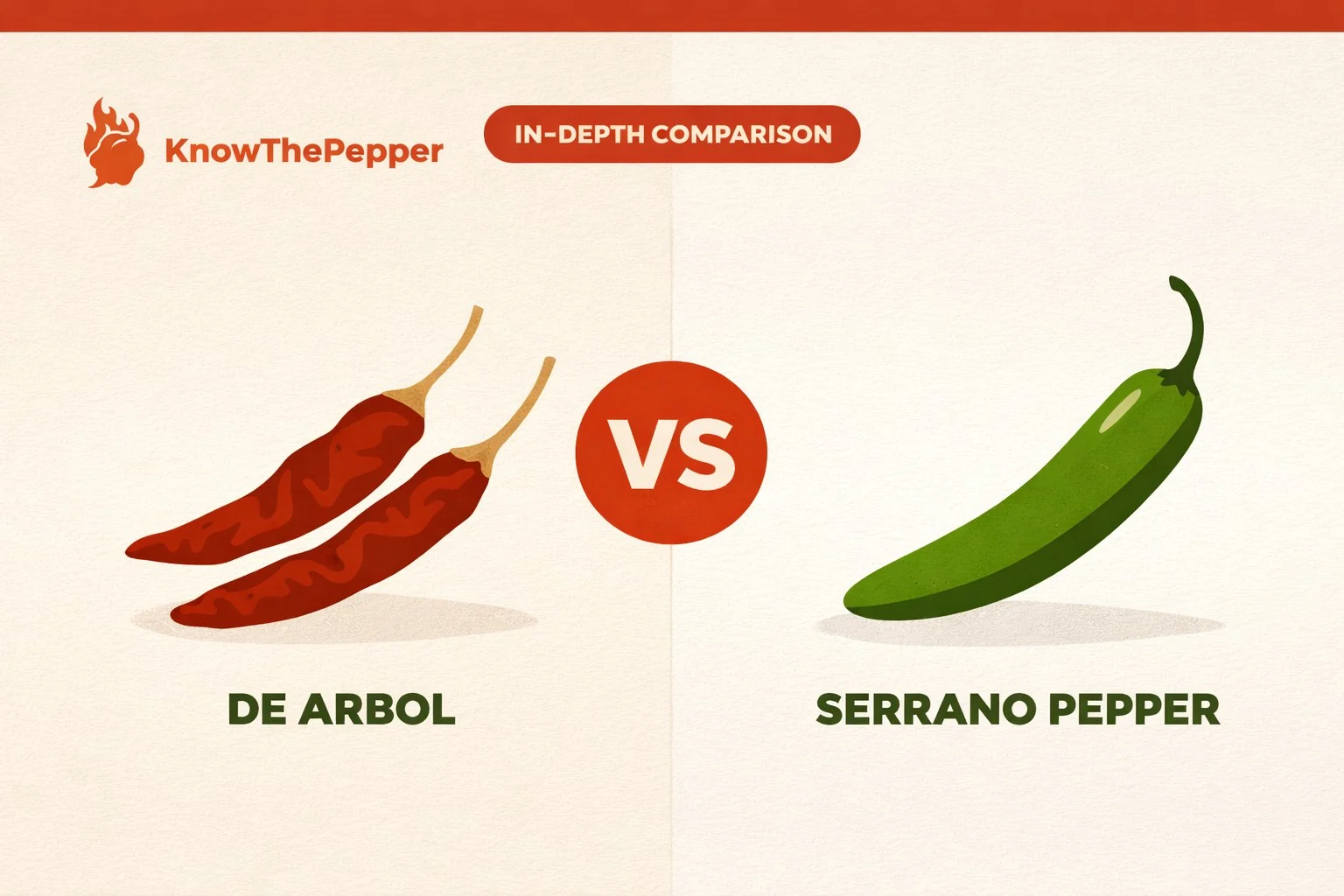
De arbol registers at 15,000-30,000 SHU, placing it firmly in the medium-hot tier - roughly 3 to 6 times hotter than a serrano pepper, which typically tops out around 5,000 SHU. That is not background warmth.
It is assertive, front-of-palate fire that builds with each bite.
Guajillo, by contrast, sits at 1,000-2,500 SHU, a mild chile that most heat-tolerant eaters barely register as spicy.
Compared to a serrano, guajillo delivers less than one-fifth the heat. The the Scoville rating scale captures this gap cleanly: de arbol is roughly 10 times hotter than guajillo at their respective midpoints.
The character of the heat differs too.
De arbol produces a sharp, almost metallic burn that arrives quickly and lingers in the throat and sinuses, a quality tied to its relatively high capsaicin concentration and the chemistry behind how capsaicin binds to heat receptors. Guajillo's mild warmth is gentler, sitting more on the lips and front of the tongue without the prolonged finish.
For cooks building a dish where heat is the point, a thin red salsa, a spicy chile oil, a fiery birria broth, de arbol is the workhorse.
When heat should be a whisper rather than a shout, guajillo handles that register with ease. The medium-hot SHU bracket that de arbol occupies is a different cooking context entirely from guajillo's mild position.
How Do De Arbol and Guajillo Taste Different?
Heat aside, these two chiles have genuinely distinct flavor identities that make them non-interchangeable in most applications.
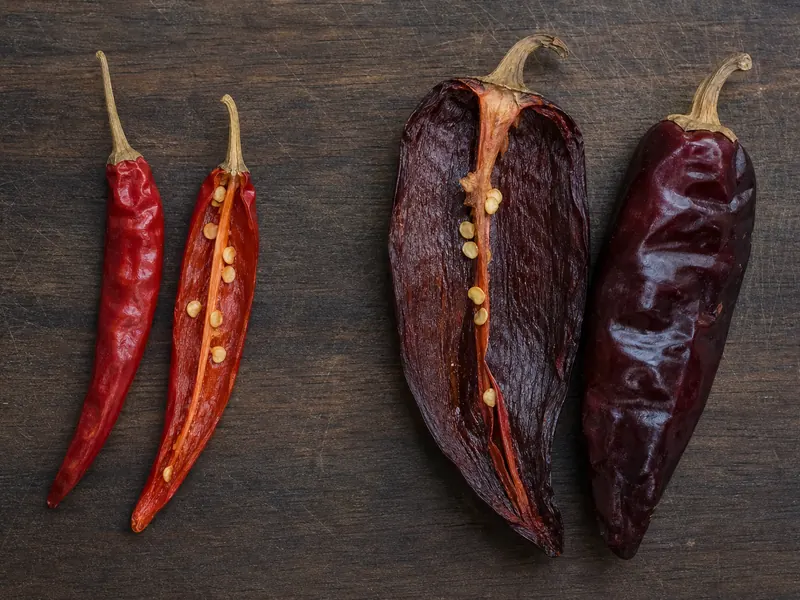
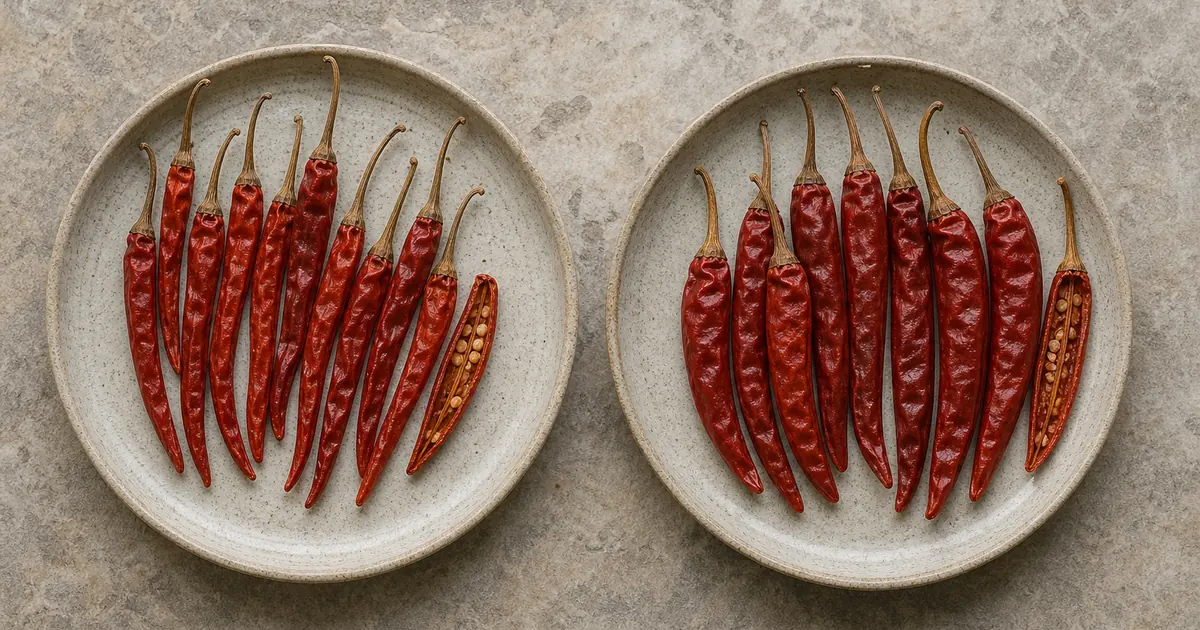
De arbol has a grassy, slightly smoky flavor with a sharp, almost tannic quality. Some describe it as having a faint nuttiness when toasted, but the dominant impression is brightness and heat rather than deep complexity.
The dried pods carry a thin flesh that toasts quickly, releasing volatile aromatics that are pungent and direct. It is not a subtle chile.
Guajillo is one of the more complex dried chiles in Mexican cooking.
Its flavor profile layers dried cherry and cranberry tartness with a mild earthiness and a hint of green tea, a combination that is genuinely hard to replicate with other ingredients.
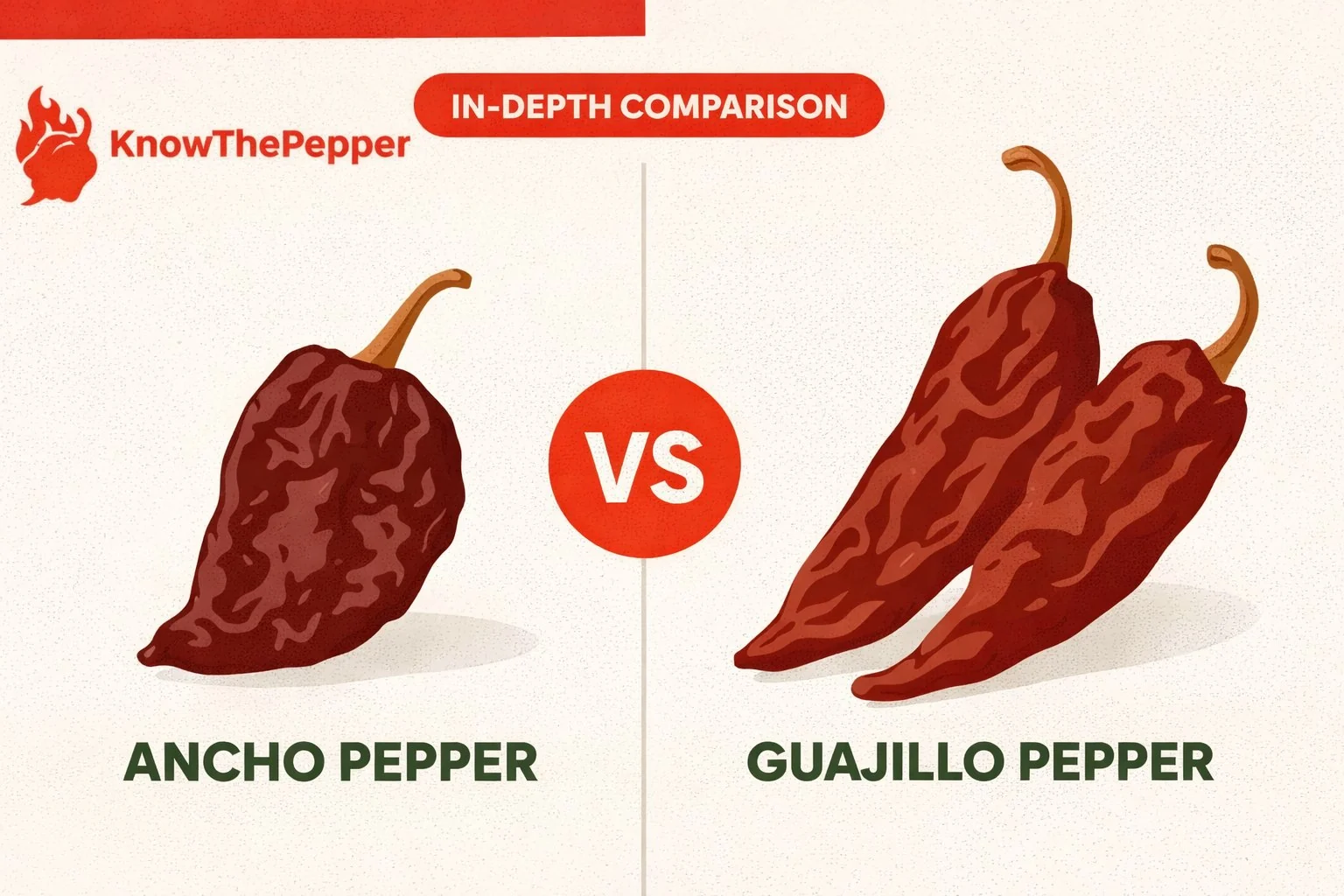
The flesh is thicker and more leathery, which means longer rehydration but also more body in sauces. When blended, guajillo produces a smooth, brick-red paste with a slight natural sweetness that anchors mole rojo, enchilada sauce, and adobo marinades.
Aroma tells the story before the first taste.
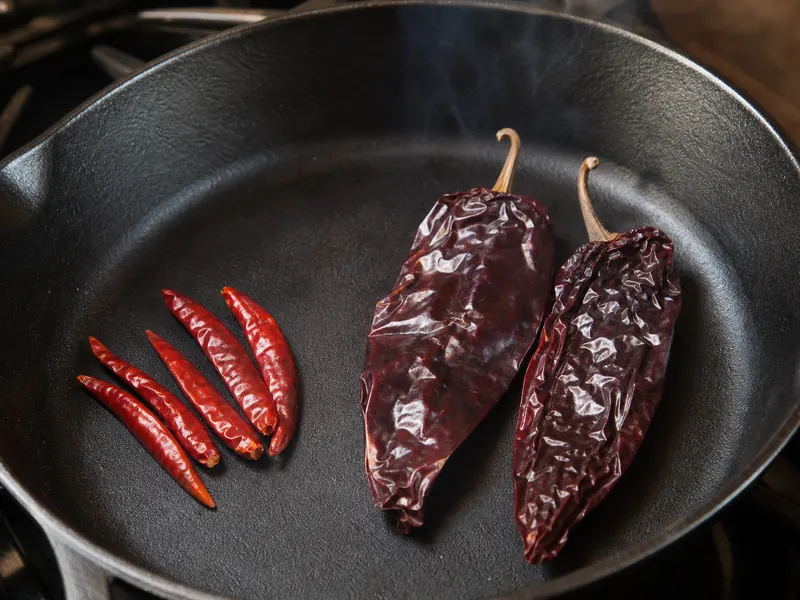
De arbol pods smell sharp and spicy straight from the bag. Guajillo has a more inviting dried-fruit scent that opens up dramatically when the pods hit a dry comal.
For dishes where color matters, and in Mexican cooking, it often does, guajillo wins outright.
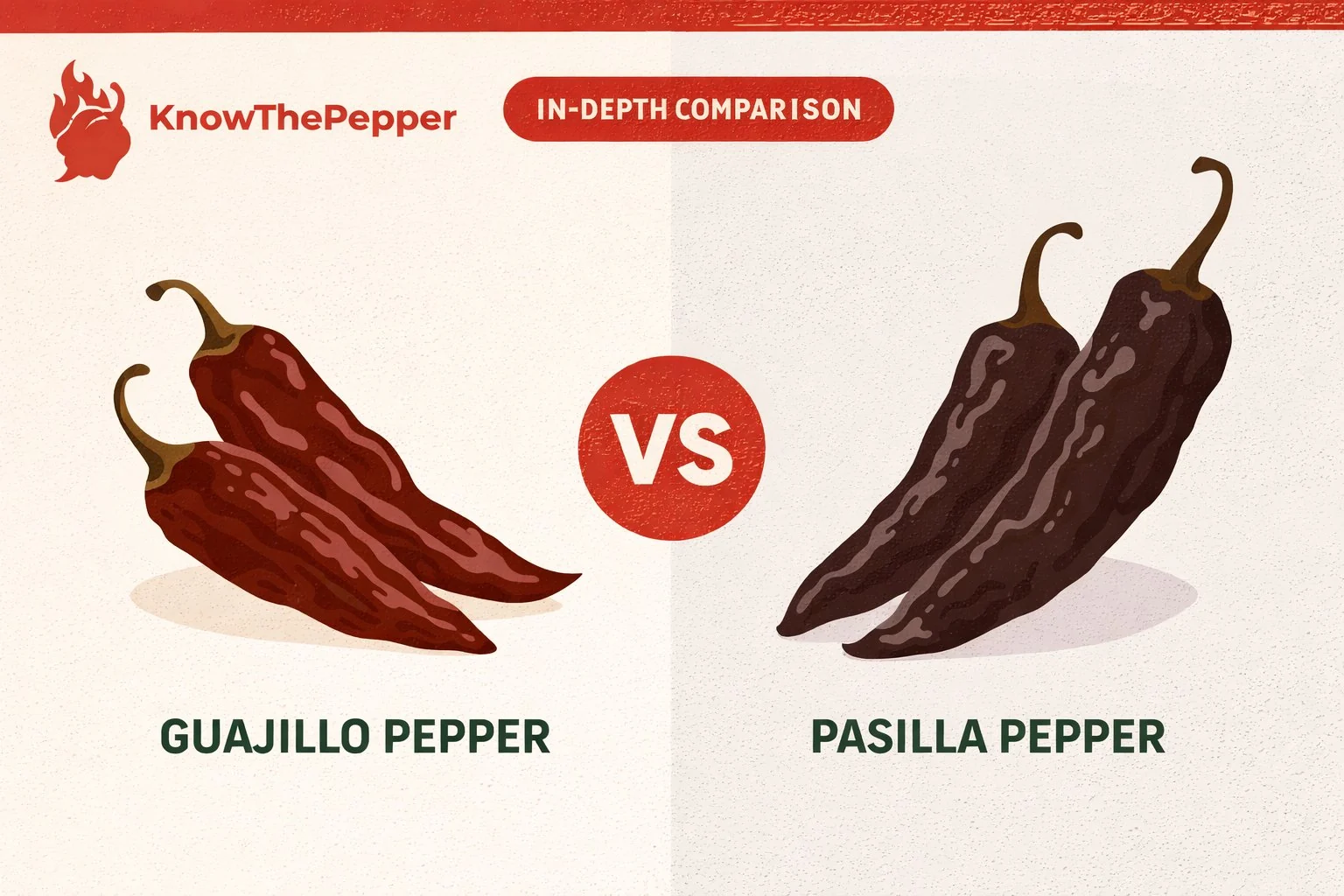
Its deep red pigment creates the vibrant sauce color associated with classic guajillo-versus-pasilla comparisons and other foundational chile blends. De arbol adds heat and a grassy note, but it does not carry the same visual impact.
Can You Use De Arbol and Guajillo Together?
These two chiles rarely compete for the same role in a recipe, they are more often used together than swapped directly.
Guajillo is the backbone chile in dozens of Mexican classics.
It is essential in guajillo versus New Mexico chile preparations where mild, fruity depth is the goal.
Rehydrate the pods in hot water for 20-30 minutes, then blend with garlic, cumin, and a splash of the soaking liquid for a foundational red sauce that works over enchiladas, as a braising liquid for pork shoulder, or stirred into pozole rojo. The thick flesh means guajillo sauces have natural body without needing thickeners.
De arbol works best where heat delivery is the primary mission. Whole dried pods are dropped into hot oil to bloom their capsaicin into chile oil, a technique common in Mexican and some Chinese cooking.
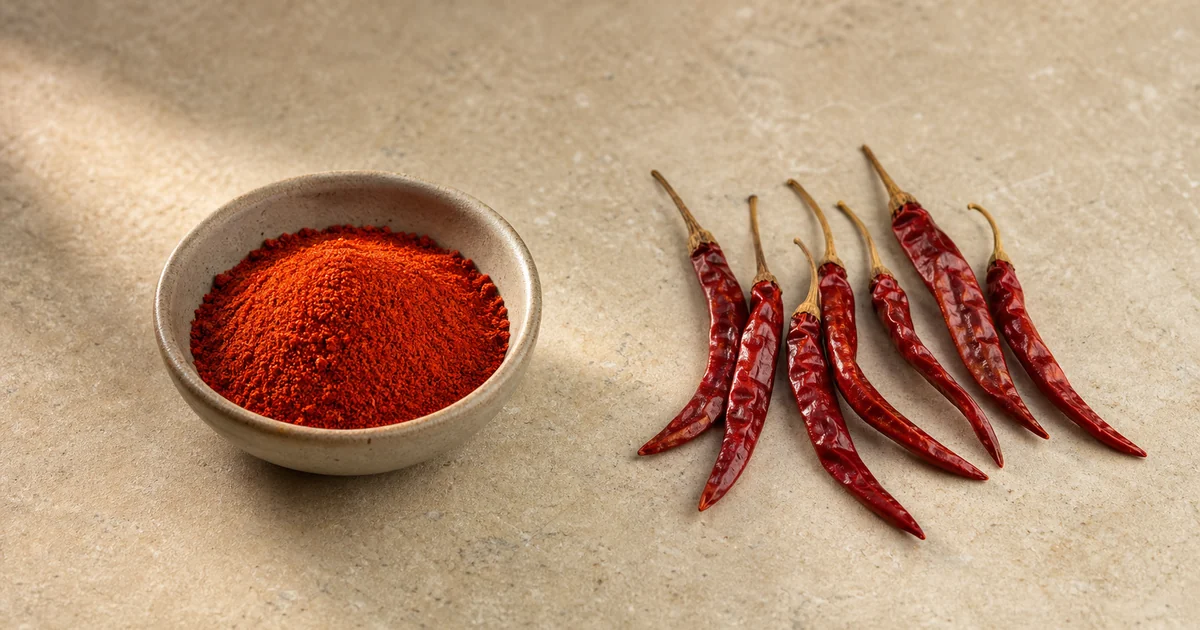
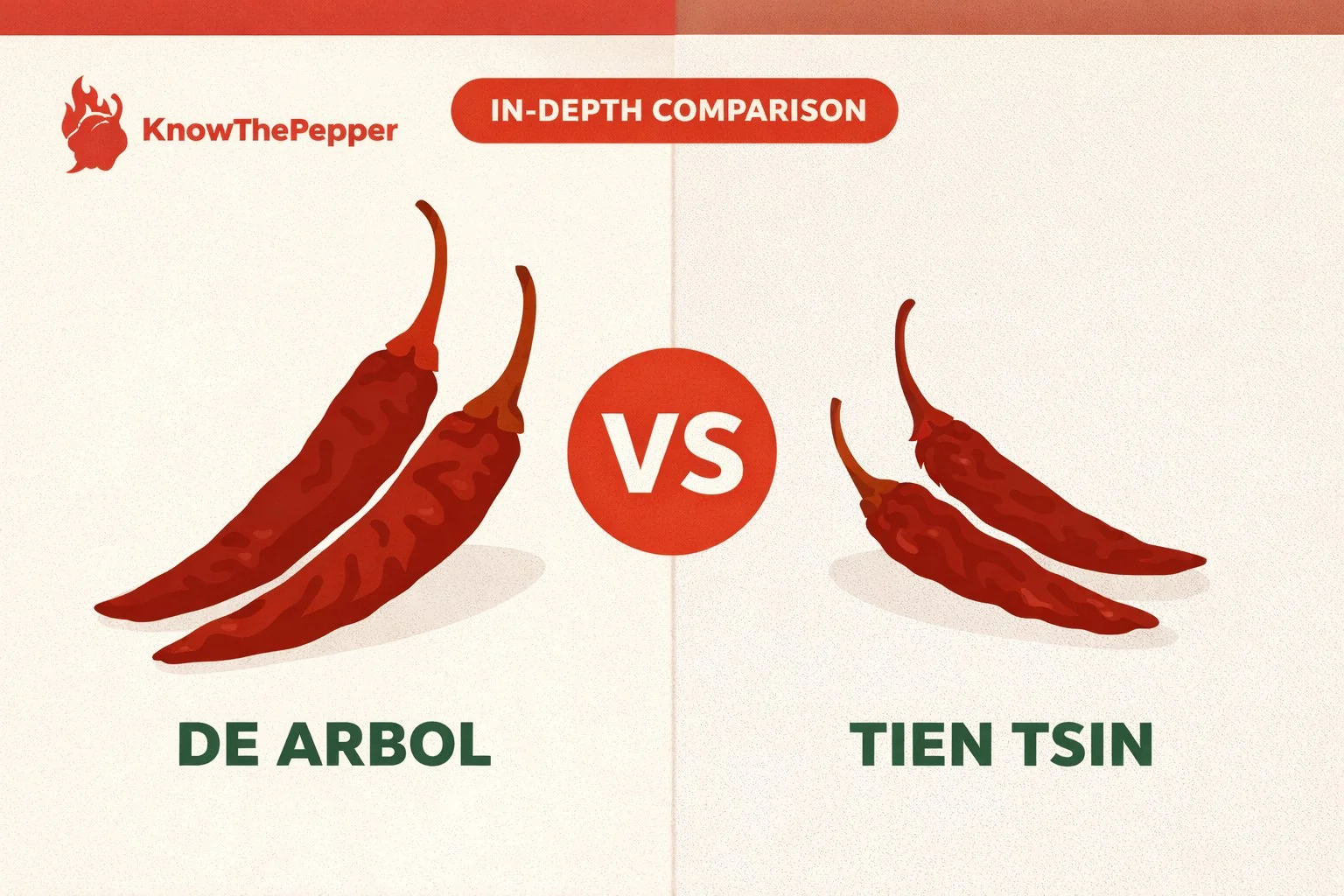
Toasted and ground, de arbol becomes a coarse powder used to dust grilled corn, rim glasses for micheladas, or spike a salsa that needs more aggression than dried ancho or mulato can provide. The side-by-side heat difference between de arbol and tien tsin shows how de arbol fits into that broader category of thin-fleshed, high-heat dried chiles used across multiple cuisines.
When substituting one for the other, the math gets tricky.
Replacing guajillo with de arbol requires drastically reducing quantity, use one de arbol for every four to five guajillos, and expect to lose the fruity complexity. Going the other direction, replacing de arbol with guajillo, means accepting a much milder dish unless you compensate with cayenne or another heat source.
Blending both is often the smartest move.
A salsa roja with three guajillos and two de arbols gets the color and depth from guajillo and the heat from de arbol, a combination that shows up in countless regional Mexican preparations.
Rehydrate separately since de arbol needs less time, then blend together with tomato, onion, and garlic. For cooks deciding whether de arbol or cayenne belongs in an infused oil, the dry chile oil heat comparison is the closer reference because both peppers are used primarily for sharp heat.
Verdict
Reach for guajillo when the dish needs color, body, and layered flavor without serious heat, enchilada sauce, braised meats, mole bases, and pozole all benefit from its dried-fruit complexity. It is the more versatile of the two for everyday cooking and the safer choice when feeding guests with mixed heat tolerance.
Reach for de arbol when the dish needs fire.
Salsas meant to challenge, chile oils, spice rubs, and any preparation where heat is the feature rather than the background, this is de arbol's domain. Its sharp, grassy character also adds a brightness that guajillo cannot replicate.
For cooks building a dried chile pantry from scratch, guajillo is the higher priority purchase.
It appears in more foundational recipes and its mild heat makes it easier to work with in quantity.
De arbol is the essential second addition, the heat dial that guajillo lacks. Stock both, and most Mexican dried chile recipes become accessible.
Which Should You Choose, De Arbol or Guajillo?
Choose De Arbol when the recipe needs clean medium-hot heat, thin dried-chile texture, and a sharp grassy bite. It is the better fit for salsa roja that needs fire, chile oil, spice blends, and recipes where heat is the feature rather than the background.
Choose Guajillo Pepper when the dish needs mild heat, red color, and dried-fruit body. It is the better fit for enchilada sauce, adobo, pozole rojo, braises, and chile pastes where the sauce needs body as much as heat.
The practical decision is not just SHU.
De Arbol is a heat dial; Guajillo is a sauce base. If a recipe names one because of a regional sauce or paste, use that pepper first and treat the other as an adjustment, not an equal swap.
Can De Arbol and Guajillo Replace Each Other?
De Arbol is listed at 15,000-30,000 SHU. Guajillo Pepper is listed at 1,000-2,500 SHU.
At midpoint, De Arbol runs about 13x hotter than Guajillo Pepper.
That is a planning number, not a promise for every bag of dried chiles, but it keeps substitutions from drifting wildly.
For substitution, start by matching the role before matching the number. If the pepper is mainly there for color or body, use volume as the guide.
If it is there for heat, start with a much smaller amount of the hotter pepper and taste before adding more. If it is a dried chile comparison, match by seeded weight after stems are removed, not by pod count.
Flavor is the second correction.
Add a little vinegar or lime when the replacement tastes flat, a pinch of sugar when the replacement tastes bitter, and a small amount of smoked paprika only when the original pepper had smoke. Do not add smoke to a bright dried-fruit sauce unless the recipe already points that way.
De Arbol vs Guajillo Pepper FAQ
- Varieties & Plant Breeding - Chile Pepper Institute, NMSU
- USDA FoodData Central - Dried Chile Peppers
- Diana Kennedy - The Essential Cuisines of Mexico
- Rick Bayless - Mexican Kitchen