Dragon's Breath vs Pepper X: Claim, Record, and Real Use
Pepper X is the documented winner because Guinness records its 2,693,000 SHU average. Dragon's Breath is tied to an unofficial 2.48 million SHU report, so buyers should compare evidence and provenance before treating either name as a guaranteed dose.

Dragon's Breath
Super-HotPepper X
Super-HotQuick Comparison
| Attribute | Dragon's Breath | Pepper X |
|---|---|---|
| Scoville evidence | 2.5M-2.5M SHU | 2.7M-2.7M SHU |
| Heat Tier | Super-Hot | Super-Hot |
| vs Jalapeño | 313x hotter | 337x hotter |
| Flavor | extremely intense | fruity and earthy |
| Species | C. chinense | C. chinense |
| Origin | United Kingdom | USA |
Which Is Hotter, Dragon's Breath or Pepper X?
Pepper X has the stronger documented heat result. Guinness World Records recognized it in 2023 at an average 2,693,000 Scoville heat units, while Dragon's Breath is associated with an unofficial 2.48 million SHU report rather than a Guinness title.
That distinction matters because an average from a documented record attempt is not equivalent to a single repeated headline figure. Guinness says Pepper X replaced the Carolina Reaper after testing across multiple specimens and generations.
The National Institute of Standards and Technology explains that modern laboratories use high-performance liquid chromatography to separate and quantify capsaicinoids, and that method produces more reproducible evidence than judging heat through a taste panel or repeating a seller's estimate.
NIST also notes that soil, temperature, and growing location can change a pepper's heat. A cultivar name therefore does not guarantee that every pod matches the highest number reported for it.
Dragon's Breath drew attention in 2017 after a 2.48 million SHU result was widely reported. No public Guinness certification followed, so the responsible comparison calls the figure reported or unofficial instead of presenting it as a settled average.
Pepper X has a public record but is not a uniform dose in every product, and sauce concentration, batch size, and the amount added to one serving determine the heat a diner actually encounters.
The numerical gap between 2.48 million and 2.693 million is less useful in a kitchen than the evidence gap. Both figures describe an extreme range where a tiny quantity can overwhelm a batch, but only Pepper X carries the current Guinness record.
Do not test either pepper by biting a raw pod. A tasting stunt cannot verify SHU, and it exposes the person to an uncontrolled amount of capsaicin without answering the comparison accurately.
Heat verdict goes to Pepper X on documented average and record status, and dragon's Breath remains an exceptionally hot reported cultivar, but its famous number should retain an uncertainty label.
If a product claims either name, look for a traceable producer and a stated ingredient concentration. The pepper name alone cannot tell you how much capsaicin reaches one serving.
What Do Dragon's Breath and Pepper X Taste Like?
Flavor cannot be compared with the same confidence as record status because verified Dragon's Breath pods are difficult to trace. Repeated descriptions from seed sellers do not establish a stable sensory profile across authenticated samples.
Associated Press reporting describes Pepper X as greenish-yellow with an earthy flavor after the heat arrives. Breeder Ed Currie told AP that flavor and appearance were central breeding goals, which gives that description a named source.
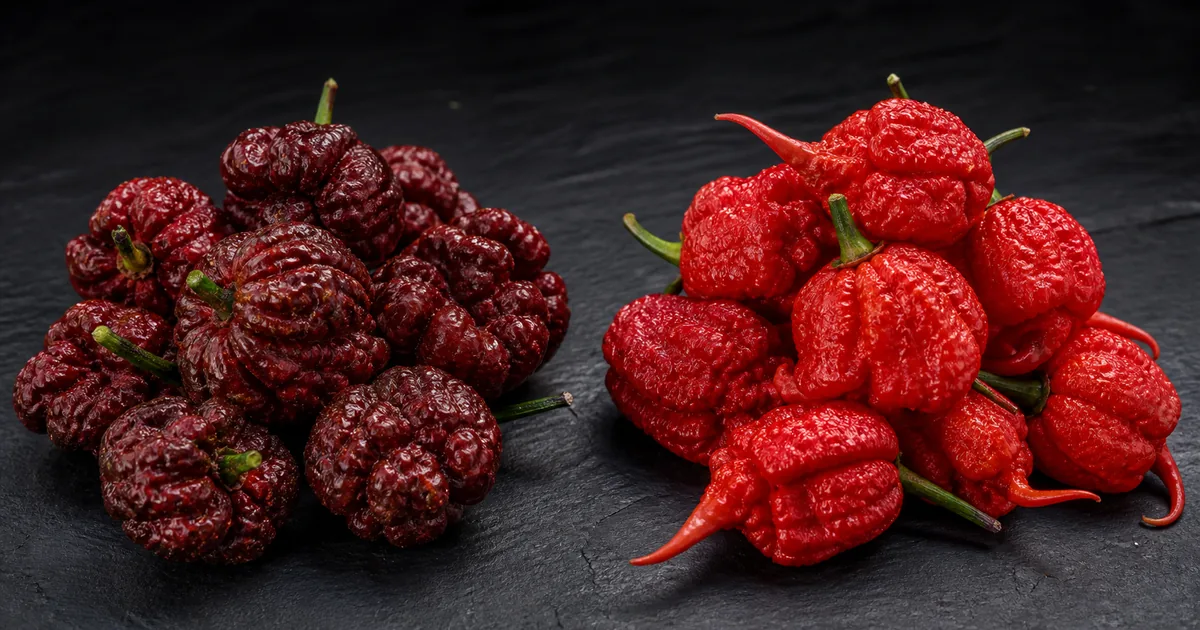
Guinness describes Pepper X as a cross developed over more than a decade, and its compact folded surface and olive color differ visually from the small red pods commonly sold under the Dragon's Breath name.
Color and wrinkles still cannot authenticate a seed lot. Many Capsicum chinense superhots produce bumpy pods, so provenance matters more than matching a photograph from a marketplace listing.
At this heat level, concentration controls whether flavor remains perceptible. A minute addition may leave some earthiness in a large sauce batch, while a larger addition can make capsaicin irritation dominate the entire experience.
Dragon's Breath is often given fruity or floral descriptions online, but those claims rarely identify an authenticated sample and formal tasting method, and this article therefore does not assign it a precise flavor promise.
Drying, fermentation, vinegar, sugar, and smoke can change the finished product more than the difference between the two raw cultivars. Compare sauces by their complete ingredient lists instead of assuming the pepper name predicts the final taste.
Fresh pod texture has little practical value when safe use requires very small portions. Neither pepper belongs in a recipe that depends on whole slices, crisp walls, or a generous fresh-chile garnish.
Flavor verdict is limited by evidence, and pepper X has a sourced earthy description, while Dragon's Breath lacks enough authenticated public sensory data for a confident head-to-head claim.
Choose a milder named chile when flavor is the main goal. Habanero, Scotch bonnet, or a verified Carolina Reaper product provides more accessible cooking guidance than an uncertain Dragon's Breath listing.
Can You Cook With Dragon's Breath or Pepper X?
Neither pepper is an everyday cooking ingredient. The safest practical choice is a professionally formulated sauce or mash with clear serving guidance, not an unidentified fresh pod from an untraceable seller.
Poison Control says capsaicin can intensely irritate skin, eyes, the digestive tract, and airways. It recommends rubber, latex, or nitrile gloves, fresh air during preparation, and keeping contaminated hands away from the face.
Use dedicated nonporous tools if you handle a verified pod, and keep children and pets out of the work area, cover nearby food, and clean the board, knife, counter, and sink immediately after the pepper is sealed away.
Do not fry, grill, or grind either pepper in a poorly ventilated room. Heat and airborne particles can move capsaicin toward eyes and airways, which turns a food experiment into an exposure problem.
For sauce work, begin with a finished commercial product whose manufacturer provides a serving size. Adding an unknown raw sliver offers less control because pod heat varies and home equipment cannot measure capsaicinoid concentration.
Never use these peppers for surprise heat, dares, or unlabeled shared food, and tell every diner what the product contains and provide a separate mild batch so consent does not depend on guessing.
Pepper X is relevant to record-history collections and products licensed or sourced through its breeder. AP reported that Ed Currie planned to protect the cultivar and would not release seeds, so casual Pepper X seed offers deserve skepticism.
Dragon's Breath seed is advertised more widely, but availability does not prove identity. A plant grown from an unverified packet cannot support a precise 2.48 million SHU claim without authenticated genetics and laboratory testing.
If capsaicin reaches the eyes or causes concerning symptoms, stop the cooking session and follow Poison Control guidance, and in the United States, Poison Control provides case-specific help through its official service.
Use verdict favors neither raw pod for ordinary cooking. Choose measured commercial forms, protective handling, transparent labeling, and a much milder pepper whenever the recipe can achieve its purpose without record-level heat.
Verdict
Choose Pepper X when the question is which pepper holds the verified record. Guinness names it the current hottest chile at a 2,693,000 SHU average, and Dragon's Breath has never replaced it or the Carolina Reaper in the official record sequence.
Choose neither when the question is which fresh pepper to add casually to dinner. The evidence supports treating both names as specialist material, with Pepper X tightly controlled and Dragon's Breath identity inconsistent across open seed listings.
For research or collection, document the seller, lot, breeder claim, purchase date, and any laboratory report, and a photograph and cultivar label cannot establish heat or authenticity by themselves.
For a hot-sauce purchase, compare serving size, full ingredients, allergen information, and manufacturer warnings. A sauce carrying Pepper X may be milder per teaspoon than another product if its concentration is lower.
Do not buy loose Pepper X seed on the assumption that the Guinness name proves the packet. AP reported that Currie was withholding seed release, so an unrelated listing needs unusually strong provenance.
Treat Dragon's Breath's 2.48 million SHU number as historical context, not a guaranteed property of a plant, and that wording preserves the interesting 2017 claim without converting it into a certification that never occurred.
The closest useful substitute depends on the purpose. Use a traceable Carolina Reaper product for accessible documented superhot heat, or step down to habanero when a recipe needs fruit and manageable dosing rather than a record label.
The handling standard does not relax because one figure is unofficial. Gloves, ventilation, dedicated tools, clear labeling, and controlled portions remain appropriate whenever a verified extreme-heat product is opened.
Final verdict is Pepper X for proof and neither raw pepper for routine food, and dragon's Breath is a notable unverified heat claim, while Pepper X is the documented record holder with restricted access.
That answer survives a name swap because it rests on evidence status, sourcing, and use conditions specific to these two peppers. It does not depend on generic praise for whichever superhot name appears in the title.