

KnowThePepper
Pepper X: Ed Currie's Guinness Record Chile, Averaging 2,693,000 SHU
Pepper X is the current Guinness World Records hottest chilli pepper, with an official average of 2,693,000 SHU from Winthrop University testing.
Ed Currie bred it through PuckerButt Pepper Company in South Carolina, and the pepper is still best treated as a controlled record cultivar rather than a normal seed-catalog variety.
Its value for cooks is extreme heat in tiny doses, plus a fruity, earthy C. chinense flavor that only shows up after serious dilution.
- Species: C. chinense
- Heat tier: Super-Hot (1M+ SHU)
- Comparison: 337-1,077x hotter than a jalapeño, depending on where the jalapeño falls in its 2,500-8,000 SHU range
What Makes Pepper X Different?
At 2,693,000 SHU, Pepper X is the Guinness World Records holder for the world's hottest chilli pepper. Guinness reported the average from Winthrop University testing of specimens grown over several years, which makes the number a record measurement rather than a casual grower claim.
Ed Currie, the breeder behind the former record-holder Carolina Reaper, developed the pepper at PuckerButt Pepper Company in Fort Mill, South Carolina.
The important reader caveat is availability. Pepper X is not a normal open-source garden cultivar with widely verified seed stock.
KATIECO and PuckerButt have kept tight control over pods, seeds, and ingredient supply, so third-party seed listings should be treated with skepticism unless the seller can document the source.
That controlled status is part of why this profile focuses on verified heat, flavor use, and safe handling rather than pretending every home grower can simply buy true seed.
Pepper X belongs to the Capsicum chinense species, the same botanical group as most record super-hots. Guinness notes that its ridged, folded shape creates more internal surface area for placenta tissue, where capsaicin concentrates.
Species matters here because the heat is not in the seeds themselves. The pale membrane that holds the seeds carries most of the burn.
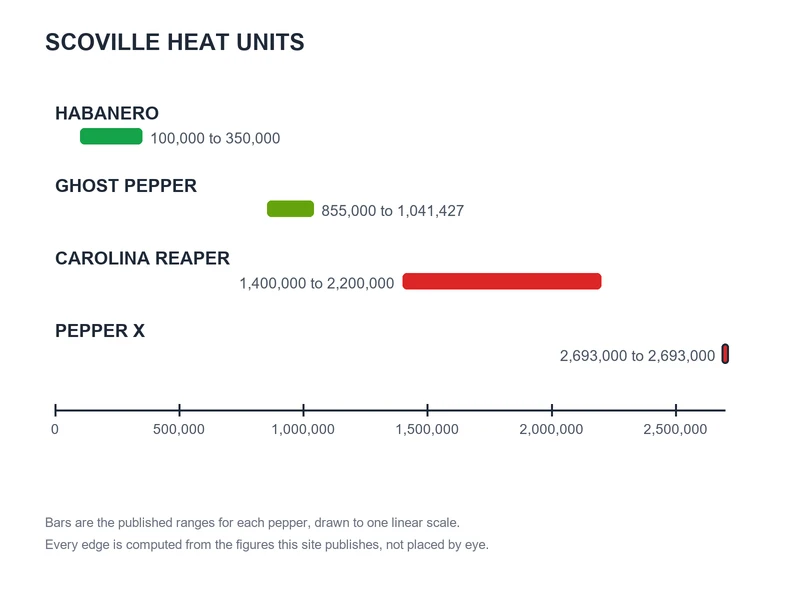
Compared with a typical ghost pepper around 1,000,000 SHU, Pepper X is roughly two and a half times hotter by average SHU. Compared with a jalapeño's common 2,500-8,000 SHU range, it sits about 337-1,077 times hotter, depending on which end of the jalapeño range you use.
Those ranges are planning context, not eating advice. A fraction of one pod can dominate an entire sauce batch.
The flavor underneath the heat is usually described as fruity and earthy rather than bright or grassy. We treat that flavor as a micro-dose ingredient: useful in fermented sauce, oil infusion, and heavily diluted condiments, but easy to erase if the dose is high enough to make pain the only thing the diner notices.
Where Does Pepper X Come From?
Ed Currie revealed Pepper X to a broad audience through the Hot Ones ecosystem, then Guinness World Records announced the official hottest-chilli title in October 2023. Guinness credited Winthrop University testing and reported the record average at 2,693,000 SHU, above the Carolina Reaper average of about 1.64 million SHU.
The breeding story is not just hotter-for-hotter's-sake. Currie has said the project selected for both heat and flavor over a long stabilization period.
Guinness also explains that new hybrid peppers need repeated generations before traits become predictable, so the record claim depends on stabilized plants and lab testing, not one unusually hot pod.
That history affects how we write about the pepper. For open cultivars such as Carolina Reaper's super-hot profile, growers can discuss seed vendors, plant traits, and harvest expectations with more confidence.
For Pepper X, the authority layer is narrower: Guinness, PuckerButt/KATIECO control statements, and observed sauce use are stronger than anonymous seed listings.
How Spicy Is Pepper X, and How Does It Taste?
The Pepper X delivers 2.7M Scoville Heat Units, placing it in the Super-Hot tier (1M+ SHU). That makes it roughly 337-1,077x hotter than a jalapeño, depending on where the jalapeño falls in its 2,500-8,000 SHU range.
Flavor notes: fruity and earthy.
What Nutrients Does Pepper X Provide?
Like all C. chinense super-hots, Pepper X is nutritionally dense relative to its size. Capsicum chinense pods carry vitamin C, vitamin A, vitamin B6 and potassium, though at the quantities anyone actually eats of this pepper the nutrition is not the reason to use it.
What the pod does carry in quantity is capsaicinoids, and that has metabolic implications. Capsaicin activates TRPV1 receptors and has been studied for effects on metabolism, pain signaling, and inflammation.
At Pepper X concentrations, these compounds are present in quantities far beyond what most peppers deliver.
Caloric content is negligible, fresh peppers run roughly 30-40 calories per 100g. The practical serving size for Pepper X is measured in fractions of a pod, making nutritional contribution per use minimal.
Which Dishes Suit Pepper X?
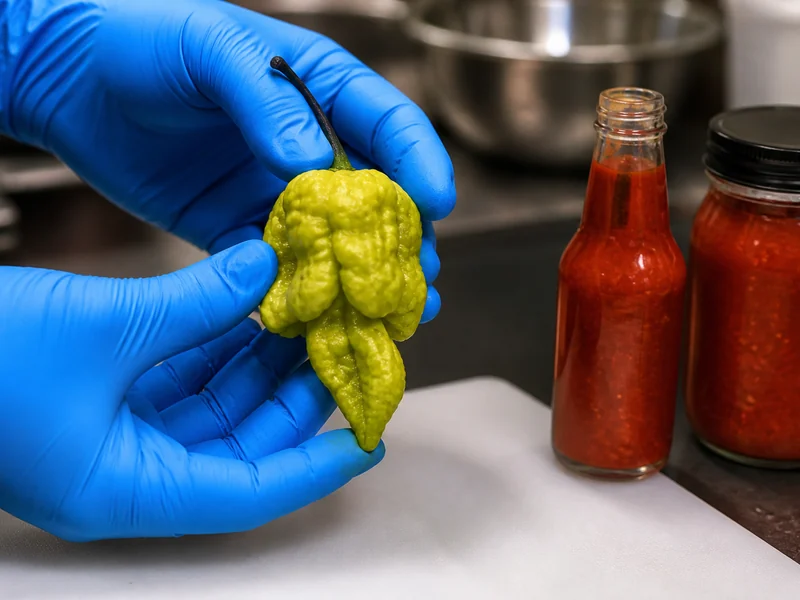
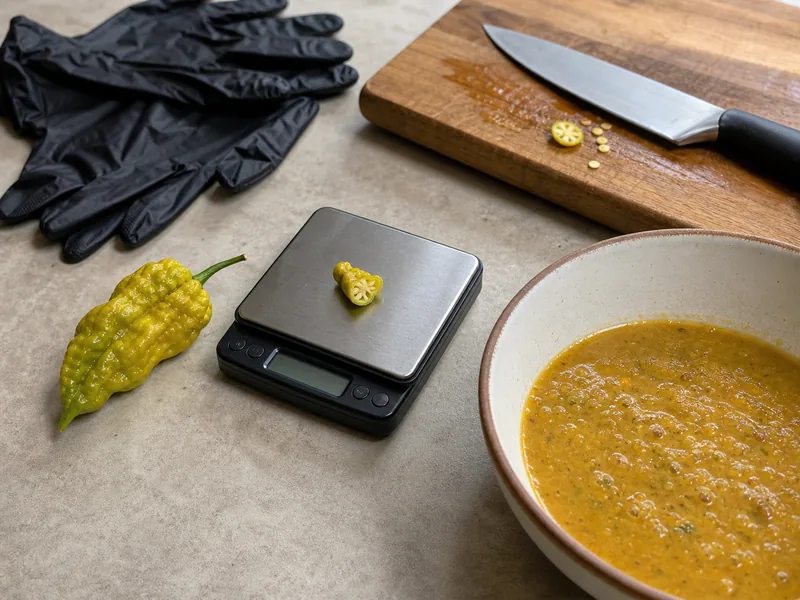
Cooking with Pepper X is a measuring problem first and a flavor problem second. Wear nitrile gloves, avoid touching your face, and work with ventilation.
At this heat level, a cutting board, knife handle, blender lid, or towel can carry enough capsaicin to surprise the next person who uses it.
The best uses are highly diluted formats: fermented hot sauce, vinegar mash, oil infusion, and fat-rich sauces.
Start with a piece smaller than a pea for a home batch, then blend into coconut cream, yogurt, oil, or a larger fermented mash before it reaches the finished sauce.
Fat helps spread the earthy fruit note and reduces the chance that one bite gets the whole dose.
Pepper X is not a good fresh salsa pepper. A raw dice will not behave like jalapeño's fresh green heat or even the ghost pepper's delayed super-hot burn.
It is better treated like a concentrate: weigh it, dilute it, taste with a clean spoon, and stop before the sauce loses its fruit, vinegar, garlic, or roasted-base character.
For hot sauce, we prefer building flavor from mango, pineapple, roasted garlic, carrot, or fermented onion, then using Pepper X as the heat engine. For dry rubs, use verified powder only and start below 0.1 g per family-size batch.
If the recipe is mainly about the pepper's record heat, the main comparison with Carolina Reaper's fruitier heat gives better context than simply increasing the dose.
How Should You Buy and Store Pepper X?
Fresh Pepper X pods are not a normal farmers-market item. KATIECO has stated that pods, plants, seeds, and Pepper X ingredients are controlled, so any seller offering loose seed or fresh pods should be checked carefully before you trust the label.
For most cooks, authorized sauces are the practical way to taste Pepper X. Check the ingredient statement for Pepper X or Pepper X pepper mash, then judge the sauce as a sauce rather than as proof that raw pods are available.
A well-made sauce can show the pepper's earthy fruit note while keeping the dose survivable.
If you do obtain verified fresh pods, store them like other super-hots: unwashed in a breathable bag in the refrigerator for about 1-2 weeks, or frozen whole for longer use. Keep them sealed away from everyday produce and label the bag clearly.
Dried powder should stay in an airtight container away from light, with a dedicated spoon so residue does not migrate to mild spices.
When availability is the problem, use the Pepper X substitute for safer alternatives. The best replacement is usually not an equal SHU match.
It is the pepper that gives the needed heat level without turning the recipe into a dare.
What Can Replace Pepper X in a Recipe?
Compare substitutes for Pepper X by form, flavor, and heat before choosing a ratio. Measured adjustments must account for the dish and the concentration of the replacement.
Direct comparisons show where flavor, form, and preparation differ in the Carolina Reaper vs Pepper X and Dragon's Breath vs Pepper X matchups.
How Do You Grow Pepper X Peppers?
Treat Pepper X growing advice differently from ordinary pepper profiles. Authentic seed availability remains tightly controlled, and many marketplace listings use the name without proof.
Unless the seed comes through a verified release or documented authorized channel, label the plant as a Pepper X-type superhot, not confirmed Pepper X.
If you do grow verified seed, use the same long-season discipline as other extreme C. chinense plants. Start indoors 10-12 weeks before last frost, keep germination media near 85-90°F, and expect slower emergence than common annuum peppers.
A heat mat, sterile seed mix, and patience matter more than extra fertilizer.
Plants in this class need strong light, steady moisture, and a long warm finish. Use at least a 5-gallon container or roughly 24 inches of in-ground spacing.
Excess nitrogen can produce impressive leaves while delaying flowers and pods, so shift toward balanced feeding once the plant is established.
The main practical warning is identity. A successful red or mustard superhot plant from an online packet does not prove it is Pepper X.
For open, grower-friendly superhot projects, the Carolina Reaper profile and other American super-hot varieties give more reliable home-growing expectations.
Pepper X FAQ


- Guinness World Records, Pepper X named hottest chilli pepper (October 2023)
- Capsicum chinense Jacq. - USDA GRIN Taxonomy
Species classification: C. chinense - based on published botanical taxonomy.