

KnowThePepper
Komodo Dragon Pepper: Fruity First, Then Up to 2,200,000 SHU That Lingers
The Komodo Dragon is a British-bred super-hot clocking 1,400,000-2,200,000 SHU, roughly 440 times hotter than a jalapeño and firmly in the same scorching bracket as the most feared peppers on the planet. Developed in England and sold through Tesco starting in 2015, it delivers a deceptively fruity initial flavor before an intense, building heat that lingers for a long time.
- Species: C. chinense
- Heat tier: Super-Hot (1M+ SHU)
- Comparison: 175-880x hotter than a jalapeño, depending on where the jalapeño falls in its 2,500-8,000 SHU range
What Is Komodo Dragon Pepper Known For?
Bred in England and introduced to mainstream grocery shelves in 2015, the Komodo Dragon sits at the extreme end of the super-hot SHU bracket - measuring between 1,400,000 and 2,200,000 Scoville Heat Units. That upper ceiling rivals some of the most incendiary pods ever cultivated.
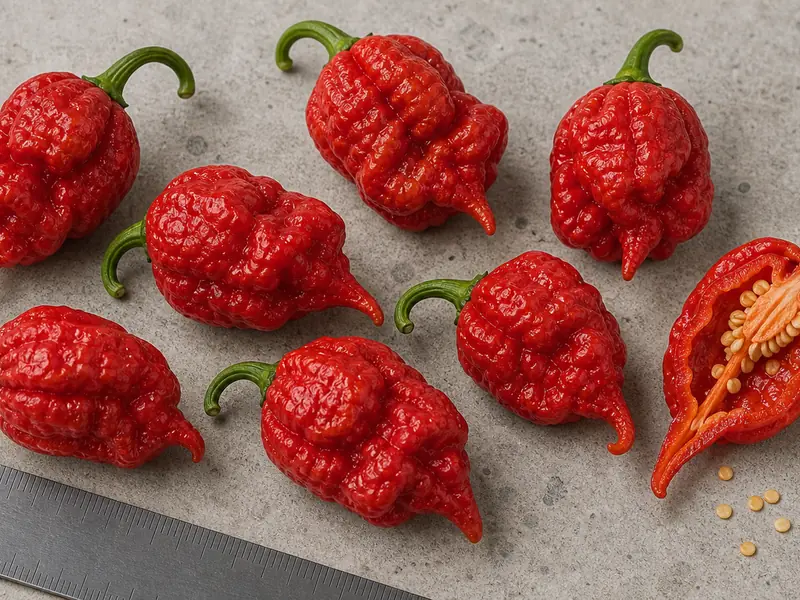
The pod is wrinkled and gnarled, with a lumpy contorted surface. That texture is a varietal trait and not a heat reading, in the same way that the tan stretch marks on a jalapeno are not one.
Heat comes from genetics and growing conditions rather than from how rough the skin looks. Pepper anatomy helps explain why these thick-walled, crinkled varieties tend to pack such intense, slow-releasing burns.
Flavor-wise, the Komodo Dragon opens with a genuinely fruity, almost tropical note, a characteristic of the C. chinense cultivar line genetics shared by habaneros and their super-hot relatives. That pleasant front end is temporary.
Within 30 seconds, the heat climbs aggressively and doesn't plateau quickly.
Compared to a standard habanero (100,000-350,000 SHU), the Komodo Dragon runs roughly 6-8 times hotter at minimum, and potentially far more at peak. Even experienced heat-seekers treat this one with respect.
For cooking use, a pod this size and intensity goes a long way: a small sliver can transform an entire batch of hot sauce or a large pot of chili into something formidable.
Where Did Komodo Dragon Pepper Originate?
The Komodo Dragon's origin story is distinctly modern and decidedly English. Developed by pepper breeders working with Salvatore Genovese, a commercial grower in Blunham, Bedfordshire, the variety was engineered specifically to push into super-hot territory while retaining marketable flavor.
In 2015, UK supermarket chain Tesco began stocking the Komodo Dragon, an unusual move for a pepper that rivals the Carolina Reaper. The pepper became something of a media sensation in Britain, drawing comparisons to the Indonesian lizard it was named after.
Its the Capsicum chinense group lineage connects it to a broader Caribbean and South American breeding tradition, even though the final product emerged from English polytunnels. It represents a newer wave of commercially cultivated super-hots bred for both heat and shelf appeal rather than just record-breaking SHU numbers.
How Spicy Is Komodo Dragon Pepper, and How Does It Taste?
The Komodo Dragon Pepper delivers 1.4M–2.2M Scoville Heat Units, placing it in the Super-Hot tier (1M+ SHU). That makes it roughly 175-880x hotter than a jalapeño, depending on where the jalapeño falls in its 2,500-8,000 SHU range.
Flavor notes: fruity and intense.
Komodo Dragon Pepper Nutrition Facts
For real eating amounts, Komodo Dragon is not a meaningful nutrition source.
It is usually used as a small piece of pod, a pinch of powder, or part of a larger sauce batch. The practical issue is capsaicin exposure around skin, eyes, and airways.
Wear gloves when cutting pods, ventilate when blending or heating sauce, and keep the pepper away from children and pets. The super-hot capsaicin exposure explains why super-hot peppers burn, and this profile is not medical advice.
How Do You Use Komodo Dragon Pepper in the Kitchen?
Cooking with the Komodo Dragon demands the same respect you'd give any pepper in the 1.4M+ SHU range, gloves, ventilation, and serious restraint with quantities.
The fruity opening flavor makes it genuinely useful in hot sauces where you want complexity alongside heat. A single pod blended into a mango or pineapple-based sauce creates a product with real depth, not just raw fire.
The the broader C. chinense group consistently delivers this fruit-forward profile, which is why so many craft hot sauce makers gravitate toward these varieties.
For dry applications, dehydrated and powdered Komodo Dragon works in spice rubs where you need concentrated heat in small doses. Think a pinch per pound of meat, not a tablespoon.
If you're exploring how super-hots fit into broader flavor traditions, the Mexican dried chile trinity offers useful context on building layered heat rather than one-dimensional burn.
Substituting within recipes is straightforward if you work by heat rather than volume. A 7 Pot Douglah offers a different flavor direction, chocolatey and rich, at comparable intensity if you want to experiment.
Fresh pods can also be fermented, the fruity notes survive lacto-fermentation well and the heat mellows slightly without disappearing.
How Should You Buy and Store Komodo Dragon Pepper?
Fresh Komodo Dragons occasionally appear in UK supermarkets and specialty grocers. Outside England, sourcing is primarily through online pepper retailers or specialty hot food shops.
Dried pods and powder are more consistently available internationally.
Fresh pods keep 1-2 weeks refrigerated in a paper bag, avoid sealed plastic, which accelerates moisture buildup and rot. For longer storage, freeze whole pods on a baking sheet first, then transfer to freezer bags.
Frozen pods retain their heat and most of their flavor for up to 12 months.
When buying seeds for growing, verify the source, mislabeled super-hot seeds are common. Reputable vendors like Baker Creek or specialist chili seed companies are worth the extra cost.
What Can Replace Komodo Dragon Pepper in a Recipe?
No dedicated substitute guidance is published for Komodo Dragon Pepper yet.
What Does Komodo Dragon Pepper Need to Grow Well?
The hardest part of growing Komodo Dragons isn't germination, it's maintaining the long season these plants demand in climates that aren't naturally warm. In England, where this pepper was developed, commercial growers rely on polytunnels or heated greenhouses to achieve the 90-120 day maturation period from transplant to ripe pod.
For home growers in USDA zones below 9, starting seeds 10-12 weeks before last frost indoors is essential. Soil temperature for germination should stay at 80-85°F (27-29°C) - a heat mat is worth the investment.
Once established, these plants are heavy feeders.
A calcium-magnesium supplement during fruiting prevents blossom end rot, which hits thick-walled super-hots harder than thinner-skinned varieties. Consistent watering matters more than quantity, irregular moisture causes splitting and pod drop.
For those interested in cultivation characteristics of similarly demanding super-hots, the general approach transfers well: full sun, well-draining soil amended with compost, and patience. Pods start green, transition through orange, and fully ripen to red, harvest at red for maximum heat and flavor development.
Expect 15-25 pods per plant under good conditions, though yields vary significantly with climate and care. Container growing is viable in a 5-gallon pot minimum, but outdoor-planted specimens in warm climates consistently outperform containerized ones.
| Requirement | What the plant needs | What that means outside a warm summer |
|---|---|---|
| Time to maturity | 90 to 120 days after transplant | An outdoor season in a cool climate runs out first |
| Heat through the season | Sustained warmth, not just a warm spell | Polytunnels or heated greenhouses, which is what English commercial growers use |
| Start | Indoors, well before the outdoor season | A direct sow will not finish |
Komodo Dragon Pepper FAQ


- Scoville Scale Reference - American Chemical Society
- Capsaicin and pain receptor research - NIH PubMed
Species classification: C. chinense - based on published botanical taxonomy.