

KnowThePepper
Chocolate Bhut Jolokia: Heat, Identity, and Safe Use
Chocolate Bhut Jolokia is a brown-ripening ghost pepper selection listed at 800,000-1,001,304 SHU. Buy it by named seed provenance, wait for full brown color, and use gloves plus measured portions whenever a pod is cut or cooked.
- Species: C. chinense
- Heat tier: Super-Hot (1M+ SHU)
- Comparison: 100-401x hotter than a jalapeño, depending on where the jalapeño falls in its 2,500-8,000 SHU range
What Makes Bhut Jolokia Chocolate Different?
Chocolate Bhut Jolokia is a brown-ripening selection sold within the Bhut Jolokia or ghost pepper family.
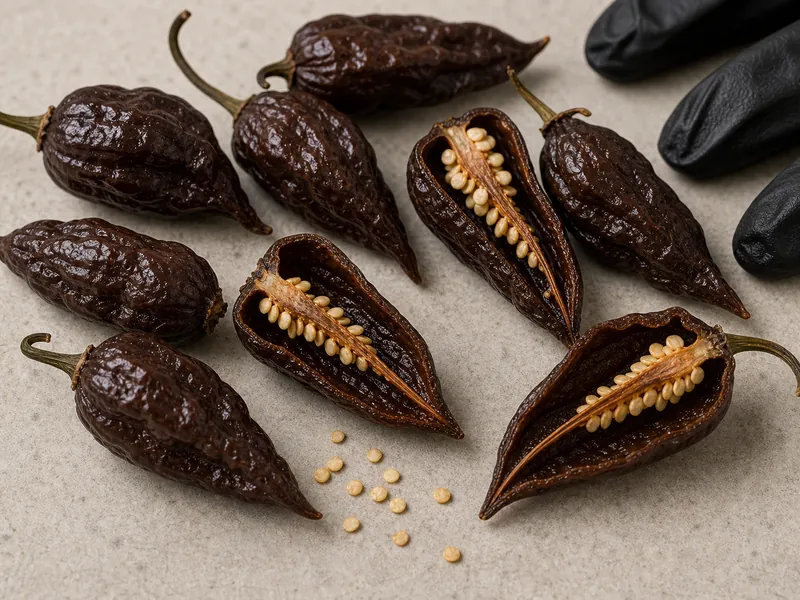
Mature pods are elongated, deeply wrinkled and chocolate brown, though color alone cannot confirm which seed line you have.
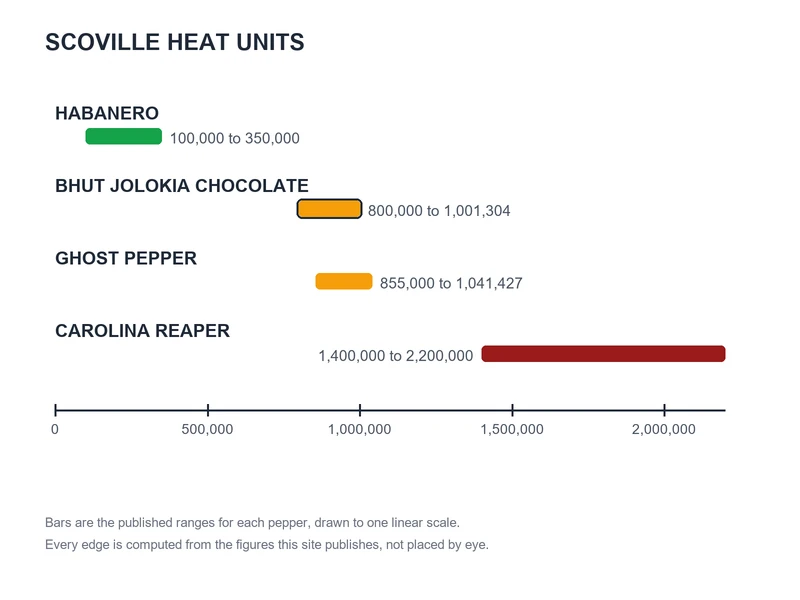
Specialty pepper references list this selection at 800,000-1,001,304 SHU. New Mexico State University separately documented the broader Bhut Jolokia lineage above one million SHU, so this belongs in the super-hot range.
The brown selection is commonly described as smoky, earthy, and fruity. Treat those words as cultivar and sensory descriptions rather than a laboratory-certified difference from the red ghost pepper.
That distinction matters when buying seeds. A packet should name the seed line and seller, while the harvested pod should ripen fully brown and retain the wrinkled ghost-pepper shape.
Extreme heat makes portioning the first cooking decision rather than the last.
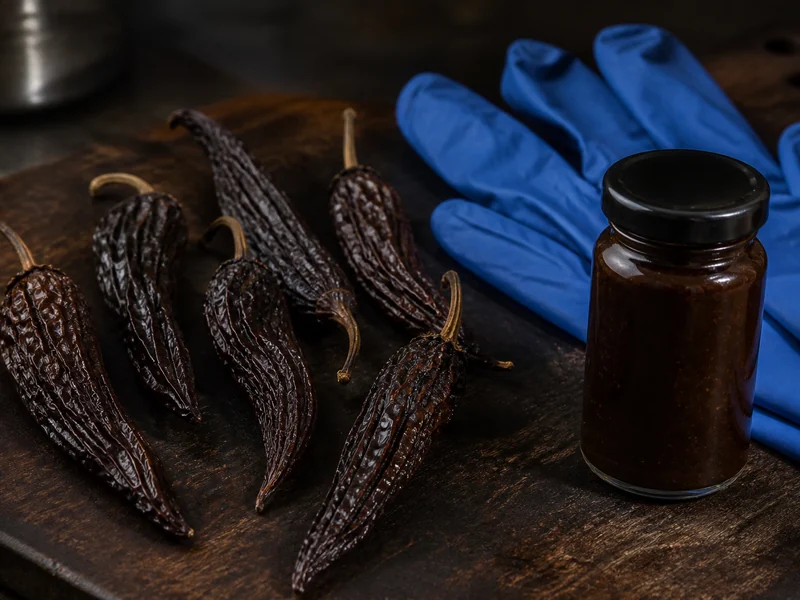
Wear nitrile gloves, keep cut pods away from eyes and children, and ventilate the room before heating fresh or dried material.
| Claim | Standing | Who says so |
|---|---|---|
| Bhut Jolokia exceeds one million SHU | Documented | New Mexico State University on the broader lineage |
| Hottest chilli in the world, 2007 | Documented, but for Bhut Jolokia | Guinness World Records, and not for a chocolate selection |
| This selection at 800,000 to 1,001,304 SHU | Reported | Specialty pepper references, not a separate certified test |
| Smoky, earthy and fruity | Sensory description | Sellers and growers, not a laboratory comparison |
| A distinct Indian landrace with its own origin | Not established | No published source dates or places the brown phenotype |
What Is the History of Bhut Jolokia Chocolate?
The documented Bhut Jolokia story belongs to northeastern India. New Mexico State University and research on Capsicum chinense populations identify Assam, Nagaland, and Manipur as key regions associated with the pepper.
Guinness recognized Bhut Jolokia as the hottest chilli in 2007.
That record belongs to Bhut Jolokia, not to a separately tested chocolate selection, and the difference matters when a seller quotes the title on a brown pod.
Published sources do not establish when or where the brown phenotype was first stabilized. The accurate description is therefore a chocolate-colored selection within the Bhut Jolokia trade, not a newly documented Indian landrace with its own proven origin story.
How Hot Is Bhut Jolokia Chocolate? Heat and Flavor
The Bhut Jolokia Chocolate delivers 800K–1M Scoville Heat Units, placing it in the Super-Hot tier (1M+ SHU). That makes it roughly 100-401x hotter than a jalapeño, depending on where the jalapeño falls in its 2,500-8,000 SHU range.
Flavor notes: smoky and fruity.
How Nutritious Is Bhut Jolokia Chocolate?
No authoritative nutrient database provides a separate panel for Chocolate Bhut Jolokia. General fresh-pepper vitamin values should not be presented as a cultivar-specific 100-gram result.
The main dietary issue is capsaicin exposure. Capsaicin activates TRPV1 receptors, and why capsaicin burns explains why water spreads the sensation instead of dissolving the compound.
Seeds are not the heat-producing tissue.
Capsaicinoids concentrate in the pale placenta that holds them, so scraping seeds alone will not reliably make a cut pod mild.
Which Dishes Suit Bhut Jolokia Chocolate?
A measured pinch beats a whole-pod assumption every time.
Start with a small piece or a pinch of powder in a large pot, let the heat distribute, and only then decide whether to add more. The red ghost pepper behaves the same way at a similar dose.
Earthy seller descriptions make the brown selection a plausible fit for beans, dark sauces, chile pastes, and meat rubs. The flavor contribution is easiest to notice when the dose stays below the point where capsaicin overwhelms every other ingredient.
For sauce, blend it with a larger base of sweet pepper, fruit, tomato, or carrot. A guide to making hot sauce explains how acid, salt, and texture should be controlled independently of pepper heat.
Dried flakes and powder make portioning more repeatable than chopping an entire fresh pod. Do not roast a super-hot pod in an unventilated kitchen because heated capsaicin aerosols can irritate eyes and airways.
Nitrile gloves protect hands during cutting, but they do not make contaminated tools safe. Wash the knife, board, blender lid, and sink area before touching ordinary food.
Where Can You Buy Bhut Jolokia Chocolate, and How Do You Store It?
Buy fresh pods or seeds from a supplier that names Chocolate Bhut Jolokia explicitly. A generic "brown ghost" label or brown photograph cannot prove the seed line.
When no seller names the line, working from a ghost pepper swap is more honest than paying a premium for a colour.
Choose fresh pods with intact skin and no wet, sunken patches. Refrigerate them dry in a breathable bag and use them promptly rather than relying on a fixed multiweek promise.
Freeze whole clean, dry pods for later cooked dishes. Freezing softens the texture after thawing, so those pods suit sauce and stew better than fresh garnish.
Store fully dried pods or powder in an airtight container away from light, heat, and moisture. Label the container as super-hot so another cook does not mistake the contents for mild chile powder.
Dried form: Fully dried Chocolate Bhut Jolokia becomes brittle, dark brown, and much easier to dose by weight. Drying removes water but does not remove capsaicin.
Grind only in a well-ventilated area and avoid opening the grinder immediately near the face. A dedicated spice grinder prevents super-hot residue from reaching coffee or mild spices.
Whole dried pods retain aroma longer than pre-ground powder. Break off a measured piece when occasional use matters more than convenience.
What Can You Use Instead of Bhut Jolokia Chocolate?
No dedicated substitute guidance is published for Bhut Jolokia Chocolate yet.
How Do You Grow Bhut Jolokia Chocolate at Home?
Grow this selection as a long-season C. chinense pepper. Start seeds indoors 8-10 weeks before the last frost and keep the germination medium warm rather than relying on a cold windowsill.
Seedling labels matter because green plants and immature pods do not prove the chocolate phenotype. Keep the source name attached to each plant until fruit reaches its final color.
Move hardened plants outside after frost risk has passed and nights remain warm. Full sun, drainage, and consistent root-zone moisture support flowering without deliberately drought-stressing the plant.
A container of at least 5 gallons gives the root system more buffer against rapid drying. The steps for growing ghost peppers cover transplant timing and season-long care.
Harvest only once the pod turns from green to an even chocolate brown, later than most garden chillies ripen.
Brown color plus the wrinkled ghost shape supports identification, though only seed provenance can establish the line. For the wider family, the ghost pepper covers the same growing problem at a shorter season.
Bhut Jolokia Chocolate FAQ


- Characterization of Capsicum chinense Jacq. (Solanaceae) from Northeast India
- Guinness World Records - Hottest Chilli
- USDA FoodData Central, SR Legacy 170106, Peppers, hot chili, red, raw
Species classification: C. chinense - based on published botanical taxonomy.