

KnowThePepper
Carolina Reaper Pepper: Heat, Uses, and Record Status
The Carolina Reaper is Ed Currie's South Carolina-bred C. chinense cultivar and the former Guinness hottest chilli. Guinness certified a 1,569,300 SHU average in 2013, then recognized Pepper X at 2,693,000 SHU in 2023.
The profile's 1.4-2.2 million SHU range is a nursery and reference range, not a separate Guinness-certified average. Treat every pod or powder as highly variable, prevent eye and airway exposure, and avoid eating challenges.
- Species: C. chinense
- Heat tier: Super-Hot (1M+ SHU)
- Comparison: 175-880x hotter than a jalapeño, depending on where the jalapeño falls in its 2,500-8,000 SHU range
What Is Carolina Reaper?
A true Carolina Reaper typically has a deeply wrinkled red pod, broad shoulders, and a pointed tail, although fruit shape varies. Guinness attributes the cultivar to Ed Currie of PuckerButt Pepper Company in South Carolina and reported it as a Sweet Habanero and Naga Viper cross.
That named breeding history matters more than matching one dramatic pod shape.
The cultivar belongs to Capsicum chinense. Guinness described a fruity, sweet flavor, but that sensory note does not make the pepper suitable for casual tasting.
At this heat level, preventing unintended exposure is the first decision.
What Is the Origin of Carolina Reaper?
Guinness World Records confirmed Smokin' Ed's Carolina Reaper in 2013 with an average of 1,569,300 SHU. The record article tied the pepper to Currie's breeding work in South Carolina and made the Reaper the official hottest chilli of that period.
Pepper X replaced it in 2023. Guinness reported a 2,693,000 SHU average for the new holder and referred to the Reaper's former-record average as roughly 1.64 million SHU.
The two Reaper figures come from different Guinness reports and should remain dated record context, not be blended into a new measurement.
The 1.4-2.2 million SHU range shown in this profile describes the range commonly assigned to Carolina Reaper pods in nursery and reference material. It is not a Guinness-certified range, and an individual pod cannot be assigned an exact heat level by appearance.
The how their record figures differ keeps the two record histories side by side.
How Hot Is Carolina Reaper? Heat and Flavor
The Carolina Reaper delivers 1.4M–2.2M Scoville Heat Units, placing it in the Super-Hot tier (1M+ SHU). That makes it roughly 175-880x hotter than a jalapeño, depending on where the jalapeño falls in its 2,500-8,000 SHU range.
Flavor notes: fruity and sweet.
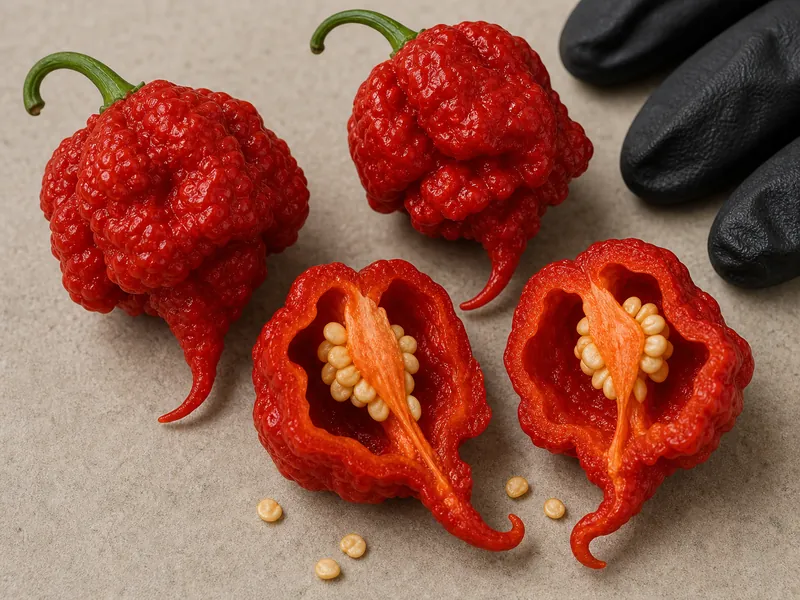
How Do You Cook With Carolina Reaper?
Use Carolina Reaper only where extreme heat is intentional and the amount can be controlled across the entire batch. Pod size, growing conditions, and how much placental tissue enters a dish all change the result, so no fraction of a pod works as a universal starting dose.
Its fruity and sweet notes can fit a carefully formulated sauce, but a cook should add a measured preparation in very small increments rather than invite anyone to taste raw pepper. Keep the finished food clearly labeled and separate from ordinary condiments.
The choose a less extreme substitute is the proper place to choose a less extreme ingredient or work through recipe-specific replacement logic.
Capsaicin does not disappear because a sauce contains fruit, sugar, dairy, or acid. Those ingredients can change flavor or the sensation of a dish, but they do not establish a safe dose.
The why capsaicin burns explains the compound and burn mechanism without turning this profile into medical advice.
| Pepper | Published range, SHU | Against a jalapeno |
|---|---|---|
| Jalapeno | 2,500 to 8,000 | The reference |
| Habanero | 100,000 to 350,000 | Roughly 40 times hotter |
| Ghost pepper | 855,000 to 1,041,427 | Roughly 250 times hotter |
| Carolina Reaper | 1,400,000 to 2,200,000 | Roughly 400 to 500 times hotter |
How Should You Buy and Store Carolina Reaper?
Buy fresh pods, dried pods, or powder from a seller who names the cultivar and producer when identity matters. A red wrinkled pod with a tail can support identification, but appearance alone cannot prove genetics or heat.
Store Reaper products in a closed, clearly labeled container that cannot be mistaken for paprika, cayenne, or an everyday seasoning. Keep them separated from mild peppers and shared spice jars, and tell other household members what the container holds.
These controls matter after the original package is gone.
Dried form: Drying concentrates the handling problem into brittle flakes and fine dust. NIOSH investigations of occupational spice and capsaicin exposure document eye, skin, and respiratory irritation where airborne material is generated, so casual home grinding is a poor fit for Carolina Reaper.
Buy prepared powder from a traceable seller when powder is genuinely needed. Keep the container closed, plainly labeled, and away from face level when opened.
If dried material is damp, moldy, or unidentified, discard it rather than testing aroma by leaning over it.
Handling and storing it without an accident
- Store it in a closed, clearly labelled container that cannot be mistaken for paprika, cayenne or an everyday seasoning.
- Keep it physically separated from mild peppers and shared spice jars.
- Dose any preparation in very small increments and taste across the whole batch, since pod size, growing conditions and how much pale placental tissue goes in all change the result.
- Treat an online eating-challenge serving size as entertainment. Poison Control notes that very hot pepper products can cause severe symptoms, and a dramatic portion is not a safety standard.
What Can You Use Instead of Carolina Reaper?
Compare substitutes for Carolina Reaper by form, flavor, and heat before choosing a ratio. Measured adjustments must account for the dish and the concentration of the replacement.
Direct comparisons show where flavor, form, and preparation differ in the Carolina Reaper vs Habanero and Carolina Reaper vs Ghost matchups.
Compare Carolina Reaper with: Carolina Reaper vs Trinidad Moruga Scorpion · Carolina Reaper vs 7 Pot Douglah · Carolina Reaper vs Chocolate Bhutlah · Carolina Reaper vs Apollo · Carolina Reaper vs Jalapeno · Carolina Reaper vs Dragons Breath
How Do You Start and Grow Carolina Reaper Peppers?
Carolina Reaper needs the warm-season conditions required by other C. chinense peppers. University of Minnesota Extension recommends starting peppers indoors, transplanting after frost danger, and waiting for warm soil rather than rushing plants outside.
This profile does not replace a cultivation calendar. Germination setup, transplant timing, feeding, container size, and harvest cues belong in the the full Carolina Reaper growing process.
Here, the useful boundary is simple: allow a long season and keep harvested pods identified and apart from mild peppers.
Carolina Reaper FAQ


- Guinness World Records: Smokin' Ed's Carolina Reaper sets new record
- Guinness World Records: Pepper X dethrones Carolina Reaper
- Poison Control: Is the One Chip Challenge dangerous?
- NIOSH Health Hazard Evaluation Report 2014-0056-3259
- NIOSH Publication 2003-154, PDF 5041
- University of Minnesota Extension: Growing peppers
Species classification: C. chinense - based on published botanical taxonomy.