

KnowThePepper
Naga Viper: England's Former Record Superhot at 900,000–1,382,118 SHU
The Naga Viper ranges from 900,000-1,382,118 SHU and briefly held the Guinness World Record in 2011. Bred in England from superhot parentage, it brings extreme heat with a fruity, delayed burn.
- Species: C. chinense
- Heat tier: Super-Hot (1M+ SHU)
- Comparison: 113-553x hotter than a jalapeño, depending on where the jalapeño falls in its 2,500-8,000 SHU range
What Is Naga Viper?
Most superhots are conversation pieces. The Naga Viper is actually worth cooking with.
At 900,000-1,382,118 SHU, the heat is serious, comparable to sitting in the super-hot pepper band alongside some of the most punishing varieties ever bred. But what separates the Naga Viper from pure heat bombs is the flavor that arrives before the burn takes over: bright, tropical fruit notes with a slight floral edge that you can actually taste if you use it carefully.
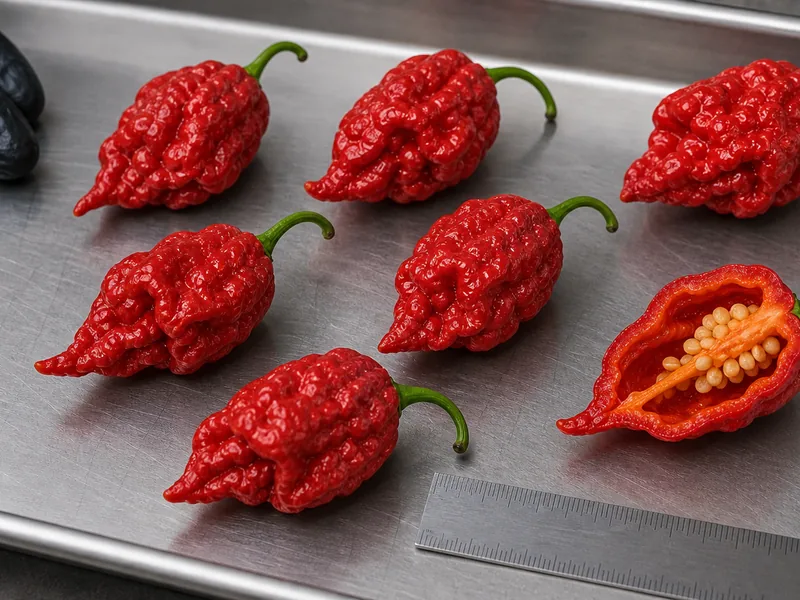
The pepper itself is wrinkled and irregular, typically 2-3 inches long, ripening from green through yellow to red. That textured skin is part of what makes it visually striking among British-bred super-hot peppers.
Chilli farmer Gerald Fowler of The Chilli Pepper Company in Cumbria, England, created it by crossing the Dorset Naga's South Asian cultural roots with two other C. chinense varieties. The result is a triple-cross hybrid that belongs to the C. chinense botanical family alongside habaneros and Scotch bonnets, which explains both its fruit-forward character and its extreme heat ceiling.
For cooks, the Naga Viper sits in a useful middle ground: hotter than most people will ever need, but flavorful enough to justify its presence in a sauce or marinade rather than just being a dare.
What Is the History of Naga Viper?
Gerald Fowler spent years crossing C. chinense varieties at his farm in Cumbria, northern England, before the Naga Viper emerged from that work. In February 2011, Guinness World Records certified it at 1,382,118 SHU, making it officially the hottest pepper in the world at that moment.
The record lasted less than a year. The Trinidad Scorpion Butch T was verified at over 1,463,000 SHU later that same year, pushing the Naga Viper down the rankings.
The pepper's parentage combines influences from South Asian naga peppers, the same lineage behind the Dorset Naga's South Asian heritage, with other extreme C. chinense genetics. England's unlikely role as a superhot breeding ground reflects how seriously British growers took the competition for heat records in the late 2000s and early 2010s.
How Spicy Is Naga Viper, and How Does It Taste?
The Naga Viper delivers 900K–1.4M Scoville Heat Units, placing it in the Super-Hot tier (1M+ SHU). That makes it roughly 113-553x hotter than a jalapeño, depending on where the jalapeño falls in its 2,500-8,000 SHU range.
Flavor notes: fruity and fierce.
What's in Naga Viper? Nutrition Facts
Like other C. chinense superhots, the Naga Viper is nutritionally dense relative to its tiny serving size. Fresh peppers deliver vitamin C in concentrations that exceed many common vegetables, a single pod provides meaningful amounts despite how little you'd actually eat.
Capsaicin, the compound responsible for the 1.3-1.4 million SHU heat, has been studied for anti-inflammatory and metabolic effects. Research from institutions including the Chile Pepper Institute at NMSU supports capsaicin's role in thermogenesis and appetite regulation.
Naga Vipers also contain vitamin A, potassium, and antioxidant carotenoids - the red pigmentation signals high lycopene and beta-carotene content. Calories per pepper are negligible.
A 100g serving of fresh pods provides approximately 20-40 calories, notable vitamin C (often 80-150% of daily value), and small amounts of vitamin B6, potassium, and folate. The extreme 900,000-1,382,118 SHU capsaicin load means a 100g serving contains far more capsaicin than most people would consume, a small fraction of a pod is typical.
Capsaicin concentrates in the placenta (white inner membrane), not the seeds.
These peppers fall in the superhot category on the Scoville scale. For the full mechanism of capsaicin and heat perception, see how capsaicin activates TRPV1 receptors.
How Do You Cook With Naga Viper?
The Naga Viper's fruity character opens up real cooking possibilities, but the 1.3-1.4 million SHU range demands respect. A single fresh pepper contains enough capsaicin to season a pot of chili for eight people.
For hot sauces, a quarter of one pepper blended with mango, lime, and ginger produces a genuinely complex sauce that works on peppers tacos without simply torching everything it touches. The fruit notes play well against tropical ingredients, pineapple, papaya, coconut milk.
Dried and powdered, the Naga Viper becomes a precision tool. A pinch in a dry rub for chicken wings delivers background heat that builds slowly, check out wing sauce heat guidance for calibration advice.
The fruity undertones survive drying reasonably well, which isn't true of every superhot.
Pickling is another strong option. Thin-sliced rings in apple cider vinegar with a little sugar preserve the pepper's flavor while slightly mellowing the raw heat.
Add one ring to a bowl of ramen and the broth transforms.
Always wear gloves when handling fresh Naga Vipers. Capsaicin transfers easily to skin and eyes, and at this heat level, that's not a minor inconvenience.
How Should You Buy and Store Naga Viper?
Fresh Naga Vipers appear occasionally at specialty grocers and farmers markets in the UK. Online vendors like specialist chilli companies ship them during harvest season (typically August-October).
Dried pods and powder are more reliably available year-round.
Store fresh peppers in the refrigerator in a paper bag, they hold well for 1-2 weeks. For longer storage, freeze whole pods without blanching.
They retain heat and most of their flavor for up to 12 months.
Dried powder should be kept in an airtight container away from light. Buy from reputable vendors who list SHU testing, powder quality varies significantly between suppliers.
What Can Replace Naga Viper in a Recipe?
Compare substitutes for Naga Viper by form, flavor, and heat before choosing a ratio. Measured adjustments must account for the dish and the concentration of the replacement.
Direct comparisons show where flavor, form, and preparation differ in the Ghost vs Naga Viper and Dorset Naga vs Naga Viper matchups.
How Do You Grow Naga Viper at Home?
Growing the Naga Viper requires patience, this is not a pepper for first-season growers looking for quick results.
Seeds need 80-90 days from transplant to first ripe fruit, and that's assuming ideal conditions.
Start seeds indoors 10-12 weeks before your last frost date. Soil temperature for germination should stay between 80-85°F - a heat mat under the seed tray is essentially mandatory.
The plants grow bushy and moderately tall, reaching 24-36 inches in a good season.
They prefer full sun and well-draining soil with a pH around 6.0-6.8. Consistent moisture matters more than heavy feeding.
Too much nitrogen pushes leaf growth at the expense of fruit set.
For growers comparing options, the 7 Pot Barrackpore's cultivation demands are similar, both reward growers who maintain steady warmth throughout the season. Container growing works well in cooler climates.
A 5-gallon pot gives roots enough room.
In the UK (where this pepper originates), polytunnel or greenhouse growing is nearly essential. Even in USDA zones 9-11, a warm, sheltered microclimate helps maximize fruit production.
Expect 10-20 pods per plant in a productive season, though yields vary considerably with growing conditions.
Naga Viper FAQ


- Guinness World Records - Hottest Chilli 2011
- Chile Pepper Institute, New Mexico State University
- USDA FoodData Central - Hot Peppers
-
Sourcing note: heat range is a widely cited figure, not an institutional measurement No university, government or research body publishes a Scoville measurement for this cultivar. The range given here is the figure growers and pepper references cite in common, and it has not been verified by a laboratory.
Species classification: C. chinense - based on published botanical taxonomy.