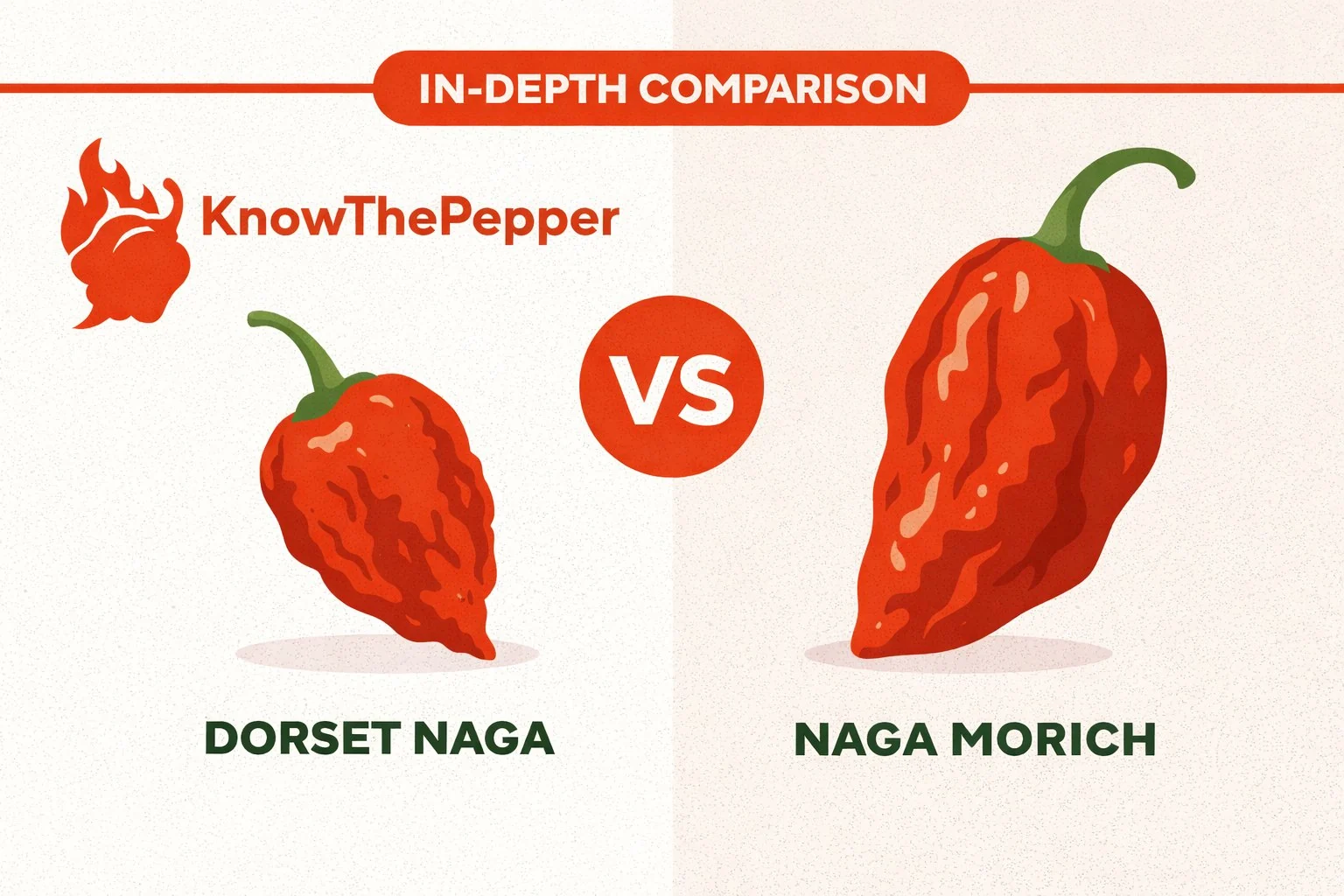
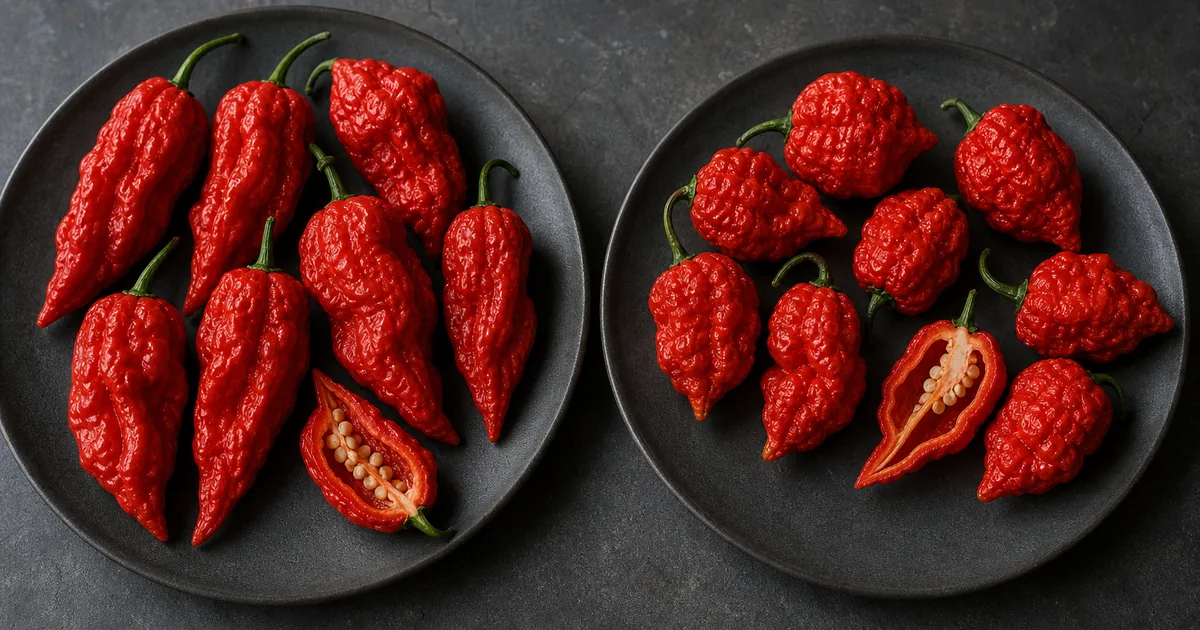
Dorset Naga is the better choice when you want a more stable Naga-style superhot with fruity heat and seed-saving value. Naga Viper is the record-history hybrid choice, sharper in identity and harder to source consistently. In the kitchen, both need superhot dosing rather than normal pepper substitution.
Comparison Contributor·Updated Jun 29, 2026·
Reviewed by
Karen Liu
Quick Comparison
Dorset Naga measures 800K–1.6M SHU while Naga Viper registers 900K–1.4M SHU. That makes Dorset Naga about 1.2x hotter by upper SHU range. Dorset Naga is known for its fruity and intense flavor (C. chinense), while Naga Viper offers fruity and fierce notes (C. chinense).
Dorset Naga
800K–1.6M SHU
Super-Hot · fruity and intense
Naga Viper
900K–1.4M SHU
Super-Hot · fruity and fierce
Heat difference: Dorset Naga is about 1.2× hotter by upper SHU range
Species: Both are C. chinense
Best for: Dorset Naga excels in hot sauces and extreme dishes, Naga Viper in hot sauces and spicy dishes
Dorset Naga spans 800K–1.6M SHU, roughly 200× a jalapeño at the upper end.
Naga Viper spans 900K–1.4M SHU, about 173× a jalapeño at the upper end.
Use the ranges to decide whether the recipe needs a measured dose, a mild overlap, or a hard substitution limit.
Tools: Scoville chart and SHU calculator.
Few peppers carry as much national pride as the Dorset Naga. Developed in the early 2000s by Joy and Michael Michaud at Sea Spring Seeds in Dorset, England, this C. chinense cultivar was selectively bred from Bangladeshi Naga Morich stock over multiple generations - a process that pushed heat and yield simultaneously.
At 900,000 to 1,500,000 SHU, it sits comfortably among the most intense peppers in the world. To put that in perspective, it reaches roughly half the upper range of a record-setting Carolina Reaper on a good growing season.
Naga Viper
fruityfierceC. chinense
Most superhots are conversation pieces. The Naga Viper is actually worth cooking with.
At 900,000-1,382,118 SHU, the heat is serious - comparable to sitting in the the super-hot pepper band alongside some of the most punishing varieties ever bred. But what separates the Naga Viper from pure heat bombs is the flavor that arrives before the burn takes over: bright, tropical fruit notes with a slight floral edge that you can actually taste if you use it carefully.
Both peppers belong to C. chinense, so they share some underlying flavor chemistry. However, Dorset Naga’s fruity and intense notes contrast with Naga Viper’s fruity and fierce character.
Dorset Naga brings fruity and intense notes, so it fits recipes where that flavor should remain visible.
Naga Viper leans fruity and fierce, which can change the sauce, filling, marinade, or garnish even when the heat range looks close.
Culinary Uses for Dorset Naga and Naga Viper
Dorset Naga
Naga Jolokia curry is where the Dorset Naga shows its best side - the fruity undertones actually contribute something beyond pure punishment when balanced against coconut milk, turmeric, and slow-cooked protein. A single pod, deseeded, can season a pot for six people.
Hot sauce makers prize it for that same reason. The fruity intensity survives fermentation and vinegar-based processing better than many super-hots, which can taste flat once bottled.
Handling protocol matters. Nitrile gloves are non-negotiable, and cutting boards need a thorough soap wash before anything else touches them.
Naga Viper
The Naga Viper's fruity character opens up real cooking possibilities - but the 1.3-1.
For hot sauces, a quarter of one pepper blended with mango, lime, and ginger produces a genuinely complex sauce that works on tacos and street food applications without simply torching everything it touches. The fruit notes play well against tropical ingredients - pineapple, papaya, coconut milk.
Dried and powdered, the Naga Viper becomes a precision tool. A pinch in a dry rub for chicken wings delivers background heat that builds slowly - check out wing sauce heat guidance for calibration advice.
Use slightly less by weight. Start below the recipe amount and adjust after tasting.
Milder replacement
Replacing Dorset Naga with Naga Viper
Increase gradually, but expect the flavor balance to change before the heat matches exactly.
Growing Dorset Naga vs Naga Viper
Growing notes
Dorset Naga
The Dorset Naga rewards growers who treat it like the tropical plant it fundamentally is. Start seeds 10-12 weeks before your last frost date - this variety needs a long season to hit its full heat and pod count.
Germination is the first test. Soil temperature should stay between 28-32°C (82-90°F) for reliable sprouting.
Once seedlings show their second true leaf set, move them to individual pots. The Dorset Naga develops a substantial root system - undersized containers restrict growth and reduce yield noticeably.
Growing notes
Naga Viper
Growing the Naga Viper requires patience - this is not a pepper for first-season growers looking for quick results.
Seeds need 80-90 days from transplant to first ripe fruit, and that's assuming ideal conditions. Start seeds indoors 10-12 weeks before your last frost date.
The plants grow bushy and moderately tall, reaching 24-36 inches in a good season. They prefer full sun and well-draining soil with a pH around 6.
Where They Come From
Origin & background
Dorset Naga
United Kingdom · C. chinense
The Dorset Naga's story begins not in South Asia but in a market stall in Bournemouth, England, where Joy Michaud purchased a Bangladeshi Naga Morich plant in the early 2000s. She and her husband Michael, experienced horticulturalists at Sea Spring Seeds, recognized something exceptional in that plant's combination of heat and fruit.
Over several growing seasons, they selected seeds from the hottest, most productive pods - classic selective breeding applied to a super-hot. By 2005, the result was formally named the Dorset Naga and entered commercial seed production.
Origin & background
Naga Viper
England · C. chinense
Gerald Fowler spent years crossing C. chinense varieties at his farm in Cumbria, northern England, before the Naga Viper emerged from that work. In February 2011, Guinness World Records certified it at 1,382,118 SHU, making it officially the hottest pepper in the world at that moment.
Whether you’re shopping for Dorset Naga or Naga Viper, the same quality indicators apply. Fresh peppers should feel firm and heavy for their size, with taut, glossy skin and no soft or wet spots. Minor stem cracks known as “corking” are perfectly normal and often indicate a mature, flavorful pod.
Selection
What to look for
Firm pods with taut skin and consistent color
Should feel heavy relative to size
Minor stem cracks (“corking”) are normal
Avoid anything soft, shriveled, or with dark wet spots
Storage
How to store them
Fresh: Paper bag, crisper drawer, 1 to 2 weeks
Frozen: Wash, dry, freeze on sheet pan, 6+ months
Dried: Airtight and away from light, up to 1 year
Mistakes to avoid
Common misses
Dorset Naga
Skipping gloves. Capsaicin absorbs through skin.
Using too much. Start with a quarter pod.
Drinking water for the burn. Use dairy instead.
Common misses
Naga Viper
Skipping gloves. Capsaicin absorbs through skin.
Using too much. Start with a quarter pod.
Drinking water for the burn. Use dairy instead.
Final call
Dorset Naga vs Naga Viper
Dorset Naga and Naga Viper
sit in the same heat tier but serve different roles. Dorset Naga delivers about 1.2× more upper-range heat with its distinctive fruity and intense character.
Naga Viper, with its fruity and fierce profile, excels in everyday cooking.
Heat gap about 1.2× by upper rangeDorset Naga fruity and intenseNaga Viper fruity and fierce
The search result sounds like a record-book fight. In the kitchen, the better question is whether you want a repeatable Naga-style pepper or a hybrid with more stunt value. Dorset Naga is easier to place in a sauce plan because its identity is clearer. Naga Viper is more interesting when the point is extreme heat history.
Both are too hot for normal pod-for-pod swaps. Treat them as ingredients measured by fragment, mash percentage, or powder pinch.
If the buyer only wants fruitiness with serious heat, Dorset Naga is the practical pick. If the buyer wants a conversation pepper tied to record claims and hybrid breeding, Naga Viper is the more direct answer.
Lineage And Stability
Dorset Naga was selected from Naga-type material and became valued because growers could recognize the line season after season. That matters if you want seed starting, pod shape, and harvest expectations to stay reasonably consistent.
Naga Viper's story is more tangled, with reported ancestry involving Naga Morich, Trinidad Scorpion, and Bhut Jolokia lines. That makes it exciting for collectors, but also a weaker choice when the buyer needs predictable plant behavior from seed.
Flavor Before Dose
Taste the first safe dilution, not the raw pod. A tiny Dorset Naga amount can give coconut curry, fruit hot sauce, or fermented sauce a sharp tropical lift before the burn dominates.
Naga Viper is less forgiving. The first signal is often speed and aggression, so it works better in a sauce that already announces itself as a superhot product.
There is a common mistake here: using Naga Viper because it sounds stronger, then hiding it under mango, sugar, and vinegar until only pain remains. That wastes the pepper and still makes the batch hard to serve.
When the recipe only needs a chinense aroma, a lower-dose pepper from the Capsicum chinense group may make better food than either of these.
Safe Substitution And Batch Math
Swap by heat budget, not pod count: replace one Dorset Naga with half a Naga Viper or less unless you know the exact source, then taste only after dilution and rest time.
Growing And Buying Commitment
Grow Dorset Naga if the goal is a serious long-season plant with a clearer identity. Start early, keep the soil warm, and isolate plants if seed purity matters. This is not a casual short-season windowsill pepper.
Buy Naga Viper when the seller gives recent harvest or seed-stock detail. Old powder, mixed superhot flakes, and vague marketplace listings defeat the whole reason to choose a named hybrid.
For both, finished sauce is often the best first purchase. It lets you judge flavor and heat before committing garden space or handling raw pods.
Fact-Checked & Expert Reviewed
Editorial Standards: Head-to-head comparisons include blind tasting when applicable. Heat levels cross-referenced with multiple sources. All substitution ratios tested side-by-side.
Review Process:
Written by
James Thompson
(Lead Comparison Reviewer)
, reviewed by
Karen Liu
(Lead Fact-Checker & Science Editor)
. Last updated June 29, 2026.
Dorset Naga vs Naga Viper FAQ
Their ranges overlap in superhot territory. Naga Viper has record-history numbers around 1.38 million SHU, while Dorset Naga sources often report a wide range that can reach similar or higher levels. Treat both as extreme.
No. Dorset Naga is usually the more stable grower choice. Naga Viper is valued for hybrid and record history, so seed-source reliability matters more if you want repeatable plants.
Yes, but use a measured dose rather than pod-for-pod confidence. Start at the same or slightly lower amount, then adjust after the sauce or dish has rested.
Dorset Naga is easier for a fruity fermented sauce. Naga Viper works when the sauce is built around record-style heat and the base has enough acid, salt, and volume to dilute it.