
Fresno vs Red Jalapeno: Which Ripe Chile Fits Best?
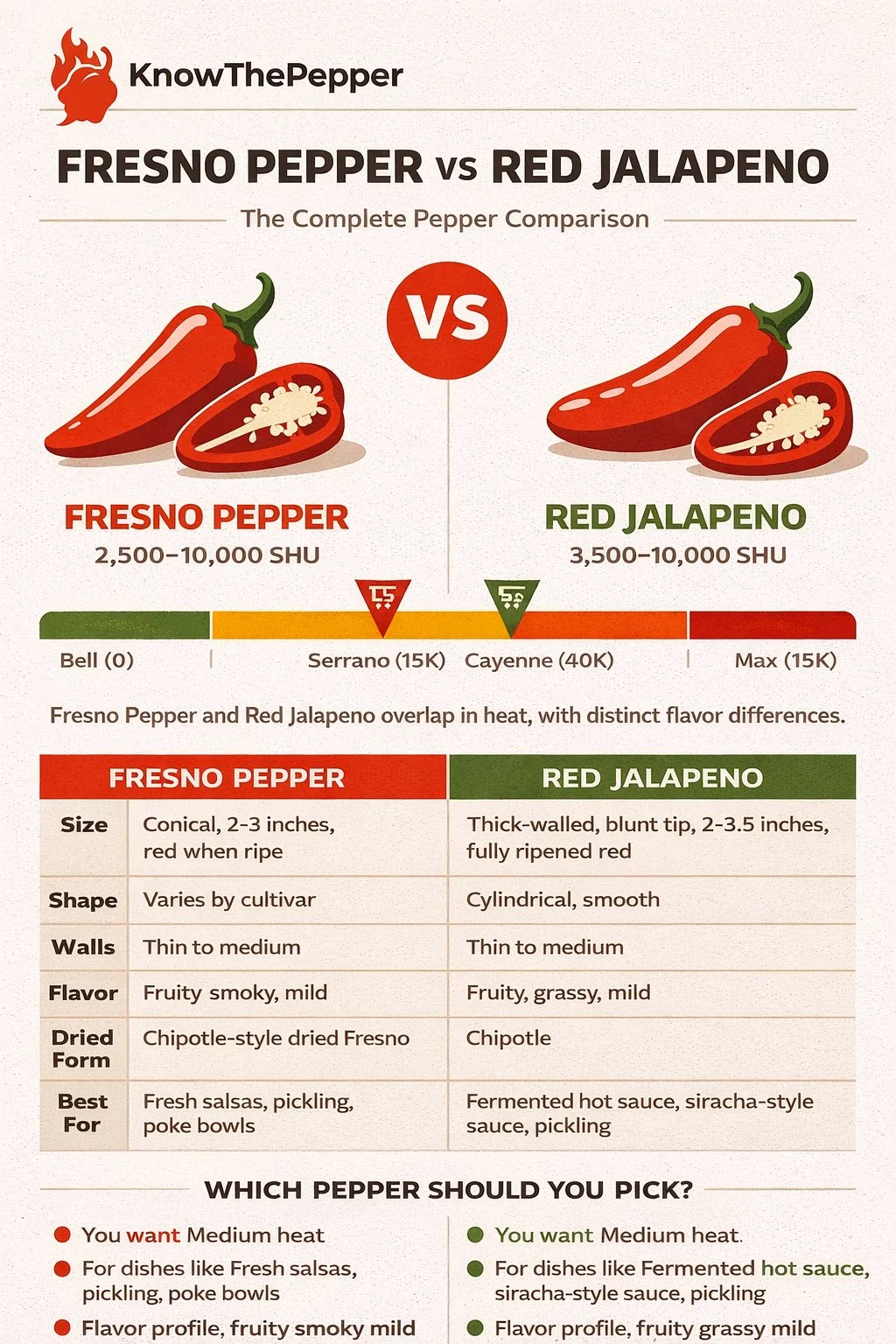
Choose Fresno for a slimmer, usually thinner-walled red chile that blends readily into salsa and sauce. Choose red jalapeno for the ripe sweetness and familiar thick-bodied structure of jalapeno in rings, pickles, relish, and chunky toppings.

Fresno and red jalapeno share a ripe red color and overlapping heat. Fresno usually blends faster because of its slimmer, thinner-walled fruit, while red jalapeno keeps firmer rings and chunks.
- Common heat: 2,500 to 10,000 SHU vs 2,500 to 8,000 SHU
- Ripe shape: Slim and pointed vs Stocky and blunt
- Wall: Usually thinner vs Usually thicker
- Ripe flavor: Bright and fruity vs Sweet, ripe jalapeno
- Best texture job: Smooth salsa and sauce vs Rings, pickles, and chunks
Fresno Pepper
HotRed Jalapeño
MediumQuick Comparison
| Attribute | Fresno Pepper | Red Jalapeño |
|---|---|---|
| Common heat | 2,500 to 10,000 SHU | 2,500 to 8,000 SHU |
| Ripe shape | Slim and pointed | Stocky and blunt |
| Wall | Usually thinner | Usually thicker |
| Ripe flavor | Bright and fruity | Sweet, ripe jalapeno |
| Best texture job | Smooth salsa and sauce | Rings, pickles, and chunks |
Which Is Hotter, Fresno or Red Jalapeno?
Fresno is not guaranteed to be hotter than red jalapeno.
Common references place Fresno pepper around 2,500 to 10,000 SHU.
They place red jalapeno around 2,500 to 8,000 SHU, so most of both bands overlap.
The extra 2,000 SHU at Fresno's published ceiling does not predict every pod. A mild Fresno and a hot red jalapeno can reverse the expected order.
New Mexico State University explains that genetics, fruit development, environment, and the tested sample all influence chile heat.
The number on a variety chart describes a broad expectation rather than a promise about one pepper in a produce bin.
Use the Scoville scale to recognize that both sit in a jalapeno-like medium range. Then let wall thickness, ripe flavor, and final cut decide the recipe.
A controlled test is simple.
Mince the same prepared weight of each pepper into separate spoonfuls of the salsa or sauce base.
Wait for the chile to disperse before comparing. If one sample needs more heat, add more of that pepper by weight rather than assuming a second whole pod is equivalent.
This approach also protects texture.
Adding more red jalapeno brings more firm flesh, while adding more thin-walled Fresno can loosen into a blended sauce more readily.
The heat bands overlap
| Pepper | Common published range | Useful reading |
|---|---|---|
| Fresno | 2,500 to 10,000 SHU | Slightly higher published ceiling, not a guaranteed hotter pod |
| Red jalapeno | 2,500 to 8,000 SHU | Same practical medium-heat band |
| Best test | Same prepared weight | Compare separate spoonfuls before scaling |
How Do Fresno and Red Jalapeno Differ in Shape and Flavor?
Red color is the reason these peppers get confused. It is not enough to identify either one.
A Fresno usually looks slimmer, smoother, and more tapered toward a pointed end.
A red jalapeno usually looks stockier, with broader shoulders, a blunter tip, and more wall mass around the cavity.
NMSU describes Fresno as similar to jalapeno but notes thinner walls and a more complex fruity character in its mature red form. NC State's cultivar record also describes the original Fresno Chile as smooth and sharply tapered.
Red jalapeno is not a separate catch-all red pepper.
It is a jalapeno allowed to mature beyond the familiar green stage.
Colorado State cultivar information documents jalapenos that progress from green to red at maturity. The fruit retains its jalapeno body while the ripe stage shifts the flavor away from the greener, grassier impression of an early harvest.
That maturity adds sweetness and a fuller ripe-pepper quality.
The exact change depends on cultivar and harvest timing, so a red pod should not be treated as a fixed sweetness score.
Fresno also changes as it ripens. UC Cooperative Extension specifically identifies red-ripe Fresno as a good salsa pepper, which matches the way its fruitier mature character works with tomato, onion, lime, and roasting.
Cutting the peppers settles many shopping doubts.
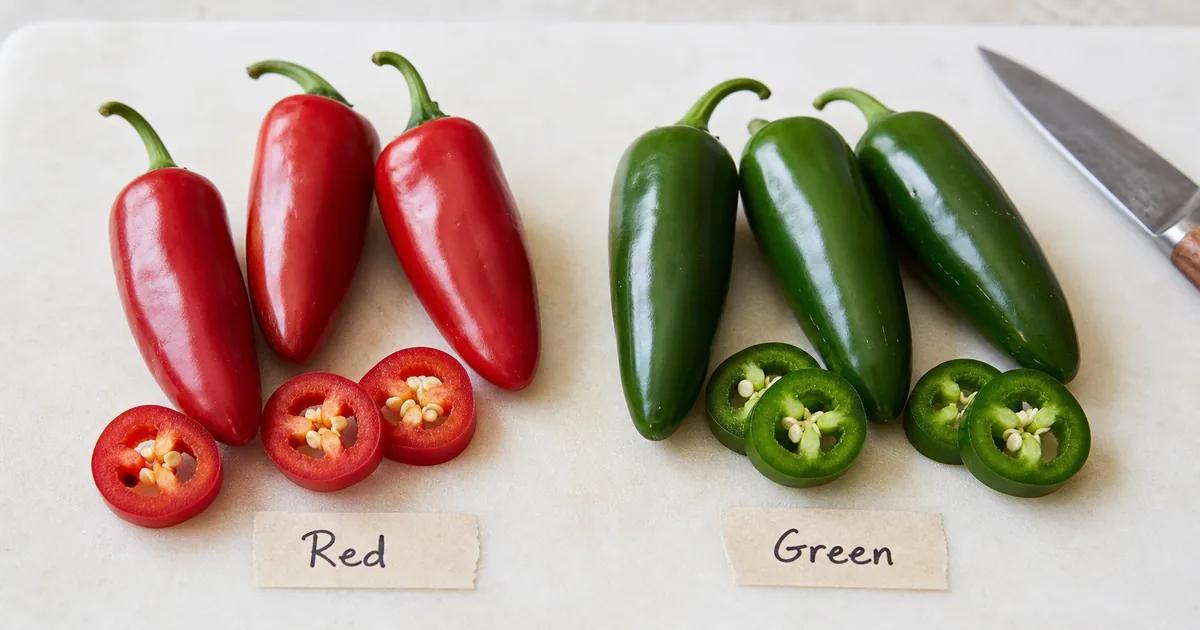
Fresno's comparatively thin wall leaves a larger-looking cavity and lighter strips, while the jalapeno half shows a firmer band of flesh that makes a substantial ring.
Corking does not turn a red jalapeno into Fresno and does not automatically mean damage. The pale stretch marks can develop as jalapeno skin expands, while wet soft spots, leaking tissue, or collapse are actual condition problems.
Use three clues together. Check the whole silhouette, inspect a cut wall when possible, and confirm the produce label or grower name.
The flavor choice follows that identification.
Fresno leans brighter and fruitier in a red salsa, while red jalapeno delivers ripe sweetness through a structure that still reads clearly as jalapeno.
Longer pointed taper
Usually lighter and thinner
Stockier with a blunt end
Firmer band for rings
How Does Wall Thickness Change Roasting and Salsa?
Wall thickness changes the result before heat becomes the main issue.
A thinner-walled Fresno roasts and softens quickly. Once charred and blended with tomato, onion, garlic, and lime, it can disappear into a smooth red salsa with little fibrous interruption.
That makes Fresno a strong first choice for fresh salsa, fire-roasted salsa, quick chile sauce, vinaigrette, and thin raw slices over tacos or seafood.
UC Cooperative Extension's red-ripe salsa use and the NMSU Fresno description support that direction.
Use Fresno when the pepper should become part of the liquid or puree. Its pointed body also produces long narrow strips for a garnish that does not need jalapeno-like heft.
Red jalapeno serves a different physical job.
Its thicker flesh makes broader, firmer rings and chunkier dice that stay recognizable in relish, pico de gallo, burger toppings, and cooked glazes.
For pickling, the red jalapeno is usually the better first choice when you want sturdy rings. The ripe color and sweetness change the familiar green pickle, but the jalapeno wall still gives the brine something substantial to hold.
Quick refrigerator pickles can use either pepper.
A tested shelf-stable canning recipe must keep its stated pepper volume, acidity, jar size, and process time rather than being redesigned around a casual swap.
Fresno rings are not wrong. They simply soften faster and feel lighter, which may be welcome in a sandwich or taco where a thick jalapeno ring would dominate the bite.
For hot sauce, Fresno's easier breakdown is useful in a smooth blend.
Red jalapeno works when the sauce is meant to retain pulp or when familiar jalapeno flavor matters more than a perfectly fine texture.
Roasting narrows the fresh difference. Both become sweeter and softer under heat, but the jalapeno usually retains more body while Fresno reaches a blendable state sooner.
Fermentation can narrow the flavor gap as acid and developed aromas become more prominent.
Keep the batches separate at first because pepper wall mass affects how much solid fruit enters the same jar by volume.
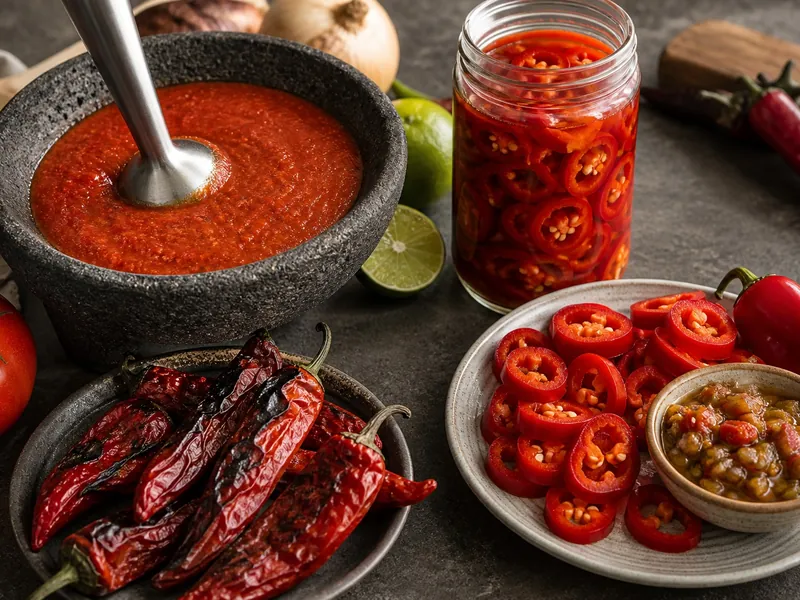
The photograph makes the practical split visible. Smooth roasted Fresno salsa and intact red jalapeno pickle rings represent different final textures, even though both preparations begin with glossy ripe red pods.
Choose by serving format.
Salsa and smooth sauce favor Fresno, while rings, relish, pickles, and visible chunks favor red jalapeno.
A chunky salsa sits between those jobs. Use Fresno when tomato should lead and the chile should soften into the mix, or red jalapeno when each dice should remain a distinct pepper bite.
Match the finished texture
| Final form | Better first choice | Reason |
|---|---|---|
| Smooth roasted salsa | Fresno | Thin wall softens and blends readily |
| Quick hot sauce | Fresno | Less firm flesh interrupts the puree |
| Pickled rings | Red jalapeno | Thicker wall keeps a substantial ring |
| Relish or chunky topping | Red jalapeno | Dice remain more distinct |
| Chunky salsa | Either | Choose softer integration or a firmer pepper bite |
Can You Substitute Fresno for Red Jalapeno?
Yes, Fresno and red jalapeno can replace each other when a recipe mainly needs a ripe red medium-hot chile.
The substitution is closest when both peppers are fresh and prepared in the same form.
Start by matching trimmed, prepared weight. Pod count is unreliable because a stocky jalapeno can contribute more flesh than a slim Fresno of similar length.
For blended salsa or sauce, replace red jalapeno with Fresno at the same prepared weight.
Expect the blend to become smooth sooner and taste a little brighter.
When red jalapeno replaces Fresno in a puree, chop it finely and blend longer. If the sauce becomes too thick, correct with a small amount of the recipe's existing liquid rather than adding more acid automatically.
For rings, relish, or chunky salsa, red jalapeno is the safer structural substitute.
Fresno can replace it, but cut slightly wider pieces and add them later if you want them to remain visible.
Taste before changing sugar or lime. Both peppers are already ripe, and extra sweetener or acid can hide the actual difference you are trying to judge.
Choose Fresno when smooth integration and bright fruit matter most.
Choose red jalapeno when firm pieces and ripe jalapeno identity matter most.
If a recipe calls for green jalapeno, this page does not describe the same flavor decision. The Fresno versus green jalapeno comparison covers the greener, grassier stage.
The final market check is physical. Buy firm glossy pods without wet spots, then use the pointed or blunt silhouette and wall thickness to confirm which job each pepper can perform.
There is no need to force an absolute winner.
Fresno is the better sauce chile more often, while red jalapeno is the better ring and chunky-piece chile more often.
Swap in this order
- Match ripe red pepper with ripe red pepper.
- Trim and compare by prepared weight, not pod count.
- Keep the same cut or puree form.
- Correct texture before changing sugar, salt, or acid.
- Taste the finished sample before scaling the batch.
Fresno Pepper vs Red Jalapeño FAQ
- NMSU Chile Pepper Institute - Fresno
- NC State University - Pepper Cultivars A to L
- UF IFAS - Pepper Production
- UC Cooperative Extension - Peppers in Your Garden
- Colorado State University - Jalapeno Peppers
- New Mexico State University - Measuring Chile Pepper Heat