

KnowThePepper
Fresno Pepper: Same Heat as a Jalapeno, Thinner Walls
Most people assume the Fresno pepper is just a red jalapeño. It is not.
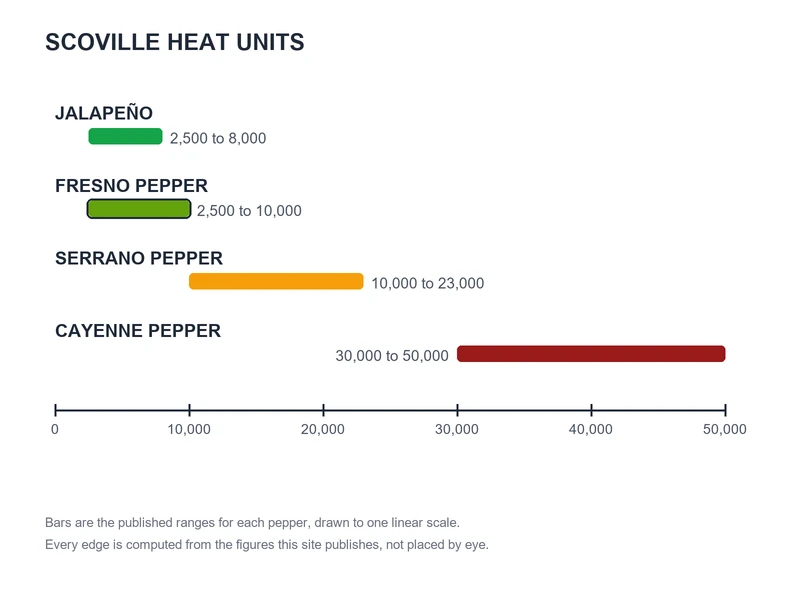
Fresnos run 2,500 to 10,000 SHU, carry a distinctly fruity and smoky flavor, and have thinner walls than jalapeños, which makes them behave differently in the kitchen. They sit in the medium pepper bracket but can push toward genuine heat at their upper end.
- Species: C. annuum
- Heat tier: Hot (10K-100K SHU)
- Comparison: the same heat range as a jalapeño because their published ranges overlap
What Makes Fresno Pepper Different?
The Fresno pepper gets mistaken for a red jalapeño constantly, same conical shape, similar color, sold side by side at the grocery store. But bite into one and the difference is immediate.
Fresnos have a fruitier, slightly smoky character that jalapeños simply do not deliver, and their thinner flesh means they roast faster, dry more readily, and absorb marinades in half the time.
At 2,500 to 10,000 SHU, a Fresno can range from a mild tingle to a legitimate burn depending on growing conditions. Heat stress and reduced watering during the final ripening stage push capsaicin production up considerably, the same fruit from the same plant can vary noticeably depending on the season.
Frenos belong to Capsicum annuum pepper types, the most widely cultivated pepper species in the world, which includes everything from bells to cayennes.
Despite the name suggesting California roots, the Fresno was developed by Clarence Brown Hamlin in 1952 and named after Fresno County, where it was first commercially grown. It is part of a proud American pepper cultivation tradition that includes many regionally developed varieties.
Compared to a de arbol, which averages around 15,000 to 30,000 SHU - the Fresno is considerably milder, making it approachable for cooks who want heat with flavor rather than heat as the point.
What Is the History of Fresno Pepper?
Clarence Brown Hamlin, a seed merchant and grower near Clovis in Fresno County, introduced the Fresno pepper in 1952, selecting it specifically for commercial cultivation in California's Central Valley. Fresno County's hot summers and fertile soils made it ideal for pepper farming, and the variety spread quickly through California markets before reaching national distribution.
Unlike many peppers with centuries of Indigenous cultivation behind them, the Fresno is a mid-20th century American creation, deliberately bred, not discovered. That origin story sets it apart from older C. annuum varieties with deep Mesoamerican roots.
By the 1980s, Fresnos had become a fixture in California-style cooking and Tex-Mex kitchens. Their resemblance to jalapeños helped adoption, familiar enough to trust, different enough to be interesting.
Today they appear in hot sauces, fresh salsas, and restaurant menus across the country.
What Does Fresno Pepper Taste Like, and How Hot Is It?
The Fresno Pepper delivers 2.5K–10K Scoville Heat Units, placing it in the Hot tier (10K-100K SHU). That makes it roughly the same heat range as a jalapeño because their published ranges overlap.
Flavor notes: fruity and smoky.
What Nutrients Does Fresno Pepper Provide?
A 100g serving of fresh Fresno pepper delivers roughly 40 calories, with notable amounts of vitamin C, and noticeably more of it in fully ripened red fruit than at the green stage. Red Fresnos contain significantly more vitamin C and beta-carotene than their green-stage counterparts.
Capsaicin, the compound responsible for the 2,500 to 10,000 SHU heat range, has been studied for its role in metabolism and pain response, the TRPV1 heat trigger mechanism explains why capsaicin produces that burning sensation without actual tissue damage.
Fresnos also provide vitamin A, potassium, and dietary fiber. Low in sodium and fat, they add flavor and nutrition without significant caloric load.
Which Dishes Suit Fresno Pepper?
Thin walls are the defining cooking fact about Fresnos. Where a jalapeño holds up to stuffing and slow roasting, the Fresno chars quickly and collapses into sauces beautifully.
That trait makes it ideal for fire-roasted salsas, quick pickles, and blended hot sauces.
The fruity, smoky flavor profile pairs naturally with citrus-forward dishes, ceviche, fish tacos, and bright vinaigrettes. Slice them thin for fresh applications or roast whole over an open flame for 3 to 4 minutes until blistered.
Roasting deepens that smokiness considerably, which is why the fire-roasted use is the one this pepper is best known for.
For birria, Fresnos add fruity heat without overwhelming the complex dried-chile base. They work well blended into the consommé or served fresh alongside.
Pickled Fresnos are a restaurant staple, their thin flesh absorbs brine within 24 hours, faster than most peppers. A simple rice wine vinegar brine with a pinch of sugar highlights the natural sweetness.
For those curious about smoking fresh peppers, the technique applied to jalapeños translates well here, see the step-by-step approach to smoking jalapeños for timing and wood pairing guidance that applies to Fresnos too. The thinner walls mean you should reduce smoke time by about 20%.
For a direct Fresno vs red jalapeño, the differences in wall thickness and sugar content explain most of the cooking divergence.
| Job | Fresno | Thicker pepper such as a jalapeno |
|---|---|---|
| Fire-roasting | Chars fast and collapses into the sauce, which is the point | Holds shape long enough to peel |
| Stuffing | Falls apart, so this is the wrong pepper for it | Holds a filling |
| Marinating | Takes up a marinade in about half the time | Needs longer to carry flavour inward |
| Drying | Dries readily | Slower, with more flesh to drive water out of |
Where Can You Buy Fresno Pepper, and How Do You Store It?
Fresh Fresnos are available year-round in most grocery stores, often shelved next to jalapeños. Look for firm, glossy skin with no soft spots or wrinkling, those are signs of age.
Redder fruits will be riper, fruitier, and typically hotter than green-stage Fresnos.
Refrigerate unwashed in a paper bag or loosely wrapped for up to 2 weeks. Washing before storage accelerates spoilage.
For longer preservation, slice and freeze on a sheet pan before transferring to bags, they hold well for 6 months in the freezer. Pickling is the other go-to: a simple brine keeps them shelf-stable for months and enhances their natural sweetness.
What Is a Good Substitute for Fresno Pepper?
Compare substitutes for Fresno Pepper by form, flavor, and heat before choosing a ratio. Measured adjustments must account for the dish and the concentration of the replacement.
Direct comparisons show where flavor, form, and preparation differ in the Fresno vs Habanero and Fresno vs Serrano matchups.
Compare Fresno Pepper with: Fresno Pepper vs Jalapeno · Fresno Pepper vs Calabrian Chili
How Do You Grow Fresno Pepper at Home?
Fresnos are straightforward to grow but reward growers who manage water stress deliberately. Start seeds indoors 8 to 10 weeks before last frost, they germinate well at 80 to 85°F soil temperature and typically sprout within 10 to 14 days.
Transplant after all frost risk has passed, spacing plants 18 inches apart in full sun. They need at least 6 to 8 hours of direct light daily.
As a C. annuum variety, they are less cold-sensitive than some species but still prefer consistent warmth.
For more heat in your harvest, reduce watering by about 30% during the final 2 to 3 weeks of ripening. This mild drought stress increases capsaicin concentration noticeably, the same technique used commercially to push Fresnos toward the upper end of their 10,000 SHU ceiling.
Fruits ripen from green to red in approximately 75 to 80 days from transplant. Green Fresnos are edible but milder and less fruity, most of the flavor development happens in the final ripening stage.
Watch for aphids and bacterial spot, both common in humid conditions. Consistent airflow between plants reduces disease pressure significantly.
Fresnos are productive plants. A single healthy specimen can yield 20 to 30 fruits per season under good conditions.
Fresno Pepper FAQ


- Capsicum annuum L. - USDA GRIN Taxonomy
- University of Minnesota Extension, growing peppers
- USDA FoodData Central, Peppers, jalapeno, raw
Species classification: C. annuum - based on published botanical taxonomy.