

KnowThePepper
Cascabella Pepper: Crisp and Pungent Fresh, Tart Once It Goes Into Brine
Cascabella is a small open-pollinated yellow-wax Capsicum annuum with thick flesh, a tapered shape, and a published 1,500-4,000 SHU range. Fresh pods are crisp and pungent, while commercial pickling brine supplies the tart vinegar flavor many shoppers associate with the pepper.
- Species: C. annuum
- Heat tier: Medium (1K-10K SHU)
- Comparison: the same heat range as a jalapeño because their published ranges overlap
What Is Cascabella Pepper?
Cascabella is a small yellow-wax pepper built for fresh slicing and pickling. The North American cultivar registry describes an open-pollinated Capsicum annuum with conical fruit about 40 millimeters long, which is roughly 1.5 inches.
The pod tapers from broad shoulders to a blunt or pointed tip instead of forming a sphere. Cal State Fullerton's pepper list places Cascabella among compact yellow peppers, and the current hero shows thick-walled yellow fruit progressing into orange.
Its supported heat range is 1,500-4,000 SHU, which creates a noticeable but moderate burn.
Fresh flavor is crisp and pungent. Jarred Cascabellas taste tart because vinegar brine, salt, and seasonings change the fruit, so a pickled pod should not be used as evidence of intrinsic acidity in the fresh flesh.
The name does not connect Cascabella to Cascabel. Cascabel is the round reddish-brown dried form of Mexico's Bola chile, while Cascabella is a small tapered yellow-wax pepper normally sold fresh or pickled.
What Is the History of Cascabella Pepper?
The documented history of Cascabella includes commercial production in California by the mid-1950s, but that evidence does not establish where the cultivar originated. A 1958 California Court of Appeal opinion records 1954 contracts in Santa Clara County for growing and delivering yellow Cascabella peppers.
The opinion establishes a named pepper, year, county, and commercial supply relationship. It supports California commercial presence in 1954, not a claim about the cultivar's birthplace.
North American cultivar descriptions and the Cal State Fullerton Veggiepalooza pepper list provide identity context for Cascabella as a named pepper. Neither source is used here to assign a geographic origin.
How Hot Is Cascabella Pepper? Heat and Flavor
The Cascabella Pepper delivers 1.5K–4K Scoville Heat Units, placing it in the Medium tier (1K-10K SHU). That makes it roughly the same heat range as a jalapeño because their published ranges overlap.
Flavor notes: crisp and pungent when fresh, tart from vinegar brine when pickled.
How Do You Cook With Cascabella Pepper?
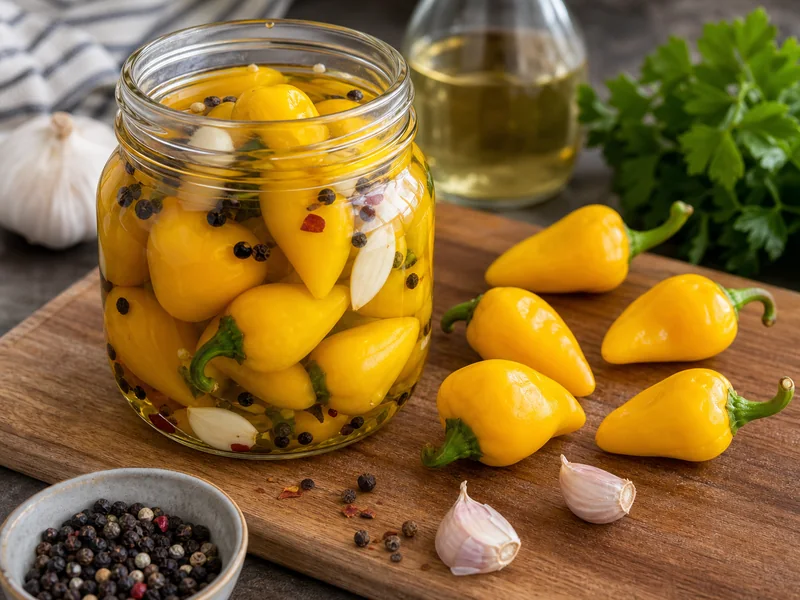
Fresh Cascabellas work best where their compact shape and thick flesh remain visible. Slice the yellow pods into sandwiches, antipasto, relishes, or salads when a crisp pepper bite is wanted without the broad, long strips produced by banana or Hungarian wax peppers.
Pickling changes both flavor and storage rules. Mezzetta lists Cascabella among its peppers, which documents the commercial jarred form, but a manufacturer's finished product does not provide a universal home-canning formula.
For a refrigerator pickle, keep the prepared peppers chilled and follow a refrigerator-pickle recipe from an extension service. This method is designed for refrigeration, not pantry storage.
Shelf-stable jars need a research-tested recipe with its specified vinegar strength, ingredient proportions, jar size, headspace, and processing method. Penn State Extension and University of Minnesota Extension both separate tested preservation instructions from improvised quick pickles, so a fast 20-minute soak is not proof that a jar is shelf stable.
The most useful comparison is by shape and dish job. Banana pepper and pepperoncini are longer and usually milder, while Hungarian wax is also elongated and often used when a recipe wants more pepper flesh in each slice.
Cascabella fits the jar when small whole or halved tapered pods are the point. Use the fresh pepper for crunch, and treat the brined version as a tart condiment whose acid comes from the pickling liquid.
How Do You Buy and Store Cascabella Pepper?
Choose fresh Cascabellas with firm tapered walls, clean stems, and an even yellow surface. Avoid wet spots, splits, mold, or collapsed flesh, and do not reject an intact orange pod merely because it has moved beyond the usual commercial yellow stage.
For jarred peppers, check that the seal is intact and follow the manufacturer's label after opening. Refrigeration and use-by guidance belong to that product label because brine formulation and processing differ among brands.
Home refrigerator pickles stay refrigerated for the period stated by the tested recipe used. Do not transfer a refrigerator-pickle timeline to a shelf-stable jar, and do not assign an unopened jar a one-year life unless its tested process or manufacturer provides that claim.
Fresh-pepper storage should stay simple. Keep pods dry and refrigerated, then discard peppers that become slimy, moldy, or foul-smelling rather than relying on a fixed number of days.
What Can You Use Instead of Cascabella Pepper?
No dedicated substitute guidance is published for Cascabella Pepper yet.
How Do You Grow Cascabella Pepper at Home?
Grow Cascabella as a warm-season Capsicum annuum. University of Minnesota Extension recommends full sun, well-drained soil, and outdoor planting only after frost danger has passed and nighttime temperatures stay above 50°F.
Seed labels should show small conical yellow fruit and name Cascabella. A complete method for growing peppers from seed covers seed-starting and transplant detail, because the cultivar sources do not support a special Cascabella germination temperature, fixed maturity day, yield, or disease claim.
Harvest at yellow when the seed or product description calls for the familiar yellow-wax form. Pods may continue through orange toward red, but color progression alone does not prove a sweeter, more acidic, hotter, or more nutritious stage without cultivar-specific measurements.
Cascabella Pepper FAQ


- HORTSCIENCE - Vegetable Cultivar Descriptions for North America
- North Carolina State University - Vegetable Cultivar Descriptions for North America, List 26
- Cal State Fullerton - Veggiepalooza Pepper List
- Mezzetta - Peppers
- Siquig v. West Coast Pickle Co., California Court of Appeal, 1958
- Penn State Extension - Let's Preserve Peppers
- Penn State Extension - Preserving Those Colorful Garden Peppers
- University of Minnesota Extension - Pickling
- University of Minnesota Extension - Growing Peppers
Species classification: C. annuum - based on published botanical taxonomy.