

KnowThePepper
Cascabel Pepper: A Nutty Mexican Rattle Chile That Is Dried, Not Smoked
Cascabel is the round, reddish-brown dried form of Mexico's fresh Bola chile, a Capsicum annuum pod whose loose seeds give it a bell-like rattle. Its 1,000-3,000 SHU range and nutty, earthy character suit salsa, pipian, stews, and chile-oil preparations, but the pod is dried rather than smoked.
- Species: C. annuum
- Heat tier: Medium (1K-10K SHU)
- Comparison: the same heat range as a jalapeño because their published ranges overlap
What Kind of Pepper Is Cascabel Pepper?
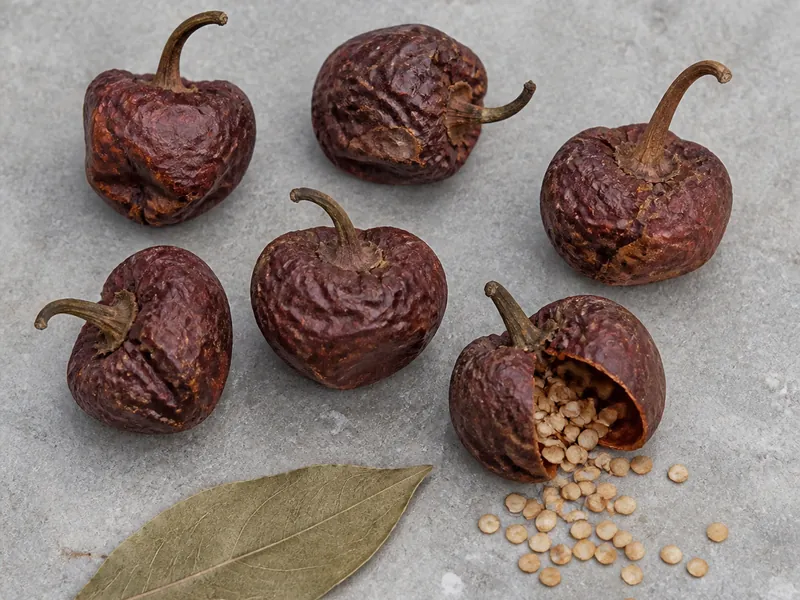
Cascabel is a dried Mexican chile, not the name of a fresh cultivar sold in that form. Larousse Cocina describes it as the dried form of the round Bola chile, a Capsicum annuum fruit that turns reddish brown and measures about 3 centimeters across after drying.
The shape is the fastest identification clue. A sound whole pod is nearly spherical, with hard, smooth-to-wrinkled skin and loose seeds inside, unlike the long flat outline of many Mexican dried chiles.
Its name comes from the bell-like rattle those seeds make when the dry pod is shaken. The sound confirms that seeds have separated from the inner wall, but a rattle does not prove freshness because an old, faded, or moisture-damaged pod may still make noise.
KnowThePepper retains a broad 1,000-3,000 SHU profile range. A Wisconsin Extension chile chart lists Cascabel more narrowly at 1,500-2,500 SHU, so the practical conclusion is mild warmth with normal source and crop variation, not a lab guarantee for every pod.
Flavor is the stronger reason to choose it. Larousse characterizes Cascabel as aromatic and nutty, and we describe the dried chile as earthy with a rounded seed-and-nut depth.
It is not smoke-cured, so any smoke in a finished salsa should come from another ingredient or cooking process.
What Is the History of Cascabel Pepper?
The fresh-to-dried name change matters when shopping. Bola names the fresh round fruit, while Cascabel names its dried form, much as other Mexican peppers acquire a different market identity after drying.
Mexico's Agriculture Secretariat places chiles within a crop tradition domesticated in Mexico and diversified into regional forms. Cascabel belongs within that Mexican dried-chile vocabulary, but the available sources do not support assigning one precise state as its undisputed birthplace.
Do not confuse that identity with the Cascabella pepper. Cascabella is a separate elongated, pale yellow to red pickling pepper, while Cascabel is the compact reddish-brown dried Bola chile.
How Hot Is Cascabel Pepper, and What Does It Taste Like?
The Cascabel Pepper delivers 1K–3K Scoville Heat Units, placing it in the Medium tier (1K-10K SHU). That makes it roughly the same heat range as a jalapeño because their published ranges overlap.
Flavor notes: nutty and earthy, not smoke-cured.
What Is Cascabel Pepper Best Used For?
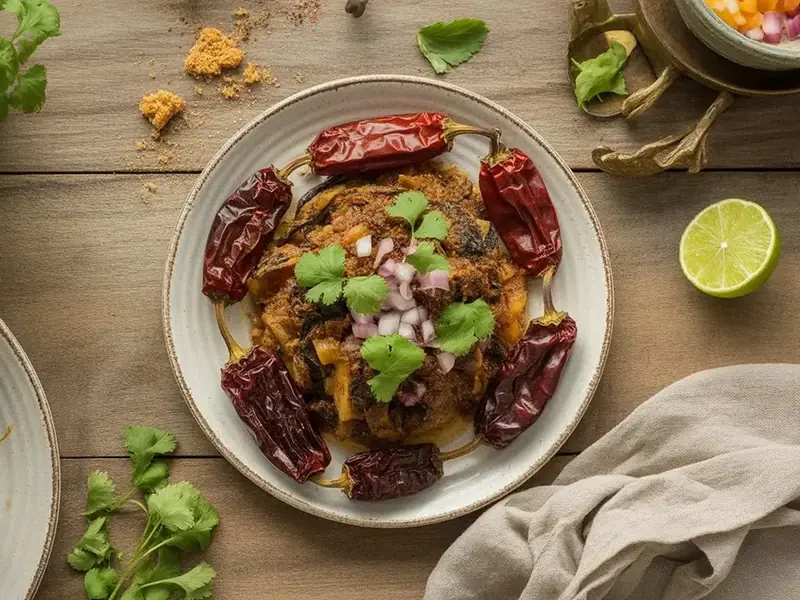
Toast Cascabel only until it smells fragrant. In Rick Bayless's fish with cascabel-tomatillo pipian, each side touches the hot skillet for about 2 seconds before the chile is removed to cool.
That timing corrects a common dried-chile mistake. Minutes over medium heat can blacken the thin shell and turn the sauce bitter, so press the pod briefly, flip once, and stop before dark scorching appears.
After toasting, remove the stem and shake or pull out the loose seeds if a smoother sauce is wanted. Soak the opened pods in hot water only until pliable, then blend them with the recipe's cooking liquid rather than assuming every dish needs the same soaking time.
Cascabel's clearest role is body and nutty depth in salsa. A Cascabel chile salsa can pair it with tomato or tomatillo, while a hotter chile can supply extra heat when the dish needs it.
Pipian gives the pod a different job. Bayless blends Cascabel with tomatillo, pepitas, onion, and warm spices for a sauce served with fish, so the chile supports the seed-rich sauce instead of acting as a solo heat source.
Salsa macha uses the dried form without pureeing it into a conventional tomato salsa. Bayless combines mostly Guajillo and Cascabel with a little chile de arbol, nuts or seeds, garlic, oil, and vinegar, which makes Cascabel part of a textured chile-oil preparation.
For stews and braises, blend the prepared pod into the liquid early enough for its earthy flavor to spread through the sauce. In a mole or mixed-chile sauce, use Cascabel as one layer rather than describing it as a substitute for every dark dried chile.
There is no reliable one-pod-equals-one-teaspoon rule. Pod size, shell thickness, seed removal, and grind fineness all change the yield, so weigh the dried chile when a recipe supplies grams or follow that recipe's pod count.
Toasting a cascabel without turning the sauce bitter
- Heat a dry skillet before the chile goes in, so the timing below means something.
- Press one side of the pod flat against the hot surface for about two seconds.
- Flip once and give the other side the same two seconds.
- Remove it while it smells fragrant and before any dark scorching appears.
- Let it cool before blending. Minutes over medium heat blacken the thin shell and the bitterness carries into the finished sauce.
Where Can You Buy Cascabel Pepper, and How Do You Store It?
Buy whole Cascabels that keep their round shape and reddish-brown color. Reject packages with visible mold, damp clumps, condensation, insect damage, or a musty odor, even when the pods still rattle.
Flexibility is not a universal freshness test for this hard-skinned chile. Some sound pods feel firm and rigid, so judge the batch by clean aroma, intact shells, dry surfaces, and the absence of faded dust or moisture damage.
Store fully dried pods in an airtight container in a cool, dark, dry cupboard. University of Minnesota Extension recommends packaging dried foods only after they have cooled completely and checking containers for moisture during the first week.
Utah State University Extension gives properly dried chiles a broad 4-12 month quality window under cool, dry, dark storage. That is a quality range rather than a safety promise, so discard any pod that develops mold, moisture, insect activity, or an off odor.
Whole pods protect aroma better than pre-ground chile. Grind only what the current dish needs, then return the remaining pods to the sealed container instead of leaving the bag open beside heat or steam.
Which Peppers Can Replace Cascabel Pepper?
Compare substitutes for Cascabel Pepper by form, flavor, and heat before choosing a ratio. Measured adjustments must account for the dish and the concentration of the replacement.
Direct comparisons show where flavor, form, and preparation differ in the Cascabel vs Guajillo matchups.
How Do You Grow Cascabel Pepper at Home?
Seed packets labeled Bola or Cascabel may refer to the fresh plant and its eventual dried product. Confirm that the seller shows a round Capsicum annuum fruit, because the similar name Cascabella belongs to a different elongated pepper.
Oregon State treats peppers as warm-season crops that need warm soil and protection from frost. For the seed-starting and transplant sequence, growing peppers from seed is the useful next task, while this profile stops at identification and label checks.
Harvest fully colored round pods before drying them with a tested food-dehydration method. Dry them completely before packing because residual moisture, not the presence or absence of a seed rattle, determines whether a storage container stays sound.
Cascabel Pepper FAQ


- Larousse Cocina - Cascabel search and dictionary entry
- Secretaria de Agricultura y Desarrollo Rural - Yo soy como el chile verde
- Rick Bayless - Fish in Cascabel-Tomatillo Pipian
- Rick Bayless - Salsa Macha
- Wisconsin Extension - Chiles
- Oregon State University - Peppers
- University of Minnesota Extension - Drying food
- Utah State University Extension - How to Preserve Chiles
Species classification: C. annuum - based on published botanical taxonomy.