

KnowThePepper
Hinkelhatz Pepper: Pickling Heat and Pennsylvania Dutch Roots
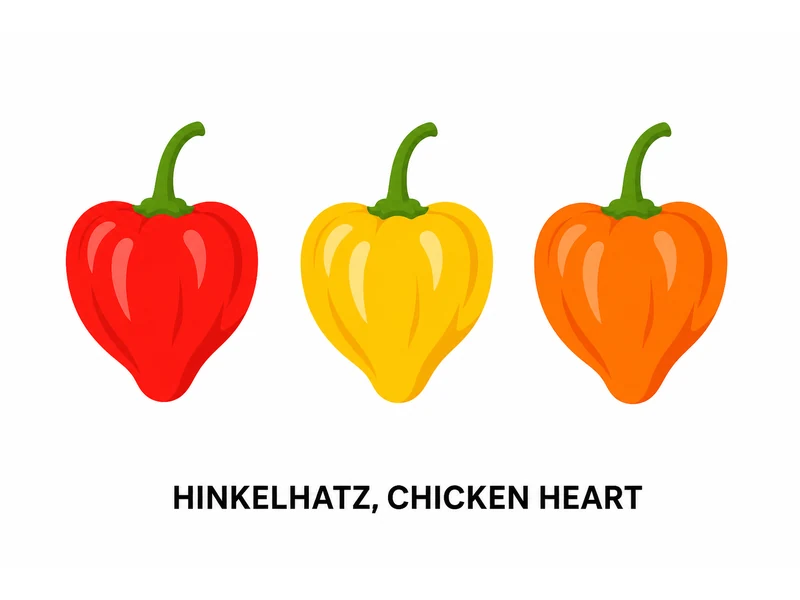
Hinkelhatz is a Pennsylvania Dutch Capsicum annuum heirloom grown for pickling and pepper vinegar, with small heart-shaped pods in red, yellow and rarer forms. Pepper references report 5,000 to 30,000 SHU, which is a reported range rather than a certified measurement.
- Species: C. annuum
- Heat tier: Hot (10K-100K SHU)
- Comparison: the same heat range as a jalapeño because their published ranges overlap
What Is Hinkelhatz Pepper Known For?
Hinkelhatz is a Pennsylvania Dutch hot pepper grown for pickling and pepper vinegar. The Seed Savers Exchange catalog translates the name as chicken heart, which matches the small heart-shaped pods.
That catalog entry describes small fruit roughly three quarters of an inch wide by one to two inches long, ripening from green to glossy red. Slow Food adds that the pepper also comes in yellow, with a very rare orange variant.
Most pepper references put Hinkelhatz at 5,000 to 30,000 SHU, inside the hot pepper tier. Treat that as a reported range rather than a lab-certified cultivar measurement, because no public test data for the variety was found.
The upper end of that range overlaps a thin Thai chili heat range, so a pod can land far sharper than a jalapeno. The better way to understand Hinkelhatz is as a small preservation pepper built for vinegar and jars, not as a novelty superhot.
What Is the Origin of Hinkelhatz Pepper?
The Seed Savers Exchange catalog says Hinkelhatz has been cultivated by the Pennsylvania Dutch since the mid-1880s. Slow Food puts the same tradition at more than 150 years within the Mennonite community, which lands in roughly the same window.
Slow Food goes further and reports that the pepper was illustrated in Curae Posteriores by Charles L'Ecluse in 1611. That claim belongs to Slow Food alone and reaches back well before the Pennsylvania Dutch record, so it is worth repeating with its source attached rather than folding into the cultivation date.
The safest claim is the regional one. Hinkelhatz became a working pepper in southeastern Pennsylvania preservation cooking, and Seed Savers names pickling and pepper vinegar as its traditional uses.
Avoid stretching that into a loose oldest-American-pepper claim. The documented value is more specific and stronger, which is a named Pennsylvania Dutch heirloom with a living seed-preservation record.
How Hot Is Hinkelhatz Pepper? Heat and Flavor
The Hinkelhatz Pepper delivers 5K–30K Scoville Heat Units, placing it in the Hot tier (10K-100K SHU). That makes it roughly the same heat range as a jalapeño because their published ranges overlap.
Flavor notes: clean, sharp, pungent.
Hinkelhatz Pepper Nutrition Facts
Drying is what changes the numbers, and drying is how most Hinkelhatz gets used.
Water leaves and everything else concentrates, so carotenoids and minerals sit higher per gram in a dried pod than in a fresh one while vitamin C falls. Capsaicin survives, because the compound is heat-stable.
None of that is measured for this variety specifically. USDA publishes no Hinkelhatz record, so the pattern above is what holds for hot peppers generally rather than a figure for these pods.
A serving is small in any case, since the pods are hot and narrow.
For heat control, the inner membrane matters more than the loose seeds. The pepper deseeding helps when a batch lands at the sharp end.
How Do You Use Hinkelhatz Pepper in the Kitchen?
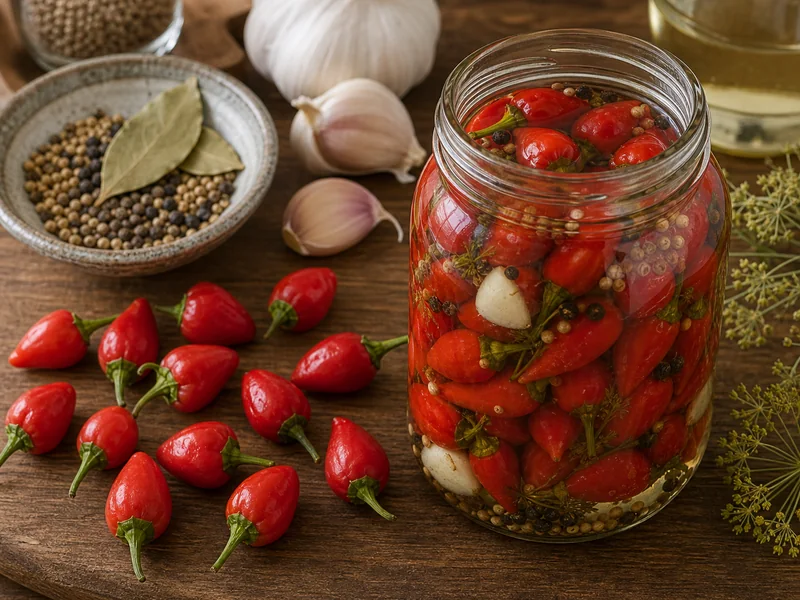
Pickling is the signature use. Thin small pods let vinegar reach the flesh quickly, which is why Seed Savers describes the Pennsylvania Dutch use as almost entirely pickling or pepper vinegar.
For a refrigerator pickle or a table vinegar, whole pods make sense because the fruit is small. Shelf-stable jars are a different food-safety job and need a tested process such as the National Center for Home Food Preservation method.
This profile is not a canning recipe.
Fresh Hinkelhatz works best as minced heat through relishes, potato salad, greens, beans, eggs, and sandwiches.
It is too small to behave like a thick-walled roasting pepper, and the flavor runs clean and pungent rather than fruity. Dried pods crush into flakes when you want a local-heirloom stand-in for the sharp bite of a dried de arbol.
For a Louisiana-style vinegar reference instead, the Tabasco pepper vinegar lineage is the more familiar route. Use gloves or wash carefully after slicing a hot batch.
The capsaicin heat explains why the membrane and placenta carry more burn than the seeds themselves.
How Do You Keep Hinkelhatz Pepper Fresh?
Fresh Hinkelhatz pods are uncommon outside regional growers and seed-saving circles. Seed is easier to find than fruit, through the Seed Savers catalog and specialty heirloom sellers.
Store fresh pods dry and unwashed in the refrigerator and use them within 1 to 2 weeks. The fresh pepper storage covers the same moisture problem that affects other small hot peppers.
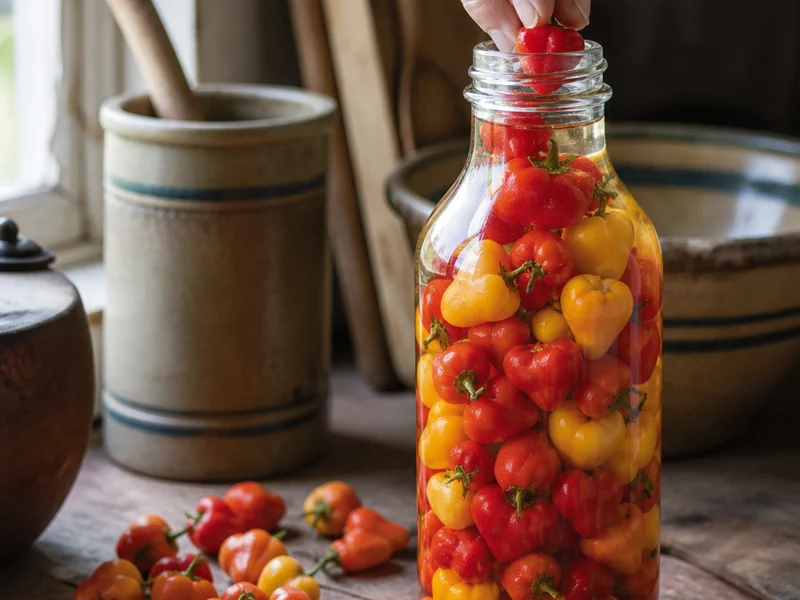
For longer keeping, dry whole pods until brittle or preserve them through a tested pickled-pepper method. Freezing works for cooked use, though the pods soften after thawing.
If you are adapting a familiar refrigerator pickle, a pickled jalapeno brine sets the flavour expectation. Shelf-stable canning still needs a tested preservation recipe.
What Can You Use Instead of Hinkelhatz Pepper?
No dedicated substitute guidance is published for Hinkelhatz Pepper yet.
How Do You Start and Grow Hinkelhatz Peppers?
Grow Hinkelhatz as a compact annuum-type hot pepper. The Seed Savers catalog lists 80 to 90 days from transplant, which puts it mid-season rather than early.
Start seed indoors 8 to 10 weeks before the last expected frost. Warm soil helps germination, and growing peppers from seed covers tray timing, hardening off and transplant stress.
Transplant after frost risk passes and give the plants full sun. Eighteen inches between plants is a reasonable starting point, and containers work where drainage is strong.
Harvest green for sharper fresh use, or wait for full color when you want the strongest pepper-vinegar flavor. Expect variation, since the variety is carried in red, yellow and black strains by different seed keepers.
Seed Savers catalogs Hinkelhatz among non-hybrid varieties, so saved seed comes true when it is kept isolated. Keep a few strong plants apart from other peppers if you intend to save it, because cross-pollination matters when several annuum peppers bloom close together.
Hinkelhatz Pepper FAQ


- Seed Savers Exchange, 2018 Catalog of Heirloom, Untreated, Non-Hybrid, Non-GMO Seeds, entry 1446 Hinkelhatz, page 50
- Slow Food Foundation, Ark of Taste, Hinkelhatz
- National Center for Home Food Preservation, Pickled Hot Peppers
Species classification: C. annuum - based on published botanical taxonomy.