

KnowThePepper
What Is a Sport Pepper? The Pickled Chile on a Chicago Hot Dog
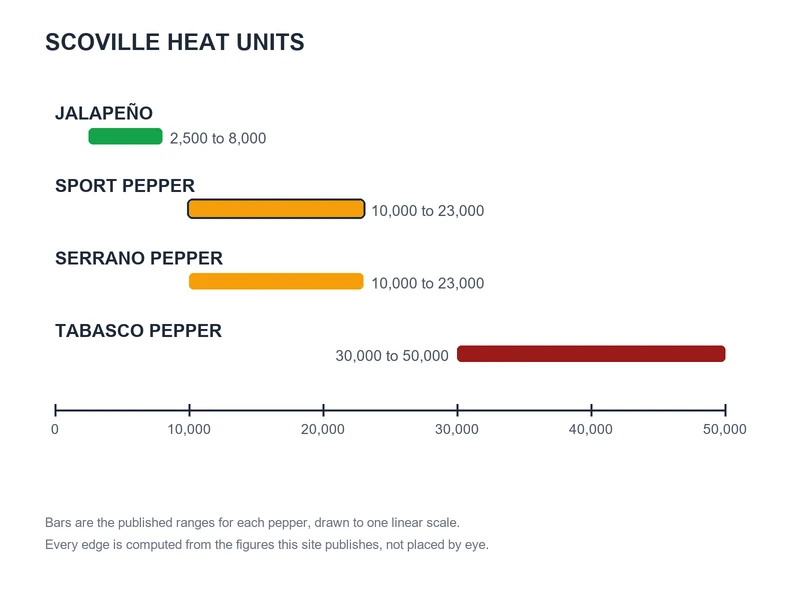
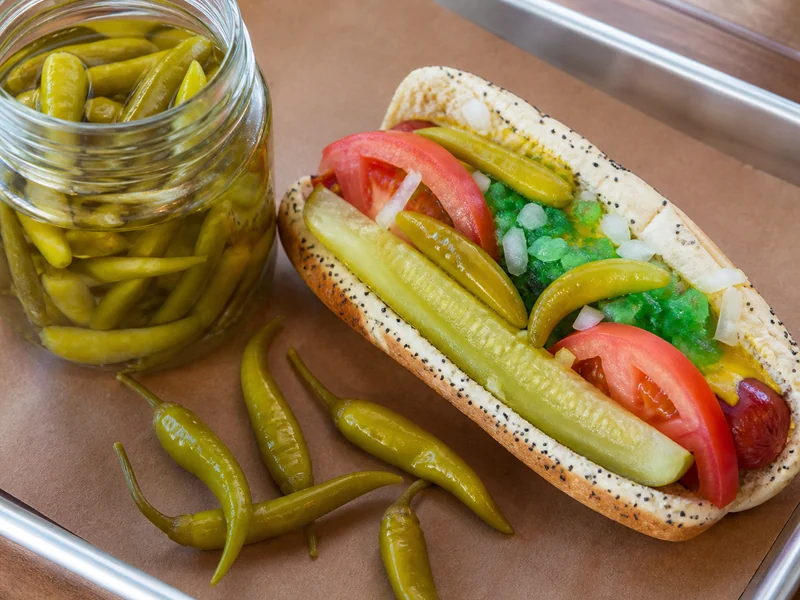
The sport pepper is a small thin-walled Capsicum annuum sold almost entirely pickled, and one of the seven toppings the Chicago History Museum records as fixed on Maxwell Street in the 1920s and 1930s. Commonly reported at 10,000 to 23,000 SHU, roughly three times a jalapeno at the midpoint, it is a market name rather than a named cultivar.
- Species: Capsicum annuum
- Heat tier: Hot (10K-100K SHU)
- Comparison: 1-9x hotter than a jalapeño, depending on where the jalapeño falls in its 2,500-8,000 SHU range
What Makes Sport Pepper Different?
Sport peppers on a Chicago hot dog look unassuming, small and pale and swimming in brine. The heat is sharper than the size suggests, insistent rather than brutal, and it finishes clean.
They are commonly reported at 10,000 to 23,000 SHU, which would put them in the hot pepper range. That figure travels widely without a published measurement behind it, and it happens to match the range usually quoted for the serrano, so treat it as an approximation rather than a lab result.
The pods run roughly 1 to 1.5 inches long with thin walls, pale green to yellow in the jar. Fresh on the plant they ripen green through yellow to red, and those thin walls are exactly why they brine so well.
The heat is direct and dry rather than fruity, nearer a serrano's clean, grassy intensity than anything smoky. Where it lands against the peppers people compare it to is set out below.
Sport is a market name rather than a botanical cultivar. It covers small thin-walled Capsicum annuum pods grown for the pickling trade, which is why no seed catalog or extension service describes it the way they describe a named variety.
| Pepper | Reported SHU | Against a sport pepper |
|---|---|---|
| Pepperoncini | 100-500 | Far milder, and the swap that changes a Chicago dog most |
| Jalapeno | 2,500-8,000 | Milder, by roughly three times at the midpoint |
| Sport | 10,000-23,000 | The figure this page reports, matching the serrano range |
| Tabasco | 30,000-50,000 | Hotter, not milder, whatever the usual comparison claims |
Where Does Sport Pepper Come From?
The pepper itself is a small Mexican-type Capsicum annuum, but its identity in the United States was made in Chicago. The Chicago History Museum records hot dogs arriving in the city at the 1893 World's Fair in Jackson Park, where a Vienna Sausages stand operated in the Vienna Village on the Midway Plaisance.
The topping combination came later, and came from a market rather than a manufacturer. The museum places the seven-topping build as established on Maxwell Street in an open air market during the 1920s and 1930s, and the seven are listed further down.
That is how a minor pickling pepper became fixed in a regional canon. Sport peppers are one of the seven, which is a stronger claim to permanence than popularity alone would give.
Where the name came from is genuinely unknown.
No dictionary, extension service or archive documents it, and the explanations in circulation, that the peppers were sold at ballparks or that sport meant something small and scrappy, are guesses rather than records.
Commercially the pepper settled into pickling through the mid-20th century. Thin walls, consistent size and predictable heat suit a processor, and fresh pods stayed scarce outside specialty growers as a result.
How Hot Is Sport Pepper, and What Does It Taste Like?
The Sport Pepper delivers 10K–23K Scoville Heat Units, placing it in the Hot tier (10K-100K SHU). That makes it roughly 1-9x hotter than a jalapeño, depending on where the jalapeño falls in its 2,500-8,000 SHU range.
Flavor notes: spicy and sharp.
How Nutritious Is Sport Pepper?
The brine is the part that changes the numbers.
Pickling adds sodium and strips some vitamin C, and a condiment portion is what anyone actually eats rather than the 100g a reference table describes.
For the fresh pod, USDA lists raw green hot chili at 40 calories, 1.5g of fiber and 242mg of vitamin C per 100g. No record exists under the sport pepper name, which follows from it being a market type rather than a variety.
Capsaicin sits in the pale inner membrane rather than the seeds, so trimming it takes the edge off a jar you find too sharp. What that compound does on contact is covered in what capsaicin does on contact.
Which Dishes Suit Sport Pepper?
Pickled is the default format and the one worth starting from. Brine softens the sharpest edge of the heat while pushing the vinegar forward, which is what makes them work on a sandwich.
Beyond the hot dog bun, reach for them wherever you would use pepperoncini but want considerably more heat. They layer into Italian beef, chop into relishes, and belong in a jar of homemade giardiniera.
The thin walls break down quickly in brine and add no bulk. That is a virtue in a relish and a limitation if you wanted something to hold its shape under long cooking.
Fresh pods, when you find them, bite like a smaller version of a de arbol's dry, penetrating heat. They slice into salsas or quick-pickle at home in white vinegar, salt and a pinch of sugar, ready inside a day.
Pair them with fat. Pork, beef and fried chicken all take the acidity and heat well, because both cut richness rather than competing with it.
If you want a contrast at a similar heat ceiling, the Lemon Drop goes in an entirely different flavor direction.
How Do You Keep Sport Pepper Fresh?
Pickled jars are the easy find, usually shelved near pepperoncini and giardiniera. Fresh pods turn up only occasionally, at farmers markets and specialty grocers in late summer.
Unopened jars keep at room temperature to the best-by date. Once opened, refrigerate them and use within 2 to 3 months while the texture is still firm.
Fresh pods keep 1 to 2 weeks refrigerated, unwashed and loosely bagged. An early rinse only traps moisture against the skin.
Whole pods freeze without blanching and keep for months, though they thaw too soft for anything raw. For home pickling, a plain white vinegar brine is enough, and shelf-stable jars need a tested process rather than an improvised one.
Which Peppers Can Replace Sport Pepper?
Direct comparisons show where flavor, form, and preparation differ in the Sport Pepper vs Serrano matchups.
How Do You Grow Sport Peppers?
Sport peppers grow like any small annuum once germination is handled. Give seed a 8 to 10 week head start indoors at 80 to 85°F, since cool soil drags germination out badly.
Transplant once night temperatures stay above 55°F. Give them full sun and well-drained soil of moderate fertility, since heavy nitrogen buys leaves at the expense of fruit.
Space plants about 18 inches apart for airflow. Thin-walled varieties are the ones that suffer in humid weather, so circulation matters more here than with thick-walled types.
Water steadily and avoid waterlogging. These plants take a short dry spell better than they take soggy roots.
Pick at the yellow-green stage for pickling, or let pods run red for fuller flavor. Expect 60 to 80 days from transplant, and keep picking to keep the plant setting fruit.
Growing peppers from seed covers the soil prep and hardening off that small hot peppers need. Seed sold as sport pepper varies between suppliers, because the name describes a market type rather than a fixed cultivar.
The seven toppings the Chicago History Museum records
- All-beef hot dog
- Sport peppers
- Yellow mustard
- Pickle spear
- Green pickle relish
- Tomato wedges
- Celery salt, on a poppy seed bun
Sport Pepper FAQ


- Chicago History Museum, Chicago Style vs My Style Hot Dog, family activity sheet on the origin of the seven toppings
- USDA FoodData Central, SR Legacy 170497, Peppers, hot chili, green, raw
Species classification: Capsicum annuum - based on published botanical taxonomy.