

KnowThePepper
Wiri Wiri Packs 100,000–350,000 SHU Into a Round, Half-Inch Guyanese Pod
The wiri wiri is a small, round pepper from Guyana that delivers a fierce, fruit-forward burn in the 100,000 to 350,000 SHU range. It belongs to the extra-hot heat category alongside some of the Caribbean's most intense varieties.
Compact plants, ornamental appearance, and genuine cooking depth make this one of the more rewarding peppers to grow and cook with.
- Species: C. chinense
- Heat tier: Extra-Hot (100K-1M SHU)
- Comparison: 13-140x hotter than a jalapeño, depending on where the jalapeño falls in its 2,500-8,000 SHU range
What Kind of Pepper Is Wiri Wiri?
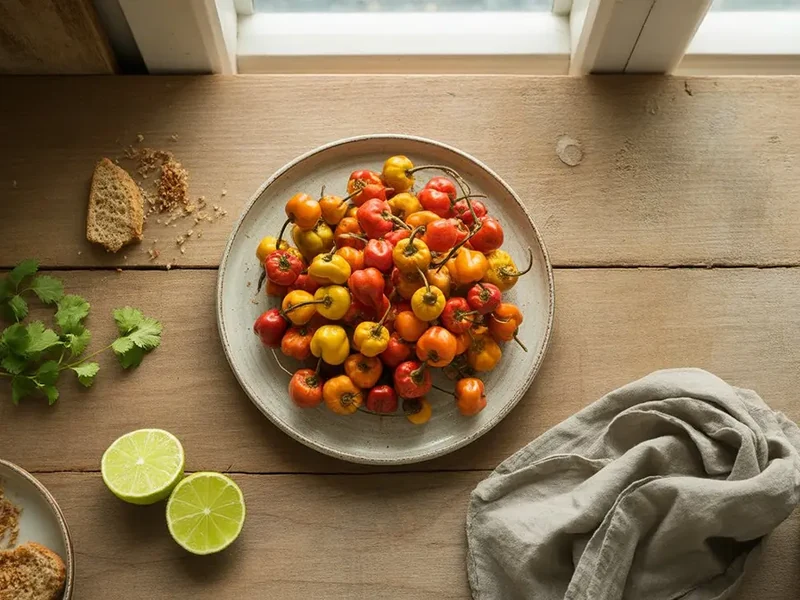
Round as a cherry tomato and barely half an inch across, the wiri wiri looks almost playful sitting on the plant. That appearance is deceptive.
Bite into one and you get a bright, fruity flash followed by heat that builds steadily, not the immediate wall-of-fire you get from a bird's eye, but something more layered and persistent.
It belongs to the C. frutescens species, the same species as tabasco peppers, and shares that species' tendency toward upright fruit and prolific production. The flavor underneath all that heat is genuinely interesting: tangy, almost citrusy, with a berry-like quality that makes it stand apart from the Scotch Bonnet.
At 100,000 to 350,000 SHU, it sits comfortably in the same bracket as the sharp, tropical intensity of habanero-type peppers, though the wiri wiri's flavor character skews more tart than sweet. The small size concentrates everything, heat, flavor, aroma, into a package that experienced cooks in Guyana have been using for generations to build complex sauces and condiments.
Grown as an ornamental, it turns heads. Grown as a cooking pepper, it earns respect.
Most serious growers end up doing both at once.
What Is the History of Wiri Wiri?
The wiri wiri is deeply embedded in Guyanese food culture, where it functions as the default hot pepper, the one that appears in pepper sauce, stews, and marinades the way jalapeños appear in Mexican cooking. Its name comes from the local Creole tradition, and it has been cultivated in Guyana and surrounding regions of northeastern South America for generations.
As part of the regional pepper tradition of Guyana, the wiri wiri rarely traveled far beyond its home territory until global seed trading communities began circulating it more widely in the 2000s and 2010s. It remains less commercially prominent than Surinamese peppers with similar fruity heat, but its reputation among growers and hot sauce makers has grown steadily.
Today it's a sought-after specialty variety with a loyal following outside South America.
How Hot Is Wiri Wiri, and What Does It Taste Like?
The Wiri Wiri delivers 100K–350K Scoville Heat Units, placing it in the Extra-Hot tier (100K-1M SHU). That makes it roughly 13-140x hotter than a jalapeño, depending on where the jalapeño falls in its 2,500-8,000 SHU range.
Flavor notes: bright and fruity.
What Nutrients Does Wiri Wiri Provide?
Like most hot peppers in this heat range, wiri wiri peppers are nutritionally dense relative to their small size. They provide vitamin C in amounts that can exceed a day's recommended intake per serving, along with vitamin A, potassium, and dietary fiber.
The compound responsible for heat - capsaicin - has been studied for its potential anti-inflammatory and metabolic effects.
Peppers in the 100K, 350K SHU intensity range contain meaningful capsaicin concentrations. Calories are negligible: roughly 5 to 10 calories per pepper depending on size.
What Is Wiri Wiri Best Used For?
In Guyana, wiri wiri peppers are most commonly preserved in vinegar, a simple, shelf-stable condiment that belongs on nearly every table. The acidic brine tempers the heat slightly while amplifying the fruity tang.
If you want to try this at home, the step-by-step process for pickling hot peppers works perfectly for this variety.
Beyond pickling, the wiri wiri shines in pepper sauces. Its flavor holds up well to blending and benefits from pairing with tropical fruits, mango, papaya, and pineapple all complement its citrusy bite.
The make hot sauce applies here, though with wiri wiri you can use fewer peppers than you might expect and still get significant heat.
The small size means you generally use them whole when cooking stews or curries, then remove before serving, similar to how cooks handle Aji Chombo. For raw applications, slice thinly into salsas or chutneys where the fruit notes can come through.
Seed removal reduces heat without sacrificing much flavor.
How Do You Keep Wiri Wiri Fresh?
Fresh wiri wiri peppers outside Guyana and Caribbean communities can be genuinely hard to find. Specialty grocery stores, Caribbean markets, and farmers markets in areas with South American or Caribbean populations are your best bets.
Seeds are more widely available through specialty seed retailers and online communities.
Dried or pickled versions ship well and are worth seeking out. Fresh peppers keep 1 to 2 weeks refrigerated in a paper bag.
For longer storage, freeze whole peppers on a sheet pan first, then transfer to a bag, they hold their heat and much of their flavor for 6 months.
Vinegar-preserved wiri wiri keeps for months at room temperature once opened.
Which Peppers Can Replace Wiri Wiri?
Direct comparisons show where flavor, form, and preparation differ in the Scotch Bonnet vs Wiri Wiri matchups.
How Do You Grow Wiri Wiri at Home?
Wiri wiri plants are genuinely beautiful in the garden, compact, bushy, and covered in upright round fruits that transition from green through yellow to deep red. They work as container plants on a patio or as border plants in a warm-climate garden.
Start seeds indoors 8 to 10 weeks before your last frost. Germination is typical for C. frutescens - soil temperature of 80 to 85°F speeds things up considerably, and a heat mat is worth using.
Transplant after all frost risk passes and nighttime temperatures stay above 55°F.
Full sun is non-negotiable. These plants originate in tropical Guyana and want heat.
In cooler climates, growing against a south-facing wall or in a greenhouse extends the season enough to get a full harvest.
Spacing at 18 to 24 inches gives the bushy plants room to spread.
Watering should be consistent but not excessive, let the top inch of soil dry between waterings. Overwatering is the most common mistake with this variety.
A balanced fertilizer early in the season, then a low-nitrogen option once flowering starts, keeps production strong.
For anyone new to growing tropical species, comparing notes with growers raising Chiltepin can help set expectations for yield and plant behavior. Harvest when fruits reach full red for maximum flavor.
Wiri Wiri FAQ


- Chiles, Wiri Wiri - The Spice Library
- Capsicum frutescens L. - USDA ARS GRIN Taxonomy
-
Sourcing note: heat range is a widely cited figure, not an institutional measurement No university, government or research body publishes a Scoville measurement for this cultivar. The range given here is the figure growers and pepper references cite in common, and it has not been verified by a laboratory.
Species classification: C. chinense - based on published botanical taxonomy.