

KnowThePepper
Malagueta Pepper: The Small, Fiery Chile in Brazil's Hot Sauces and Seafood
The malagueta pepper is a small but fiery Brazilian chili with a sharp, grassy heat and bright citrusy aroma. Deeply embedded in Brazilian and Portuguese cooking, it punches well above its size.
A staple in hot sauces, seafood dishes, and street food across Brazil, the malagueta delivers serious intensity with a clean, lingering burn that makes it unlike any other pepper in its class.
- Species: C. frutescens
- Heat tier: Hot (10K-100K SHU)
- Comparison: 8-40x hotter than a jalapeño, depending on where the jalapeño falls in its 2,500-8,000 SHU range
What Kind of Pepper Is Malagueta Pepper?
Pick up a fresh malagueta and the first thing that hits you is the smell, bright, almost herbal, with a citrus-forward sharpness that signals heat before you've tasted anything. The flavor follows that promise: a clean, grassy bite with faint floral undertones and a burn that builds quickly and settles at the back of the throat.
The malagueta (Capsicum frutescens) grows in tight, upright clusters on compact plants, producing small tapered pods, usually no longer than 2 cm - that ripen from green through yellow to a vivid red. That small size is deceptive.
These are genuinely hot chilies, and their heat is notably direct compared to, say, the slow-building warmth of larger dried chilies.
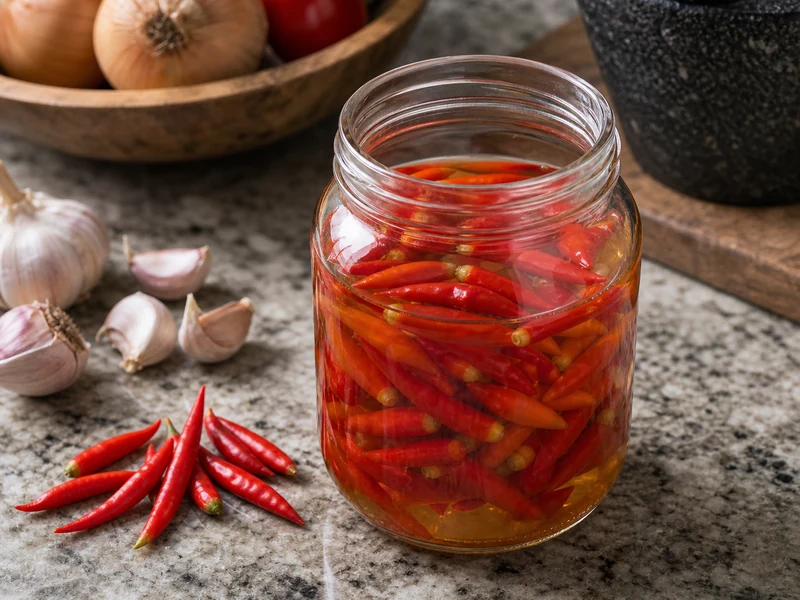
In Brazil, the malagueta sits at the center of the national hot sauce tradition. Bottles of malagueta peppers preserved in cachaça or vinegar appear on nearly every table in a churrascaria.
It's the pepper behind molho de pimenta, the foundational condiment of Brazilian cuisine.
Portuguese traders are credited with spreading the malagueta's reach beyond Brazil into Africa and Southeast Asia, where related small hot chilies now carry its name. The regional pepper tradition it represents spans continents, making this one of the most widely traveled chilies in history.
For anyone exploring the heat category this pepper belongs to, the malagueta is a genuine benchmark, sharp, clean, and distinctly Brazilian.
Where Does Malagueta Pepper Come From?
The malagueta's origins trace to Brazil, where indigenous populations cultivated Capsicum frutescens long before European contact. Portuguese colonizers encountered the pepper in the 16th century and quickly incorporated it into their trade networks, carrying seeds to West Africa, Mozambique, and eventually Portugal itself.
The name likely derives from melegueta pepper - the unrelated West African spice also called grains of paradise, which Portuguese traders had already been selling in Europe. The naming overlap created centuries of botanical confusion, but the two plants share nothing beyond a similar fiery reputation.
In Brazil, the malagueta became the default hot pepper of everyday cooking, embedded in dishes from Bahian moqueca to the simple vinegar-and-pepper sauces served alongside grilled meats. Its cultural staying power is remarkable: while dozens of chili varieties have come and gone in Brazilian kitchens, the malagueta has remained central for over 500 years.
How Hot Is Malagueta Pepper? Heat and Flavor
The Malagueta Pepper delivers 60K–100K Scoville Heat Units, placing it in the Hot tier (10K-100K SHU). That makes it roughly 8-40x hotter than a jalapeño, depending on where the jalapeño falls in its 2,500-8,000 SHU range.
Malagueta Pepper Nutrition Facts
Like most small hot chilies, the malagueta delivers nutritional value that outpaces its size. Fresh pods are a strong source of vitamin C - often exceeding 100% of the daily recommended intake per 100g serving, along with meaningful amounts of vitamin A, vitamin B6, and potassium.
Capsaicin, the compound responsible for the burn, has been associated with capsaicin, including effects on metabolism and inflammation. The malagueta's capsaicin content is moderate-to-high relative to its size.
Calories are negligible, fresh chilies are roughly 40 calories per 100g - and the fiber content supports digestive health. Drying concentrates all of these compounds significantly.
What Is Malagueta Pepper Best Used For?
The malagueta's best use is as a finishing heat - added late or served as a condiment rather than cooked down into a base. Long cooking softens its sharp citrus edge and muddies the clean burn that defines it.
The classic preparation is pimenta em conserva: fresh or dried malaguetas submerged in cachaça, olive oil, or white vinegar with garlic and sometimes bay leaf. A few days of maceration mellows the raw bite while preserving the pepper's characteristic brightness.
This condiment goes on everything, grilled chicken, fish stews, black beans, farofa.
For cooking applications beyond condiments, the malagueta works well in pepper jelly contexts where its fruity heat can shine without being buried. It also pairs naturally with coconut-based dishes, where the richness of coconut milk balances the pepper's sharpness.
Anyone interested in the broader practical guidance on pepper health benefits of hot chilies will find the malagueta relevant, its capsaicin content, while not extreme, is meaningful and consistent.
Substitution-wise, the Prik Kee Noo is the closest match in terms of heat delivery and pod size, though the malagueta has a slightly more citrusy profile. For a milder swap that still carries Bell Pepper, you'd need to adjust ratios significantly.
How Do You Keep Malagueta Pepper Fresh?
Fresh malaguetas are rarely found outside Brazil and specialty Latin markets in major cities. More commonly available are jarred malaguetas in brine or oil, which are a legitimate substitute and shelf-stable for up to a year unopened.
When buying fresh, look for firm pods with tight skin and no soft spots. Green pods are sharper and more vegetal.
Red pods are riper and slightly fruitier.
Fresh malaguetas keep 1-2 weeks refrigerated in a paper bag. For longer storage, preserve them in cachaça or white wine vinegar, they'll last months and improve with time.
Dried malaguetas store well in an airtight container away from light for up to 6 months.
What Can You Use Instead of Malagueta Pepper?
No dedicated substitute guidance is published for Malagueta Pepper yet.
How Do You Grow Malagueta Peppers?
Malagueta plants are vigorous and relatively forgiving, making them a solid choice for gardeners who want a productive hot pepper without the fussiness of superhot varieties. They perform best in warm, humid conditions - unsurprisingly given their Brazilian origins, but will produce well in most temperate climates with a long enough growing season.
Start seeds indoors 8-10 weeks before last frost. Germination is reliable at soil temperatures of 75-85°F (24-29°C).
The plants grow compact, typically 60-90 cm tall, which makes them well-suited to containers.
Malaguetas are heavy producers. A single plant can yield hundreds of pods over a season.
They share cultivation characteristics with heatless habanero-type plants in terms of branching habit, though the malagueta is considerably more cold-sensitive.
Full sun and consistent moisture are the two non-negotiables. Let the soil dry slightly between waterings but never completely, water stress at flowering will drop pods.
A balanced fertilizer through the vegetative stage, then a low-nitrogen formula once flowering begins, supports heavy fruiting without excessive leaf growth.
For a complete walkthrough on starting from scratch, the germination and growing covers everything from seed selection through harvest. Pods are ready green but develop more complexity allowed to ripen fully to red.
Malagueta Pepper FAQ


- TasteAtlas - Malagueta Pepper
- Embrapa - Brazilian Agricultural Research Corporation
Species classification: C. frutescens - based on published botanical taxonomy.