

KnowThePepper
What Is a Habanada? Cornell's Habanero Bred to Carry No Heat
The habanada is a heat-free habanero developed at Cornell University, delivering all the tropical, floral sweetness of a habanero without any capsaicin burn. At 0 SHU, it sits firmly in the low-heat pepper band and appeals to anyone who loves habanero flavor but can't tolerate heat.
Fruity, aromatic, and surprisingly complex, it's one of the most interesting sweet peppers available.
- Species: C. chinense
- Heat tier: Mild (0-999 SHU)
What Is Habanada?
The habanada carries habanero aroma with no heat behind it, which is disorienting the first time: mango, citrus blossom and stone fruit. That's the habanada's whole trick: it carries the full aromatic complexity of its habanero parent with zero capsaicin.
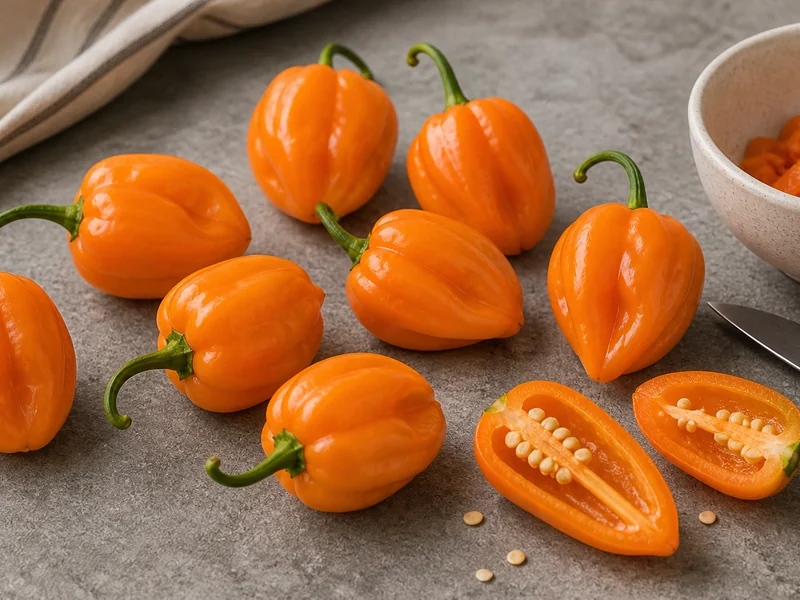
Developed by plant breeder Michael Mazourek at Cornell University through selective breeding (no genetic modification), the habanada is a C. chinense variety that retains the species' characteristically fruity, floral notes while completely dropping the heat gene. The pods are small and lantern-shaped, ripening from pale green through yellow-orange to a deep orange, and they're thin-walled enough to eat out of hand.
At 0 SHU, this pepper occupies unusual territory. Most sweet peppers in the mild SHU range, things like Sweet Italian Pepper - lack the aromatic punch that C. chinense genetics bring.
The habanada bridges that gap, offering complexity that neither a standard bell nor a frying pepper can match.
For cooks who love habanero flavor in salsas, hot sauces, or marinades but serve guests with low heat tolerance, the habanada is genuinely useful. It belongs to the broader American pepper breeding tradition and represents one of the more creative developments in modern pepper cultivation.
Where Does Habanada Come From?
The habanada emerged from Cornell University's plant science program, where Michael Mazourek spent years selectively breeding for peppers with distinct cooking traits. Released around 2014-2015, it was developed entirely through traditional breeding, crossing heat-free plant lines within the C. chinense species until the capsaicin trait was bred out while preserving the aromatic compounds.
The name is a portmanteau of habanero and 'nada' - Spanish for nothing, a nod to its zero heat. It's part of a broader wave of flavor-forward breeding projects that prioritize taste complexity over Scoville numbers.
The habanada belongs to the same the broader C. chinense group as the habanero, Scotch bonnet, and ghost pepper, a species known for intensely fruity, floral aromatics. By isolating the flavor compounds from the heat compounds, Mazourek essentially gave cooks access to a flavor profile that had previously always come with a fire warning attached.
How Spicy Is Habanada, and How Does It Taste?
The Habanada delivers 0 Scoville Heat Units, placing it in the Mild tier (0-999 SHU).
Flavor notes: fruity and sweet.
How Nutritious Is Habanada?
Like other sweet peppers, the habanada is low in calories and high in vitamin C. A single 100g serving provides roughly 30 calories, with significant amounts of vitamin C (often exceeding 100% of the daily value at full ripeness), vitamin A from carotenoids, and small amounts of vitamin B6 and folate.
Because it contains zero capsaicin, it lacks the metabolic effects sometimes associated with hot peppers. What it does offer is a solid antioxidant profile from the same carotenoid pigments that give it the orange color.
Fiber content is modest at around 1g per 100g.
How Do You Cook With Habanada?
Because the habanada delivers habanero-style fruitiness without any burn, it works in places where a real habanero would overwhelm. Raw in a salsa fresca, it adds tropical brightness that a sweet roasting pepper with thick flesh simply can't replicate.
Thin walls mean it doesn't need much prep, just slice and go.
Roasting concentrates the sugars and deepens the citrus-mango notes considerably. Blended into a vinaigrette or stirred into a cream sauce, roasted habanada adds complexity without requiring any heat warning on the menu.
For hot sauce makers, the habanada opens up interesting possibilities: a fruity, habanero-style sauce that's completely heat-free. Pair it with a small amount of vinegar, garlic, and salt, and you get a condiment that tastes like it should be spicy but isn't.
Learning how to deseed peppers properly is less critical here than with hot varieties, but removing seeds still improves texture in cooked applications. When slicing for raw preparations, the technique in cutting peppers cleanly for prep work applies directly, the thin walls behave similarly.
The habanada also pairs well alongside Jimmy Nardello in roasted pepper medleys, where the flavor contrast between the two is striking.
The aroma arrives in a sequence worth knowing before cooking with it. Raw, the first note is mango, then citrus blossom, then a stone-fruit sweetness underneath, and the whole thing lands in the nose rather than on the tongue because there is no capsaicin to occupy attention.
Roasting shifts the order: the sugars concentrate first, and the citrus-mango character deepens and comes forward as the pod softens.
Dehydrating keeps the fruit aroma and drops most of the freshness, which is what makes the ground powder useful in a dish that wants habanero character with no burn behind it. Nothing in that sequence is heat, which is the point of the pepper and the reason a tasting note that starts with heat would be describing something else.
| Form | What comes forward | Where it fits |
|---|---|---|
| Raw, sliced | Mango and citrus blossom, closest to the habanero parent | Salsa fresca, anywhere raw brightness is wanted |
| Roasted | Sugars concentrate, citrus-mango deepens | Vinaigrettes and cream sauces |
| Dehydrated, ground | Fruit aroma survives, no burn behind it | A fragrant powder for dishes that cannot take heat |
How Do You Buy and Store Habanada?
Habanada peppers are rarely found in mainstream grocery stores, look at farmers markets, specialty produce shops, or grow your own from seed. High Mowing Organic Seeds and a few other specialty suppliers carry habanada seed stock.
Fresh pods keep 1-2 weeks refrigerated in a loose bag or container.
The thin walls dry out faster than thick-walled varieties, so check them every few days. For longer storage, roast and freeze them, the flavor holds well.
Dehydrating is also effective.
The dried pods retain the fruity aroma and can be ground into a fragrant, heat-free powder.
Dried form: Dehydrating is the preservation route that keeps what makes this pepper worth growing.
The dried pods hold their fruity aroma, and ground they make a fragrant, heat-free powder. That is an unusual product: a chile powder with habanero character and no capsaicin behind it, which suits a dish that needs the aroma but cannot take the burn.
Thin walls are the reason drying works so readily.
There is little flesh to hold moisture, so pods dry through without splitting or slicing.
Roasting and freezing is the other route, and the flavour holds well that way too. Roast first, then freeze, so the concentrated sugars are locked in rather than the raw pod.
Fresh pods keep one to two weeks refrigerated in a loose bag, but those same thin walls dry out faster than a thick-walled variety, so check them every few days rather than at the end of the week.
What Can Replace Habanada in a Recipe?
Direct comparisons show where flavor, form, and preparation differ in the Habanada vs Habanero matchups.
How Do You Grow Habanada Peppers?
Growing habanada follows the same general path as any C. chinense variety, which means it wants warmth, patience, and consistent moisture. Start seeds indoors 8-10 weeks before last frost.
Germination is slow at room temperature.
A heat mat set to 80-85°F speeds things up considerably.
Transplant outdoors only after nighttime temps stay reliably above 55°F. C. chinense varieties stall in cool soil and rarely recover their early-season momentum.
Space plants 18-24 inches apart in full sun.
The habanada is a compact grower compared to some chinense varieties, which makes it manageable in containers. A 5-gallon pot with well-draining potting mix works fine.
Feed with a balanced fertilizer through the vegetative stage, then shift to a lower-nitrogen formula once flowering begins.
Pods ripen from green to orange over a long season, expect 100+ days from transplant to full color. Harvesting at the orange stage gives peak sweetness and aroma.
Green pods are usable but noticeably less complex.
For growers new to chinense varieties, the grow peppers from seed covers the fundamentals that apply here. The habanada's thin walls make it slightly more susceptible to fruit rot in wet conditions, good airflow matters.
Habanada FAQ


- Habanada: The Unmasked Habanero - Cornell Small Farms
- High Mowing Organic Seeds
- Capsicum chinense Jacq. - USDA GRIN Taxonomy
Species classification: C. chinense - based on published botanical taxonomy.