

KnowThePepper
Peppadew Pepper: Brand Story, Heat, Flavor, and Uses
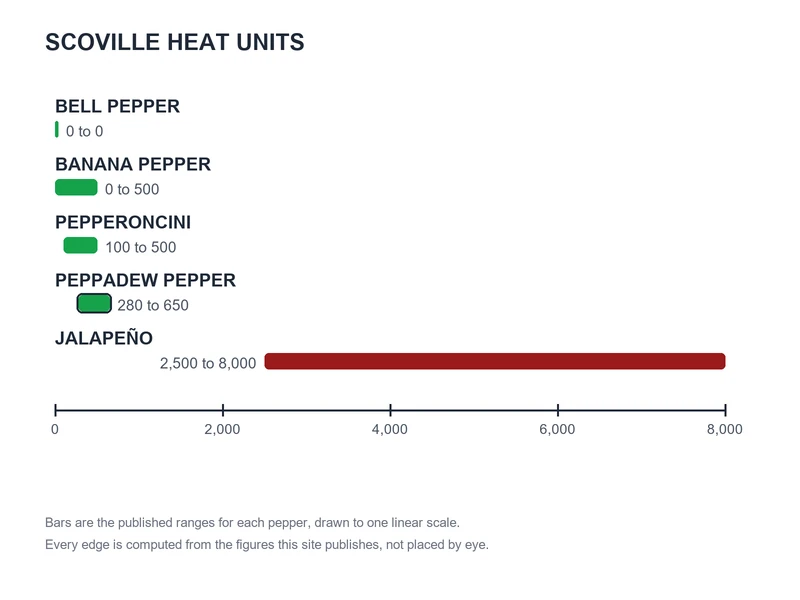
The Peppadew pepper most shoppers mean is the South African sweet piquanté pepper sold under the PEPPADEW brand. It is a small round C. baccatum fruit with a stuffing-friendly cavity and mild heat, which the brand lists at 280 capsaicin SHU with total capsaicinoids below 650 SHU for the mild pickled product.
- Species: C. baccatum
- Heat tier: Mild (0-999 SHU)
What Is Peppadew Pepper Known For?
The Peppadew pepper is best understood as a branded sweet piquanté pepper rather than a generic grocery chile. PEPPADEW is a registered trademark of Peppadew International, a South African company, and the name gets used as though it were a pepper category.
A 2013 New Jersey agricultural convention paper identifies the fruit as Capsicum baccatum, which separates it from the round annuum cherry pepper it gets mistaken for. In eating terms it sits in the mild pepper bracket rather than at the hot-sauce end of the scale.
Regionally it belongs to the modern South African pepper tradition, even though the species itself was domesticated in South America. What makes Peppadew distinctive is the combination of shape and use.
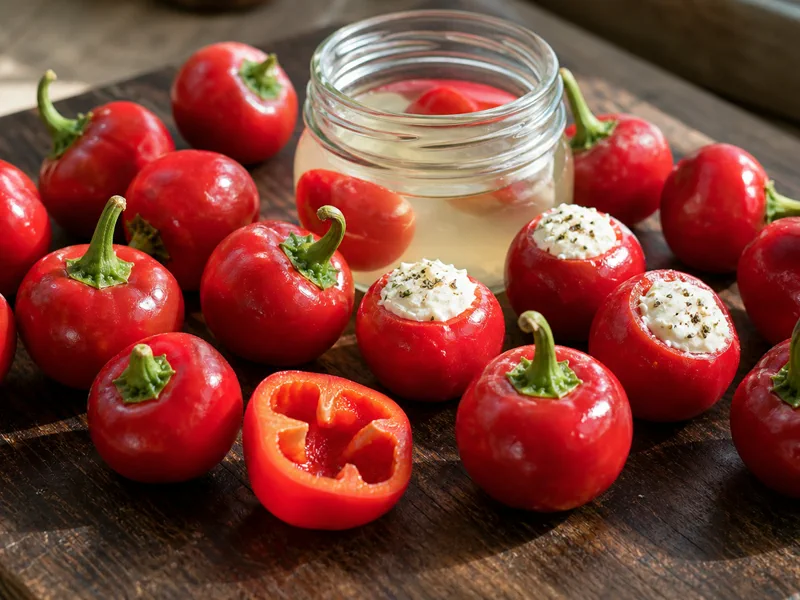
The fruit is small, round, red, and naturally hollow enough to stuff cleanly. That is why deli counters lean so hard on the cheese-filled version.
It does not eat like a blocky zero-heat bell pepper. Nor is it as thick as a classic pimento-style stuffing pepper.
Set against Sweet Italian Pepper, Peppadew is far more about brine, bite-size stuffing, and cold antipasti. The piquillo set beside it is the closer call, because both arrive jarred and both are sweet reds.
The biggest source of reader confusion is the name itself.
The brand became so tied to the sweet piquanté pepper that the two blurred together in everyday speech.
That matters because the jarred product is the form most readers are actually buying and tasting. Fresh fruit counts for gardeners and specialty growers, but the mainstream experience is sweet, tangy, crisp, and lightly pickled.
If the real question is whether Peppadew behaves like a salad pepper, a stuffing pepper, or a charcuterie garnish, the answer is stuffing and antipasti first. General sweet-pepper use comes second.
Where Did Peppadew Pepper Originate?
The PEPPADEW FAQ places the discovery in South Africa in the mid 1990s and states that the brand belongs to Peppadew International. That is the brand-owned version of the story and the safest starting point.
A 2013 New Jersey Agricultural Convention paper adds the detail the brand leaves out. It describes Peppadew as a sweet and tangy Capsicum baccatum found 16 years earlier in Tzaneen, South Africa, on a tea plantation whose former owner was a widely traveled botanist.
Counting back from that paper puts the find near 1997, which agrees with the brand's mid-1990s framing. The retelling varies between sources, but South Africa, the second half of the 1990s, and a proprietary pickling process stay stable across all of them.
The trademark matters as much as the discovery.
Because the name belongs to Peppadew International, the same-looking pepper is described differently outside the brand system.
So Peppadew holds an unusual position. Botanically it belongs to a South American-domesticated species, while commercially it became famous through South African cultivation and export.
How Hot Is Peppadew Pepper? Heat and Flavor
The Peppadew Pepper delivers 280–650 Scoville Heat Units, placing it in the Mild tier (0-999 SHU).
Flavor notes: sweet, tangy, and lightly brined.
What Nutrients Does Peppadew Pepper Provide?
Almost nobody eats a Peppadew fresh.
That governs the whole section, because pickling adds sodium and sugar that no fresh-pepper table accounts for. Whichever brand fills the jar, the brine is part of what you are eating.
For the fruit itself USDA holds no Peppadew record, so raw red sweet pepper is the nearest published stand-in at 26 calories and 128mg of vitamin C per 100g. Those numbers describe the class, not this cultivar.
The useful instruction is to read the jar rather than the table.
How Do You Use Peppadew Pepper in the Kitchen?
Most cooks meet Peppadew in a jar, and that is the right starting point.
The sweet brine and mild heat are the whole point of the eating experience.
These work on antipasto boards, chopped through grain salads, folded into cream cheese, or set on flatbreads. They bring sweetness, acid, and color without a serious burn.
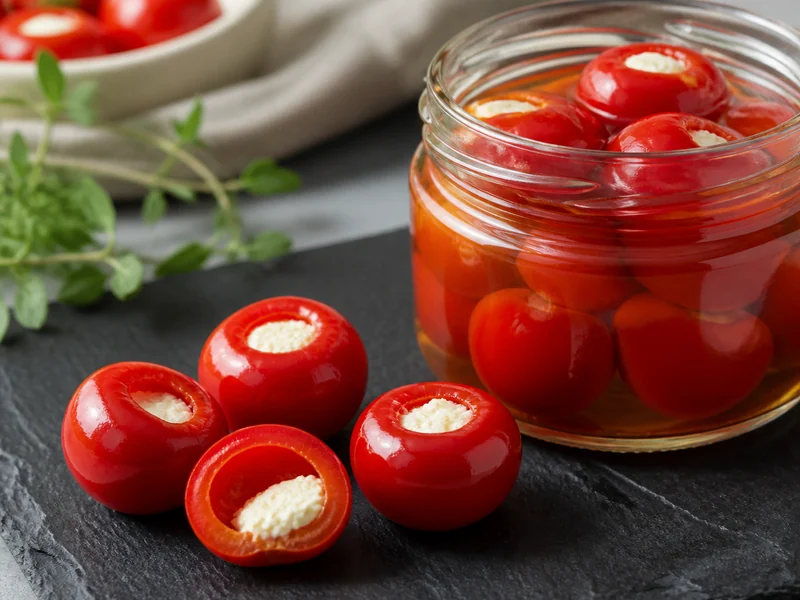
Stuffing is the standout use because the fruit is shaped for it. A careful deseed peppers keeps the walls intact and leaves a neat pocket for goat cheese, whipped feta, or herbed ricotta.
Once filled they hold their shape better than many softer sweet peppers. Fresh fruit is rarer, and when you find it the flavor points back toward the same uses.
It runs brighter and less briny than the jarred version, closer to a pickling pepper than a roasting pepper. For a low-heat baccatum in a more citrusy direction, biquinho set against peppadew draws the sharper contrast.
Peppadew is also a reminder that not every red pepper is a sauce pepper. When a dish needs real chile punch instead of sweet brined crunch, a true habanero hot-sauce workflow is the better route.
How Do You Buy and Store Peppadew Pepper?
Most shoppers meet Peppadew in jars, deli bars, or antipasti cases rather than the loose produce section. The buying question is format rather than ripeness, meaning whole, chopped, stuffed, mild, or hot.
A label reading PEPPADEW means the commercial sweet piquanté product most readers have in mind.
Anything else round, red and pickled is a comparable pepper under a different name.
In the jar, look for fruit still firm and evenly red in clear brine. Once opened, keep them refrigerated and submerged, because they hold far better in brine than drained.
Fresh fruit is a specialty-market or grower find. Buy firm glossy peppers with intact skin, and use them quickly if the goal is stuffing or pickling.
| The name | What it refers to | How you can tell |
|---|---|---|
| PEPPADEW | A registered trademark of Peppadew International, not a pepper category | The mark is printed on the jar |
| Sweet piquante pepper | The fruit itself, named without the brand | How growers and seed sellers describe it when the trademark is not involved |
| Cherry pepper | A different pepper, and a different species | Capsicum annuum against this fruit's Capsicum baccatum, per a 2013 New Jersey agricultural convention paper |
| Any round red pickled pepper | A habit rather than a category | If the jar carries no mark, it is a comparable pepper under another name |
What Can You Use Instead of Peppadew Pepper?
Direct comparisons show where flavor, form, and preparation differ in the Peppadew vs Cherry Pepper and Peppadew vs Piquillo matchups.
What Does Peppadew Pepper Need to Grow Well?
Peppadew plant material is proprietary. The 2013 convention paper records an exclusive arrangement to produce the gold and red cultivars in North America, so seed for the branded lines is not a retail item.
What a home grower can raise is a generic sweet piquanté or Juanita-type C. baccatum, which wants warmth and a long season. Baccatum plants are easier to identify in bloom, because the flowers often carry cream or yellow petals with darker markings at the base.
The commercial figures give a sense of how long that season runs. The same paper puts the gold cultivar's field season at about 90 days in one passage and describes a 120-day growing cycle in another, planted at the end of May for a September harvest.
The red piquanté line runs far longer, at roughly 160 days. That length is the stated reason the red is grown in South Africa and imported rather than raised in New Jersey.
Treat it as a warm-season, long-run crop. Start seed indoors 8 to 10 weeks before the last frost, transplant only after settled warmth, and give the plants the brightest spot available.
Steady water and patience matter more than heavy feeding. Pushing lush leaf growth at the expense of fruit set only delays the part you want.
A greenhouse, tunnel, or the warmest available bed all improve the odds in a cool summer. Judge harvest by full red color and cavity development rather than by the calendar.
Peppadew Pepper FAQ


- PEPPADEW UK, Piquanté Peppers FAQs, heat figures and trademark ownership
- Producing and Selling Peppadew Peppers, 2013 Proceedings of the 58th New Jersey Agricultural Convention and Trade Show, pages 142 to 143
- USDA FoodData Central, SR Legacy 170108, Peppers, sweet, red, raw
Species classification: C. baccatum - based on published botanical taxonomy.