

KnowThePepper
How Hot Is Royal Black Pepper? 5,000–30,000 SHU Depending on Ripeness
The Royal Black Pepper sits in the 5,000 to 30,000 SHU range, putting it roughly at the lower end of what most cooks call seriously hot. Its name suggests ornamental drama, and the plant delivers, dark foliage, striking pods, but this is a pepper built for the kitchen as much as the garden.
Think of it as sitting in the hot pepper classification zone alongside cayenne-level heat.
- Species: C. annuum
- Heat tier: Hot (10K-100K SHU)
- Comparison: the same heat range as a jalapeño because their published ranges overlap
What Makes Royal Black Pepper Different?
At its lower bound, the Royal Black Pepper starts around 5,000 SHU - comparable to a jalapeño on a warm day. At its peak, 30,000 SHU puts it near cayenne territory, roughly one-third the heat of a standard cayenne.
That range makes it useful across more dishes than its heat suggests: use the less-ripe pods where you want warmth without fire, or let them fully develop for a sharper kick.
The plant itself is part of the C. annuum lineage, the same species that gives us everything from bell peppers to cayenne. Origin records for this variety are sparse, it falls into the category of peppers with unclear or undocumented regional roots, which isn't unusual for ornamental-leaning cultivars that circulated through hobbyist networks before any formal documentation caught up.
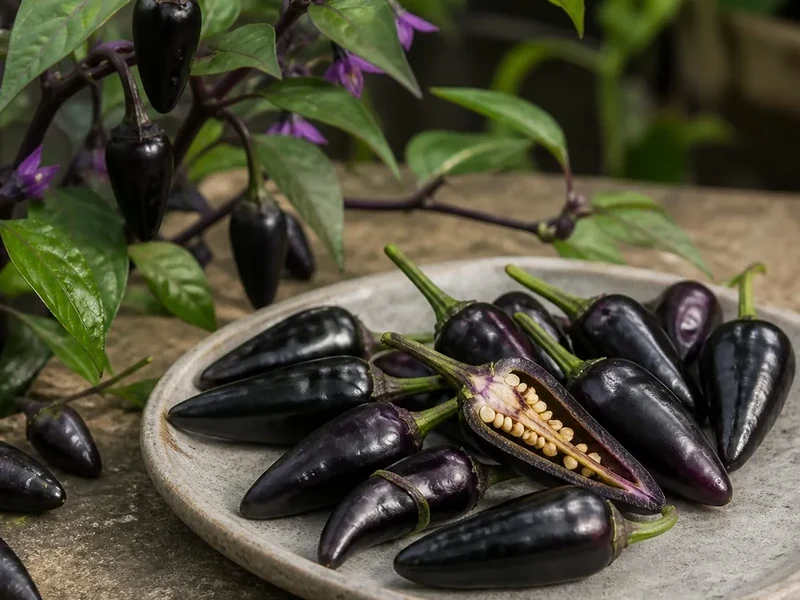
What's notable is how the dark pod coloration tracks ripeness. Early-stage pods tend to be deep purple-black, shifting as they mature, a visual cue that also correlates with heat development.
Growers who harvest at the black stage get a milder, slightly grassier heat.
Waiting for the full color shift pushes the SHU higher and the flavor profile warmer.
For cooking, that variable heat window is genuinely useful. The same plant can supply different intensity levels across a single harvest, which gives you flexibility without growing multiple varieties.
Where Did Royal Black Pepper Originate?
The Royal Black sits in murky historical territory. Unlike peppers with well-documented lineages, the Aleppo Pepper traces back centuries, for instance, the Royal Black doesn't have a clear geographic anchor or a recorded breeding program behind it.
Most evidence points to it emerging through ornamental pepper breeding, where visual characteristics (dark foliage, striking pod color) were prioritized alongside heat. These cultivars often circulated informally among collectors and seed savers before appearing in commercial catalogs, which means documentation is thin.
What's clear is that it belongs to C. annuum, a species domesticated in Mexico and Central America thousands of years ago. The Royal Black likely represents a relatively recent selection within that ancient lineage, bred for appearance, retained for flavor.
What Does Royal Black Pepper Taste Like, and How Hot Is It?
The Royal Black Pepper delivers 5K–30K Scoville Heat Units, placing it in the Hot tier (10K-100K SHU). That makes it roughly the same heat range as a jalapeño because their published ranges overlap.
What's in Royal Black Pepper? Nutrition Facts
Like most C. annuum peppers, Royal Black delivers vitamin C in meaningful amounts, red-ripe pods typically contain more than green-stage harvests. Capsaicin, the compound responsible for the 5,000 to 30,000 SHU heat range, has been studied for potential metabolic and anti-inflammatory effects, though research is ongoing.
Calorie count is minimal, fresh chili peppers run roughly 20 to 40 calories per 100g.
They also provide vitamin A, potassium, and dietary fiber. The dark pigmentation suggests anthocyanin content, the same class of antioxidants found in blueberries and purple vegetables, though specific data for this cultivar isn't published.
Which Dishes Suit Royal Black Pepper?
The kitchen case for Royal Black Pepper starts with that variable heat window. Pods harvested at the dark stage bring 5,000 to 15,000 SHU warmth, enough to notice, not enough to dominate.
Fully ripe pods push toward 30,000 SHU, closer to what you'd expect from De Arbol.
Fresh pods work well sliced into stir-fries, pickled whole, or chopped into salsas where you want color contrast alongside heat. The dark skin holds up to high heat cooking better than thinner-walled varieties.
Dried and ground, Royal Black makes a visually distinctive chili powder, the dark pigmentation carries through into the finished product. Mix it with smoked paprika for a rub, or use it solo in marinades where you want moderate heat without the red-orange color that cayenne brings.
For substitution purposes, it sits in similar territory to Manzano Pepper - both offer flexibility across fresh and dried preparations. Pickled Royal Black pods make an excellent condiment alongside grilled meats, where the brine tempers the heat and the color adds visual interest to the plate.
How Do You Buy and Store Royal Black Pepper?
Royal Black Pepper plants are more commonly found through specialty seed vendors and ornamental plant nurseries than grocery stores. Search for seeds from heirloom or specialty chili suppliers, Baker Creek and similar vendors occasionally carry dark-pod ornamental varieties.
Fresh pods store 1 to 2 weeks refrigerated in a paper bag. For longer preservation, dry them whole at 135°F in a dehydrator until fully brittle, then store in an airtight jar away from light.
Dried pods keep 12+ months without significant heat loss.
Freezing fresh pods whole is also effective, no blanching required.
What Is a Good Substitute for Royal Black Pepper?
No dedicated substitute guidance is published for Royal Black Pepper yet.
What Does Royal Black Pepper Need to Grow Well?
Royal Black performs like a standard C. annuum in the garden, which means it wants warmth, consistent moisture, and patience.
Start seeds indoors 8 to 10 weeks before last frost. Germination runs 10 to 21 days at soil temperatures around 80°F.
The ornamental traits that make this variety striking, dark foliage, black pods, are most pronounced under full sun.
Shade washes out the coloration. Transplant outdoors after nighttime temps stay reliably above 55°F.
Cold soil stunts early growth noticeably.
For anyone navigating the transplanting and cultivation process for the first time, Royal Black is reasonably forgiving compared to more finicky varieties. It doesn't have the specific humidity demands of something like the cultivation characteristics of Jwala, which prefers the conditions of its South Asian origin.
Spacing at 18 inches gives plants room to bush out. Watch for pepper leaves turning brown - in ornamental varieties with dark foliage, early stress signs can be harder to spot against the pigmentation.
Consistent watering matters more than volume.
Irregular moisture leads to blossom drop. Expect pods in 70 to 90 days from transplant.
Royal Black Pepper FAQ


- CoqHot - Royal Black Pepper
- Chile Pepper Institute - New Mexico State University
Species classification: C. annuum - based on published botanical taxonomy.