

KnowThePepper
Bishop's Crown: Miter-Shaped Barbados Pods, Tangy Before the Heat Builds
The Bishop's Crown is a visually striking C. baccatum pepper from Barbados, shaped like a three-winged bishop's miter. It delivers 5,000 to 30,000 SHU of fruity, sweet heat, roughly 6x hotter than a serrano at its peak.
Gardeners prize it for ornamental appeal and generous yields.
The flavor leans bright and tangy before the warmth builds, making it a standout in fresh preparations.
- Species: C. baccatum
- Heat tier: Hot (10K-100K SHU)
- Comparison: the same heat range as a jalapeño because their published ranges overlap
What Is Bishop's Crown?
The Bishop's Crown is hard to walk past in a garden row. Its three-lobed, lantern-like silhouette, resembling a bishop's ceremonial headwear, makes it immediately recognizable, but the flavor is what keeps growers coming back season after season.
Native to Barbados and part of the broader Caribbean regional pepper tradition, this Capsicum baccatum variety sits comfortably in the hot. At 5,000 to 30,000 SHU, it spans a wide range, some fruits are almost mild, others hit with real intensity.
That variability is partly genetics, partly growing conditions.
The flavor profile sets it apart from most peppers in its heat bracket. Fruity and sweet up front, with a citrusy brightness characteristic of the baccatum species, the heat arrives after the flavor rather than with it.
That sequencing makes it approachable for people who find habaneros too aggressive.
Compared to the Lemon Drop, Bishop's Crown offers a rounder sweetness with more visual drama. Gardeners who want the same three-winged silhouette with much less heat should look at the milder Mad Hatter hybrid, which was bred from this shape lineage for sweeter fresh eating.
The C. baccatum botanical family it belongs to includes many South American cultivars known for exactly this kind of fruity-first heat, and Bishop's Crown represents the Caribbean branch of that lineage.
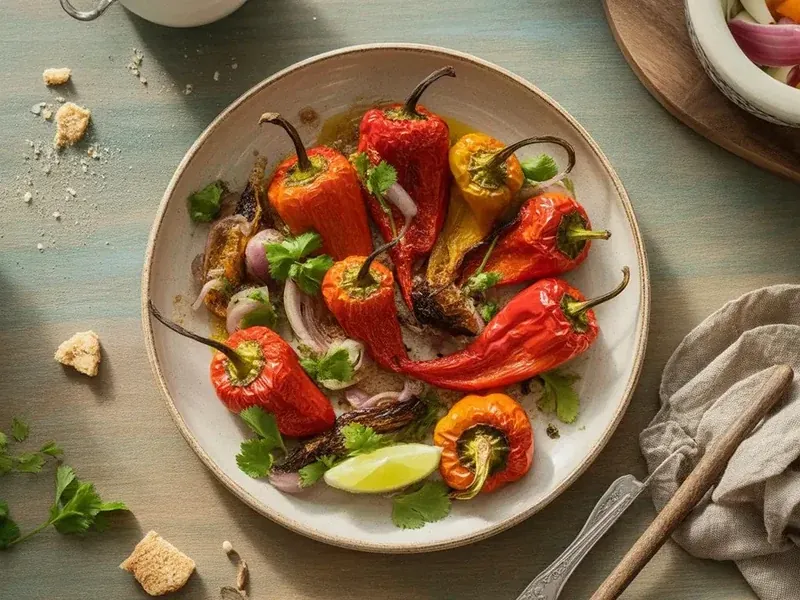
What Is the History of Bishop's Crown?
Bishop's Crown traces its documented roots to Barbados, where it has been cultivated for generations under various regional names, including Joker's Hat and Christmas Bell in different parts of the world. The pepper spread through South America and into European markets, particularly Germany and Austria, where it became popular as a pickling pepper in the 20th century.
As a the baccatum species group variety, it shares ancestry with Andean peppers that date back thousands of years in South American cultivation. The distinctive shape likely emerged through generations of selection, the winged structure is unusual enough that it was probably preserved deliberately by growers who valued its ornamental character.
Heirloom seed networks helped reintroduce it to North American gardeners in the 1990s and 2000s, and its combination of striking looks and genuine flavor complexity earned it a dedicated following among specialty growers.
What Does Bishop's Crown Taste Like, and How Hot Is It?
The Bishop's Crown delivers 5K–30K Scoville Heat Units, placing it in the Hot tier (10K-100K SHU). That makes it roughly the same heat range as a jalapeño because their published ranges overlap.
Flavor notes: fruity and sweet.
What Nutrients Does Bishop's Crown Provide?
Like most baccatum peppers, Bishop's Crown provides solid nutritional value alongside its heat. A 100g serving of fresh fruit delivers approximately 40 calories, meaningful amounts of vitamin C (often exceeding 100mg), and beta-carotene that increases as the pepper ripens from green to red.
The capsaicin content, responsible for heat in the 5,000 to 30,000 SHU range, interacts with TRPV1 receptors. The capsaicin explains why ripe red fruits feel hotter than green ones from the same plant.
Fiber content is modest, around 1.5g per 100g, and the pepper is naturally low in sodium.
How Do You Cook With Bishop's Crown?
Escabeche is where Bishop's Crown really earns its keep. The pepper's firm walls and distinct shape hold up beautifully in a quick vinegar brine, and sliced crosswise, each ring looks like a tiny stained-glass window.
The fruity sweetness survives pickling in a way that purely hot peppers cannot.
Fresh, the pepper works well in ceviche and fruit-forward salsas, the bright, tangy heat complements citrus and mango without overwhelming them. For heat-building dishes like curries and slow-cooked sauces, it adds complexity rather than raw firepower.
For those exploring similar fruity heat in dried form, the Aleppo Pepper offers an interesting contrast, both reward attention to flavor before heat.
The three wings of the pepper are thinner than the central body, so they cook faster. When sauteing, add them last.
Stuffing works well with the main cavity, the shape naturally holds small amounts of cheese or meat filling.
At 5,000 to 30,000 SHU, heat varies fruit to fruit, so taste before committing to a raw preparation.
How Should You Buy and Store Bishop's Crown?
Fresh Bishop's Crown peppers are rarely found in mainstream grocery stores, specialty markets, farmers markets, and Latin or Caribbean grocers are your best bets. Online seed retailers like Baker Creek Heirloom Seeds carry reliable stock for home growers.
When buying fresh, look for firm skin with no soft spots. The wings should feel taut, not wrinkled.
Store unwashed peppers in the refrigerator crisper drawer for up to 10 days.
For longer preservation, pickling is the traditional choice, the firm walls hold texture well in brine. Freezing works but softens the distinctive shape, so it is better suited for cooked applications afterward.
Check the scoville scale if comparing purchases across varieties.
What Is a Good Substitute for Bishop's Crown?
Direct comparisons show where flavor, form, and preparation differ in the Bishop's Crown vs Lemon Drop matchups.
How Do You Grow Bishop's Crown at Home?
Bishop's Crown is a rewarding garden plant, but it has specific preferences that separate thriving plants from struggling ones. Start seeds 8 to 10 weeks before last frost indoors.
Germination can be slow - baccatum species sometimes take 21 to 28 days at soil temperatures of 80 to 85°F.
Bottom heat from a seedling mat makes a real difference.
This pepper is a natural fit for container growing. Check the peppers containers if you are working with limited space, Bishop's Crown adapts well to 5-gallon pots or larger, and the ornamental shape makes it genuinely attractive on a patio.
For those comparing cultivation approaches, De Arbol - its preference for heat and full sun, overlap with what Bishop's Crown needs: 6 to 8 hours of direct sun daily and well-draining soil with consistent moisture.
Plants reach 24 to 36 inches tall and benefit from staking once fruit load increases. Space them 18 to 24 inches apart.
Days to maturity run approximately 80 to 90 days from transplant.
Fruit starts green, transitions through yellow, and ripens to red, all stages are usable, with red offering the fullest sweetness.
For a grow peppers from seed, the timing principles apply directly to this variety.
Bishop's Crown FAQ


- Capsicum - USDA GRIN Taxonomy
- Baker Creek Heirloom Seeds - Bishop's Crown
- Peppers - UC Small and Organic Farm Advisor, UC ANR
-
Sourcing note: heat range is a widely cited figure, not an institutional measurement No university, government or research body publishes a Scoville measurement for this cultivar. The range given here is the figure growers and pepper references cite in common, and it has not been verified by a laboratory.
Species classification: C. baccatum - based on published botanical taxonomy.