
Bishop's Crown vs Lemon Drop: Pickle or Citrus Heat
These are both Capsicum baccatum peppers, but they pull in different directions. Bishop's Crown gives you more flesh for pickling or stuffing and runs about 5,000-30,000 SHU. Lemon Drop carries similar top-end heat at 15,000-30,000 SHU, then pushes harder on citrus and thin-walled sauce heat.

Bishop's Crown
HotLemon Drop
HotQuick Comparison
| Attribute | Bishop's Crown | Lemon Drop |
|---|---|---|
| Scoville evidence | 5K-30K SHU | 15K-30K SHU |
| Heat Tier | Hot | Hot |
| vs Jalapeño | 4x hotter | 4x hotter |
| Flavor | fruity and sweet | citrusy and bright |
| Species | C. baccatum | C. baccatum |
| Origin | Barbados | Peru |
Is Lemon Drop Hotter Than Bishop's Crown?
These peppers overlap more than the old labels suggest. Bishop's Crown usually runs 5,000-30,000 SHU, while Lemon Drop sits around 15,000-30,000 SHU.
Lemon Drop is not always vastly hotter, but it delivers heat faster because the walls are thin and the citrus note rides right on top of it.
With Bishop's Crown, heat can feel milder at first because more flesh comes with every bite. Seeded rings can land close to sweet-pepper territory, then a hotter pod surprises you later.
If you want a cleaner family reference, both sit inside the Capsicum baccatum group, but they use that family heat very differently.
How Do Bishop's Crown and Lemon Drop Taste Different?
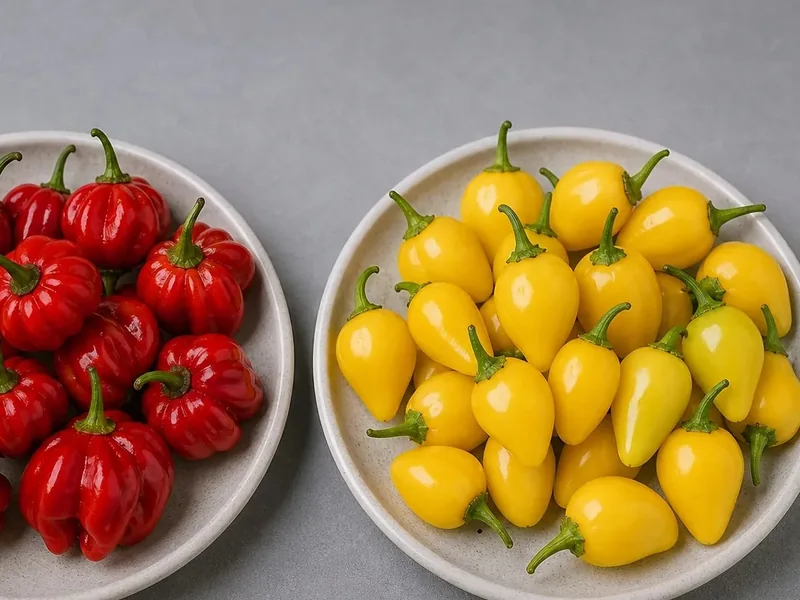
Bishop's Crown leans sweet, fruity, and a little tangy. Lemon Drop leans sharp, lemony, and brighter.
That difference changes acid balance. Lemon Drop can make a sauce taste as if a squeeze of citrus already went in.
Bishop's Crown usually needs vinegar or lime from somewhere else if you want the same lift.
The split looks small on paper, but in the pan it is obvious. One behaves like a pepper you can stuff or pickle.
The other behaves like a pepper you mince into a sauce.
That sweetness-versus-tang split also traces to their different regional roles: Bishop's Crown developed as a fruity pickling pepper in a European tradition that valued sweetness alongside crunch, while Lemon Drop developed as a coastal Peruvian seasoning pepper where sharp acidity was the whole point.
Culinary Uses
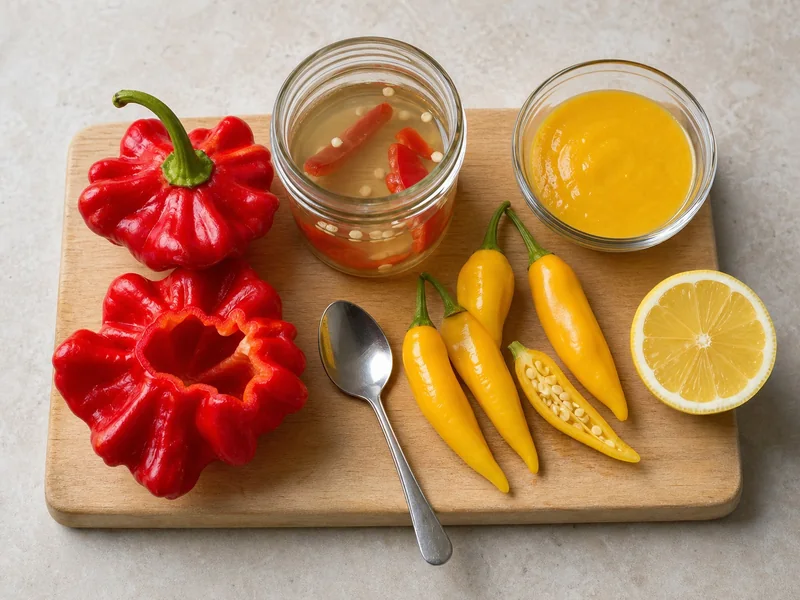
Bishop's Crown fits quick pickles, stuffed bites, salad rings, and relishes where shape and crunch matter.
Lemon Drop fits aji sauces, ceviche garnish, fish marinades, and yellow hot sauce where bright heat has to spread fast.
If you are already cooking with Peruvian ajis, aji amarillo versus Lemon Drop shows where Lemon Drop stays leaner and sharper.
German and Austrian pickling traditions favor Bishop's Crown specifically for its winged shape, since the pockets between the wings hold brine and seasoning in a way a smooth pod cannot. Lemon Drop's Peruvian roots show up most in aji-style condiments served alongside grilled fish, a pairing that traces directly back to the coastal fishing communities that first prized its citrus brightness.
Which Should You Choose, Bishop's Crown or Lemon Drop?
Choose Bishop's Crown for flesh, shape, and gentler fruity heat. Choose Lemon Drop for thin-walled citrus fire that can season a sauce without adding much bulk.
They are close relatives, not close replacements. Wall thickness changes the whole result.
Both are baccatum varieties, so the choice ultimately comes down to what the dish needs: a decorative, crunchy pickle that holds shape, or a bright, thin-walled pepper built to disappear into a sauce.
Wall Shape
The shape tells you the kitchen job before the first bite. Bishop's Crown gives you wings and a center cup, which is why it works for stuffing and decorative pickles.
Lemon Drop stays narrow and pointed. It wants to be sliced thin, pounded, blended, or dried, not filled.
That wing structure is a growing quirk of the baccatum species, not something bred deliberately into every variety. Most other baccatum peppers, including Lemon Drop, grow as simple elongated pods, which makes Bishop's Crown's shape genuinely unusual within its own species group.
| Kitchen job | Bishop's Crown | Lemon Drop |
|---|---|---|
| Stuffing | Winged hollow cup holds filling | Too narrow for practical stuffing |
| Quick pickle | Firm shape stays visible | Thin rings season brine quickly |
| Blended sauce | Adds flesh and sweetness | Adds bright heat with less bulk |
| Drying | Possible, but slower | Thin pod is the easier drying choice |
Pickle Or Sauce
In brine, Bishop's Crown keeps more crunch and shows off its shape. Lemon Drop still pickles well, but the bigger win is sauce because the citrus note carries through oil, vinegar, and garlic.
If you need a tiny hot garnish instead of a fuller-bodied sauce pepper, aji charapita versus Lemon Drop is the better next step.
That crunch retention traces directly to the pepper's European pickling history, where 20th-century German and Austrian preservers selected for pods that would hold their bite through months in a jar rather than softening like a typical pickled pepper.
Garden Tradeoff
Bishop's Crown gives you a striking patio plant and fruit that guests notice right away. Lemon Drop usually gives a longer run of thin yellow pods that are easier to dry or turn into sauce.
Garden space decides part of this choice. Grow Bishop's Crown when you want a multipurpose fresh pepper.
Grow Lemon Drop when you want a steady stream of bright sauce peppers.
Both trace back to Andean cultivation traditions thousands of years old, but modern seed catalogs market them differently: Bishop's Crown as a novelty ornamental-edible, and Lemon Drop as a serious cooking baccatum for cooks chasing Peruvian flavor.
Ripe Buying Rule
Buy Bishop's Crown for firm walls and clean shoulders. Buy Lemon Drop when the pods are fully yellow and smell a little citrusy as soon as you cut them.
Both freeze well for cooked uses, but only Bishop's Crown really loses something special once the crisp shape is gone.
Both peppers ripen from green through orange to red or yellow, and color alone is not always a reliable heat indicator within the same batch, so a taste test on one pod from a new lot is worth the risk before committing a whole harvest to a single dish.
Check before buying
- Bishop's Crown has a firm winged or crown-like pod
- Lemon Drop is elongated, tapered, and fully yellow when ripe
- No soft wet lesions, leaking flesh, or mold
- The seller names the cultivar and stated heat range
Are Bishop's Crown and Lemon Drop the Same Species?
Bishop's Crown and Lemon Drop are both Capsicum baccatum, but shared species does not make them interchangeable. The cited Chile Pepper Institute source supports the species frame, while the stored seller pages own only their individual cultivar descriptions.
The available sources do not establish the old claims about German or Austrian selection, coastal fishing communities, archaeological trade, or a 16th-century Lemon Drop record. Those timeline claims have been removed rather than presented as settled cultivar history.
Do Bishop's Crown and Lemon Drop Differ in Nutrition?
No cultivar-specific nutrient analysis was located for Bishop's Crown or Lemon Drop. Generic fresh-pepper values cannot prove exact calories, vitamin C, or carotenoids for either cultivar, so nutrition does not decide this comparison.
Pod form does decide it. Bishop's Crown supplies a broad hollow cup and thicker bite for stuffing or pickling, while Lemon Drop supplies thin slices and bright flavor that disperse through sauce.
Handle both as hot peppers when preparing a large batch. Use gloves, avoid touching the eyes, and add measured portions because pod-to-pod heat can vary inside the listed ranges.
Bishop's Crown vs Lemon Drop FAQ
- Capsicum baccatum L. - USDA GRIN Taxonomy